24H Mold Inspection
Fontana24/7 EMERGENCY(840) 232-4277
HomeOur ServicesLeak & Moisture Detection
our services

Leak & Moisture Detection

Hidden moisture is the root cause of most mold problems. We locate it precisely—without tearing into walls—so you can fix the source, not just the symptoms.

About

Why Moisture Detection Comes First

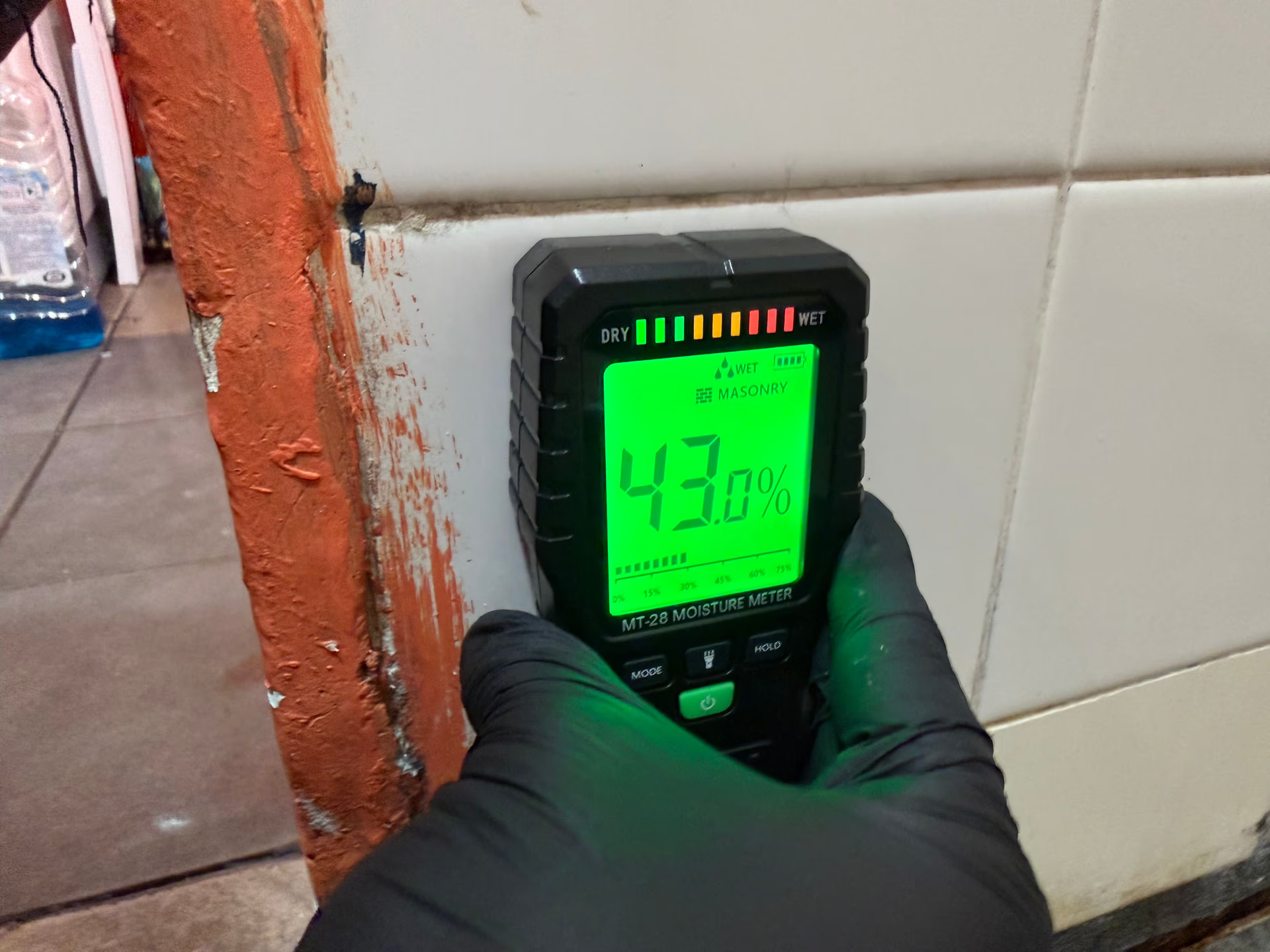
Mold needs moisture to grow, and moisture hides. We use non-destructive instruments to map water through walls, floors, and ceilings—and thermal cameras to see temperature anomalies that indicate active leaks or condensation—giving you a precise location before any repair work begins.

Moisture detection helps you:

  • —Pinpoint the exact source of a leak before demolition
  • —Map moisture spread behind walls and under flooring
  • —Identify condensation-prone areas before mold appears
  • —Confirm repairs were effective after water damage is addressed
Why Moisture Detection Comes First

Methodology

How We Detect Moisture

Non-destructive tools that locate water without cutting into your property.
We measure the moisture content of walls, floors, and ceilings using both pin-based and non-invasive pinless meters—mapping the full extent of saturation without surface damage.

Best for:

— Drywall, wood framing, and subfloor assessment
— Mapping moisture spread after a water event
— Establishing baseline readings for monitoring

Our thermal cameras detect temperature differentials across surfaces. Water-loaded materials hold heat differently than dry materials, making leaks and saturated zones visible behind finished walls.

Best for:

— Finding active leaks behind drywall without cutting
— Locating plumbing or roof leaks not yet surface-visible
— Identifying condensation zones that feed mold

Every finding is documented with photos, moisture readings, and thermal images. You receive a clear report so contractors, insurers, or property managers can act immediately.

Report includes:

— Moisture readings mapped by room and surface
— Thermal images with annotated anomaly locations
— Probable source identification and next steps

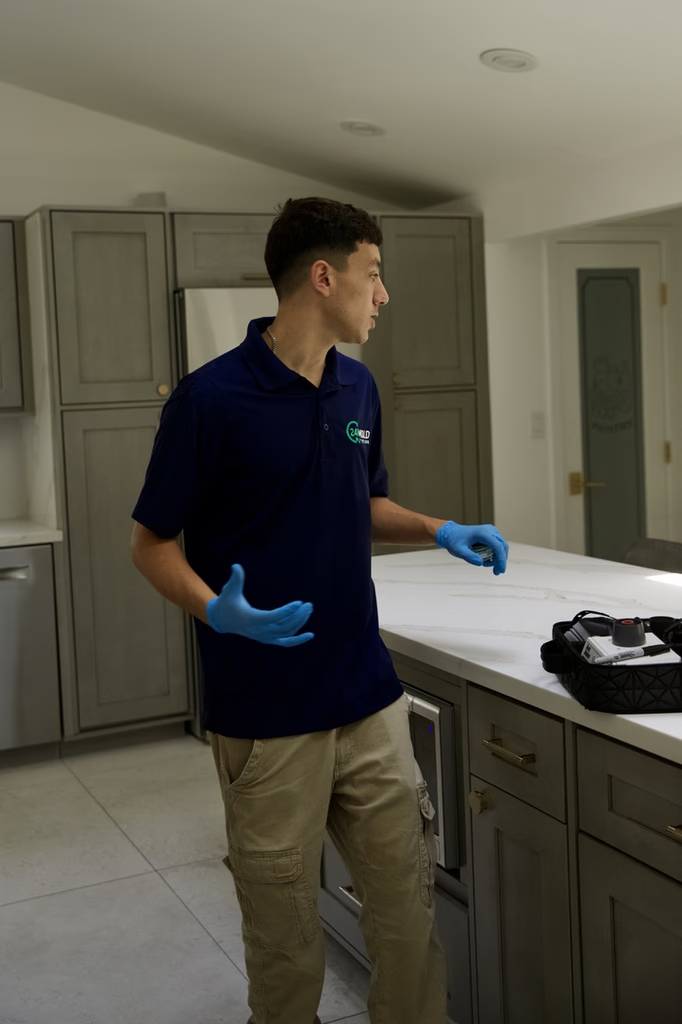
Mold inspector at work

Checklist

When Do You Need Moisture Detection?

Moisture detection is the right first step if:

  • —You smell mold or dampness but can't find the source
  • —You've had a plumbing leak, roof leak, or flood
  • —You're buying a property and want to verify no hidden moisture
  • —You had water damage and want to confirm the area is fully dry
  • —Recurring mold keeps coming back after surface cleaning

Moisture detection is often the fastest and most cost-effective way to scope a mold problem before committing to testing or remediation.

Detection Services

Our Detection Methods

Two complementary tools that together give a complete picture of moisture conditions in any building.

1Thermal Imaging

Infrared cameras reveal temperature anomalies that indicate hidden leaks, condensation zones, and moisture paths behind finished surfaces.

2Moisture Detection

Pin and pinless meters precisely measure moisture content in walls, floors, and ceilings—mapping the full extent of saturation without destructive investigation.

Mold inspection Fontana FAQ

Call For An Inspection
Spore detection is air sampling: a measured volume of indoor air is drawn through a spore trap in each area of concern, a matching outdoor sample is collected on the same visit, and an accredited lab counts and identifies what was captured. The outdoor sample is essential in Fontana, where wind events, open lots, construction, and dust from the logistics belt push outdoor particle and spore levels up and down from one day to the next. An indoor result only means something when compared against that baseline. Spore detection is the right test when someone in the household has symptoms, when there is a musty smell with nothing visible, or after water damage to see whether growth has reached the air. In Fontana's 1950s and 1960s slab homes, elevated indoor counts usually trace to a slab or wall leak; in the newer northern neighborhoods, to an attic or HVAC condensation problem. Pairing air samples with a moisture survey turns the number into a location.
It is a fair question, and the honest answer is that it is a different issue that sometimes gets mixed up with mold. The Kaiser mill operated from 1942 to 1983 on roughly 2,000 acres, and parts of the site have since been remediated under the state Department of Toxic Substances Control, with caps and deed restrictions on some areas. Soil and groundwater contamination is evaluated through that regulatory process and through environmental site assessments, not through mold testing. Mold is a moisture problem inside the building, and it behaves the same near the former mill as anywhere else in the city. Where the location does matter is the outdoor baseline: properties close to the warehouses and truck routes that replaced much of the mill can show higher outdoor dust and particle loads, so indoor air samples are always paired with an outdoor sample from the same visit. If soil conditions concern you, the DTSC public records for the site are the place to start.
Much of Fontana's older housing went up as the steel mill's workforce grew through the postwar decades — single-story stucco homes on concrete slabs, now 60 to 70 years old. The recurring moisture sources are consistent: copper or galvanized supply lines leaking inside walls or beneath the slab, cast-iron drain lines cracking under bathrooms and kitchens, roofs re-covered over earlier layers, and bathroom fans that were never installed or that vent into the attic. Many of these homes also have a garage converted into living space at some point, often on a slab with no vapor barrier and a wall built straight onto the concrete where the door used to be. The first sign is usually subtle — a musty closet, a swelling baseboard, a warm spot on the floor from a hot-water slab leak. Thermal imaging and moisture readings around the plumbing walls and slab perimeter cover the places these houses usually fail.
It can, because an evaporative cooler works by putting water into the air. Roof-mounted coolers are still common on Fontana's older homes, and on the hottest, driest days they do the job well. Problems start when the system runs on humid days, when the house is closed up so the moist air has nowhere to exhaust, or when the unit itself fails: a leaking pan or cracked housing dripping onto the roof deck, a failed curb seal around the duct opening letting water into the attic, or a sump and pads left stagnant through the off-season. Homes that later added central air often kept the old cooler duct, which becomes a condensation point in summer and a rain entry point in winter. Look for staining around the ceiling register beneath the cooler and musty air when it starts up for the season. An attic inspection at the cooler opening is usually the quickest way to find out.
They do, because of the slope. Southridge Village was planned in the early 1980s into the Jurupa Hills, the granitic ridge along the city's southern edge, so many homes sit on cut-and-fill pads with retaining walls and terraced back yards. Granite and decomposed-granite soil sheds water quickly instead of absorbing it, and in a heavy storm that runoff concentrates against uphill walls, spills onto lower lots, and finds its way into the joint between slab and foundation on homes cut into the grade. Terrace drains and V-ditches clogged with debris turn a manageable storm into a wet wall, and irrigation on steep yards keeps the uphill side damp year-round. Inside, the signs are white mineral deposits on the slab edge, swelling baseboards on the hill side of the house, and a musty smell in the lowest rooms. An inspection focused on the uphill wall, retaining-wall drainage, and the slab perimeter is the right scope here.
Not on the day of the wind event, but possibly by the next storm. Fontana's northern neighborhoods — Hunter's Ridge, Summit Heights, Sierra Lakes — sit in the path of the strong seasonal winds that funnel out of the mountain passes, and those gusts crack and lift concrete roof tiles, tear ridge caps, and drive dust and debris into roof valleys and gutters. A tile roof can look mostly intact from the ground while the underlayment beneath a displaced tile is now exposed. When the first heavy rain arrives, water gets through that gap into the attic, soaks the insulation, and runs along rafters before staining a ceiling somewhere well away from the damage. In tightly built newer homes, that moisture stays put. After a major wind event, a roof check before the rainy season is the first step, and if a stain or musty smell appears later, an attic moisture inspection finds the growth before it spreads.
Document it independently first. California law applies in Fontana as it does everywhere in the state: Health and Safety Code section 17920.3, as amended by SB 655, lists visible mold as a substandard housing condition, and an older building doesn't excuse it. Fontana's rentals range from postwar houses with converted garages to apartment complexes along Sierra Avenue and Foothill Boulevard, and disputes usually come down to whether the mold is a building defect — a slab leak, a failed roof, a missing exhaust fan — or a household habit. A third-party report answers that with moisture readings, photographs, lab results, and an identified source. Because we don't do remediation, the report has no incentive to make the problem bigger than it is. Attach it to a written repair request; if nothing changes, it is the evidence you would take to the city's code enforcement division or to small claims court.

Contact

Book your Fontana mold inspection today

Tell us what's going on and we'll respond the same day

Location

24H Mold Inspection of Fontana

Hours

  • MondayOpen 24 hours
  • TuesdayOpen 24 hours
  • WednesdayOpen 24 hours
  • ThursdayOpen 24 hours
  • Friday6 AM – 6 PM
  • SaturdayClosed
  • SundayOpen 24 hours

Service area neighborhoods

  • North Fontana
  • Southridge
  • Hunter’s Ridge
  • Sierra Lakes
  • Downtown Fontana
  • Summit Heights
  • Jurupa Hills
  • Central Fontana
Call For Service(840) 232-4277