1
Mold inspection
- Moisture detection
- Infrared technology
- Certified mold inspectors
- No conflict of interest

Certified mold inspection and testing in Fontana. Same-day appointments, lab-verified reports, and no financial stake in any remediation work that follows.
(840) 232-4277What We Do
Air and surface samples analyzed in a state-certified lab. You receive mold species ID, spore count data, and lab-verified documentation that holds up with insurers, attorneys, or counsel.
About
At 24H Mold Inspection of Fontana, we know no two buildings respond to moisture the same way.
Fontana has experienced decades of rapid growth, transforming from an industrial and agricultural center into one of the Inland Empire’s largest residential communities. The city contains a broad mix of older neighborhoods, master-planned developments, industrial facilities, and commercial corridors. Although Fontana’s climate is generally dry, moisture issues remain common due to slab construction, plumbing failures, roof leaks, and extensive HVAC operation during prolonged periods of hot weather. The city’s varied building ages create different moisture profiles, with older neighborhoods often facing infrastructure-related concerns while newer developments are more likely to encounter issues involving HVAC systems, building-envelope performance, and construction defects.
Fontana contains suburban family homes, master-planned communities, industrial facilities, townhomes, apartment developments, and commercial properties. Slab foundations, HVAC systems, and rapid-growth construction patterns frequently influence moisture conditions.
Services
Mold inspection, mold testing, and environmental risk assessments for Fontana properties. Available 24/7, with no remediation work to bias the findings.

Why Us
24H Mold Inspection of Fontana combines local field experience with state-certified methods and lab analysis. Reports get back to you quickly and clearly, with no upsell tacked on to the findings.
We don't stop at surface-level findings. Active leaks, health symptoms, post-remediation work, and pre-purchase due diligence each call for a different inspection approach. Our certified mold inspectors guide you through the specific situation rather than running a generic checklist.
Strengths
We check every box, then go further. Book your inspection today
Licensed inspectors with proven field experience in Fontana.
FLIR thermal cameras, calibrated moisture meters, and lab-verified sampling.
Straightforward updates and honest reporting throughout the process.
Highly rated by Fontana homeowners and businesses.
5 Step Process
Choose a date and time that fits your schedule.
Flexible scheduling means same-day and next-day appointments are usually available, with 24/7 emergency response when the situation needs it.
Our certified mold inspectors assess every mold-prone area.
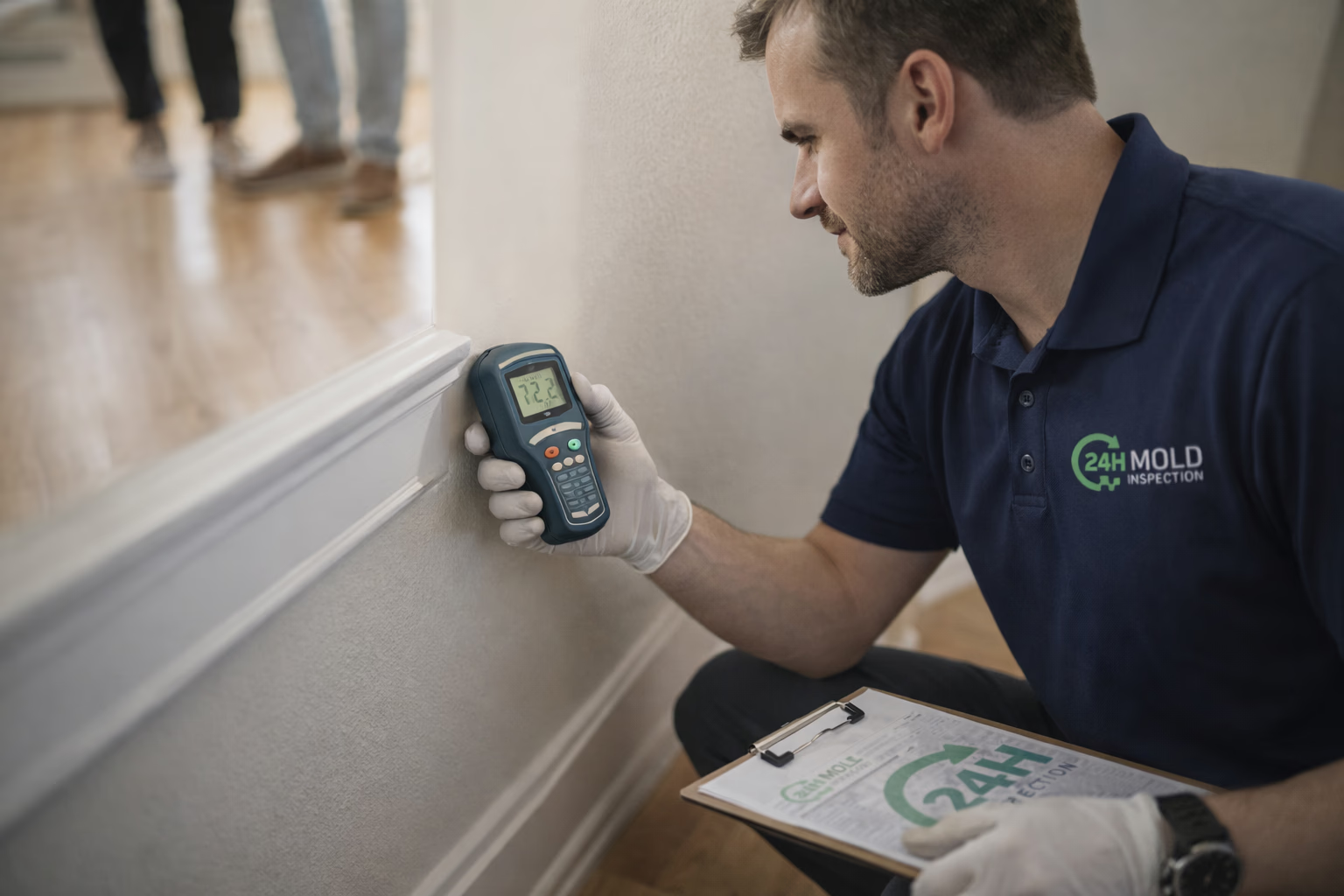
We walk the property identifying visible mold and moisture issues, using thermal imaging and moisture meters to catch what's hidden behind walls and under flooring.
Air and surface samples collected for lab analysis.
Our certified mold inspectors collect targeted samples from key areas to find mold spores both visible and hidden, with sample sites documented on a property map.
Lab testing returns precise results.
Samples go to a state-certified lab for detailed analysis identifying mold species and contamination levels, typically returned within 24 to 72 hours.
Insights and clear next steps from our experts.
You receive a written report with lab results, inspector findings, and specific recommended action steps to resolve any mold issues safely.
Who We Serve
24H Mold Inspection of Fontana brings clear answers to HOAs, hotels, commercial buildings, and homes through certified mold inspection and testing services.
Downtown grew from A.B. Miller's town site, christened Fontana on June 7, 1913 when the old name Rosena was retired, and the 2,000 acres of citrus he planted were billed as the largest single citrus grove in the world. The blocks around Sierra Avenue and Arrow Boulevard hold the city's oldest housing — pre-war cottages and 1940s homes, some on raised foundations — and its older commercial frontage. Original galvanized plumbing, roofs layered over earlier roofs, and additions joined to small original houses are the recurring moisture paths here, along with flat-roofed storefronts whose drains clog with wind-blown debris.
Henry J. Kaiser fired up his steel mill on December 30, 1942, and for four decades it was one of only two steel mills west of the Mississippi before it closed in 1983. The roughly 2,000-acre site has since been remediated in sections under state oversight — the speedway built on its former coke-oven area ran its last NASCAR race in February 2023 — and much of the land has gone to logistics. Soil and groundwater cleanup is a separate field from mold, but the warehouse belt that replaced the mill carries its own moisture pattern: big low-slope roofs, clogged internal drains, and slab moisture working into stored goods.
The mill's workforce drove Fontana's postwar building boom, and the 50-bed hospital Kaiser opened in 1943 for steelworkers and their families became a seed of Kaiser Permanente. The single-story homes that went up as that workforce grew through the 1950s and 1960s fill much of the older city: stucco over wood frame on concrete slabs, with copper or galvanized lines, early forced air or wall furnaces, and plenty of evaporative coolers on the roof. Sixty-plus years later, slab leaks, failing drain lines, coolers leaking at their roof curbs, and garage conversions built straight onto the slab are the most common sources of hidden moisture on these blocks.
In the city's northern reaches, vineyards and open fan land gave way from the 1990s onward to master-planned neighborhoods such as Hunter's Ridge, Summit Heights, and Sierra Lakes, built on graded pads climbing toward the San Gabriel Mountains. This is also the part of Fontana most exposed to the strong wind events that funnel out of the mountain passes, lifting roof tiles and driving dust into vents and valleys. The homes are newer and tighter — two-story stucco over slab, attic HVAC, tile roofs — so the moisture risks are trapped interior humidity, condensation in attic ducts through long hot summers, and wind-damaged roofs that leak at the next storm.
On the southern edge of the city, Southridge Village was planned in the early 1980s into the slopes of the Jurupa Hills, a granitic ridge rising above the valley floor. Homes here sit on cut-and-fill pads with retaining walls and terraced yards, and the hard granite and decomposed-granite soil sheds rainwater quickly downhill rather than absorbing it. That concentrates runoff against uphill walls, onto lower lots, and into the joint between slab and foundation on homes cut into the grade. Clogged terrace drains and V-ditches, irrigation on steep yards, and older pool installations on sloped lots are the usual drivers of moisture problems in these neighborhoods.
Google Search
Add 24H Mold Inspection as a preferred source so our pages are easier to spot in your Google results.
Contact
Tell us what's going on and we'll respond the same day
Location
24H Mold Inspection of Fontana
Phone
(840) 232-4277Hours
Service area neighborhoods
Newsletter
Monthly notes from our inspectors on prevention and air quality.