
Detect hidden moisture, leaks, and insulation issues without invasive methods.
our services
Mold Inspection
Advanced moisture detection and infrared technology—so you can act before it spreads.
About
Why Mold Inspection Matters
Mold often hides behind walls or under flooring. Our inspection process is designed to catch both the obvious and the invisible—before they become costly repairs or health concerns.
- —Detect visible mold
- —Locate the source of moisture that feeds it
- —Identify which areas need testing or remediation
- —Get peace of mind after leaks or before buying property
Methodology
How our mold inspectors inspect
We combine certified field experience with calibrated detection tools
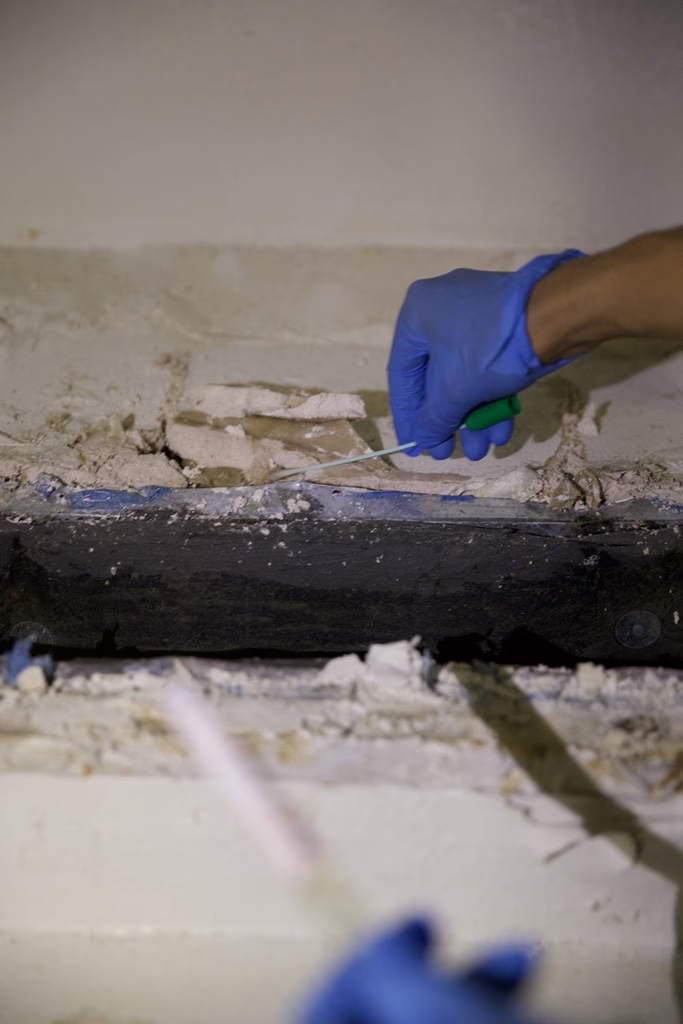
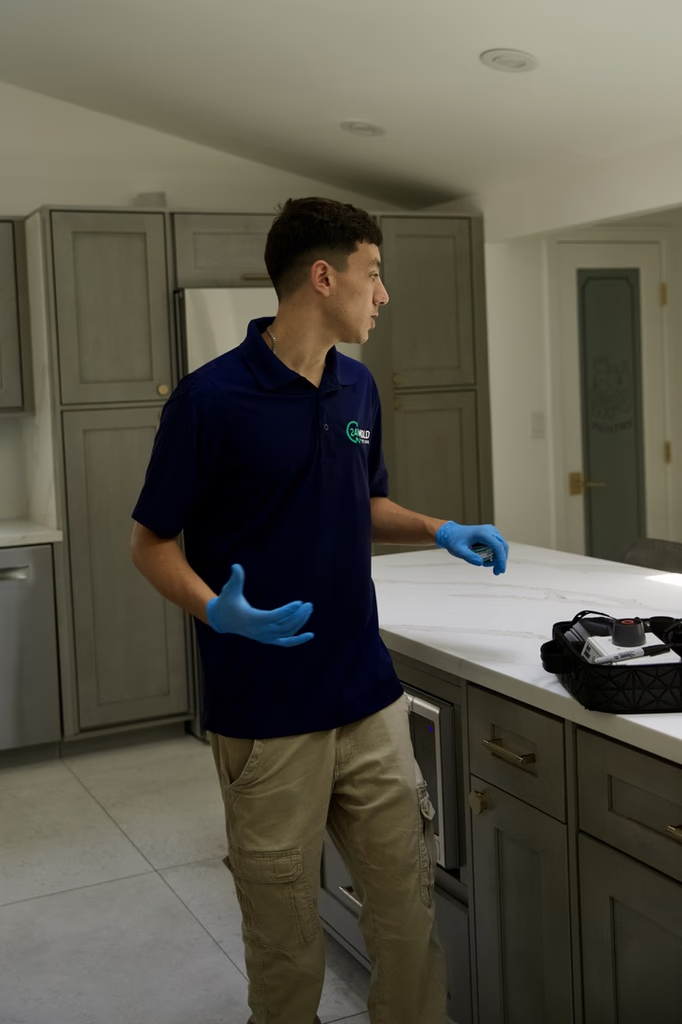
Every job starts with a structured walkthrough of high-risk areas: bathrooms, kitchens, attics, basements, crawl spaces, and around any plumbing, windows, or HVAC components. The inspector documents visible growth, stains, warping, and other physical signs as they go.
Mold doesn't grow without water, so finding the moisture is half the work. Pin and pinless moisture meters measure water content inside walls, ceilings, and flooring materials, locating active leaks and elevated humidity that the eye can't see.
FLIR thermal imaging cameras read temperature differentials behind surfaces, which is how we find wet areas inside walls without opening anything up. Cold spots flag moisture, condensation, and air leaks that often correlate with hidden mold growth.
Checklist
Is an Inspection Right for You?
Mold inspection is ideal if:
- —You've had recent leaks or water damage
- —You notice musty odors in certain rooms
- —You're buying, selling, or managing a property
- —You want to check for mold before testing or remediation
- —You just want peace of mind
Still unsure? Our team will help you decide if an inspection—or testing—is the right first step.
Inspection Overview
Our Inspection Methods
Understand the key methods we use to deliver a complete, thorough mold inspection.
Measure moisture levels inside surfaces to find leaks, trapped water, or early signs of mold risk.
Homes, condos, and rentals—moisture and mold assessment with clear reporting for occupants and transactions.
Offices, retail, hospitality, and industrial—inspections that respect operations and support facilities teams.
Mold inspection Encino FAQ
Call For An InspectionSame-day and next-day appointments are usually available across our Encino service area, with 24/7 emergency response for active leaks, recent water damage, or urgent real estate timelines. Standard scheduling runs 1 to 3 business days depending on availability.
Our certified mold inspectors assess bathrooms, kitchens, laundry rooms, basements, attics, crawl spaces, HVAC components, and any area showing signs of past or current water issues. Thermal imaging and moisture meters identify hidden moisture behind walls and under floors.
Often, yes. Larger homes typically contain more plumbing lines, larger attic spaces, multiple HVAC systems, and more complex roofing assemblies. These additional systems create more potential locations where hidden moisture problems can develop if maintenance is delayed.
Pricing varies based on the size of the property, the scope of testing required, and whether any lab work is included. Most residential mold inspections in Encino fall within the standard industry range of $300 to $600, with a clear quote provided before any work begins.
Air sampling, swab testing, tape lift testing, wall cavity sampling, and HVAC mold testing. The inspector recommends the right method on-site based on what's found. Samples go to a state-certified lab, with results typically back in 24 to 72 hours.
Mold needs water to grow, so finding the moisture source is what prevents the same problem from coming back after any cleanup. Moisture detection during the inspection identifies plumbing leaks, roof leaks, condensation issues, and humidity buildup that's feeding any growth.
Yes. Post-remediation verification confirms the remediation contractor's work succeeded and the space is safe to reoccupy. Because we don't perform remediation ourselves, the verification stays independent of the remediation contractor's interests, which is what insurers and tenants look for.
No. 24H Mold Inspection of Encino inspects and tests only, and never performs remediation or removal. On this housing stock that distinction is worth real money. A 5,000-square-foot house in Amestoy Estates or the Encino Hills has multiple zoned systems, long plumbing runs, and finished lower levels, and remediation bids on a property that size swing by tens of thousands of dollars depending entirely on where somebody draws the boundary of the affected area. When the company drawing that boundary is the company billing for the demolition, the incentive is obvious. What we produce is the diagnosis: what is growing, which moisture source feeds it, how far it extends behind the finish, and lab confirmation of the samples. That becomes a written scope three remediation contractors can bid against on identical terms. When the work is finished, we can return for independent verification, which is the document insurers and buyers actually want.
The whole community, on both sides of the boulevard. That means Amestoy Estates, Royal Oaks, Rancho Estates, the Balboa district and the flats north toward the basin, the Ventura Boulevard corridor, and the hillside streets through Encino Hills, Lake Encino, and up to the Mulholland ridge. The two halves need different inspections, so it helps to say which one you are on when you call. Several neighbors have their own 24H Mold Inspection page written around their own building stock and drainage: for property in Tarzana, Sherman Oaks, Van Nuys, Reseda, Northridge, or Valley Glen, start on that city's page instead. Scheduling here usually runs same day or next day, and we answer emergency calls around the clock, which is what a slab leak found on a Saturday or a hillside wall taking water at midnight actually requires. If your address sits near a boundary, call the number here and we will route it.
Call while the water is still there, because the first 48 hours decide how much of this becomes a mold problem at all. Mold needs roughly a day or two of sustained moisture to establish on wet building material, so the window between a failure and visible growth is short and it is the window worth using. Shut off the source, get standing water out, and leave the wet materials in place rather than cutting them out before anyone has documented the extent. In Encino the two failures that generate most of these calls are a slab leak under a 1950s flats house, where the first sign is a warm spot on the floor or a water bill nobody can explain, and a hillside lower level taking water laterally after a storm. We inspect at any hour, including weekends and nights. Photograph everything before you touch it, since insurers ask for the condition at discovery, not after the cleanup started.
More than most people expect, three decades on. The January 17, 1994 epicenter sat a few miles northwest of here, and the shaking through Encino cracked stucco, sheared roof tiles, broke slabs, and displaced foundations across the flats and the hillsides alike. The repairs that followed were made in enormous volume and under enormous time pressure, and the envelope work in particular — stucco patching, re-roofing, chimney rebuilds, window replacements — is now itself thirty years old and was often done without the flashing or drainage details a permitted job would carry today. A hairline crack in a patched stucco field admits very little water per storm and does it for thirty years into the same wall cavity. If your house predates 1994 and has never had the stucco or the roof looked at since the repairs, that is the assessment to schedule, and moisture readings around the repaired areas are where it should start.
Leave it alone, which is the opposite of most people's instinct. Do not scrub it, bleach it, or cut it out: disturbing growth throws spores through the rest of the house and destroys the evidence needed to scope a cleanup or support a claim. Close the room and shut down the HVAC. That matters more here than in smaller housing, because Encino homes commonly run two or three zoned systems with ducts through the attic, and one return can distribute spores through a whole wing in minutes. Dark growth is often a common species such as Cladosporium or Aspergillus rather than Stachybotrys, and nobody can tell them apart by eye, so a surface sample for identification plus air samples for spread is what turns a guess into a plan. Then find the water. In the hillside neighborhoods it is usually lateral, arriving behind a retaining wall or under a pad, not falling from above.
Not in the way the phrase implies, and the distinction is worth knowing before you hire anyone. California does not license mold inspection or remediation as its own trade — the 2001 Toxic Mold Protection Act directed the state to set permissible exposure limits and it never did — so nobody holds a state mold license and there is no legal threshold number to test a result against. What exists is third-party certification for the inspector, general liability coverage, a contractor's license for whoever performs physical repair work, and the question of whether the company testing your property also sells the removal. Ask for certification numbers and a straight answer on that last point. What separates a real assessment from a walkthrough here is method: water history first, then moisture meters and thermal imaging, then entry into attics and sub-areas, and sampling only where the walkthrough justifies it, always with an outdoor control taken the same day.
Yes, and it is the fastest-growing category of work in this area. The spec houses replacing the old ranch homes on the flats are built with finished below-grade levels — theaters, gyms, wine rooms, elevator pits — on a valley floor where the springs that made this a rancho site are evidence of how close the water table runs in places. A below-grade level here depends entirely on waterproofing membrane, a perimeter drain, and a sump that works, and none of those are visible once the drywall goes up. New construction adds a second issue: framing that got rained on before the building was dried in, then closed up behind finishes on a tight schedule. If you are buying a recently completed house, the below-grade level is where the inspection should start, and ask the builder for the waterproofing and drainage details before you close.
The inspector reads the building before touching any equipment — what you noticed, when it started, and what has been repaired or remodeled recently. Then comes the systematic part: a room-by-room visual survey, thermal imaging to locate the temperature differences that indicate wet material behind finishes, and moisture meters to confirm what the camera suggests. Attics, the plumbing walls, and the HVAC air handlers with their condensate lines and drain pans get particular attention in Encino, because so much of what we find in the larger homes here traces to cooling equipment rather than weather. Two features of the local stock stretch the timeline. Many Encino homes run multiple independent HVAC systems, and each one is effectively its own moisture environment that has to be checked separately. And decades of additions and remodels mean concealed transitions — where an older roofline meets a newer one, where an addition ties into original plumbing — that are the most common hiding places. Expect two to four hours for a typical home, longer for a large estate.
The assessment is the on-site evaluation: the visual inspection, the moisture mapping, and the diagnosis of what is driving the problem. Testing is the laboratory piece within it — air samples collected on spore traps, or surface samples taken by swab, tape lift, or bulk, analyzed by an accredited lab for species identification and spore counts. The assessment produces the answer; the testing confirms and quantifies it. Not every Encino property needs both. Where growth is visible and the source is obvious — a failed water heater, a roof leak above a known stain — sampling frequently adds cost without changing what you do next. Where there is odor or symptoms with nothing visible, or where an insurer, a buyer, or an association needs documentation that will hold up later, lab results are what make the findings defensible. On a large home with several HVAC zones the sampling plan usually needs more points than people expect, because a guest wing on its own system can be a genuinely different air environment from the main house.
Ask three questions and the answer becomes clear quickly. First, is the lab independent and accredited, or is the company reading its own samples on site? A result produced by the party recommending the work is not a result, it is an opinion with a number attached. Second, was an outdoor control sample collected the same day? Indoor spore counts are meaningless in isolation — outdoor levels vary hour to hour and season to season, and the only way to know whether an indoor number is elevated is to compare it against the air outside that building at that time. Any air sampling done without a control should be treated with suspicion. Third, does the report show chain of custody and marked sample locations, so anyone reading it later knows exactly where each sample came from? That matters in Encino specifically because so many reports here end up in front of a buyer's agent, an adjuster, or an association board, and a sample without a documented location is difficult for any of them to rely on.
Yes — the professional and medical office corridor along Ventura Boulevard, retail, condominium associations, and the apartment communities throughout the Balboa district and the side streets off the boulevard. The method is the same; where the moisture hides is not. Commercial buildings along Ventura run packaged rooftop HVAC units with long duct runs and low-slope roofs that pond, so the damage typically develops above ceiling systems or inside mechanical spaces that see attention only at service intervals, and it spreads considerably before a tenant reports anything. Multi-unit residential brings a different pattern: shared plumbing stacks and supply lines mean a failure inside one wall pushes moisture into the adjacent unit's cavities, and the resident who smells it is regularly not the resident with the leak. Inspecting only the unit that complained tends to document the symptom and miss the source. Reports are written to be relied on by an owner, a manager, an insurer, or a tenant, and carry no interest in the size of any cleanup that follows.
Give every contractor the same report and ask them to bid the documented scope. That is the step that makes three quotes comparable, because the bids then differ on price and method rather than on how much mold each company says it found. Confirm a current CSLB license — required on any job over five hundred dollars in combined labor and materials — along with workers compensation and liability coverage. On the larger Encino homes, ask two specific questions before signing. How will containment be built, and how will the affected HVAC zone be isolated, since a house with several independent systems can carry spores from an uncontained work area into wings that were never affected. And how will the moisture source itself be repaired, because removal without that repair simply resets the clock. If the property is in a condominium or an association, check whether insurance certificates or an approved vendor list apply before work is scheduled.
It is the independent check performed after the cleanup and before containment comes down and finishes go back on: confirmation that the affected material was genuinely removed, meter verification that the framing and substrate have dried to a normal moisture content, and clearance air sampling compared against an outdoor control. It should never be done by the company that performed the removal, for the obvious reason that a contractor verifying their own work is grading their own exam. In Encino it earns its cost most clearly at resale. This is an active market for larger homes, and a buyer's agent who learns of a past mold event will want documentation — an independent clearance report answers that question in a way a remediation invoice never does. It also matters on any property with multiple HVAC zones, where clearing the work area alone does not establish that spores stayed out of the rest of the house during demolition.
Contact
Book your Encino mold inspection today
Tell us what's going on and we'll respond the same day
Location
24H Mold Inspection of Encino
Phone
(818) 854-7550Hours
- MondayOpen 24 hours
- TuesdayOpen 24 hours
- WednesdayOpen 24 hours
- ThursdayOpen 24 hours
- Friday6 AM – 6 PM
- SaturdayClosed
- SundayOpen 24 hours
Service area neighborhoods
- Amestoy Estates
- Encino Hills
- Lake Encino
- Royal Oaks
- Rancho Estates
- Ventura Boulevard corridor
- Balboa district
- Mulholland area