
Detect hidden moisture, leaks, and insulation issues without invasive methods.
our services
Mold Inspection
Advanced moisture detection and infrared technology—so you can act before it spreads.
About
Why Mold Inspection Matters
Mold often hides behind walls or under flooring. Our inspection process is designed to catch both the obvious and the invisible—before they become costly repairs or health concerns.
- —Detect visible mold
- —Locate the source of moisture that feeds it
- —Identify which areas need testing or remediation
- —Get peace of mind after leaks or before buying property
Methodology
How our mold inspectors inspect
We combine certified field experience with calibrated detection tools
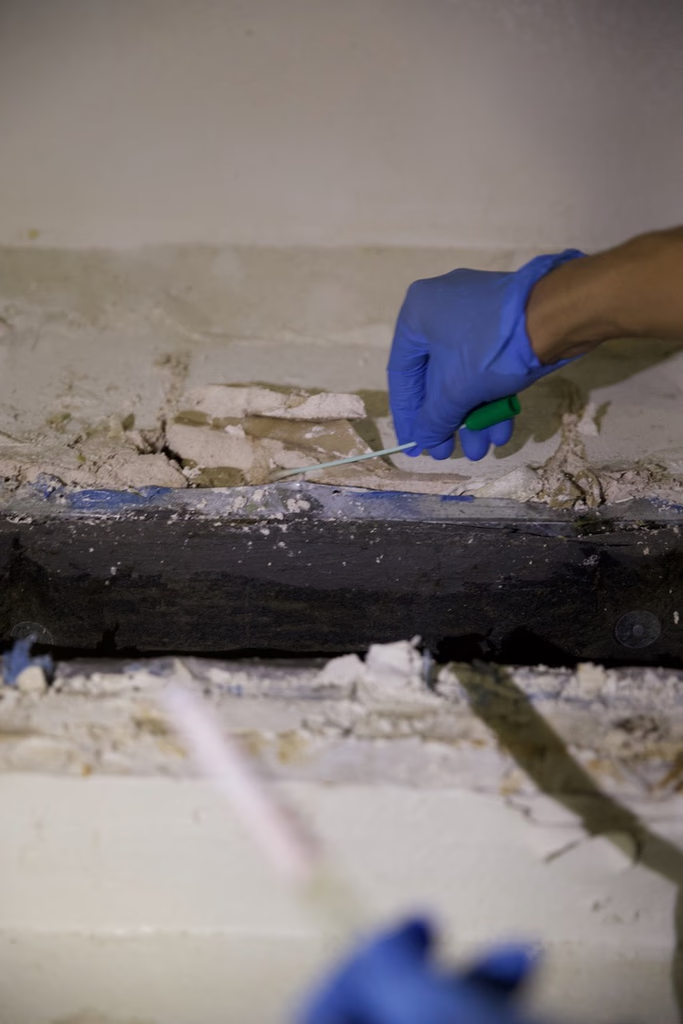
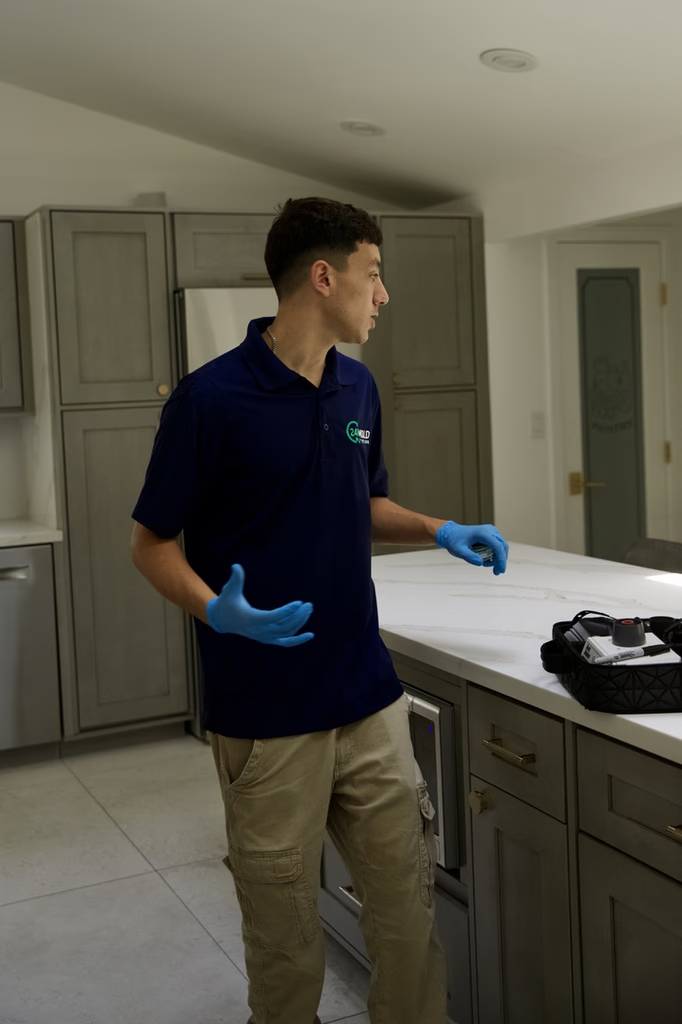
Every job starts with a structured walkthrough of high-risk areas: bathrooms, kitchens, attics, basements, crawl spaces, and around any plumbing, windows, or HVAC components. The inspector documents visible growth, stains, warping, and other physical signs as they go.
Mold doesn't grow without water, so finding the moisture is half the work. Pin and pinless moisture meters measure water content inside walls, ceilings, and flooring materials, locating active leaks and elevated humidity that the eye can't see.
FLIR thermal imaging cameras read temperature differentials behind surfaces, which is how we find wet areas inside walls without opening anything up. Cold spots flag moisture, condensation, and air leaks that often correlate with hidden mold growth.
Checklist
Is an Inspection Right for You?
Mold inspection is ideal if:
- —You've had recent leaks or water damage
- —You notice musty odors in certain rooms
- —You're buying, selling, or managing a property
- —You want to check for mold before testing or remediation
- —You just want peace of mind
Still unsure? Our team will help you decide if an inspection—or testing—is the right first step.
Inspection Overview
Our Inspection Methods
Understand the key methods we use to deliver a complete, thorough mold inspection.
Measure moisture levels inside surfaces to find leaks, trapped water, or early signs of mold risk.
Homes, condos, and rentals—moisture and mold assessment with clear reporting for occupants and transactions.
Offices, retail, hospitality, and industrial—inspections that respect operations and support facilities teams.
Mold inspection Downey FAQ
Call For An InspectionSame-day and next-day appointments are usually available across our Downey service area, with 24/7 emergency response for active leaks, recent water damage, or urgent real estate timelines. Standard scheduling runs 1 to 3 business days depending on availability.
Our certified mold inspectors assess bathrooms, kitchens, laundry rooms, basements, attics, crawl spaces, HVAC components, and any area showing signs of past or current water issues. Thermal imaging and moisture meters identify hidden moisture behind walls and under floors.
Yes. Small plumbing leaks can continue unnoticed for months or years behind walls, beneath flooring, or above ceilings. Over time, the accumulated moisture can support mold growth long before visible damage appears.
Pricing varies based on the size of the property, the scope of testing required, and whether any lab work is included. Most residential mold inspections in Downey fall within the standard industry range of $300 to $600, with a clear quote provided before any work begins.
Air sampling, swab testing, tape lift testing, wall cavity sampling, and HVAC mold testing. The inspector recommends the right method on-site based on what's found. Samples go to a state-certified lab, with results typically back in 24 to 72 hours.
Mold needs water to grow, so finding the moisture source is what prevents the same problem from coming back after any cleanup. Moisture detection during the inspection identifies plumbing leaks, roof leaks, condensation issues, and humidity buildup that's feeding any growth.
Yes. Post-remediation verification confirms the remediation contractor's work succeeded and the space is safe to reoccupy. Because we don't perform remediation ourselves, the verification stays independent of the remediation contractor's interests, which is what insurers and tenants look for.
If the home inspection noted staining, a musty smell, or signs of past leaks, yes. A general home inspector surveys the whole property visually and, when moisture shows up, the standard recommendation is a specialist evaluation. A mold inspection is that evaluation: thermal imaging and moisture meters to find water inside walls, under floors, and in the attic, and lab-analyzed air or surface samples to identify any growth. In Downey the gap between the two matters most in the city's postwar housing — single-story homes on slabs, now 60 to 70 years old, where a slab leak or a cracked cast-iron drain can run for months beneath carpet or tile without a visible sign. Older homes in North Downey with raised foundations add crawl spaces a walkthrough rarely reaches. Garage conversions and room additions, common on Downey's large lots, are another blind spot. Book the mold inspection inside your contingency window so the findings can still shape the deal.
Downey's housing grew fast after the war, much of it on land that had been orange groves and farms, and by the time the city incorporated on December 17, 1956 the postwar tracts were filling in around the aerospace jobs at the North American Aviation plant. Those single-story stucco homes on slabs share a set of aging systems. The recurring moisture sources are copper or galvanized supply lines leaking inside walls or under the slab, cast-iron drain lines cracking beneath bathrooms and kitchens, roofs re-covered over older layers, attic ductwork sweating in summer, and bathroom fans that were never installed or that vent into the attic. Garage conversions on unsealed slabs add another layer. The first signs are usually subtle — a musty closet, a baseboard swelling, a warm spot on the floor from a hot-water slab leak. A moisture survey of the plumbing walls, the slab perimeter, and the attic covers the places these houses usually fail.
It is a reasonable question, and the short answer is that mold is a separate issue from the site's industrial history. For more than 70 years the plant on Lakewood Boulevard produced aircraft, missiles, and spacecraft — North American Aviation built the Apollo command and service modules and the Saturn V second stage there — before it closed in 1999. The site has since been redeveloped into the Columbia Memorial Space Center, shopping centers, a Kaiser Permanente hospital, and city fields. Questions about soil or groundwater conditions on former industrial land are handled through environmental site assessments and regulatory records, not through mold testing. Mold is a moisture problem inside the building, and it behaves the same near the former plant as anywhere else in Downey. Where location matters for us is the outdoor baseline: homes near busy corridors like Lakewood Boulevard and the freeways can show higher outdoor dust levels, so every indoor air sample is paired with a same-day outdoor sample.
Some are, particularly on the lowest ground. Governor John Gately Downey built his original subdivision on land between the Rio Hondo and the San Gabriel River around 1865, and both are now concrete flood-control channels bordering the city. The neighborhoods closest to the Rio Hondo on the west side sit on flat, low ground where shallow groundwater and heavy storm runoff keep soil damp against slabs and foundations, and where intense rain can collect in streets faster than drains carry it away. After a wet winter, the effects show up as moisture rising through slabs poured without vapor barriers — damp carpet pad, lifting tile or vinyl plank, a musty smell in ground-floor rooms — and as growth on the bottom of drywall along exterior walls. Downspouts that empty against the foundation and planters built against stucco make it worse. A moisture survey comparing readings across the slab shows whether it is general vapor drive or a concentrated leak.
Often they do. North Downey holds some of the city's older and larger homes, including pre-war and early postwar houses on generous lots, some on raised wood foundations with crawl spaces, and many enlarged or remodeled several times. That history leaves specific moisture pathways: crawl space soil that stays damp after rain, original galvanized plumbing and cast-iron drains well past their service life, additions joined to older walls and roofs, and mature trees whose roots reach sewer laterals and whose leaves clog gutters and valleys. Remodels can also cover old water damage with new finishes rather than fixing it. The usual findings are subfloor growth under bathrooms and kitchens, staining where an addition's roof ties into the original, and moisture at the junction between old and new foundations. An inspection on these homes goes into the crawl space and the attic, and focuses on the transitions between original construction and later work.
It is one of the more frequent problems we find. Downey's postwar lots are large by Southeast LA standards, and many homes have a garage converted to living space at some point, with the state ADU laws that took effect from 2017 onward adding many more garage conversions and backyard units. A garage slab was poured to park a car, not to sit beneath a bedroom: it usually lacks a vapor barrier, it may slope toward the old door opening, and the wall that replaced the garage door often sits on a sill plate directly on the concrete. Add a bathroom or kitchenette and moisture from both the ground and the occupants has nowhere to go. Growth tends to show up behind furniture on the old door wall, under flooring, and in the slab corners. Whether you rent one out, live in one, or are buying a house with one, a moisture survey of the slab and the converted wall is the key part of the inspection.
Document the condition independently first. California law applies in Downey as it does everywhere in the state: Health and Safety Code section 17920.3, as amended by SB 655, lists visible mold as a substandard housing condition, and the age of a building doesn't excuse it. Downey's rentals range from converted garages and houses on postwar lots to apartment complexes along Firestone Boulevard, Lakewood Boulevard, and the Imperial Highway corridor, and disputes usually come down to whether the mold is a building defect or a household habit. A third-party report answers that with moisture readings, photographs, lab results, and an identified source — a slab leak, a plumbing failure inside the wall, a missing exhaust fan, a leak from the unit above. Because we don't do remediation, the report has no incentive to inflate the problem. Attach it to a written repair request; if nothing changes, it is the evidence you would bring to the city's code enforcement office or to court.
Only inspection and testing. We don't remediate, and that is what keeps our findings independent of the cleanup. A company that inspects and then removes the mold is estimating its own job. We locate the growth, trace the moisture behind it, and document the extent with thermal imaging, moisture meters, and lab-analyzed samples. In Downey the cause is often under or behind something a remediation crew isn't paid to investigate: a slab leak beneath a 1950s house, a cracked cast-iron drain under a bathroom, a crawl space under an older North Downey home, or a garage conversion built straight on the concrete. Remove the mold without addressing that and it returns. The written report gives you a defined scope that several remediation contractors can bid on equally, which usually means a smaller job. Once the work is complete, we can return for independent clearance testing before walls are closed up or the space is reoccupied.
Detection is the work of finding the water and the growth before anything is opened up. In a Downey home that means thermal imaging across walls, ceilings, and floors to flag cool or damp areas; moisture meter readings to confirm and map them; a close look at the slab perimeter, the plumbing walls, the water heater and laundry, the attic, and any converted garage or addition; and a borescope into a wall cavity where needed. Testing follows: air samples against an outdoor baseline, swabs, or tape lifts sent to an accredited lab to identify what is growing. Most Downey inspections combine the two, because a lab result without a moisture source tells you there is a problem but not where it lives. In the city's postwar slab homes, detection often separates ground moisture rising through the concrete from a leak in a line beneath it — two problems with very different repairs and very different costs.
Yes, if water sat for more than a day or you can't confirm everything dried. The common causes in Downey are supply-line and water heater failures in 60-year-old houses, slab leaks that ran unnoticed under flooring, sewer backups from root-damaged laterals on tree-lined streets, and storm runoff collecting against foundations on the city's flat lots near the Rio Hondo. Slab houses are unforgiving: water that soaks into carpet pad or under laminate wicks into the bottom of the drywall and the wood sill plate, and those dry far more slowly than the floor surface. Mold can start within 24 to 48 hours in that hidden moisture. An independent moisture assessment confirms whether drying actually finished, documents any growth that started, and gives you a dated record for your insurance claim. Because we don't do restoration, that verification stays separate from the company that did the drying, which is what insurers and future buyers look for.
Yes. Downey has an unusually large share of medical and institutional property for its size — hospitals and medical offices, including the Kaiser Permanente hospital on the former aerospace site — along with retail and restaurants along Firestone and Lakewood boulevards and the Downey Avenue downtown, and apartment complexes across the city. Each has its own moisture pattern. Commercial buildings fail at low-slope roofs, internal drains, rooftop HVAC curbs, and slabs under carpeted offices. Restaurants add constant moisture from kitchens and walk-in coolers. Apartment buildings move water between units through shared walls and stacked plumbing, so a leak upstairs becomes a problem below. Medical offices often need documentation and scheduling that work around patients. We schedule around operations, sample occupied space with minimal disruption, and provide reports suited to owners, managers, tenants, and insurers — with independent clearance testing after any remediation, before a space reopens.
Our Downey team covers the whole city — Downtown and the Downey Avenue corridor, North and Northeast Downey, the Stonewood area, the Firestone Boulevard corridor, the Imperial Highway district, the Brookshire Avenue corridor, and the Old River School Road area — with same-day and next-day appointments and 24/7 response for active leaks and water damage. Several nearby cities have their own 24H Mold Inspection page written for their own housing, including Norwalk, Bellflower, Pico Rivera, Whittier, and Lakewood. If your property is in one of those, start with that city's page. If you aren't sure which team covers your address, call the number on this page and we'll route you to the right one.
Contact
Book your Downey mold inspection today
Tell us what's going on and we'll respond the same day
Location
24H Mold Inspection of Downey
Phone
(562) 780-0018Hours
- MondayOpen 24 hours
- TuesdayOpen 24 hours
- WednesdayOpen 24 hours
- ThursdayOpen 24 hours
- Friday6 AM – 6 PM
- SaturdayClosed
- SundayOpen 24 hours
Service area neighborhoods
- North Downey
- Northeast Downey
- Downtown Downey
- Brookshire Avenue corridor
- Stonewood area
- Imperial Highway district
- Old River School Road area
- Firestone Boulevard corridor