24H Mold Inspection
Costa Mesa24/7 EMERGENCY(949) 850-9199
HomeOur ServicesLeak & Moisture Detection
our services

Leak & Moisture Detection

Hidden moisture is the root cause of most mold problems. We locate it precisely—without tearing into walls—so you can fix the source, not just the symptoms.

About

Why Moisture Detection Comes First

Mold needs moisture to grow, and moisture hides. We use non-destructive instruments to map water through walls, floors, and ceilings—and thermal cameras to see temperature anomalies that indicate active leaks or condensation—giving you a precise location before any repair work begins.

Moisture detection helps you:

  • —Pinpoint the exact source of a leak before demolition
  • —Map moisture spread behind walls and under flooring
  • —Identify condensation-prone areas before mold appears
  • —Confirm repairs were effective after water damage is addressed
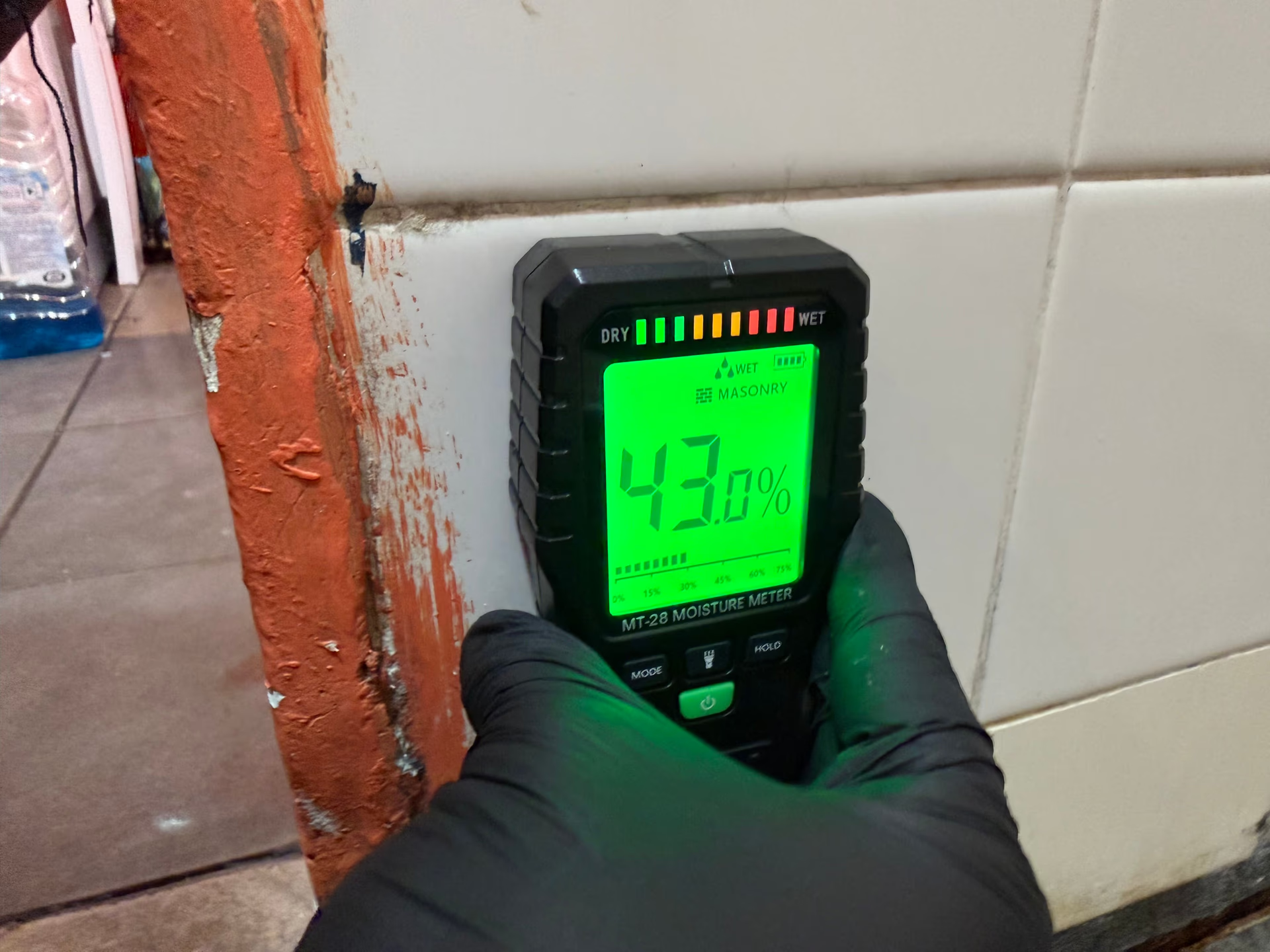
Why Moisture Detection Comes First

Methodology

How We Detect Moisture

Non-destructive tools that locate water without cutting into your property.
We measure the moisture content of walls, floors, and ceilings using both pin-based and non-invasive pinless meters—mapping the full extent of saturation without surface damage.

Best for:

— Drywall, wood framing, and subfloor assessment
— Mapping moisture spread after a water event
— Establishing baseline readings for monitoring

Our thermal cameras detect temperature differentials across surfaces. Water-loaded materials hold heat differently than dry materials, making leaks and saturated zones visible behind finished walls.

Best for:

— Finding active leaks behind drywall without cutting
— Locating plumbing or roof leaks not yet surface-visible
— Identifying condensation zones that feed mold

Every finding is documented with photos, moisture readings, and thermal images. You receive a clear report so contractors, insurers, or property managers can act immediately.

Report includes:

— Moisture readings mapped by room and surface
— Thermal images with annotated anomaly locations
— Probable source identification and next steps

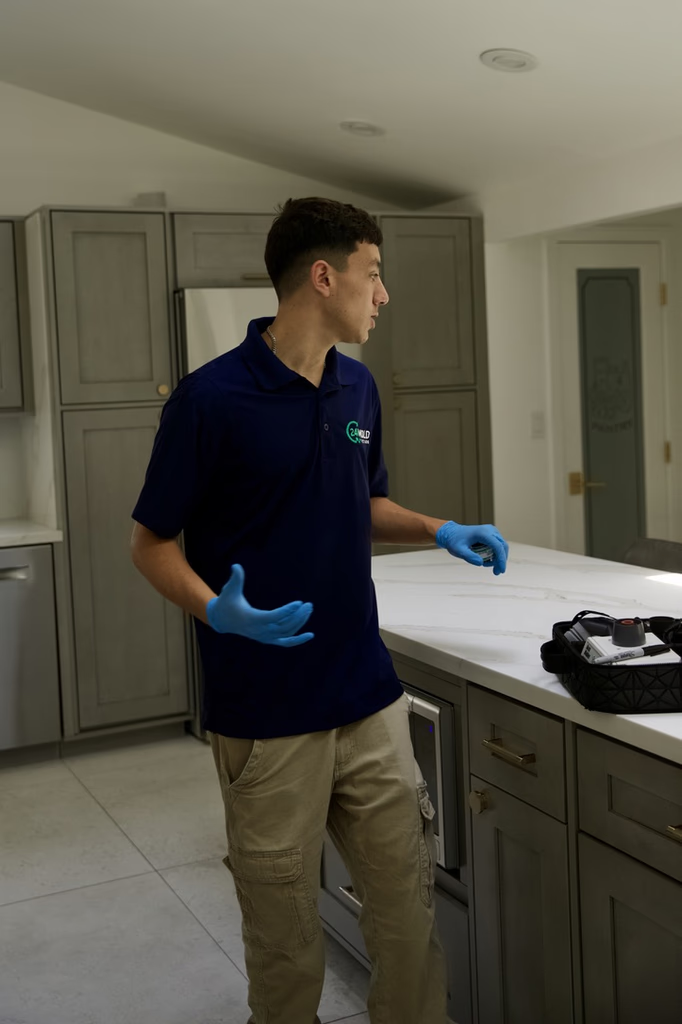
Mold inspector at work

Checklist

When Do You Need Moisture Detection?

Moisture detection is the right first step if:

  • —You smell mold or dampness but can't find the source
  • —You've had a plumbing leak, roof leak, or flood
  • —You're buying a property and want to verify no hidden moisture
  • —You had water damage and want to confirm the area is fully dry
  • —Recurring mold keeps coming back after surface cleaning

Moisture detection is often the fastest and most cost-effective way to scope a mold problem before committing to testing or remediation.

Detection Services

Our Detection Methods

Two complementary tools that together give a complete picture of moisture conditions in any building.

1Thermal Imaging

Infrared cameras reveal temperature anomalies that indicate hidden leaks, condensation zones, and moisture paths behind finished surfaces.

2Moisture Detection

Pin and pinless meters precisely measure moisture content in walls, floors, and ceilings—mapping the full extent of saturation without destructive investigation.

Mold inspection Costa Mesa FAQ

Call For An Inspection
It measures how much moisture is in the slab or subfloor before new flooring goes down, or finds out why existing flooring is failing. Most of Costa Mesa's postwar and 1960s homes sit on concrete slabs poured without a vapor barrier, and the city's marine-influenced air slows drying, so a slab can hold more moisture than flooring adhesives and wood products tolerate. The inspector takes moisture meter readings across the slab or subfloor, uses thermal imaging to spot concentrated wet areas, and checks the perimeter, the plumbing walls, and any areas near the water heater or laundry. A general pattern of elevated readings points to vapor coming up through the slab; a concentrated hot spot points to a leak in a line under or beside it. Cupping hardwood, lifting vinyl plank, failing tile grout, and a musty smell under carpet are the usual signs. Knowing which problem you have decides whether the fix is a vapor barrier or a plumber.
These homes share a construction era, so they tend to share failure points. Mesa Verde was largely undeveloped until the Mesa Verde Country Club opened in January 1959; the neighborhood around it filled in through the 1960s and 1970s with single-story and two-story ranch homes on slabs, many backing onto the golf course or greenbelts. Fifty-plus years on, the common moisture sources are original copper supply lines pinholing inside walls and under the slab, cast-iron drains cracking beneath bathrooms, single-pane aluminum windows sweating on cool marine-layer mornings, and roofs that have been replaced over older layers. Lots next to the golf course and heavily irrigated yards keep soil damp against the foundation, adding slab moisture. The first signs are usually small — a musty closet on an exterior wall, a warm spot on the floor, condensation staining at window sills — and a moisture survey around the plumbing walls, the windows, and the slab edge covers where these houses usually fail.
They often hide it in the seams. The Eastside traces back to the town of Harper, laid out in 1909 and renamed Costa Mesa in 1920, and its large lots still hold a mix of early cottages, postwar homes, and much larger houses built around or on top of them. That history is where the moisture risk lives: original structures on raised foundations with crawl spaces, additions joined to older walls, second stories added over first floors never designed for them, and plumbing that mixes original galvanized pipe with newer lines. The Eastside also sits close enough to the coast and the bluffs above the Back Bay that marine-layer humidity keeps crawl spaces and north-facing walls damp. The usual findings are subfloor growth under older bathrooms, staining where a roof addition ties into an original roof, and moisture at the junction between old and new foundations. An inspection here focuses on those transitions, not just the obvious wet rooms.
It doesn't cause mold on its own, but it makes every other moisture problem worse. Costa Mesa sits on the mesa a few miles from the ocean, close enough that the marine layer rolls in on many mornings from late spring into summer, keeping outdoor humidity high and slowing drying. In practice that means a slow leak dries more slowly than it would inland, cool exterior walls and single-pane windows collect condensation, crawl spaces stay damp, and closed-up rooms or closets on the north side of a house develop that familiar musty smell. Bathrooms without working exhaust fans are one of the most common sources we see, because shower moisture has nowhere to go on a humid day. Homes closest to the coast and the Back Bay bluffs feel it most. If you see recurring mildew on window frames or closet walls, a moisture survey tells you whether it is surface condensation you can manage with ventilation, or a leak that the humidity is masking.
It is often worth it, for tenants and owners alike. Orange Coast College has anchored the College Park area since the late 1940s, and the neighborhoods and apartment buildings around it house a large share of renters, many in units that turn over every school year. High occupancy means more showers, cooking, and laundry than many of these older units were built to vent, and the gaps between tenants are when slow leaks, failed bathroom fans, and window condensation go unnoticed. In stacked apartment buildings, a leak in one unit often surfaces in the one below. California law treats visible mold as a substandard housing condition under Health and Safety Code section 17920.3, and a building's age doesn't excuse it. An inspection at move-in or after a reported leak documents conditions with moisture readings, photos, and lab results — a record that settles deposit and repair disputes and helps an owner fix the cause instead of repainting over it.
Some are, particularly on the lowest ground. The Westside runs along the city's western edge, where the river is confined to a flood-control channel, and it mixes older single-family homes and Craftsman-era bungalows with light-industrial buildings and newer live-work townhomes. The low-lying blocks closest to the channel and the coast carry two layered risks: shallow groundwater and storm runoff that keep soil damp against slabs and crawl spaces, and marine-layer humidity that slows drying afterward. Older houses on raised foundations can hold damp crawl space soil for weeks after a wet winter, and newer townhomes built tightly over slabs trap interior humidity when ventilation is undersized. Industrial-to-residential conversions add their own pattern — flat roofs, slabs without vapor retarders, and bathrooms added to buildings never designed for them. A moisture survey of the slab edge, the crawl space, and any converted space is the useful place to start on the Westside.
If the home inspection mentioned staining, a musty smell, or evidence of past leaks, a mold inspection is the follow-up that note is pointing to. A general inspection surveys the whole property visually; a mold inspection measures moisture inside walls, under flooring, and in the attic or crawl space with thermal imaging and moisture meters, and sends air or surface samples to an accredited lab. In Costa Mesa the gap matters most in three kinds of houses: Eastside homes where old and new construction meet, Mesa Verde ranch homes with original plumbing in the slab, and Westside properties on low ground near the flood-control channel. Marine-layer humidity can also make a small active leak look like simple condensation, which a moisture meter distinguishes quickly. Book the mold inspection within your contingency period so the results can still affect the price, the repair requests, or your decision.

Contact

Book your Costa Mesa mold inspection today

Tell us what's going on and we'll respond the same day

Location

24H Mold Inspection of Costa Mesa

Hours

  • MondayOpen 24 hours
  • TuesdayOpen 24 hours
  • WednesdayOpen 24 hours
  • ThursdayOpen 24 hours
  • Friday6 AM – 6 PM
  • SaturdayClosed
  • SundayOpen 24 hours

Service area neighborhoods

  • Eastside Costa Mesa
  • Mesa Verde
  • College Park
  • South Coast Metro
  • Westside Costa Mesa
  • Halecrest
  • Fairview Park vicinity
  • 17th Street corridor
Call For Service(949) 850-9199