1
Mold inspection
- Moisture detection
- Infrared technology
- Certified mold inspectors
- No conflict of interest

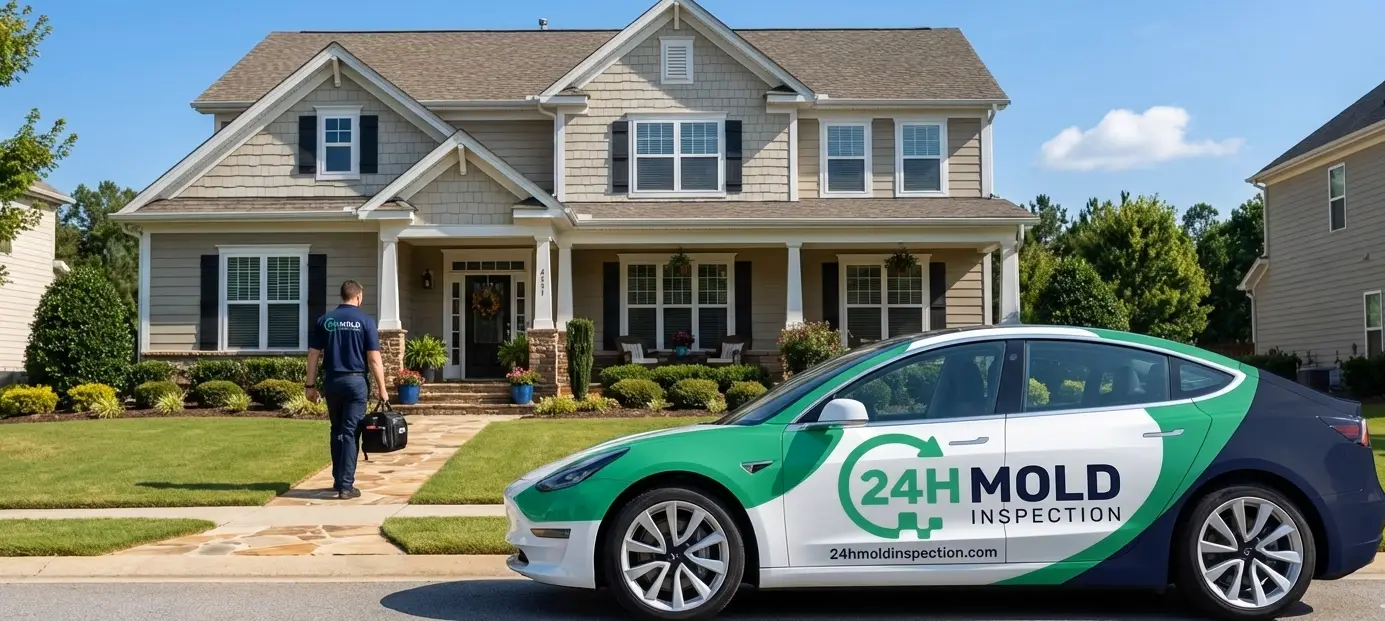
Certified mold inspection and testing in Costa Mesa. Same-day appointments, lab-verified reports, and no financial stake in any remediation work that follows.
(949) 850-9199What We Do
Air and surface samples analyzed in a state-certified lab. You receive mold species ID, spore count data, and lab-verified documentation that holds up with insurers, attorneys, or counsel.
About
At 24H Mold Inspection of Costa Mesa, we know no two buildings respond to moisture the same way.
Costa Mesa occupies a unique position in Orange County between the Pacific coastline and the region’s major commercial and residential centers. The city experiences a stronger marine influence than many inland communities, with coastal humidity, ocean breezes, and periodic marine-layer conditions contributing to moisture exposure throughout the year. Costa Mesa’s building inventory ranges from mid-century neighborhoods and multifamily housing to luxury residences, mixed-use developments, and large commercial properties. This diversity creates moisture conditions that vary considerably depending on property age, location, and proximity to the coast.
Costa Mesa contains coastal residences, suburban homes, apartment communities, condominiums, mixed-use developments, and major commercial properties. Marine humidity, aging infrastructure, and diverse construction styles frequently influence moisture conditions.
Services
Mold inspection, mold testing, and environmental risk assessments for Costa Mesa properties. Available 24/7, with no remediation work to bias the findings.

Why Us
24H Mold Inspection of Costa Mesa combines local field experience with state-certified methods and lab analysis. Reports get back to you quickly and clearly, with no upsell tacked on to the findings.
We don't stop at surface-level findings. Active leaks, health symptoms, post-remediation work, and pre-purchase due diligence each call for a different inspection approach. Our certified mold inspectors guide you through the specific situation rather than running a generic checklist.
Strengths
We check every box, then go further. Book your inspection today
Licensed inspectors with proven field experience in Costa Mesa.
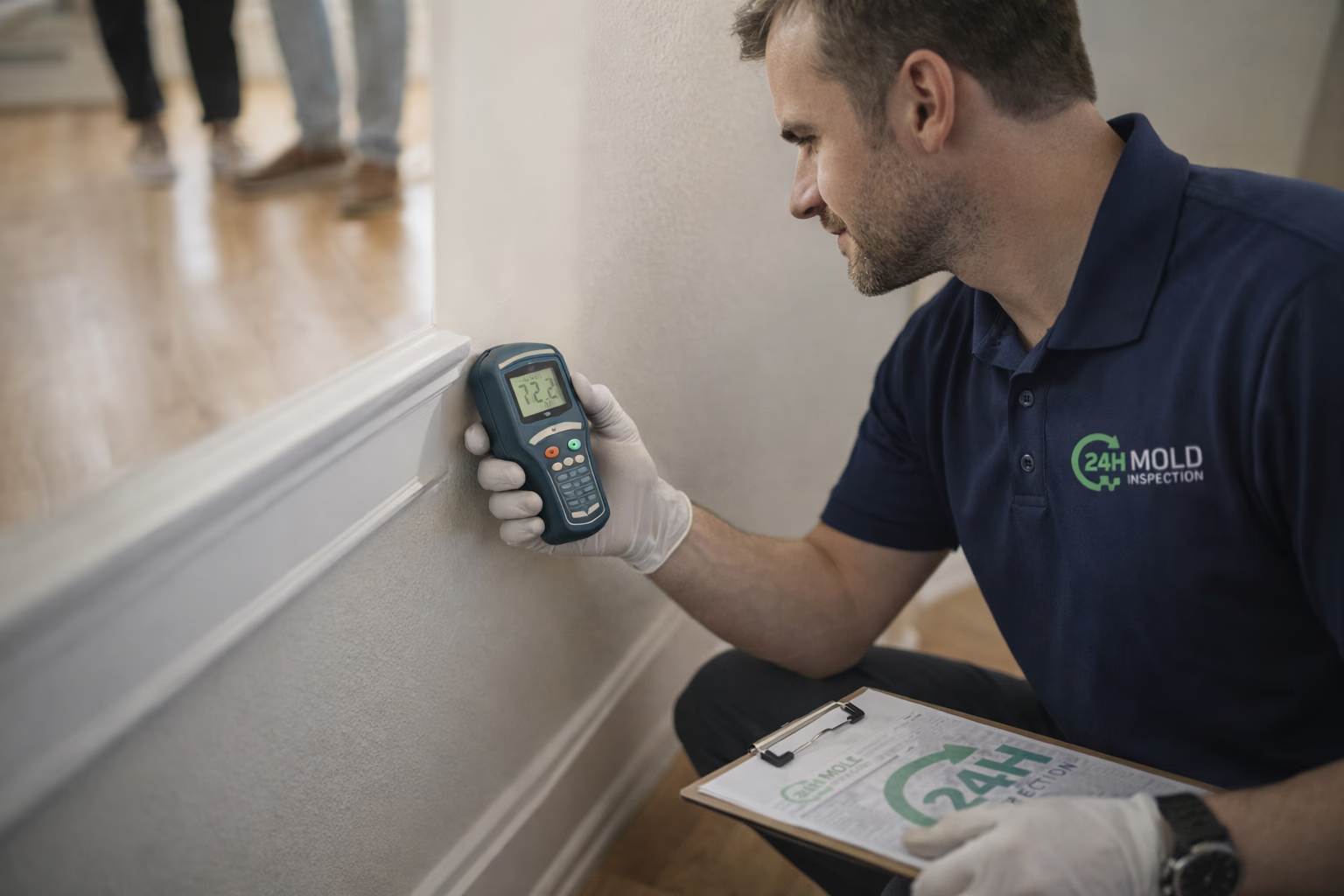
FLIR thermal cameras, calibrated moisture meters, and lab-verified sampling.
Straightforward updates and honest reporting throughout the process.
5.0 stars from 6+ Costa Mesa homeowners and businesses.
Testimonials
Thousands of Costa Mesa property owners have come to us for reliable, detailed mold assessments
Eli was so attentive and thorough with the inspection process; he listened and answered all my questions!! I would highly recommend
Alice Jeon
5 Step Process
Choose a date and time that fits your schedule.
Flexible scheduling means same-day and next-day appointments are usually available, with 24/7 emergency response when the situation needs it.
Our certified mold inspectors assess every mold-prone area.
We walk the property identifying visible mold and moisture issues, using thermal imaging and moisture meters to catch what's hidden behind walls and under flooring.
Air and surface samples collected for lab analysis.
Our certified mold inspectors collect targeted samples from key areas to find mold spores both visible and hidden, with sample sites documented on a property map.
Lab testing returns precise results.
Samples go to a state-certified lab for detailed analysis identifying mold species and contamination levels, typically returned within 24 to 72 hours.
Insights and clear next steps from our experts.
You receive a written report with lab results, inspector findings, and specific recommended action steps to resolve any mold issues safely.
Who We Serve
24H Mold Inspection of Costa Mesa brings clear answers to HOAs, hotels, commercial buildings, and homes through certified mold inspection and testing services.
The Eastside traces back to the town of Harper, laid out in 1909 and renamed Costa Mesa in 1920; the city itself incorporated on June 29, 1953. Its large lots still mix early cottages, postwar homes, and much larger houses built around or on top of them, close enough to the coast and the bluffs above the Back Bay that marine-layer humidity keeps crawl spaces and north-facing walls damp. The moisture risk lives in the seams: original structures on raised foundations, additions joined to older walls, second stories added over first floors never designed for them, and plumbing that mixes original galvanized pipe with newer lines.
The Westside runs along the city's western edge, where the river is confined to a flood-control channel, and it mixes older single-family homes and Craftsman-era bungalows with light-industrial buildings and newer live-work townhomes. The low blocks nearest the channel and the coast combine shallow groundwater and storm runoff against slabs and crawl spaces with marine-layer humidity that slows drying. Older houses on raised foundations hold damp crawl space soil for weeks after a wet winter, tightly built townhomes trap interior humidity when ventilation falls short, and industrial-to-residential conversions add flat roofs, unsealed slabs, and bathrooms in buildings never designed for them.
Mesa Verde was largely undeveloped until the Mesa Verde Country Club opened in its northwest corner in January 1959; the neighborhood filled in through the 1960s and 1970s with single-story and two-story ranch homes on slabs, many backing onto the golf course or greenbelts. Fifty-plus years on, original copper supply lines are pinholing inside walls and under slabs, cast-iron drains are cracking beneath bathrooms, single-pane aluminum windows sweat on cool marine-layer mornings, and heavily irrigated yards and course-side lots keep soil damp against the foundation. The result is slab moisture and condensation-driven mildew more often than dramatic leaks.
On March 15, 1967 the Segerstrom family opened South Coast Plaza on one of their lima bean fields, and the district around it grew into South Coast Metro — high-rise and mid-rise offices, the arts center the family helped found, hotels, restaurants, and newer multifamily housing. These buildings carry commercial moisture patterns: low-slope roofs with internal drains, rooftop HVAC curbs, curtain-wall and window-joint leaks in taller buildings, restaurant kitchens and walk-in coolers producing constant moisture, and leaks that travel above suspended ceilings before showing up far from their source. Coastal humidity slows drying in all of them once water gets in.
Orange Coast College has anchored this side of the city since the late 1940s, and the neighborhoods and apartment buildings of College Park and the surrounding blocks house a large share of renters, many in units that turn over every school year. High occupancy means more showers, cooking, and laundry than older units were built to vent, and in stacked buildings a leak in one unit surfaces in the one below. To the west, the open bluffs of Fairview Park slope toward the river channel, and the homes along that edge take the runoff and the humid air that rise off the low ground below them.
Google Search
Add 24H Mold Inspection as a preferred source so our pages are easier to spot in your Google results.
Contact
Tell us what's going on and we'll respond the same day
Location
24H Mold Inspection of Costa Mesa
Phone
(949) 850-9199Hours
Service area neighborhoods
Newsletter
Monthly notes from our inspectors on prevention and air quality.