
Detect hidden moisture, leaks, and insulation issues without invasive methods.
our services
Mold Inspection
Advanced moisture detection and infrared technology—so you can act before it spreads.
About
Why Mold Inspection Matters
Mold often hides behind walls or under flooring. Our inspection process is designed to catch both the obvious and the invisible—before they become costly repairs or health concerns.
- —Detect visible mold
- —Locate the source of moisture that feeds it
- —Identify which areas need testing or remediation
- —Get peace of mind after leaks or before buying property
Methodology
How our mold inspectors inspect
We combine certified field experience with calibrated detection tools
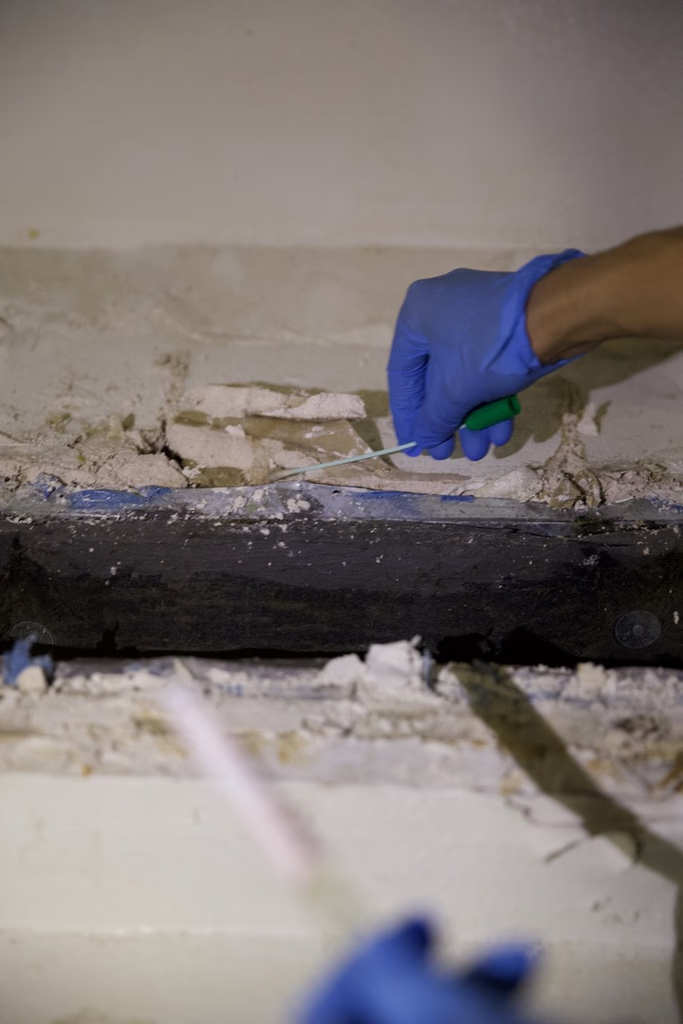
Every job starts with a structured walkthrough of high-risk areas: bathrooms, kitchens, attics, basements, crawl spaces, and around any plumbing, windows, or HVAC components. The inspector documents visible growth, stains, warping, and other physical signs as they go.
Mold doesn't grow without water, so finding the moisture is half the work. Pin and pinless moisture meters measure water content inside walls, ceilings, and flooring materials, locating active leaks and elevated humidity that the eye can't see.
FLIR thermal imaging cameras read temperature differentials behind surfaces, which is how we find wet areas inside walls without opening anything up. Cold spots flag moisture, condensation, and air leaks that often correlate with hidden mold growth.
Checklist
Is an Inspection Right for You?
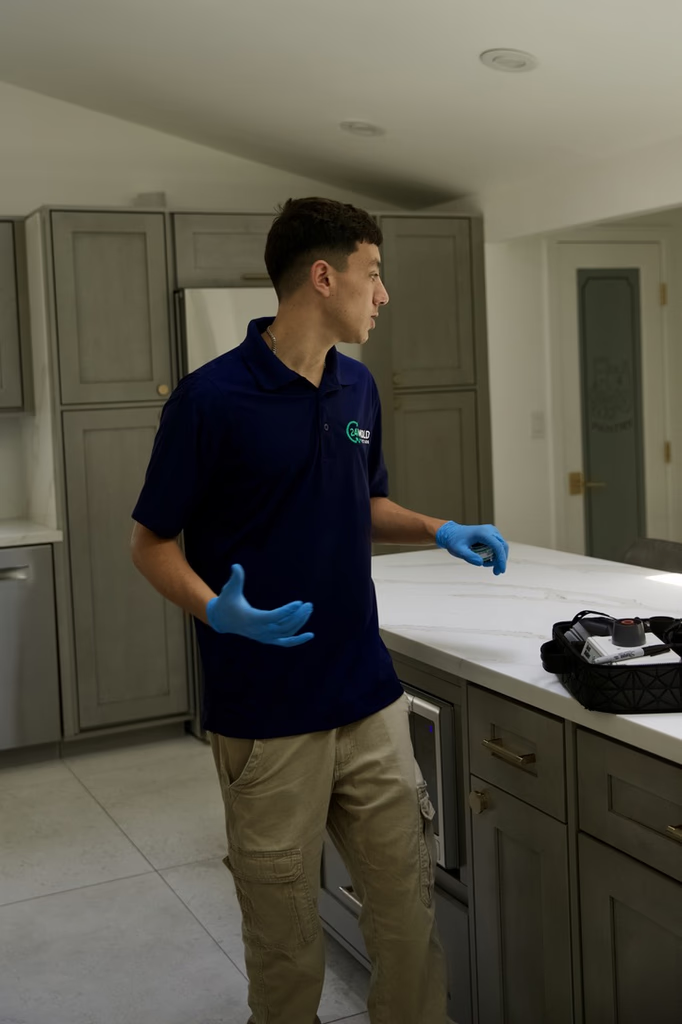
Mold inspection is ideal if:
- —You've had recent leaks or water damage
- —You notice musty odors in certain rooms
- —You're buying, selling, or managing a property
- —You want to check for mold before testing or remediation
- —You just want peace of mind
Still unsure? Our team will help you decide if an inspection—or testing—is the right first step.
Inspection Overview
Our Inspection Methods
Understand the key methods we use to deliver a complete, thorough mold inspection.
Measure moisture levels inside surfaces to find leaks, trapped water, or early signs of mold risk.
Homes, condos, and rentals—moisture and mold assessment with clear reporting for occupants and transactions.
Offices, retail, hospitality, and industrial—inspections that respect operations and support facilities teams.
Mold inspection Calabasas FAQ
Call For An InspectionSame-day and next-day appointments are usually available across our Calabasas service area, with 24/7 emergency response for active leaks, recent water damage, or urgent real estate timelines. Standard scheduling runs 1 to 3 business days depending on availability.
Our certified mold inspectors assess bathrooms, kitchens, laundry rooms, basements, attics, crawl spaces, HVAC components, and any area showing signs of past or current water issues. Thermal imaging and moisture meters identify hidden moisture behind walls and under floors.
Home value and construction quality do not eliminate moisture risk. Large luxury homes often contain more roof penetrations, more HVAC equipment, larger attic spaces, extensive plumbing networks, and complex architectural details. These features increase the number of locations where condensation, leaks, or hidden moisture accumulation can occur if systems are not regularly inspected and maintained.
Pricing varies based on the size of the property, the scope of testing required, and whether any lab work is included. Most residential mold inspections in Calabasas fall within the standard industry range of $300 to $600, with a clear quote provided before any work begins.
Air sampling, swab testing, tape lift testing, wall cavity sampling, and HVAC mold testing. The inspector recommends the right method on-site based on what's found. Samples go to a state-certified lab, with results typically back in 24 to 72 hours.
Mold needs water to grow, so finding the moisture source is what prevents the same problem from coming back after any cleanup. Moisture detection during the inspection identifies plumbing leaks, roof leaks, condensation issues, and humidity buildup that's feeding any growth.
Yes. Post-remediation verification confirms the remediation contractor's work succeeded and the space is safe to reoccupy. Because we don't perform remediation ourselves, the verification stays independent of the remediation contractor's interests, which is what insurers and tenants look for.
No. 24H Mold Inspection of Calabasas inspects and tests only, and we never perform remediation or removal — that separation is deliberate. It matters more here than in most cities, because so much of Calabasas sits inside gated and master-planned communities where a homeowner, an association board, and sometimes a neighbor all need to trust the same report, and a company that bills for the cleanup has a financial reason to keep finding more of it. What we produce is the diagnosis: what is growing, which moisture source is feeding it — a silted-up subdrain behind a retaining wall, a condensate line in one of the house's several attics, irrigation running against a graded pad — how far it extends behind walls or under flooring, and lab confirmation of what the samples contain. You take that report to remediation contractors and get comparable bids on a defined scope. When the work is done, we can return for independent verification, which holds up with insurers and boards precisely because we had no part in the removal.
No. A general home inspection is a broad condition survey — roof, electrical, plumbing, appliances — and its mold coverage stops at what is visible in accessible areas; most contracts exclude mold outright. A mold inspection is narrow and instrument-driven: thermal imaging and moisture meters to find wet material behind stucco and drywall, attic and below-grade access, and lab-analyzed air or surface samples when something turns up. The gap is widest on exactly the properties Calabasas is made of. On an eight-thousand-square-foot estate with four or five HVAC zones, a below-grade wine cellar or theater cut into the hillside, and a pool deck laid over living space, a general inspector's visual scope never reaches the places water actually collects. Escrow timelines here are short and the numbers are large, so most buyers run both: the home inspection for overall condition, and a separate mold inspection when that report notes staining, a musty odor, past water damage, or a hillside drainage question.
By working from the slope inward. Thermal imaging reads temperature differences through finished surfaces and flags wet material behind drywall and stucco; moisture meters then confirm whether it is actually wet and how far it spreads; a borescope goes into a wall cavity when there is reason to open one. What changes on a hillside pad is where we look. The uphill-facing walls come first, along with any room set partly below grade, because the shale and expansive clay these pads are cut into hold water against a wall long after a storm and the subdrains behind retaining walls silt up quietly. We check where seasonal clay movement has cracked slabs, stucco, and hardscape, and where irrigation on the graded slope keeps ground saturated all summer. Air sampling with a matched outdoor baseline then shows whether indoor spore counts are elevated above what is normal outdoors that day. Water arriving from uphill is the pattern here, not the roof leak most people expect.
Assessment and evaluation are two names for the same thing: the full diagnostic visit, where the inspector walks the property, maps moisture with meters and thermal imaging, traces water back to its source, and defines how far the affected area extends. Testing is the narrower piece — spore-trap air samples, swabs, or tape lifts sent to an accredited lab to identify what is growing and at what concentration. On a large Calabasas house the assessment is mostly a matter of being systematic, because there is simply more of everything: each air handler and its condensate pan and drain line, each attic and mechanical room, every below-grade level and the walls holding back the slope behind it, the underside of pool decks and balconies built over living space, and the guest wings that go months without anyone in them. Testing on its own would give you numbers with no cause. Because we do not sell remediation, the scope that assessment produces is a diagnosis rather than an estimate for work we would go on to perform.
Leave it alone. Do not scrub it, bleach it, or cut it out — disturbing growth pushes spores through the rest of the house and destroys the evidence needed to scope the cleanup. Close off the room and shut down the HVAC zone serving it, which in a multi-zone Calabasas house means identifying the right air handler rather than just hitting a thermostat. Photograph what you see, then have it sampled. Dark growth is frequently a common species such as Cladosporium or Aspergillus rather than Stachybotrys, and nobody can tell them apart by eye, so a surface sample for identification plus air samples for spread is what turns a guess into a plan. Then find the water. Around here it is usually irrigation or slope runoff working against a graded pad, groundwater pushing through a below-grade wall where the subdrain has failed, a condensate line backing up in an attic, or an aging waterproof coating on a pool deck or balcony over living space. Cleanup that skips the source only buys time.
Calabasas sits on the 101 at the western end of the Valley with Woodland Hills and West Hills to the east, Hidden Hills just north, Agoura Hills and Oak Park to the west, and Malibu south through the canyon, so our team works well past the city limits. Encino and Studio City are a straight run east on the freeway, which is what makes same-day appointments realistic across this corridor. Several of those communities have their own 24H Mold Inspection page written for that area's housing stock, so if your property is in one of them, start there. Inside Calabasas we cover the whole city: Old Town and Calabasas Road, Calabasas Park Estates and the lake, Calabasas Hills, The Oaks, Mountain View Estates, Vista Pointe, Westridge, Mulholland Heights, and the Las Virgenes and Malibu Canyon corridor down toward Monte Nido. We coordinate access through guard gates and HOA management as a matter of routine, and emergencies — an active leak, a failed supply line, water in a below-grade room — are handled 24/7.
Often, yes, and it comes up constantly in Calabasas because so much of the city is inside gated and master-planned communities whose CC&Rs split responsibility down the middle. Common-area slopes, drainage swales, retaining walls, and exterior building elements typically belong to the association while everything inboard of the unit belongs to the owner — so whether water is arriving from an HOA-maintained slope drain or from the owner's own plumbing decides who pays for the repair. An inspection answers that with evidence rather than argument: thermal imaging and moisture mapping show the direction and extent of the wet area, and lab-analyzed samples document what is present. Because we never perform remediation, neither side can claim the report was written to sell the work it recommends. Credentials matter too, since California does not license mold inspectors — ask for a third-party certification, an accredited lab, and results in writing. Owners and boards can both commission an inspection directly; neither needs the other's permission to have their own side documented.
Two families of sample, chosen on site rather than sold as a package. Air samples use spore traps to measure what is actually airborne, and they are always paired with an outdoor control taken the same day, because an indoor count means nothing without the baseline outside the building that hour. Surface samples — swab, tape lift, or bulk — identify what is growing on a specific material. On a large Calabasas property the sampling plan usually needs more points than a smaller home would, and for a reason that is easy to miss: estates here commonly run multiple independent HVAC zones, so the air in a guest wing or a lower level can be effectively a separate environment from the main living space, and a single sample in the entry hall does not represent the building. Everything goes to an accredited independent laboratory, never read on site. Results typically return within twenty-four to seventy-two hours, with the written report following once they are in.
Two separate questions get asked here, and it is worth keeping them apart. The first is professional: California issues no statewide mold inspector license, so what you verify instead is recognized third-party certification, current liability insurance, use of an accredited independent laboratory, and a written report with photographs, readings, and marked sample locations. Ask to see a redacted sample report before scheduling. The second is administrative and specific to Calabasas, where most of the city sits inside gated and master-planned communities. Associations in The Oaks, Calabasas Park Estates, and Mountain View Estates generally require a vendor certificate of insurance naming the association as additional insured, and some maintain approved vendor lists and gate clearance procedures that need a day or two of lead time. Requesting that certificate early avoids the common situation where an inspection is scheduled, the inspector arrives, and the gate has no record of the visit. We provide the certificate on request.
Yes — the office corridor along Agoura Road and Las Virgenes, retail at the Commons, professional and medical suites, and association common areas within the gated communities. Commercial and common-area inspection differs from residential mainly in where moisture hides. Large low-slope roofs pond and leak above ceiling systems, packaged rooftop units generate condensation along extended duct runs, and the damage tends to sit above occupied space or inside mechanical areas that get attention only at service intervals. Common-area work in Calabasas has its own recurring pattern: slope drains, drainage swales, and retaining walls carrying seasonal runoff off the surrounding hillsides, where a blocked or undersized drain shows up as moisture in the building downhill rather than at the drain itself. Because responsibility for those elements typically sits with the association while everything inboard of the unit sits with the owner, documenting the actual path the water took is usually what decides who pays for the repair.
Give every contractor the same report and ask them to bid the scope it documents, so the quotes differ on price and method rather than on how much mold each company claims to find. Confirm a current CSLB license, required for any job over five hundred dollars in labor and materials, along with workers compensation and liability coverage. On a large custom home, ask specifically how containment will be built and how the affected HVAC zone will be isolated, because a house with several independent systems can distribute spores from an uncontained work area into wings of the building that were never affected — a failure mode that simply does not exist in a small single-system home. If the property is inside an association, check whether the community maintains an approved vendor list or requires insurance certificates before work begins. And confirm the moisture source repair is inside the scope: on hillside properties here that frequently means drainage or grading work, not only removal of material.
It is the independent check performed after the cleanup and before containment comes down and finishes are restored: confirmation that the affected material was actually removed, meter verification that the structure has dried to a normal moisture content, and clearance air sampling compared against an outdoor control. It should never be performed by the company that did the removal, for the same reason you would not ask a contractor to sign off on their own inspection. On a large Calabasas property the sampling plan for clearance follows the same logic as the initial assessment — multiple HVAC zones mean multiple air environments, and clearing the work area alone does not establish that spores did not migrate into an adjacent wing during demolition. It also matters at resale. In this market a buyer's agent will generally want documentation of a past mold event, and an independent clearance report answers that question in a way a remediation invoice does not.
It is written to. What an adjuster needs is a dated record of the condition, the location and extent of the affected area, instrument readings supporting it, and a clear statement of where the water came from — the last point being the one that usually decides coverage, since policies distinguish sharply between a sudden failure and long-term seepage. That distinction comes up constantly in Calabasas, where seasonal runoff descending off the Santa Monica Mountains and Malibu Canyon puts real pressure on hillside drainage, retaining walls, and foundations, and where a slow drainage failure and a sudden storm event can look similar once the drywall is wet. Photographs, moisture mapping, and lab results taken before demolition are what separate them on paper. Two practical notes: document before a restoration crew removes material, because the original condition cannot be reconstructed afterward, and keep the assessment independent of whoever performs the drying, so the record of what happened is not produced by the company being paid to fix it.
Contact
Book your Calabasas mold inspection today
Tell us what's going on and we'll respond the same day
Location
24H Mold Inspection of Calabasas
Phone
(818) 876-5772Service area neighborhoods
- The Oaks
- Hidden Hills adjacent area
- Mulholland Heights
- Calabasas Park Estates
- Mountain View Estates
- Vista Pointe
- Westridge
- Malibu Canyon corridor