24H Mold Inspection
Novi24/7 EMERGENCY(833) 674-2898
HomeOur ServicesMold InspectionThermal Imaging
Mold Inspection

Thermal Imaging

Infrared cameras find hidden mold conditions and water damage before any surface stain shows up.

Overview

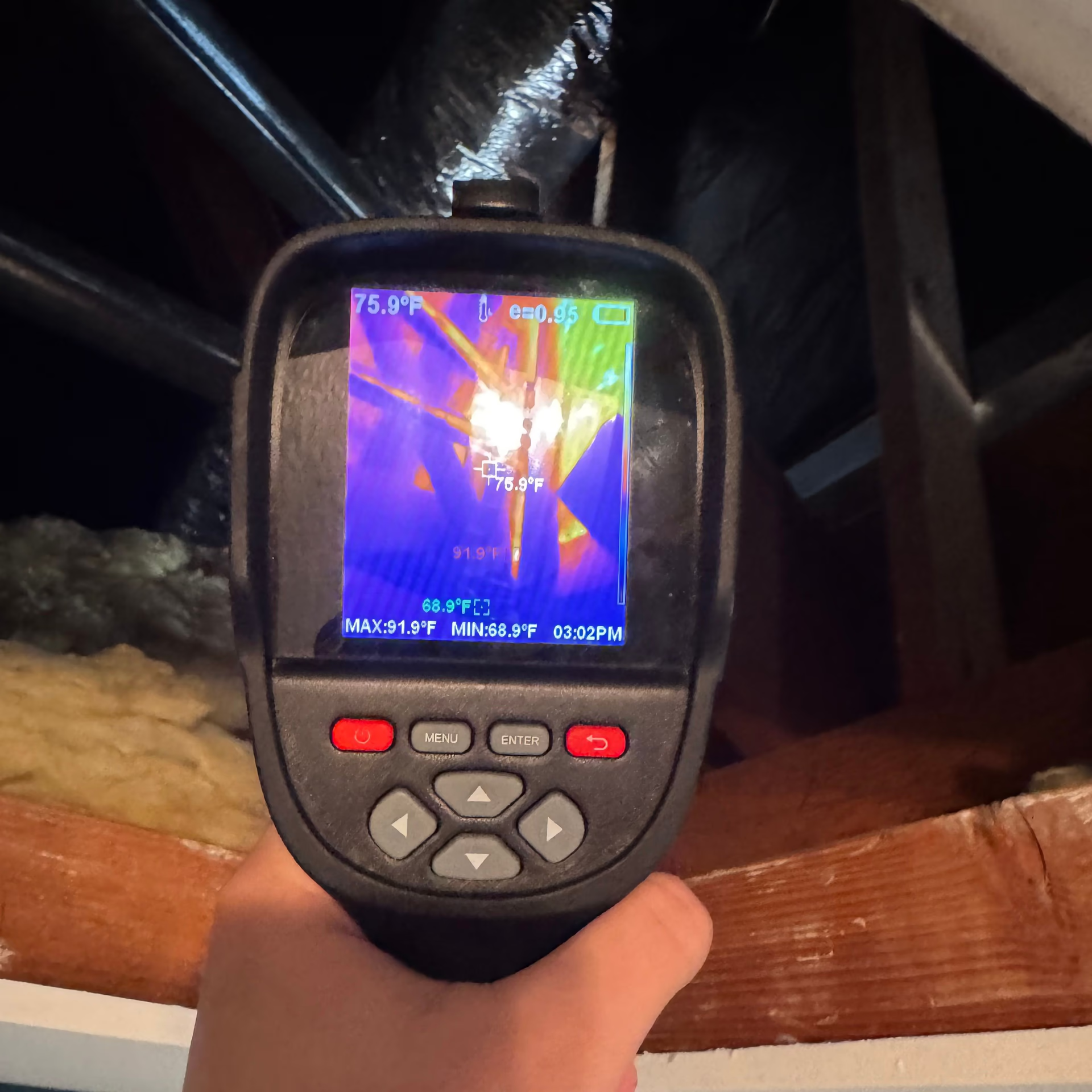
Why infrared thermal imaging finds mold others miss

Mold doesn't always announce itself. A small leak inside a wall, a stretch of failed insulation, or a cold-bridge condensation zone can build mold-friendly conditions for months before any stain reaches the surface. Thermal imaging reveals those conditions while they're still hidden, giving you a chance to address the moisture before mold has spread.

Thermal imaging detects:

  • —Hidden moisture inside walls, ceilings, and under floors
  • —Active leaks from plumbing, roofing, or HVAC components
  • —Insulation gaps and ventilation defects driving condensation
  • —Cold spots creating ideal future conditions for mold growth
Why infrared thermal imaging finds mold others miss
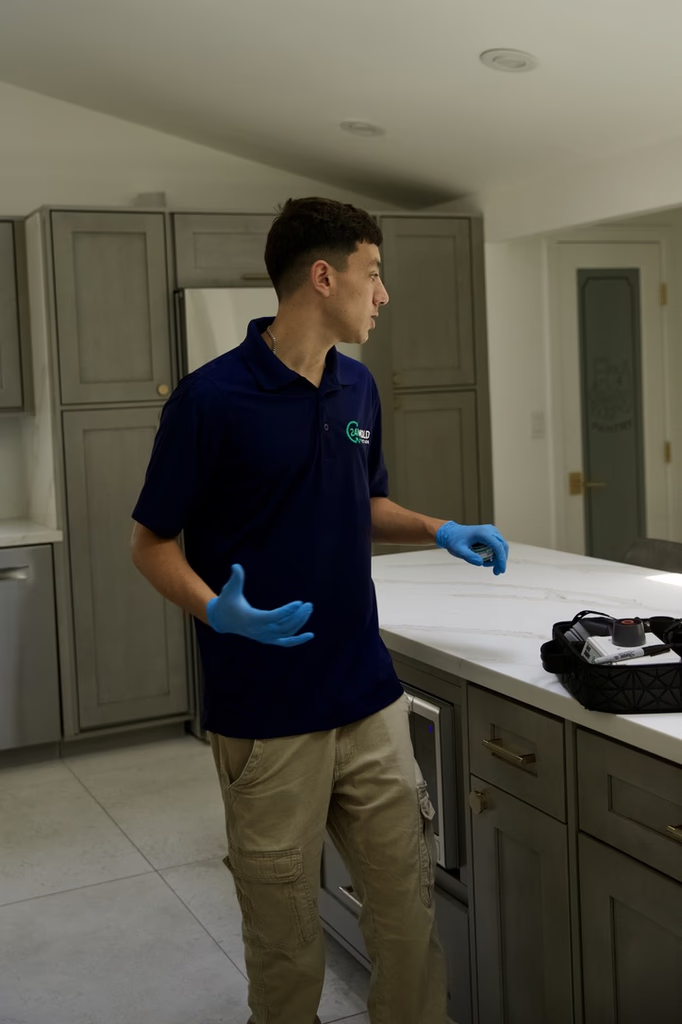
Mold inspector at work

Benefits

What you get from thermal imaging

Find hidden risks early without damaging the property

  • —Non-invasive: No drilling, no cutting, no surface damage.
  • —Early detection: Catches problems before damage becomes visible.
  • —Cost-effective: Targets repairs only where they're needed.
  • —Documented findings: Annotated thermal images included in the report.

About

How thermal imaging mold inspection works

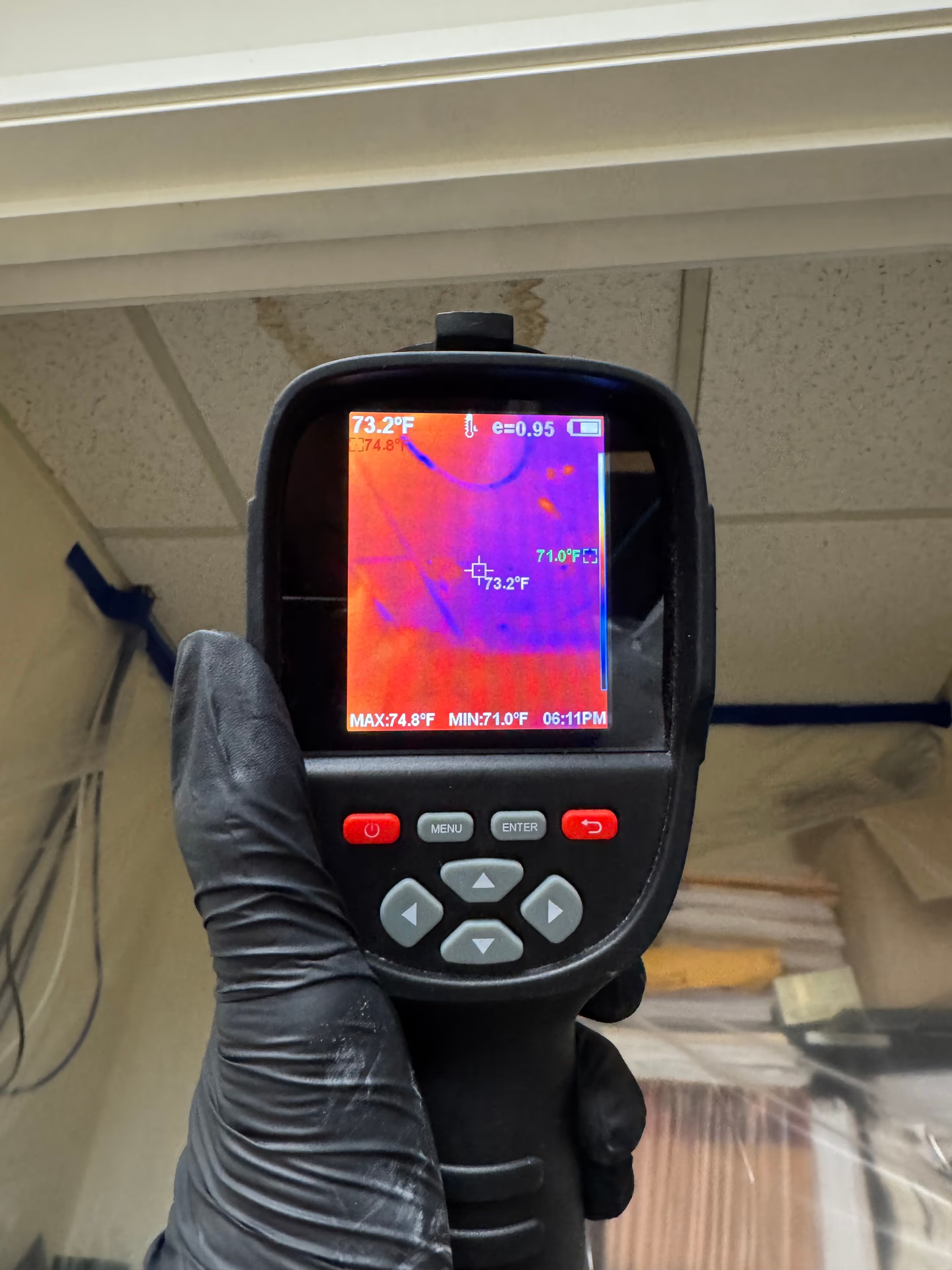
Our certified mold inspectors use FLIR cameras to read temperature differentials across surfaces. Cooler areas often signal water present in the material, even when no surface damage has appeared.

Our process includes:

  • —A complete thermal scan of key interior and exterior surfaces
  • —Identification of unusual cold or warm patterns in the readings
  • —Cross-checking thermal findings with calibrated moisture meters
  • —A mold inspection report including the annotated thermal images
How thermal imaging mold inspection works

Mold inspection Novi FAQ

Call For An Inspection
Novi grew rapidly in the 1990s and 2000s, and properties from that era are now entering the age range where original building systems show first failures. Original asphalt shingle roofing installed in 1995 to 2005 is at or approaching the end of its 25 to 30 year design life, and the first signs of failure appear as slow leaks at penetrations and valleys before the visible damage below the roof deck is obvious. Original HVAC systems from this era develop condensate drain line failures that deposit moisture inside air handler cabinets and wall cavities adjacent to mechanical rooms. Newer tight-envelope construction also traps interior humidity when ventilation systems underperform — a ventilation failure in a 2005 home produces condensation inside wall assemblies faster than the same failure in a 1960s home that was never airtight.
Yes — and the mechanism is specific to lake-adjacent construction. Properties on Walled Lake, Commerce Lake, Upper Straits, and Lower Straits sit with their lowest foundations close to the lake's water table, and in wet springs when lake levels rise, that water table rises with it. Crawl spaces and basement walls on low-lying lots experience hydrostatic pressure from the elevated water table rather than just surface runoff, and the moisture that migrates through in wet conditions establishes the humidity levels where mold grows even after the lake level recedes. Cottage-era construction converted to year-round use adds the further complication that original seasonal-use envelope details — minimal insulation, original single-pane windows — create condensation pathways during heated winter occupancy that never occurred when the building sat unheated.
Crawl space inspection is a standard part of most Novi assessments for older and mid-century construction on raised foundations. The crawl space is where Oakland County ground moisture accumulates first — clay-heavy soil retains moisture longer than sandy soil, and the combination of high soil moisture and inadequate vapor barrier in many Twelve Mile corridor homes creates the humidity levels where subfloor framing mold develops years before it's visible from the living space above. The inspection maps moisture readings across the framing and joists, checks vapor barrier coverage and condition, evaluates cross-ventilation through foundation vents, and documents any visible growth for surface sampling. Crawl space findings define whether the condition is a maintenance issue or an active growth problem requiring remediation.
For newer homes in Lyon Township built on former agricultural land, yes — in a specific way. Agricultural tile drainage systems were installed across Oakland and Livingston County farmland to dry out soil for crop production, and those systems now run beneath residential foundations and landscaping. When tile drainage is disrupted during grading or fails from age, the drainage capacity it provided is lost and the soil tends toward its original saturated condition. Properties in Lyon Township's newer subdivisions built on former crop fields should have the crawl space or basement moisture profile assessed specifically, because the soil moisture conditions beneath them may not match what the surrounding neighborhood's newer construction suggests.
Pre-purchase inspection in Walled Lake is worth doing specifically given the lake-adjacent conditions — the inspection should assess crawl space and basement moisture with the water table context in mind, not just as a standard interior space. For Wixom's older residential stock, the inspection should cover the plumbing walls and attic condition in addition to any basement or crawl space. In both communities, the combination of older construction and the moisture profiles specific to their geography makes pre-purchase inspection more informative than a standard home inspection, which typically notes a musty smell or a stain rather than mapping the moisture source.
Our Novi team covers all of Novi, Wixom, Walled Lake, Commerce Township, and Lyon Township with same-day and next-day appointments and 24/7 emergency response for active water intrusion. Several neighboring cities have their own dedicated 24H Mold Inspection pages: Farmington Hills and Livonia each have separate coverage with their own local teams. South Lyon is served from the Novi team. If your property is in Farmington Hills or Livonia, those pages will have the most relevant local information.
Inspection and testing only. In Novi's range of construction eras — from 1920s Walled Lake cottages to 2010s Lyon Township custom homes — moisture sources and remediation scopes vary significantly, and a company with cleanup work to sell has a financial reason to find more than the instruments confirm. What you receive is the diagnosis: extent of growth, moisture source, lab-confirmed species, and a written report you can use to get comparable bids from multiple contractors. Because we perform no remediation, our post-remediation verification carries no conflict of interest.

Contact

Book your Novi mold inspection today

Tell us what's going on and we'll respond the same day

Location

24H Mold Inspection of Novi

Hours

  • MondayOpen 24 hours
  • TuesdayOpen 24 hours
  • WednesdayOpen 24 hours
  • ThursdayOpen 24 hours
  • Friday6 AM – 6 PM
  • SaturdayClosed
  • SundayOpen 24 hours

Service area neighborhoods

  • Novi
  • Wixom
  • Walled Lake
  • Commerce Township
  • Lyon Township
  • South Lyon (adjacent)
Call For Service(833) 674-2898