
24H Mold Inspection
Farmington Hills24/7 EMERGENCY(877) 594-2792
HomeOur ServicesMold Inspection
our services

Mold Inspection

Advanced moisture detection and infrared technology—so you can act before it spreads.

About

Why Mold Inspection Matters

Mold often hides behind walls or under flooring. Our inspection process is designed to catch both the obvious and the invisible—before they become costly repairs or health concerns.

  • —Detect visible mold
  • —Locate the source of moisture that feeds it
  • —Identify which areas need testing or remediation
  • —Get peace of mind after leaks or before buying property
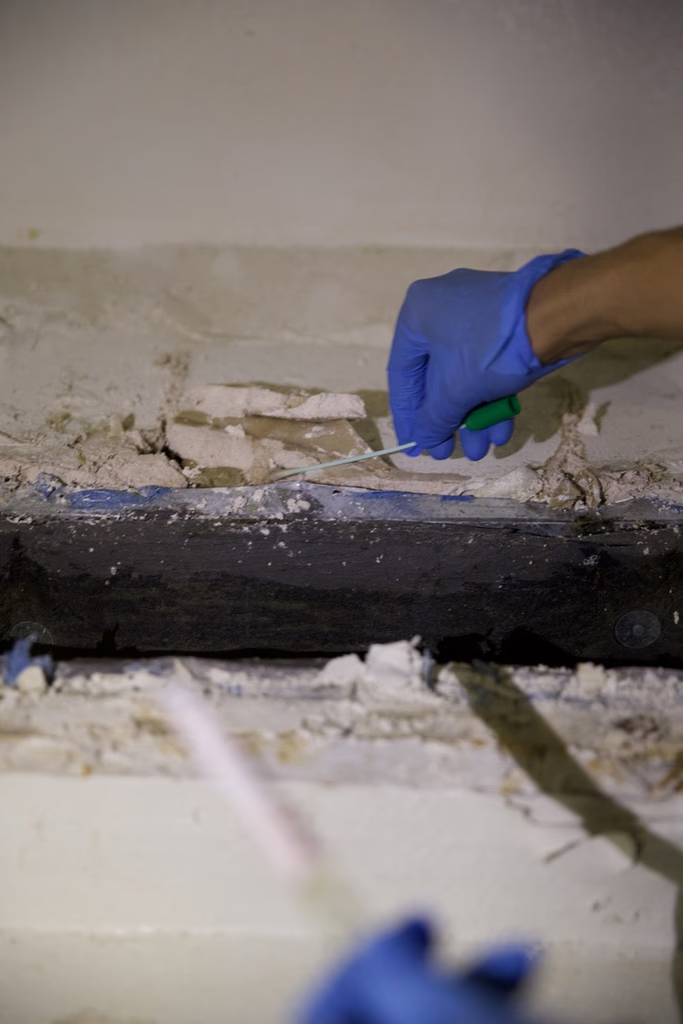
Why Mold Inspection Matters

Methodology

How our mold inspectors inspect

We combine certified field experience with calibrated detection tools
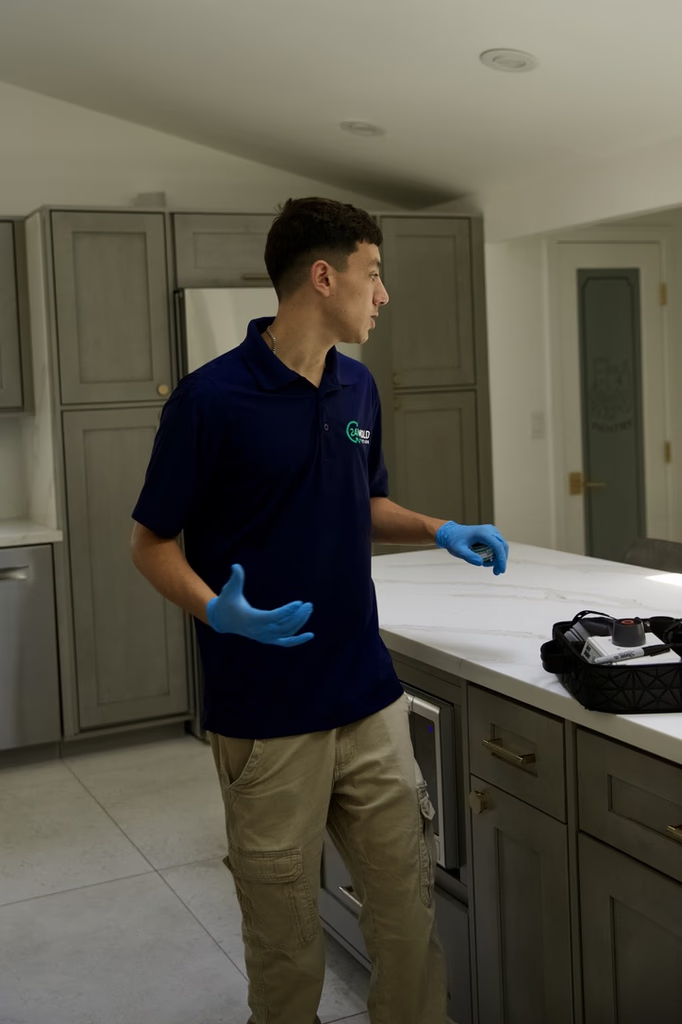
Every job starts with a structured walkthrough of high-risk areas: bathrooms, kitchens, attics, basements, crawl spaces, and around any plumbing, windows, or HVAC components. The inspector documents visible growth, stains, warping, and other physical signs as they go.

Mold doesn't grow without water, so finding the moisture is half the work. Pin and pinless moisture meters measure water content inside walls, ceilings, and flooring materials, locating active leaks and elevated humidity that the eye can't see.

FLIR thermal imaging cameras read temperature differentials behind surfaces, which is how we find wet areas inside walls without opening anything up. Cold spots flag moisture, condensation, and air leaks that often correlate with hidden mold growth.

Mold inspector at work

Checklist

Is an Inspection Right for You?

Mold inspection is ideal if:

  • —You've had recent leaks or water damage
  • —You notice musty odors in certain rooms
  • —You're buying, selling, or managing a property
  • —You want to check for mold before testing or remediation
  • —You just want peace of mind

Still unsure? Our team will help you decide if an inspection—or testing—is the right first step.

Inspection Overview

Our Inspection Methods

Understand the key methods we use to deliver a complete, thorough mold inspection.

Mold inspection Farmington Hills FAQ

Call For An Inspection
The oldest homes in the City of Farmington date to the 1880s and 1890s, and they carry moisture risks that newer construction doesn't share. Original stone and brick foundation walls from this era were built without waterproofing membranes — moisture migrates through the masonry in wet seasons and establishes the humidity levels where mold grows in basement and crawl space spaces. Original cast-iron radiator systems develop slow line failures inside finished walls. Chimneys on these properties have been through multiple relining and cap replacement cycles, and the transitions between old and new materials create new moisture entry points at each repair. Pre-purchase inspection on historic Farmington village properties should specifically assess the foundation walls, chimney condition, and any basement or crawl space.
The Northwestern Highway office corridor's 1970s and 1980s buildings are at the age where multiple building systems are failing simultaneously. Flat commercial roofs develop drain failures and ponding that produce slow ceiling leaks invisible above suspended ceiling systems. Curtain-wall glazing from this era loses its sealant at joints and allows water into the wall assembly at any floor. Original HVAC systems develop condensate accumulation inside air handlers and duct chases. For medical offices specifically, high-occupancy humidity in spaces that require precise climate control means HVAC failures produce condensation faster than standard office space. Commercial inspection reports are written to be useful to building owners, tenants, property managers, and insurers.
Oakland County's clay-heavy soil is one of the most consistent contributors to basement moisture in Farmington Hills' postwar housing stock. Clay retains moisture far longer than sandy or loam soil — ground that is saturated by spring thaw in March can remain moisture-heavy against foundation walls through May or June. Slab-on-grade foundations from the 1960s through 1980s were poured on compacted clay subgrade, and the expansion joints and any cracks that have developed through Michigan's freeze-thaw cycling become the pathways through which that persistent ground moisture migrates into the slab and basement space. The result is a basement moisture condition that appears seasonal but is actually continuous at a lower level year-round.
Pre-purchase inspection is worth doing across most of Farmington Hills' housing eras. For historic Farmington village properties, the masonry foundation and chimney condition are the primary focus. For the 1960s through 1980s residential core, the crawl space or basement moisture profile, plumbing wall condition, and attic ventilation are the key areas. For newer custom homes, roofing penetration details and HVAC condensate management are where first failures appear. In all cases the inspection goes beyond what a standard home inspection covers — thermal imaging finds moisture behind walls that a visual inspection misses, and lab results confirm whether any growth that's found is active.
Our Farmington Hills team covers all of Farmington Hills and the City of Farmington with same-day and next-day appointments and 24/7 emergency response. Several neighboring cities have their own dedicated 24H Mold Inspection pages: Livonia, Novi, and Southfield each have separate coverage with their own local teams. West Bloomfield Township is covered by the Farmington Hills team for the border communities near the lake corridor. If your property is in Livonia, Novi, or Southfield, those pages will have the most relevant local information.
Inspection and testing only. In Farmington Hills' range of construction eras — from 1880s historic Farmington village homes to 2000s custom subdivisions — moisture sources and remediation scopes vary significantly. A company with cleanup work to sell has a financial reason to find more than the instruments confirm. What you receive is the diagnosis: extent of growth, moisture source, lab-confirmed species, and a written report you can use to get comparable bids from multiple contractors on the same defined scope. Because we perform no remediation, our post-remediation verification carries no conflict of interest.
Mold clearance testing — also called post-remediation verification — is an independent inspection confirming that a remediation contractor's work succeeded. It's needed whenever a remediation was performed and a property owner, buyer, insurer, or lender requires independent confirmation that the work is complete and effective. In Farmington Hills' older housing stock, where moisture sources are often building-system failures that develop over decades, a remediation that didn't address the source will return. Because 24H Mold Inspection never performs remediation, the clearance test is independent — we report what we find rather than what a contractor needed us to find.

Contact

Book your Farmington Hills mold inspection today

Tell us what's going on and we'll respond the same day

Location

24H Mold Inspection of Farmington Hills

Service area neighborhoods

  • Farmington Hills
  • Farmington
  • West Bloomfield Township (adjacent)
  • Livonia (adjacent)
  • Novi (adjacent)
  • Southfield (adjacent)
Call For Service(877) 594-2792