24H Mold Inspection
Winnetka24/7 EMERGENCY(818) 835-8231
HomeOur ServicesEnvironmental Risk Assessment
our services

Environmental Risk Assessment

We identify hidden mold risks and verify that your space is safe to occupy.

About

Why Risk Assessment Matters

Even after cleanup or surface testing, questions often remain: Is it really gone? Are we safe to move forward? That's where an Environmental Risk Assessment comes in.

Ideal for:

  • Post-remediation verification
  • Pre-sale property inspections
  • Property management compliance
  • Sensitive environments (schools, offices, multi-unit housing)
Why Risk Assessment Matters

Methodology

Our Assessment Process

Step-by-step inspection to confirm your space is safe.

We inspect key areas across your property to identify visible signs of mold, moisture, or environmental risks that may have been missed in past inspections.

We use precision tools to measure moisture in building materials and collect air samples for lab analysis—capturing invisible spores that may linger in the environment.

Within 24–72 hours, you'll receive a certified report detailing our findings: mold species (if present), spore levels, moisture hotspots, and actionable next steps.

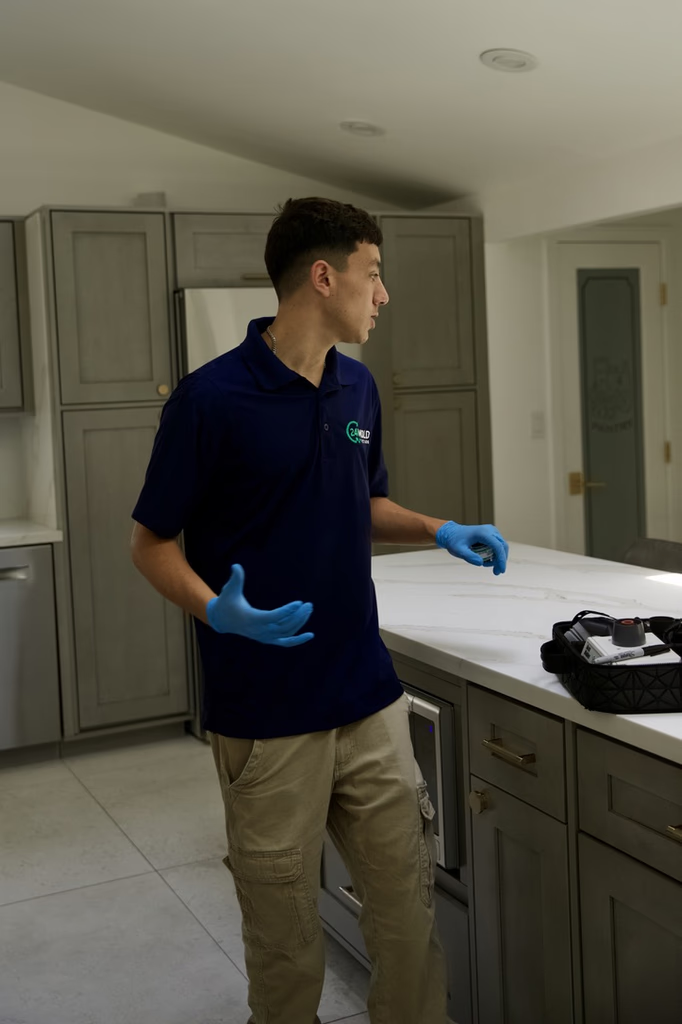
Mold inspector at work

Checklist

Is an Environmental Risk Assessment Right for You?

This service is ideal if:

  • You've had recent remediation or water damage
  • You're buying, selling, or managing a property
  • You need proof your space is safe to occupy

Still unsure? Let's talk. We'll help you decide if an assessment is the right step for your property.

Overview

What You'll Get

Certified results, safety clarity, and clear next steps—delivered fast.

1

Comprehensive Risk Report

State-certified results that summarize mold levels, moisture issues, and remediation needs.

2

Occupancy Safety Verification

Peace of mind that your property is safe to inhabit—especially critical for buyers, renters, and businesses.

3

Actionable Recommendations

If risks are found, we provide clear guidance on next steps. If not, your report becomes a safety asset.

Mold inspection Winnetka FAQ

Call For An Inspection
No. 24H Mold Inspection of Winnetka inspects and tests only, and we never perform remediation or removal — that separation is deliberate. In Winnetka's housing, the 1950s and 1960s slab-on-grade tracts south of Vanowen and the stacked apartment buildings along Sherman Way, the visible patch is usually the smaller half of the problem, and a company that bills for the cleanup has a financial reason to keep finding more of it. What we produce is the diagnosis: what is growing, which moisture source is feeding it — an under-slab plumbing leak, an attic condensate line, rain coming through cracked stucco — how far it extends behind walls or under flooring, and lab confirmation of what the samples contain. You take that report to remediation contractors and get comparable bids on a defined scope instead of a walkthrough guess. When the work is finished, we can return for independent verification, which carries weight with insurers, landlords, and buyers precisely because we had no part in the removal.
No. A general home inspection is a broad condition survey — roof, electrical, plumbing, appliances — and its mold coverage stops at what is visible in accessible areas; most contracts exclude mold outright. A mold inspection is narrow and instrument-driven: thermal imaging and moisture meters to find wet material behind stucco and drywall, entry into the attic, and lab-analyzed air or surface samples when something turns up. That gap matters here because of how Winnetka homes are built. Most of the housing dates to the 1950s and 1960s and sits on a slab, so the supply plumbing runs under the concrete and the air handler and ducts sit in the attic — the two most common water sources in the neighborhood are both places a visual walkthrough never reaches until the flooring or a ceiling is already stained. The stucco and plumbing repairs made across the west Valley after the 1994 earthquake add another layer that is hard to read from the surface. Most buyers here do both: the home inspection for overall condition, and a mold inspection when that report notes staining, a musty odor, or past water damage.
Winnetka sits in the middle of the west San Fernando Valley — Northridge to the north, Reseda to the east, Tarzana and Woodland Hills to the south, Canoga Park to the west — so our team works well past the neighborhood boundaries. Encino, Van Nuys, Calabasas, West Hills, and Chatsworth are all a short drive from a Winnetka dispatch, which is what makes same-day appointments realistic across the west Valley. Several of those communities have their own 24H Mold Inspection page written for that area's housing stock, so if your property is in one of them, start there. Inside Winnetka we cover the whole neighborhood: the Weeks Poultry Colony blocks around Runnymede, the Sherman Way corridor, Saticoy, Roscoe, the Limerick Avenue area, Winnetka Village, and the tracts running out to the Corbin Avenue side. Emergencies — an active leak, a supply line that just failed, water standing in a converted garage — are handled 24/7. If you are not sure which team covers your address, call the number on this page and we will point you to the right one.
By finding the water first. Detection starts with thermal imaging, which reads temperature differences through finished surfaces and flags wet material behind drywall, stucco, and flooring; moisture meters then confirm whether what the camera saw is actually wet and how far it spreads. A borescope goes into a wall cavity when there is reason to open one. In a Winnetka house that search has a specific shape, because almost nothing here has a crawl space to enter. The two places we spend the most time are the attic, where the air handler, its condensate pan, and the ducts all sit, and the slab, where an under-slab supply leak shows up as a warm spot on the floor, a jump in the water bill, or damp edges along baseboards. Air sampling with a matched outdoor baseline then tells us whether indoor spore counts are elevated above what is normal outdoors that day. A musty smell with nothing visible in a Valley slab home usually traces back to one of those two sources rather than the room you are standing in.
Assessment and evaluation are the same thing under two names: the full diagnostic visit, where the inspector walks the property, maps moisture with meters and thermal imaging, traces the water back to its source, and defines how far the affected area extends. Testing is the narrower piece — spore-trap air samples, swabs, or tape lifts sent to an accredited lab to identify what is growing and at what concentration. Testing on its own gives you numbers with no cause, which is why samples pulled without an assessment so often lead nowhere. In a typical Winnetka job the two run in sequence: the assessment finds the actual problem, an attic condensate line that has been dripping into a ceiling or a leak under a 1960s slab, and the testing confirms what is in the air and how far it has traveled through the house. Because we do not sell remediation, the scope that assessment produces is a diagnosis rather than an estimate for work we would go on to perform ourselves.
Leave it alone. Do not scrub it, bleach it, or cut it out — disturbing growth pushes spores through the rest of the house and destroys the evidence needed to scope the cleanup. Close off the room and shut down the HVAC, which matters more in a Winnetka home than most people expect: the air handler and the entire duct run sit up in the attic, so running the system while growth is exposed is an efficient way to distribute it into every other room. Photograph what you see, then have it sampled. Dark growth is frequently a common species such as Cladosporium or Aspergillus rather than Stachybotrys, and nobody can tell them apart by eye, so a surface sample for identification plus air samples for spread is what turns a guess into a plan. Then find the water. In these post-war tracts it is usually an under-slab supply leak, a condensate line backing up in the attic, or rain entering through cracked stucco; in an apartment off Sherman Way, it is often the unit upstairs. Cleanup that skips the water source only buys time.
Start with the fact that California does not license mold inspectors. The Toxic Mold Protection Act of 2001 directed the state to set permissible indoor exposure limits, the Department of Public Health concluded the science would not support them, and no standard was ever adopted — so a certification here is a third-party credential, not a state license. Ask which one, and ask whether the person actually showing up holds it rather than the company. Ask whether the lab is accredited, whether the inspector carries general liability and errors-and-omissions coverage, and whether you will get sample results and moisture readings in writing rather than a verbal summary at the door. Then ask the question that matters most: does the same company also sell remediation? We do not, which is the whole reason our reports hold up. That independence carries real weight in Winnetka, where much of the apartment stock predates 1978 and falls under the city's rent stabilization ordinance, and a mold report often ends up attached to a housing complaint or a dispute over repairs and a deposit.

Contact

Book your Winnetka mold inspection today

Tell us what's going on and we'll respond the same day

Location

24H Mold Inspection of Winnetka

Service area neighborhoods

  • Winnetka Village
  • Sherman Way corridor
  • Saticoy area
  • Limerick Avenue corridor
  • Runnymede district
  • Canoga Park border area
  • Woodland Hills adjacent area
  • Roscoe Boulevard corridor
Call For Service(818) 835-8231