24H Mold Inspection
Whittier24/7 EMERGENCY(562) 600-6557
HomeOur ServicesMold InspectionThermal Imaging
Mold Inspection

Thermal Imaging

Infrared cameras find hidden mold conditions and water damage before any surface stain shows up.

Overview

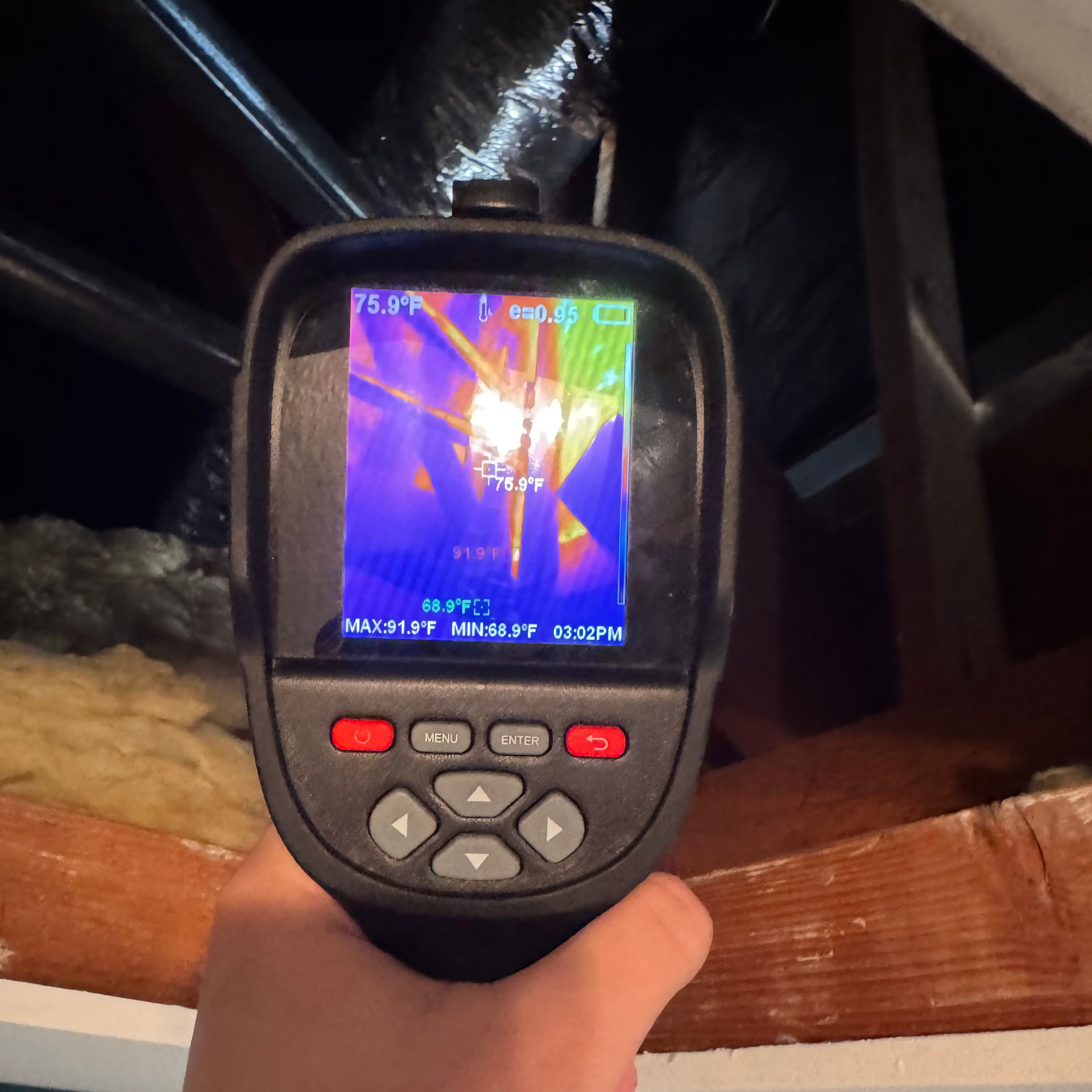
Why infrared thermal imaging finds mold others miss

Mold doesn't always announce itself. A small leak inside a wall, a stretch of failed insulation, or a cold-bridge condensation zone can build mold-friendly conditions for months before any stain reaches the surface. Thermal imaging reveals those conditions while they're still hidden, giving you a chance to address the moisture before mold has spread.

Thermal imaging detects:

  • —Hidden moisture inside walls, ceilings, and under floors
  • —Active leaks from plumbing, roofing, or HVAC components
  • —Insulation gaps and ventilation defects driving condensation
  • —Cold spots creating ideal future conditions for mold growth
Why infrared thermal imaging finds mold others miss
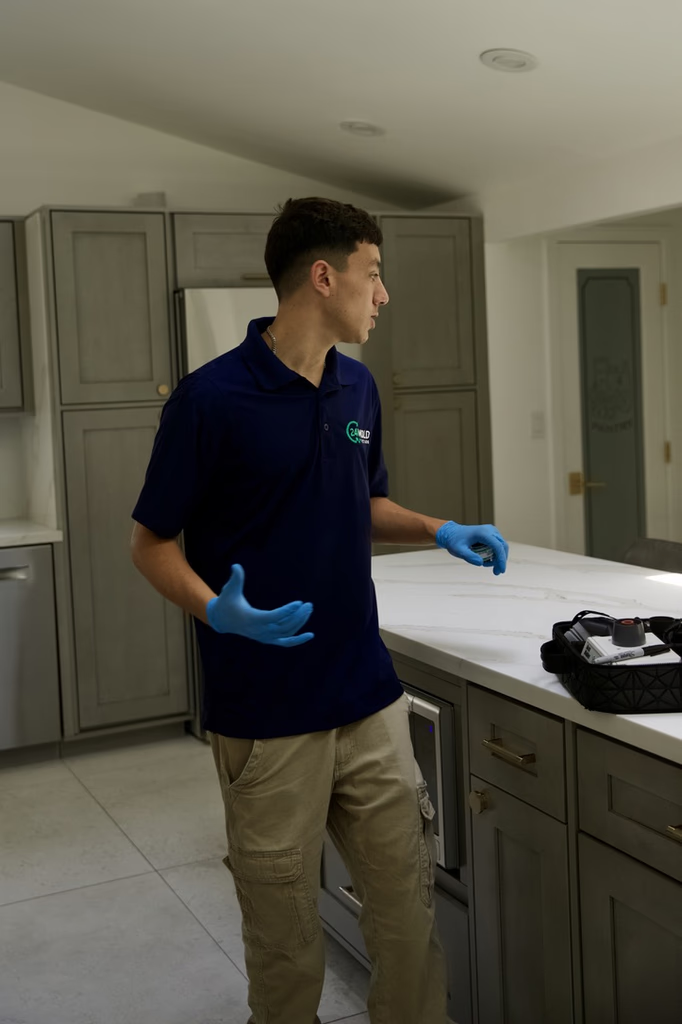
Mold inspector at work

Benefits

What you get from thermal imaging

Find hidden risks early without damaging the property

  • —Non-invasive: No drilling, no cutting, no surface damage.
  • —Early detection: Catches problems before damage becomes visible.
  • —Cost-effective: Targets repairs only where they're needed.
  • —Documented findings: Annotated thermal images included in the report.

About

How thermal imaging mold inspection works

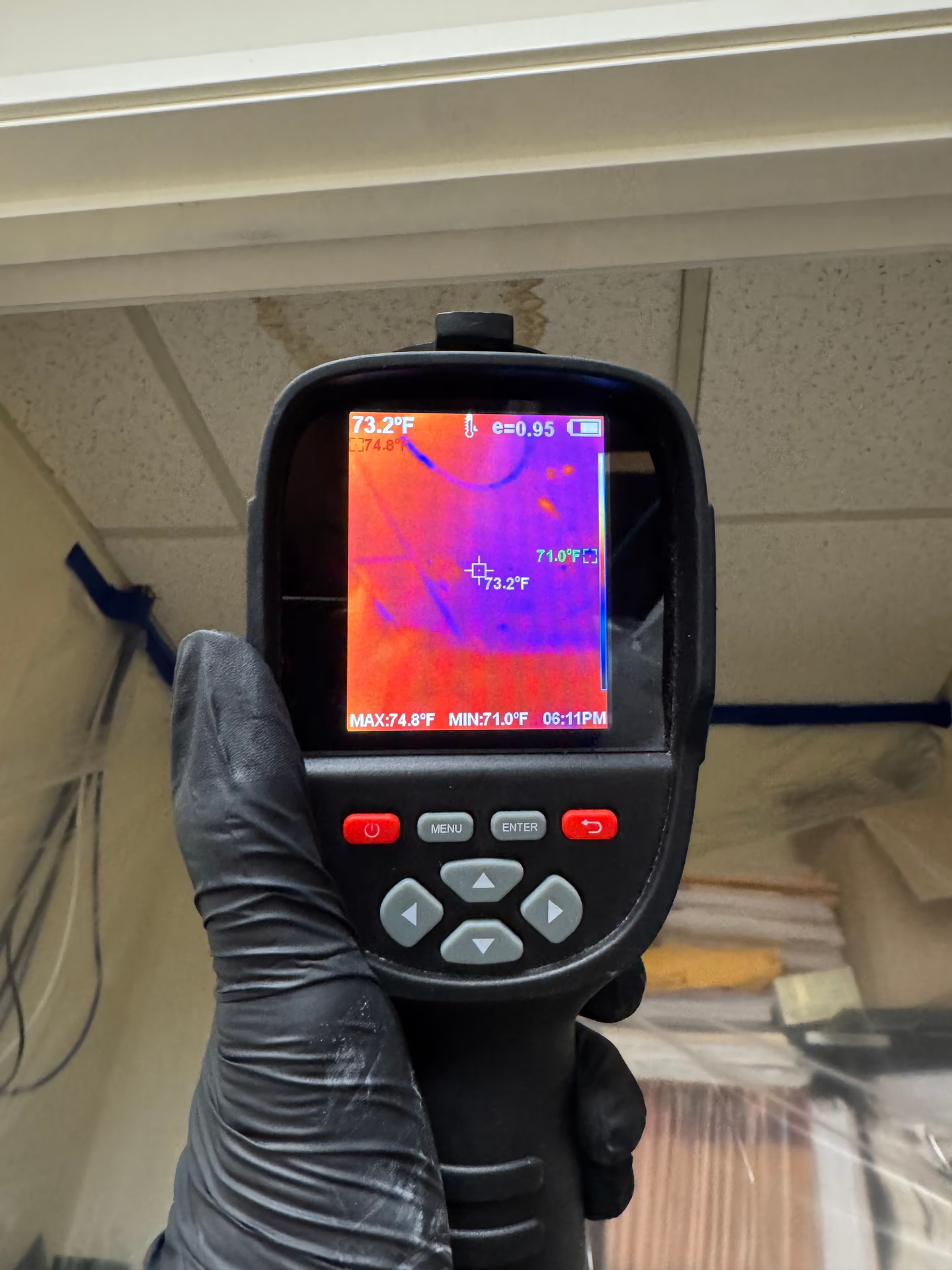
Our certified mold inspectors use FLIR cameras to read temperature differentials across surfaces. Cooler areas often signal water present in the material, even when no surface damage has appeared.

Our process includes:

  • —A complete thermal scan of key interior and exterior surfaces
  • —Identification of unusual cold or warm patterns in the readings
  • —Cross-checking thermal findings with calibrated moisture meters
  • —A mold inspection report including the annotated thermal images
How thermal imaging mold inspection works

Mold inspection Whittier FAQ

Call For An Inspection
Whittier's Victorian and Craftsman homes from the 1890s through 1920s carry the full aging-infrastructure moisture risk of their era. Original galvanized plumbing corrodes at fittings inside wall cavities and develops slow leaks invisible until the drywall shows damage. Foundation walls from this era were built without waterproofing membranes and allow ground moisture to migrate through in wet seasons. The 1987 Whittier Narrows earthquake caused widespread foundation cracking and chimney damage throughout the area — properties that weren't fully assessed after that event may have moisture pathways that have been active for nearly 40 years. Pre-purchase inspections in historic Uptown should specifically assess foundation condition, chimney integrity, and any below-grade space.
Yes — and for reasons specific to hillside construction. The Puente Hills' decomposed granite soil creates fast lateral drainage that concentrates moisture at downhill foundation faces rather than dispersing it through the soil. Cut-and-fill lots on the hillside have retaining walls and subdrains that are now 40 to 60 years old — when those systems fail, hillside moisture redirects toward foundations invisibly. The 1987 Whittier Narrows earthquake opened foundation cracks and chimney gaps in the hillside housing that have been admitting water in properties never fully assessed since. An inspection on a Whittier Hills property should focus specifically on the downhill foundation face, retaining wall condition, and any below-grade spaces.
Air quality testing draws a measured volume of air through a spore trap at each area of concern alongside an outdoor control sample collected at the same visit. The outdoor sample establishes the local background spore level, and indoor results are interpreted against that baseline rather than against a generic national reference range. In Whittier, air testing is the right choice when someone has respiratory symptoms or a musty odor but there's nothing visible to sample — common in older Uptown homes where mold may be established behind finished walls without any surface growth visible. It's also used for post-remediation clearance and for rental habitability documentation where a landlord or tenant needs lab-verified evidence of air quality conditions.
Pre-purchase inspection in Whittier is particularly valuable for properties in the hillside neighborhoods and historic Uptown, where the housing age and the 1987 earthquake's legacy create moisture risk patterns worth verifying independently. The inspection covers thermal imaging for behind-wall moisture at plumbing and chimney locations, crawl space or basement assessment, attic condition and ventilation, and air or surface sampling where visible growth is present. In East Whittier's postwar housing stock, slab-on-grade foundation moisture and aging plumbing are the primary focus. The written report with lab results gives you a documented moisture picture before closing.
Our Whittier team covers all of Whittier — Historic Uptown, Friendly Hills, Hadley Hills, Whittier Hills, East Whittier, Michigan Park, College Hills, and the Painter Avenue corridor — with same-day and next-day appointments and 24/7 emergency response. Several neighboring cities have their own dedicated 24H Mold Inspection pages with local teams. If your property is in an adjacent community, call the number on this page and we'll route you to the right team.
Inspection and testing only. In Whittier's range of construction eras — from 1890s historic Uptown homes to 1960s East Whittier ranch homes — moisture sources and remediation scopes vary significantly, and a company with cleanup work to sell has a financial reason to find more than the instruments confirm. What you receive is the diagnosis: extent of growth, moisture source, lab-confirmed species, and a written report you can use to get comparable bids from multiple contractors. Because we perform no remediation, our post-remediation verification carries no conflict of interest.
In the College Hills rental stock it's a consistent finding, and the mechanism is high-occupancy loading on construction designed for single-family use. Original bath fans that exhaust into attic space rather than outside, single-pane windows that condense in winter mornings, and cooking and laundry humidity in units without adequate mechanical ventilation keep relative humidity above the mold growth threshold year-round. For landlords in this area, independent inspection documentation establishes the condition of a unit at a specific point in time in a form that holds up in a habitability dispute. For tenants, it provides lab-verified evidence of a condition the landlord is obligated to address.

Contact

Book your Whittier mold inspection today

Tell us what's going on and we'll respond the same day

Location

24H Mold Inspection of Whittier

Service area neighborhoods

  • Friendly Hills
  • Hadley Hills
  • Historic Uptown Whittier
  • Michigan Park
  • Whittier Hills
  • East Whittier
  • Painter Avenue corridor
  • College Hills
Call For Service(562) 600-6557