24H Mold Inspection
Westminster24/7 EMERGENCY(657) 944-6411
HomeOur ServicesLeak & Moisture Detection
our services

Leak & Moisture Detection

Hidden moisture is the root cause of most mold problems. We locate it precisely—without tearing into walls—so you can fix the source, not just the symptoms.

About

Why Moisture Detection Comes First

Mold needs moisture to grow, and moisture hides. We use non-destructive instruments to map water through walls, floors, and ceilings—and thermal cameras to see temperature anomalies that indicate active leaks or condensation—giving you a precise location before any repair work begins.

Moisture detection helps you:

  • —Pinpoint the exact source of a leak before demolition
  • —Map moisture spread behind walls and under flooring
  • —Identify condensation-prone areas before mold appears
  • —Confirm repairs were effective after water damage is addressed
Why Moisture Detection Comes First

Methodology

How We Detect Moisture

Non-destructive tools that locate water without cutting into your property.
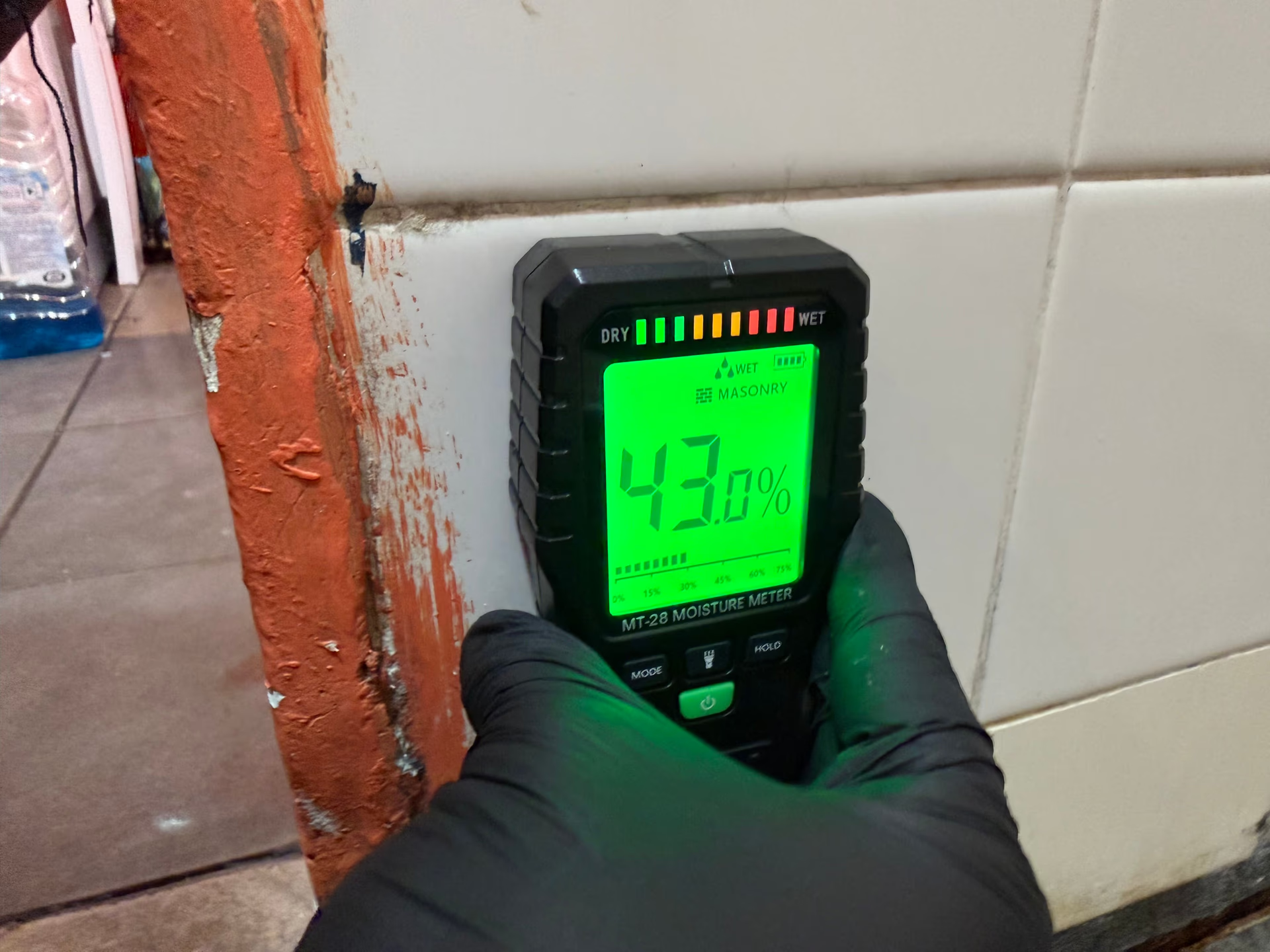
We measure the moisture content of walls, floors, and ceilings using both pin-based and non-invasive pinless meters—mapping the full extent of saturation without surface damage.

Best for:

— Drywall, wood framing, and subfloor assessment
— Mapping moisture spread after a water event
— Establishing baseline readings for monitoring

Our thermal cameras detect temperature differentials across surfaces. Water-loaded materials hold heat differently than dry materials, making leaks and saturated zones visible behind finished walls.

Best for:

— Finding active leaks behind drywall without cutting
— Locating plumbing or roof leaks not yet surface-visible
— Identifying condensation zones that feed mold

Every finding is documented with photos, moisture readings, and thermal images. You receive a clear report so contractors, insurers, or property managers can act immediately.

Report includes:

— Moisture readings mapped by room and surface
— Thermal images with annotated anomaly locations
— Probable source identification and next steps

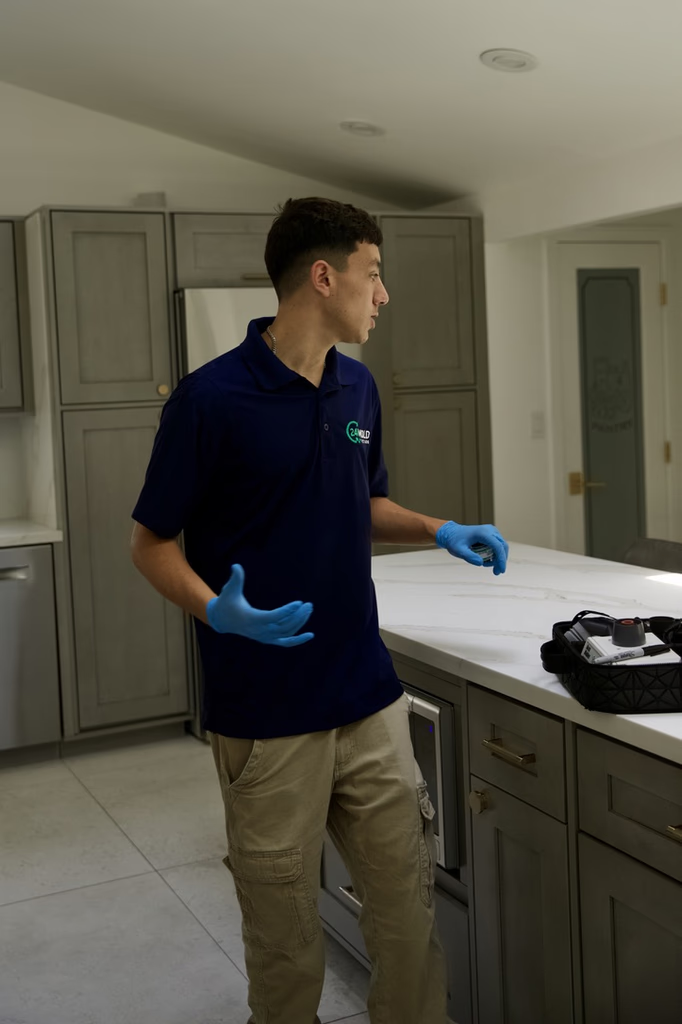
Mold inspector at work

Checklist

When Do You Need Moisture Detection?

Moisture detection is the right first step if:

  • —You smell mold or dampness but can't find the source
  • —You've had a plumbing leak, roof leak, or flood
  • —You're buying a property and want to verify no hidden moisture
  • —You had water damage and want to confirm the area is fully dry
  • —Recurring mold keeps coming back after surface cleaning

Moisture detection is often the fastest and most cost-effective way to scope a mold problem before committing to testing or remediation.

Detection Services

Our Detection Methods

Two complementary tools that together give a complete picture of moisture conditions in any building.

1Thermal Imaging

Infrared cameras reveal temperature anomalies that indicate hidden leaks, condensation zones, and moisture paths behind finished surfaces.

2Moisture Detection

Pin and pinless meters precisely measure moisture content in walls, floors, and ceilings—mapping the full extent of saturation without destructive investigation.

Mold inspection Westminster FAQ

Call For An Inspection
Air testing draws a measured volume of air through a spore trap in each area of concern, alongside an outdoor sample taken at the same visit. The outdoor sample sets the local baseline, which matters in Westminster because coastal-adjacent Orange County carries different ambient spore levels than inland areas. An accredited lab identifies the genera present and their concentrations, and the report compares indoor results to the outdoor baseline instead of a generic national range. Air testing is the right choice when there is a musty smell, symptoms, or a past leak but nothing visible to sample, which is common in stacked apartments and older slab homes where moisture hides inside walls.
No. An air test tells you what is in the air you are breathing. It does not tell you where the growth is, how far it extends, or what moisture source is feeding it. An inspection adds thermal imaging and moisture meters to locate wet material, then uses sampling to confirm species. In Westminster's dense multifamily buildings, where the source is often in a shared wall or roof system, the air result flags a problem and the physical inspection finds it. We usually do both in the same visit.
Dense multifamily and mixed-use buildings concentrate moisture in shared systems. Commercial kitchens, rooftop exhaust, and shared plumbing stacks create steady humidity and many potential leak points, and a leak on one floor travels through party walls into a lower unit months later. Higher occupancy also pushes indoor humidity past what older bath fans can remove. A building-level inspection that traces moisture to its source is more useful than a single-unit walkthrough, because the source is often outside the unit that shows the mold.
They often are, and the slab hides it. Original galvanized supply lines corrode from the inside and fail at fittings, and a leak under the slab or inside a wall can wick into drywall and framing with no sign at floor level. Orange County rarely freezes, so that moisture can support growth year-round. Attic-venting bath fans and converted garages without dedicated ventilation add to the problem. Thermal imaging and moisture meters find in-wall and under-slab moisture that a visual check misses.
It can. Lots near flood-control channels and the wetland edge sit closer to the regional water table, and coastal humidity reaches this part of Orange County more than inland areas. That keeps ground moisture elevated against slab edges through the wet season and slows drying in crawl spaces under older raised-foundation homes. It does not mean every home nearby has a problem. It means an inspection should record moisture at slab edges and in any crawl space, not only inside the living space.
Yes, especially for 1950s and 1960s tract homes, converted garages and additions, and condos or townhomes with shared systems. The inspection covers thermal imaging for behind-wall moisture, slab readings at expansion joints, attic ventilation, and air or surface sampling where growth is suspected. For attached units it also documents whether a moisture condition originates in a shared building element, which affects who pays for repairs. Independent documentation before closing protects you from inheriting a slow, long-running problem.
Our Westminster team covers the whole city, from the Bolsa Avenue and Beach Boulevard corridors to the residential tracts and condominium communities, with same-day and next-day appointments and 24/7 emergency response. Huntington Beach and Fountain Valley each have their own 24H Mold Inspection page with a local team. If your property is in either city, start with that page.

Contact

Book your Westminster mold inspection today

Tell us what's going on and we'll respond the same day

Location

24H Mold Inspection of Westminster

Hours

  • MondayOpen 24 hours
  • TuesdayOpen 24 hours
  • WednesdayOpen 24 hours
  • ThursdayOpen 24 hours
  • Friday6 AM – 6 PM
  • SaturdayClosed
  • SundayOpen 24 hours

Service area neighborhoods

  • Little Saigon
  • Westminster Village
  • Bolsa Avenue corridor
  • Goldenwest district
  • Asian Garden Mall vicinity
  • Westminster Boulevard area
  • Mile Square border area
  • East Westminster
Call For Service(657) 944-6411