
24H Mold Inspection
West Hills24/7 EMERGENCY(818) 854-7446
HomeOur ServicesLeak & Moisture Detection
our services

Leak & Moisture Detection

Hidden moisture is the root cause of most mold problems. We locate it precisely—without tearing into walls—so you can fix the source, not just the symptoms.

About

Why Moisture Detection Comes First

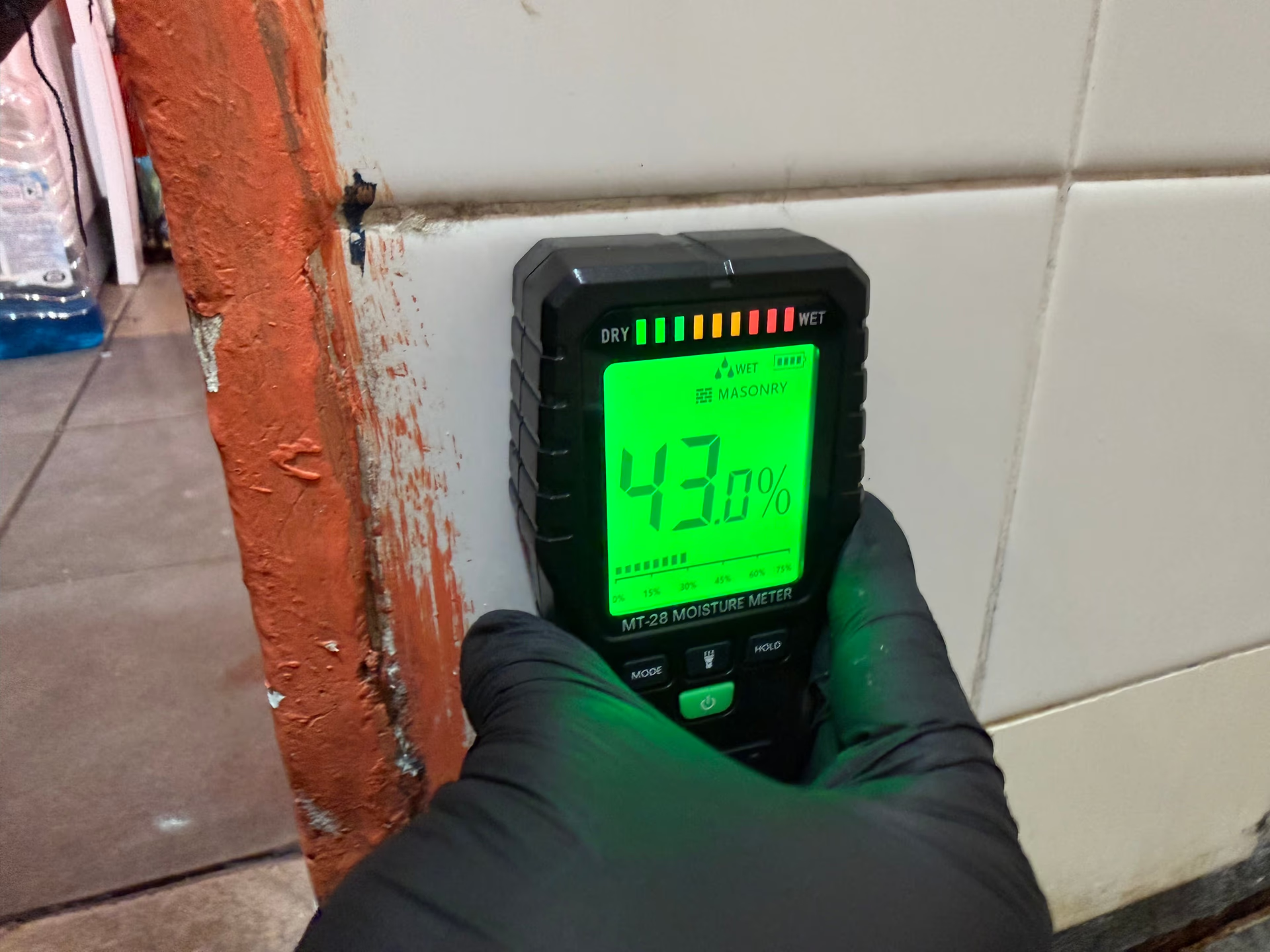
Mold needs moisture to grow, and moisture hides. We use non-destructive instruments to map water through walls, floors, and ceilings—and thermal cameras to see temperature anomalies that indicate active leaks or condensation—giving you a precise location before any repair work begins.

Moisture detection helps you:

  • —Pinpoint the exact source of a leak before demolition
  • —Map moisture spread behind walls and under flooring
  • —Identify condensation-prone areas before mold appears
  • —Confirm repairs were effective after water damage is addressed
Why Moisture Detection Comes First

Methodology

How We Detect Moisture

Non-destructive tools that locate water without cutting into your property.
We measure the moisture content of walls, floors, and ceilings using both pin-based and non-invasive pinless meters—mapping the full extent of saturation without surface damage.

Best for:

— Drywall, wood framing, and subfloor assessment
— Mapping moisture spread after a water event
— Establishing baseline readings for monitoring

Our thermal cameras detect temperature differentials across surfaces. Water-loaded materials hold heat differently than dry materials, making leaks and saturated zones visible behind finished walls.

Best for:

— Finding active leaks behind drywall without cutting
— Locating plumbing or roof leaks not yet surface-visible
— Identifying condensation zones that feed mold

Every finding is documented with photos, moisture readings, and thermal images. You receive a clear report so contractors, insurers, or property managers can act immediately.

Report includes:

— Moisture readings mapped by room and surface
— Thermal images with annotated anomaly locations
— Probable source identification and next steps

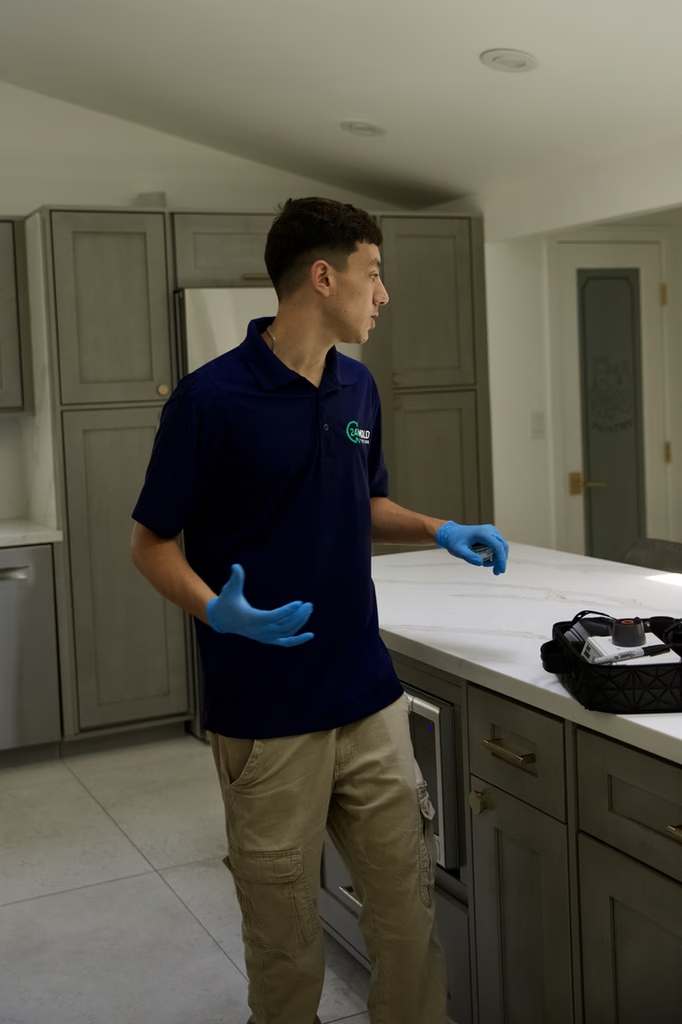
Mold inspector at work

Checklist

When Do You Need Moisture Detection?

Moisture detection is the right first step if:

  • —You smell mold or dampness but can't find the source
  • —You've had a plumbing leak, roof leak, or flood
  • —You're buying a property and want to verify no hidden moisture
  • —You had water damage and want to confirm the area is fully dry
  • —Recurring mold keeps coming back after surface cleaning

Moisture detection is often the fastest and most cost-effective way to scope a mold problem before committing to testing or remediation.

Detection Services

Our Detection Methods

Two complementary tools that together give a complete picture of moisture conditions in any building.

1Thermal Imaging

Infrared cameras reveal temperature anomalies that indicate hidden leaks, condensation zones, and moisture paths behind finished surfaces.

2Moisture Detection

Pin and pinless meters precisely measure moisture content in walls, floors, and ceilings—mapping the full extent of saturation without destructive investigation.

Mold inspection West Hills FAQ

Call For An Inspection
The hills around West Hills have burned in past wildfires. Fire-affected soils can shed rather than absorb rain, sending more runoff toward foundations and slopes for years. Homes near burned hillsides should have slope drainage and foundation moisture assessed in that context.
Hillside homes from the 1970s through 1990s have retaining walls and subdrains now 30 to 50 years old. Weep holes plug and subdrains clog, so hillside moisture redirects toward foundations. Homes with downhill-facing lower levels can collect moisture long before it shows in the living space.
Yes, in two ways. Post-fire slope drainage can send more runoff toward foundations, and embers or heat may have damaged roofs, stucco, or decks, opening entry points that admit water in later storms. An inspection should check the envelope for fire-related damage.
Lakeside lots have a shallow water table and runoff from nearby slopes that raises ground moisture against foundations in wet years. Inspections record moisture at slab edges and crawl spaces and check grade and drainage around the lot.
Yes. For homes near the burn perimeter, slope drainage and foundation moisture matter most. For valley-floor homes, envelope condition and fire-related damage do. Independent documentation before closing protects you from inheriting a problem the seller may not know about.
Our West Hills team covers the whole community, including Castle Peak, West Hills Estates, Hidden Lake, the Fallbrook Avenue and Valley Circle areas, Shadow Ranch, and Bell Canyon, with same-day and next-day appointments and 24/7 emergency response. Canoga Park and Winnetka each have their own 24H Mold Inspection page. If your property is in either, start with that page.
The inspection is the diagnosis: moisture mapped, source identified, samples analyzed by a state-certified lab, and a written scope delivered. A separate contractor does any cleanup, because we perform inspection and testing only.

Contact

Book your West Hills mold inspection today

Tell us what's going on and we'll respond the same day

Location

24H Mold Inspection of West Hills

Address

6700 Fallbrook Ave Ste 250, West Hills, CA 91307

Hours

  • MondayOpen 24 hours
  • TuesdayOpen 24 hours
  • WednesdayOpen 24 hours
  • ThursdayOpen 24 hours
  • Friday6 AM – 6 PM
  • SaturdayClosed
  • SundayOpen 24 hours

Service area neighborhoods

  • Castle Peak Estates
  • West Hills Estates
  • Hidden Lake
  • Bell Canyon adjacent area
  • Fallbrook Avenue corridor
  • Valley Circle area
  • Shadow Ranch district
  • El Escorpión vicinity
Call For Service(818) 854-7446