24H Mold Inspection
Verdugo City24/7 EMERGENCY(818) 722-9113
HomeOur ServicesMold TestingAir Testing
Mold Testing

Air Testing

Mold air testing detects airborne spores and assesses indoor air quality, even in spaces where no visible contamination has shown up yet.

Overview

Why mold air testing matters

Most mold is invisible. Spores float undetected through ducts and doorways, spreading from room to room with the air itself. Air testing reveals the species and concentration of what's airborne, even when no visible growth is found on any surface.

Mold air testing detects:

  • Invisible mold spores circulating through the air
  • Differences in spore levels from one room to the next
  • Contamination inside HVAC systems and hard-to-reach areas
  • Early warning signs in rooms that appear unaffected
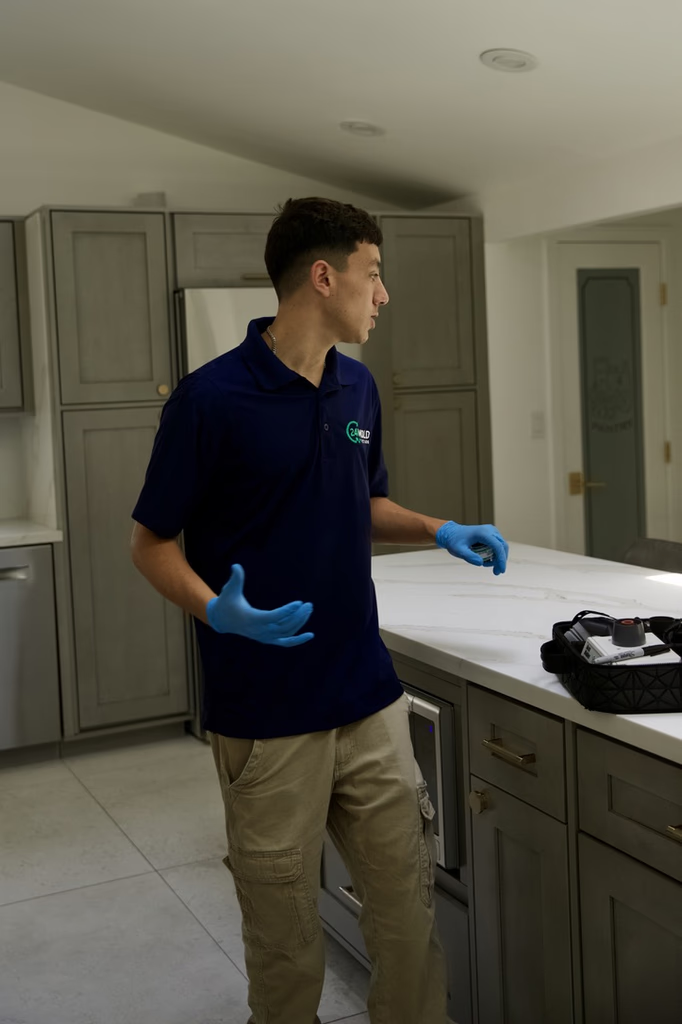
Why mold air testing matters
Mold inspector at work

Benefits

What you get from air testing

Understand the air quality and find what your eyes can't

  • Non-invasive: No drilling, no surface damage, no demolition needed.
  • Early detection: Catch contamination before it spreads or symptoms start.
  • Data-driven: Measure and compare spore counts room by room with lab-verified results.
  • Defensible documentation: State-certified lab results that hold up for insurance and real estate use.

About

How mold air testing works

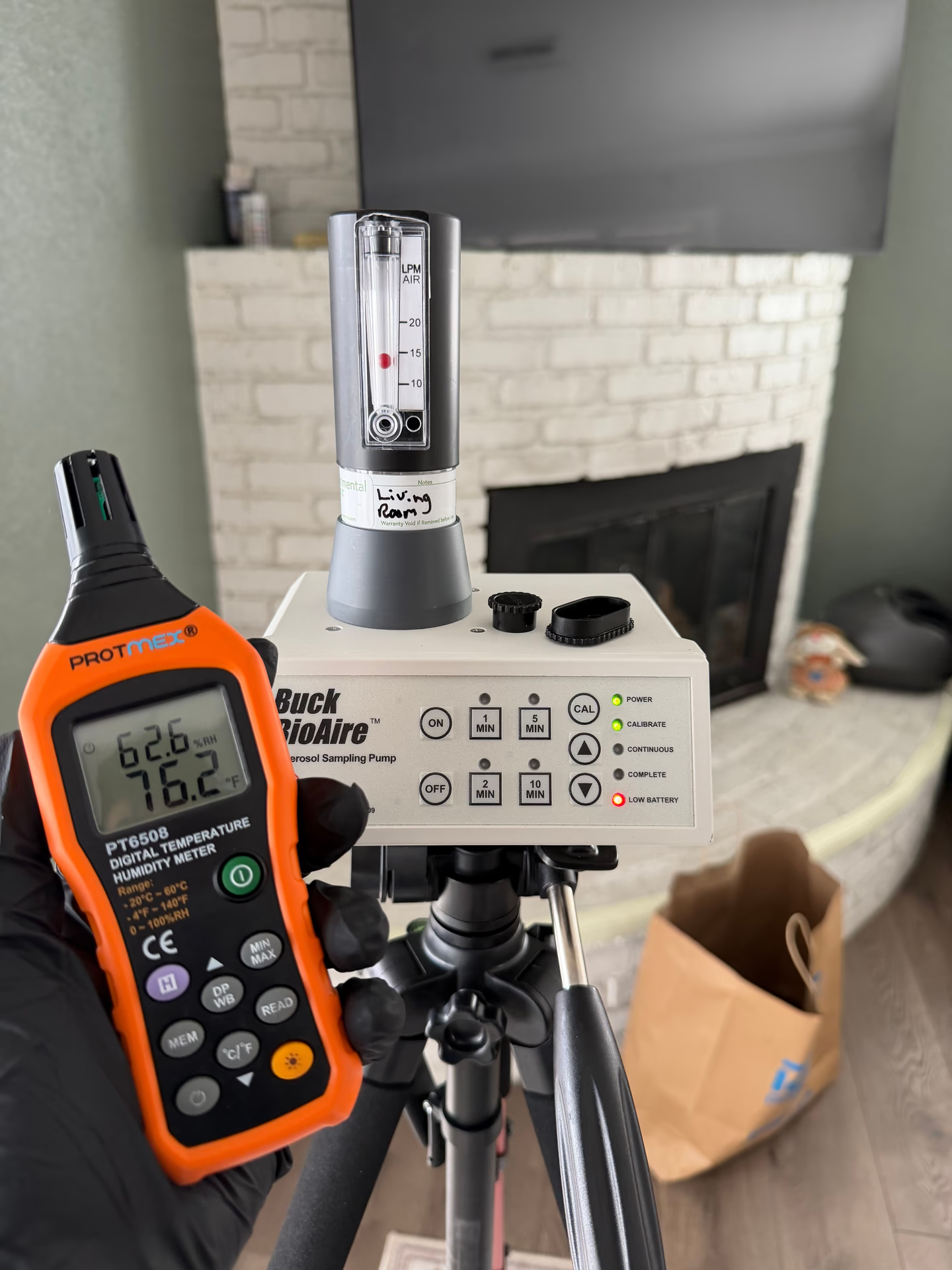
Our certified mold inspectors use calibrated sampling pumps to draw air through a spore trap cassette, capturing airborne mold spores. The lab identifies the mold species under a microscope, including any HVAC contamination if the system is implicated.

Our process includes:

  • Targeted sampling in problem areas and comparison sampling outdoors
  • Spore traps or impactor cassettes calibrated for accurate collection
  • Lab-verified results identifying species and spore counts
  • A written mold inspection report with the numbers and next steps
How mold air testing works

Mold inspection Verdugo City FAQ

Call For An Inspection
No. 24H Mold Inspection of Verdugo City inspects and tests only, and we never perform remediation or removal — that separation is deliberate. Most of what we open up in this pocket of the valley is foothill housing: 1920s and 1930s bungalows and post-1934 rebuild construction on raised foundations, later stucco homes on graded hillside pads, and small apartment buildings on the flatter blocks. In houses like those the visible patch is almost never the whole problem. Water arriving from a plugged subdrain, a buried area drain, or a roof valley packed with oak litter travels a long way behind finished surfaces before it stains anything, and the honest scope depends entirely on how far it went. A company that bills for the cleanup has a financial reason to keep finding more of it. What we produce is the diagnosis — what is growing, which moisture source feeds it, how far it extends, and lab confirmation of the samples. You take that report to remediation contractors and collect comparable bids on a defined scope. When they finish, we return for independent verification, which holds up with insurers precisely because we had no part in the removal.
Verdugo City is small — 91046 covers a pocket you can walk across in a few minutes, an unincorporated island of Los Angeles County with Glendale wrapped around it on every side — so our coverage is drawn around the valley rather than around the ZIP. That means Verdugo Woodlands, the Oakmont Country Club area, Crescenta Highlands, the Cañada Boulevard corridor, the Verdugo Canyon area, the Glendale foothills, the Mountain Street district, and the Chevy Chase adjacent area. Several neighbors have their own 24H Mold Inspection page written around that area's housing stock — Glendale, La Crescenta-Montrose, La Cañada Flintridge, Pasadena, Burbank, Altadena, Tujunga, and Sunland — so if your property sits in one of those, start there. Communities nearby without their own page, Studio City among them, are dispatched from here. Same-day appointments are realistic because this is all one dispatch area, and an active leak, a failed supply line, or water standing in a hillside garage after a storm is answered 24/7. If you are unsure which page covers your address, call the number on this page.
No, and it is worth being direct: we are mold inspectors, not general home inspectors. A home inspection is a broad condition survey — roof, electrical, plumbing, appliances, structure — and most contracts exclude mold outright, so its mold coverage stops at whatever is visible in accessible areas. A mold inspection is narrow and instrument-driven: moisture meters along wall bases and slab edges, thermal imaging over suspect assemblies, entry into attics and crawl spaces, and lab-analyzed air or surface samples when the walk-through justifies them. That gap matters on foothill property here. A hillside pad with a silted-up subdrain, a raised-foundation bungalow whose vents disappeared behind later hardscape, or a garage cut into a slope will all read as ordinary in a condition survey while holding moisture nobody has an instrument on. Most buyers in this valley do both: a licensed home inspector for overall condition, then a mold inspection when that report notes staining, odor, past water damage, grading that falls toward the house, or a crawl space nobody entered.
It shows up in the construction dates. A fire stripped the canyons above this valley in November 1933, and the storm that arrived on New Year's Eve sent debris flows down those bare slopes in the early hours of January 1, 1934 — boulders, mud, and water that killed at least forty-five people and destroyed hundreds of houses across the valley floor. What followed was a rebuild, so a large share of the housing stock here dates to the years between that flood and the war, and the county answered with the debris basins and lined channels that still catch what the canyons send down. Two consequences for an inspection. First, 1930s construction means raised foundations with vented crawl spaces, board sheathing, and no vapor retarder anywhere in the wall assembly, so moisture moves freely once it is in. Second, a house sitting downslope of a debris basin depends on infrastructure that is only as good as its last cleanout. On a property this age, the crawl space and the perimeter grading get checked before anything else.
Detection is the part people picture as sampling, but sampling comes last. It starts with water history — what leaked, when, what was repaired, and whether anyone in the house has been sick — then an exterior walk for grade, downspout discharge, and where slope water goes once it reaches the building. Inside, moisture meters read wall bases, slab edges, and the framing around windows, thermal imaging finds the temperature differences that mark wet material behind finishes, and attics and crawl spaces get entered rather than glanced at from the hatch. In this valley the standing questions are specific: whether crawl space vents are buried under later hardscape, whether an old hillside subdrain still outlets anywhere, whether ducting runs through a hot attic, and whether oak litter is holding water in the roof valleys. Sampling follows, always against an outdoor baseline taken the same day. A report naming the moisture source and its path is what a remediation contractor can bid on — a spore count without a cause is not.
This is where the unincorporated status matters. Verdugo City is a pocket of unincorporated Los Angeles County with Glendale wrapped around it, so an address inside 91046 answers to county building and safety and county code enforcement, and falls under the county's rent stabilization and tenant protections ordinance for unincorporated areas — while a rental three blocks away, across a line invisible from the street, is under the city's rules instead. Tenants regularly call the wrong agency and lose weeks to it. California has counted visible mold as a substandard housing condition under Health and Safety Code 17920.3 since 2016, so a habitability claim has a statute behind it either way. What a code inspector records, though, is a condition — not the source, and not how far it extends. An independent moisture and mold report does both, and because we never perform the remediation, neither side can argue the findings were written to sell a cleanup. Confirm which jurisdiction your address sits in before you file anything, because it determines who you file with.
It changes what the report has to do for you. Much of the foothill ground above this valley is mapped as a very high fire hazard severity zone, and since the fires of the last decade a lot of households here have been non-renewed and pushed onto the California FAIR Plan. A basic FAIR Plan policy is a fire policy: it covers fire, smoke, lightning, and explosion, and it does not cover water damage from a burst supply line or a failed water heater unless you have bought a separate difference-in-conditions policy alongside it. Owners tend to discover that gap while standing in a wet hallway. If that is your coverage situation, an inspection stops being about documenting a claim and starts being about catching the leak while it is still cheap — the corroded galvanized line, the water heater in its twelfth year, the slow drip under a hillside garage slab. Ask your broker plainly whether your policy covers sudden water damage, and schedule around that answer rather than around the season.

Contact

Book your Verdugo City mold inspection today

Tell us what's going on and we'll respond the same day

Location

24H Mold Inspection of Verdugo City

Service area neighborhoods

  • Verdugo Woodlands
  • Oakmont Country Club area
  • Crescenta Highlands
  • Canada Boulevard corridor
  • Verdugo Canyon area
  • Glendale foothills
  • Chevy Chase adjacent area
  • Mountain Street district
Call For Service(818) 722-9113