24H Mold Inspection
Ventura24/7 EMERGENCY(805) 941-1142
HomeOur ServicesMold InspectionThermal Imaging
Mold Inspection

Thermal Imaging

Infrared cameras find hidden mold conditions and water damage before any surface stain shows up.

Overview

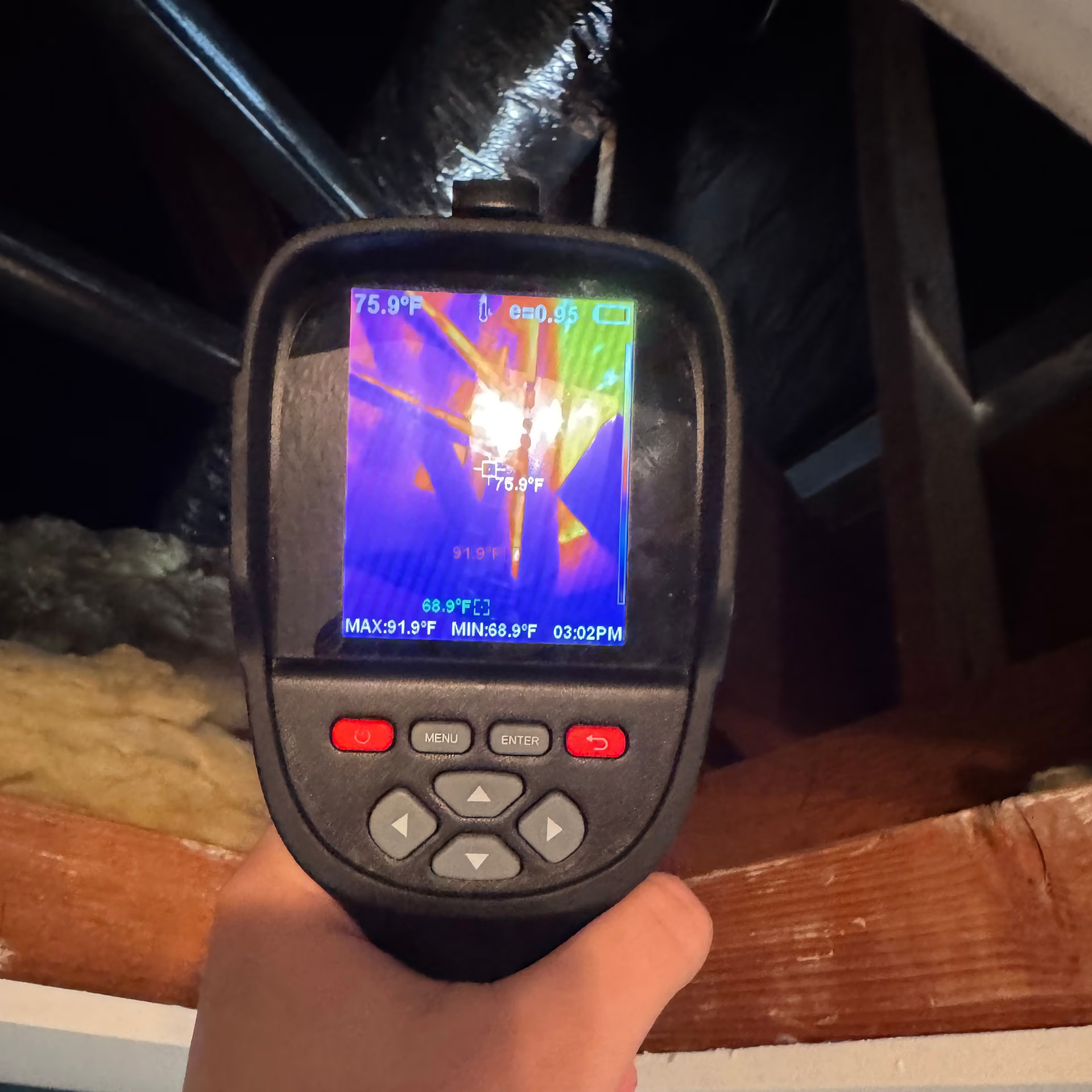
Why infrared thermal imaging finds mold others miss

Mold doesn't always announce itself. A small leak inside a wall, a stretch of failed insulation, or a cold-bridge condensation zone can build mold-friendly conditions for months before any stain reaches the surface. Thermal imaging reveals those conditions while they're still hidden, giving you a chance to address the moisture before mold has spread.

Thermal imaging detects:

  • —Hidden moisture inside walls, ceilings, and under floors
  • —Active leaks from plumbing, roofing, or HVAC components
  • —Insulation gaps and ventilation defects driving condensation
  • —Cold spots creating ideal future conditions for mold growth
Why infrared thermal imaging finds mold others miss
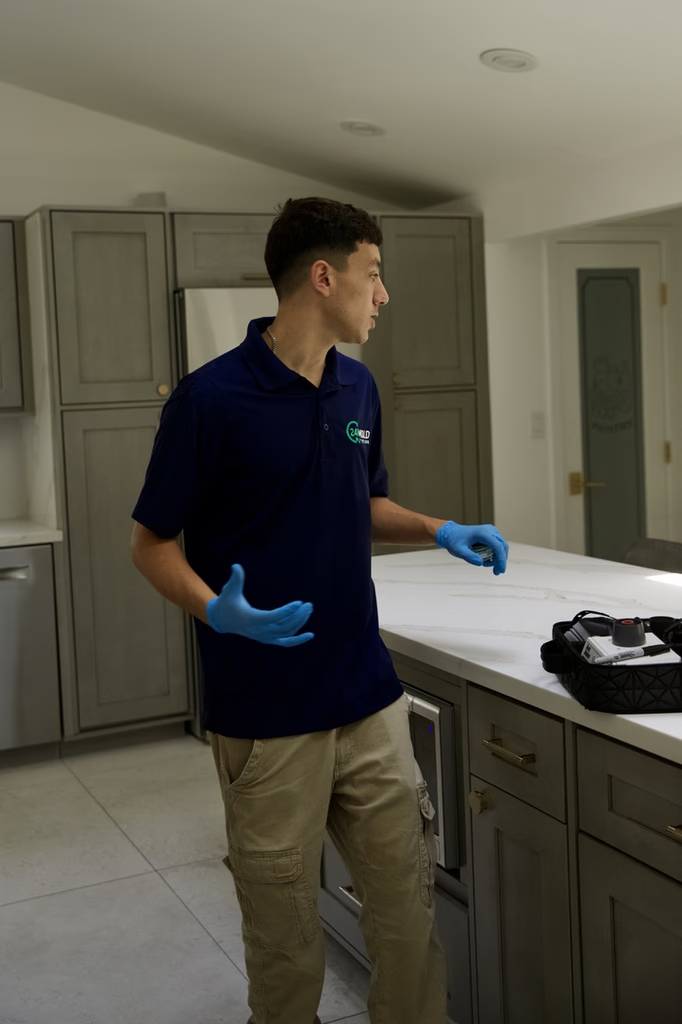
Mold inspector at work

Benefits

What you get from thermal imaging

Find hidden risks early without damaging the property

  • —Non-invasive: No drilling, no cutting, no surface damage.
  • —Early detection: Catches problems before damage becomes visible.
  • —Cost-effective: Targets repairs only where they're needed.
  • —Documented findings: Annotated thermal images included in the report.

About

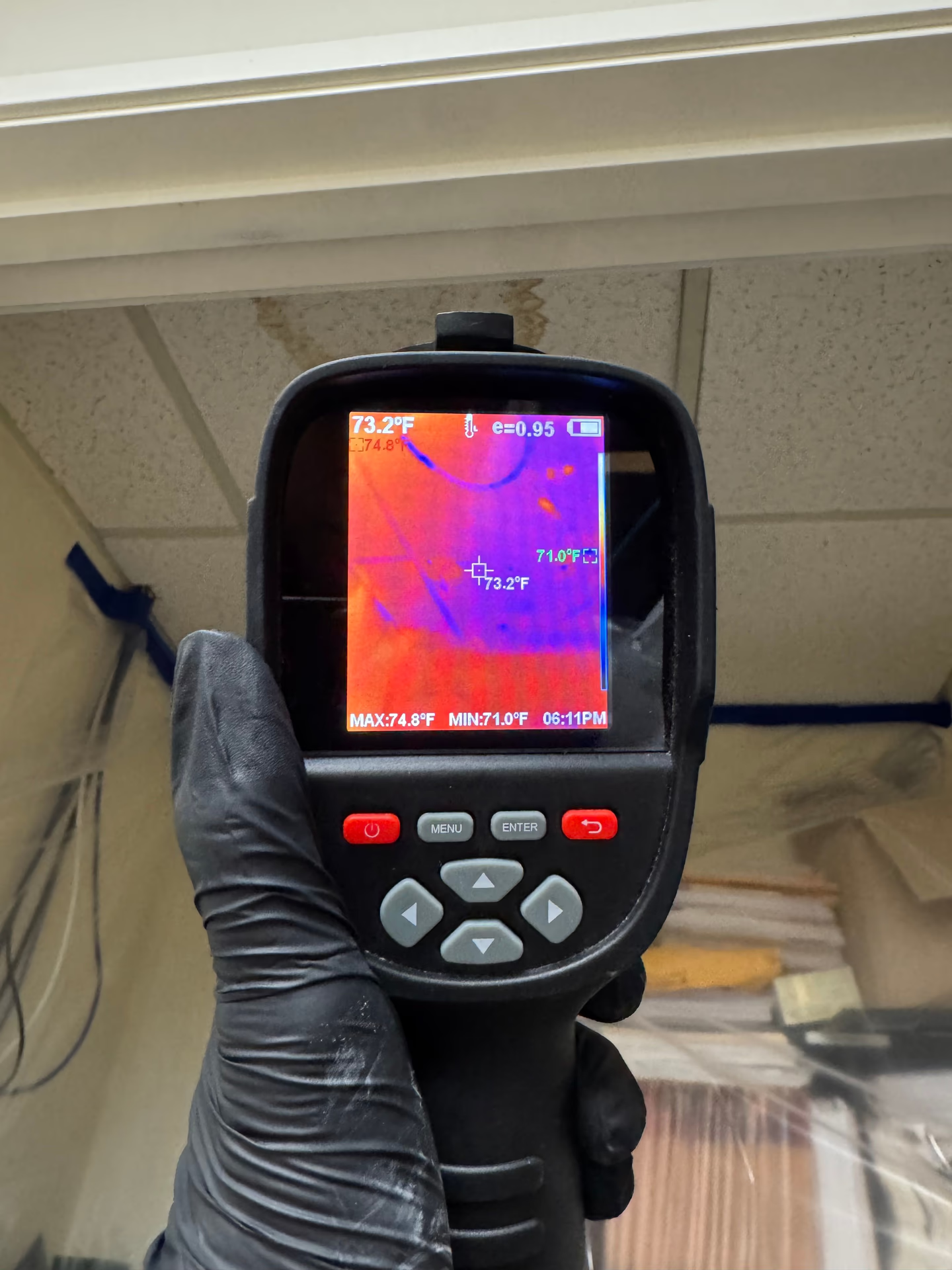
How thermal imaging mold inspection works

Our certified mold inspectors use FLIR cameras to read temperature differentials across surfaces. Cooler areas often signal water present in the material, even when no surface damage has appeared.

Our process includes:

  • —A complete thermal scan of key interior and exterior surfaces
  • —Identification of unusual cold or warm patterns in the readings
  • —Cross-checking thermal findings with calibrated moisture meters
  • —A mold inspection report including the annotated thermal images
How thermal imaging mold inspection works

Mold inspection Ventura FAQ

Call For An Inspection
It is worth doing, for two different reasons. The Thomas Fire broke out on December 4, 2017 and destroyed 525 homes in the city of Ventura alone, from the hillside streets above Foothill Road to the Hawaiian Village apartments near downtown, and damaged 138 more. Homes that survived often took heavy firefighting water on roofs, attics, and walls, and smoke residue drawn into attics and ducts can hold moisture. Homes rebuilt since then are new construction on old slopes: tight envelopes that trap interior humidity when ventilation falls short, framing closed in on a fast schedule, and drainage on graded hillside lots that sends runoff toward slab edges and retaining walls. Burned slopes above the city also shed water and sediment faster for several rainy seasons. A moisture survey of the uphill walls, the slab perimeter, and the attic gives you a baseline, and catches problems while they are still inside the warranty window.
Some are, and January 2023 showed why. On January 9 of that year the Ventura River near Ventura reached a record stage of 25.42 feet, flooding the riverside RV park near its mouth and forcing rescues along the channel. The Westside, the Ventura Avenue neighborhoods that run up the river valley, sits on the low ground beside that channel, where heavy storms raise the water table and runoff from the hills collects in streets and yards. The water that matters for mold is the water that reaches a house: pooling against stucco and slab edges, entering crawl spaces under older raised-foundation homes, and wicking into the bottom of drywall and sill plates. Because the coastal air dries slowly, that moisture lingers. After any storm that put water against or into the house, a moisture assessment within a few days shows whether it got in and whether it actually dried — before mold has time to establish in hidden spaces.
They have more places for it to hide than newer homes. Midtown's Spanish and Craftsman bungalows from the 1920s and 1930s mostly stand on raised wood foundations over crawl spaces built without vapor barriers, a mile or two from the ocean where the marine layer keeps the air damp on many mornings from spring into summer. That combination keeps crawl space soil and subfloors damp, and over nearly a century these houses have collected re-roofs, enclosed porches, room additions, and plumbing that mixes original galvanized pipe with newer lines. The usual findings are growth on the subfloor and joists beneath bathrooms and kitchens, damp crawl space soil after a wet winter, staining in the attic around old chimney and vent penetrations, and moisture where an addition meets the original walls. Stucco over older wood framing also hides cracks that let wind-driven rain inside. An inspection here goes into the crawl space and the attic, not just the wet rooms.
Pierpont's beach cottages and newer beach houses sit on narrow lots in sand a short walk from the surf, and they face the most persistent moisture exposure in the city. Salt air and onshore wind drive rain sideways into window frames, door thresholds, and siding joints, and salt deposits on surfaces attract and hold moisture. The sandy ground drains quickly at the surface but the water table sits close beneath it, so crawl spaces and slabs stay damp. Many cottages are older, small, and closely spaced, which limits airflow around and beneath them, and some are second homes or rentals closed up for weeks — the perfect setting for a slow leak or condensation problem to run unnoticed. The common findings are growth in closets on ocean-facing walls, subfloor moisture in crawl spaces, corroded metal fasteners staining wood, and mildew in bathrooms without exhaust. An inspection after a closed season catches what built up while no one was there.
They do, because they live with water on several sides. The Ventura Keys is a waterfront neighborhood of homes built along canals off Ventura Harbor, many with private docks and seawalls, and the constant presence of tidal water raises humidity around the houses and the water table beneath them. Seawalls and the soil behind them hold moisture against the foundation, and lower floors and garages closest to the water stay damp through much of the year. Salt air corrodes window frames, sliding-door tracks, and exterior fasteners, opening paths for wind-driven rain. Inside, the usual findings are growth behind furniture and in closets on canal-facing walls, condensation on aluminum windows, mildew in garages used to store boating gear, and moisture under flooring on the ground floor. Homes in the Keys sit low, near the harbor and the river mouths, which is why a moisture survey of the slab, the ground-floor walls, and the garage is the most useful starting point.
The Westside grew with the Ventura Avenue oil field, discovered in the hills north of town in the 1910s and at its peak the largest oil field in the county, and many of its homes went up for the families who worked it. Earlier, pioneer families planted citrus, walnut, and apricot orchards along the valley and built in places like the Simpson Tract, the city's first historic housing tract. That leaves a mix of early cottages, 1920s and 1930s bungalows, and postwar houses, many on raised foundations and many enlarged in stages. The moisture sources are consistent: crawl spaces near the river where the ground stays damp, original galvanized plumbing, roofs re-covered over older layers, and additions joined to small original houses. A large share are rentals with varied upkeep. An inspection focuses on the crawl space, the plumbing walls, and the seams between original construction and later additions.
A mold investigation follows the water rather than the stain. It starts with history — when the odor or growth appeared, past leaks, storms, repairs, and any symptoms in the household — and then works through the house with a thermal camera and moisture meter: bathrooms and kitchens, the water heater and supply lines, windows and doors on ocean-facing walls, the slab perimeter or crawl space, and the attic. In Ventura, investigators pay particular attention to crawl spaces under the older Midtown and Westside homes, to wind-driven rain entry on homes near the beach, and to slope drainage on the hillside streets. Where growth is suspected, air samples with a same-day outdoor baseline and surface swabs or tape lifts go to an accredited lab. The report documents what was found, the moisture source, photographs, lab results, and the scope of any remediation needed — so you know what to fix, not just what to clean.

Contact

Book your Ventura mold inspection today

Tell us what's going on and we'll respond the same day

Location

24H Mold Inspection of Ventura

Hours

  • MondayOpen 24 hours
  • TuesdayOpen 24 hours
  • WednesdayOpen 24 hours
  • ThursdayOpen 24 hours
  • Friday6 AM – 6 PM
  • SaturdayClosed
  • SundayOpen 24 hours

Service area neighborhoods

  • Downtown Ventura
  • Midtown
  • Westside
  • Eastside
  • Pierpont Beach
  • Montalvo
  • Saticoy
  • Ventura Keys
Call For Service(805) 941-1142