1
Mold inspection
- Moisture detection
- Infrared technology
- Certified mold inspectors
- No conflict of interest

Certified mold inspection and testing in Ventura. Same-day appointments, lab-verified reports, and no financial stake in any remediation work that follows.
(805) 941-1142What We Do
Air and surface samples analyzed in a state-certified lab. You receive mold species ID, spore count data, and lab-verified documentation that holds up with insurers, attorneys, or counsel.
About
At 24H Mold Inspection of Ventura, we know no two buildings respond to moisture the same way.
The City of Ventura sits at a geographic juncture where the Transverse Ranges meet the Pacific — a position that gives it a genuinely unique moisture environment among Southern California coastal communities. The Santa Clara River, which reaches the ocean just north of downtown Ventura, contributes floodplain hydrology and a historically high water table to the properties in its lower watershed, while the city's direct ocean exposure along its downtown and pier district maintains persistent marine layer humidity across the broader community. Ventura's housing stock is among the oldest in Ventura County, with a significant inventory of pre-WWII and mid-century structures in its historic downtown and eastside neighborhoods — buildings that were constructed without modern moisture barriers and that carry decades of plumbing aging, roof cycle history, and foundation drainage changes that collectively represent significant cumulative mold risk.
Ventura's property inventory spans pre-war bungalows and craftsman homes in the historic downtown and eastside neighborhoods, post-war tract development in midtown and westside areas, beachfront and near-beach residential properties along Pierpont Beach and the harbor corridor, and a significant commercial and mixed-use inventory in the downtown core. The older residential stock — particularly the pre-1960s properties — represents the city's highest mold risk concentration, where original materials have aged beyond their design life and moisture management systems are either absent or have long since failed. Pierpont Beach properties combine the added challenge of direct ocean exposure with the construction age of mid-century beach cottages, a combination that warrants particularly careful inspection.
Services
Mold inspection, mold testing, and environmental risk assessments for Ventura properties. Available 24/7, with no remediation work to bias the findings.

Why Us
24H Mold Inspection of Ventura combines local field experience with state-certified methods and lab analysis. Reports get back to you quickly and clearly, with no upsell tacked on to the findings.
We don't stop at surface-level findings. Active leaks, health symptoms, post-remediation work, and pre-purchase due diligence each call for a different inspection approach. Our certified mold inspectors guide you through the specific situation rather than running a generic checklist.
Strengths
We check every box, then go further. Book your inspection today
Licensed inspectors with proven field experience in Ventura.
FLIR thermal cameras, calibrated moisture meters, and lab-verified sampling.
Straightforward updates and honest reporting throughout the process.
5.0 stars from 89+ Ventura homeowners and businesses.
Testimonials
Thousands of Ventura property owners have come to us for reliable, detailed mold assessments
Amazing work! Very cooperative and explained everything perfectly. Walked me and my roommates through the process and was very compliant.
Mya S.
5 Step Process
Choose a date and time that fits your schedule.
Flexible scheduling means same-day and next-day appointments are usually available, with 24/7 emergency response when the situation needs it.
Our certified mold inspectors assess every mold-prone area.
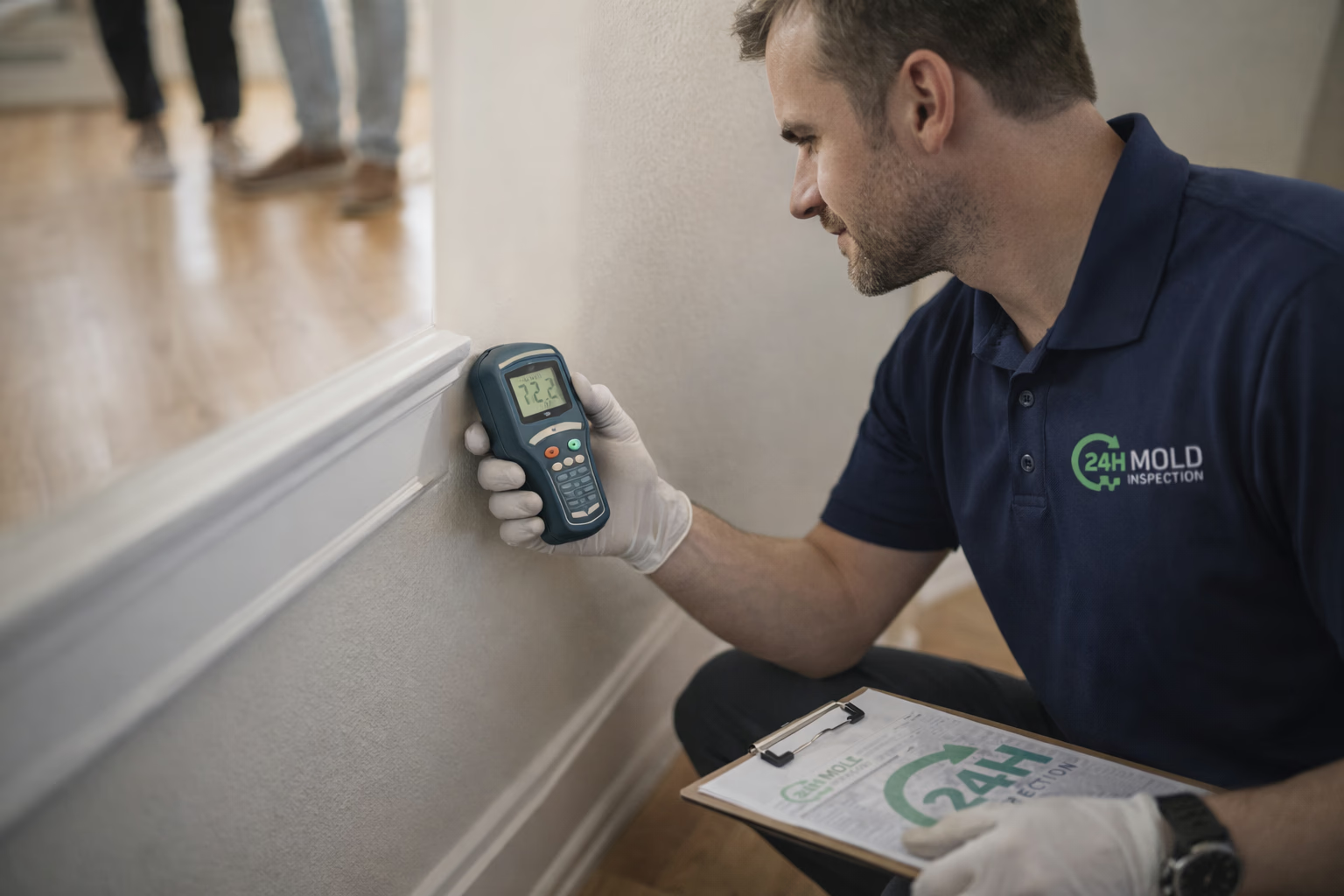
We walk the property identifying visible mold and moisture issues, using thermal imaging and moisture meters to catch what's hidden behind walls and under flooring.
Air and surface samples collected for lab analysis.
Our certified mold inspectors collect targeted samples from key areas to find mold spores both visible and hidden, with sample sites documented on a property map.
Lab testing returns precise results.
Samples go to a state-certified lab for detailed analysis identifying mold species and contamination levels, typically returned within 24 to 72 hours.
Insights and clear next steps from our experts.
You receive a written report with lab results, inspector findings, and specific recommended action steps to resolve any mold issues safely.
Who We Serve
24H Mold Inspection of Ventura brings clear answers to HOAs, hotels, commercial buildings, and homes through certified mold inspection and testing services.
Father Junípero Serra founded Mission San Buenaventura on March 31, 1782 — the ninth mission in the chain and the last founded in his lifetime — and the town that grew around it has been known as Ventura since 1891. Downtown holds the city's oldest construction: masonry commercial blocks with flat roofs behind parapets, apartments above storefronts, and Victorian and early-twentieth-century houses on the surrounding hillside streets. A few blocks from the ocean, marine-layer humidity slows drying everywhere. Parapet flashing, clogged roof drains, aging supply plumbing, and crawl spaces under the older houses are the recurring moisture sources here.
The Westside grew with the Ventura Avenue oil field, discovered in the hills north of town in the 1910s and at its peak the county's largest, and earlier with the citrus, walnut, and apricot orchards of pioneer families who built tracts like the Simpson Tract, the city's first historic housing tract. The neighborhoods run up the Ventura River valley, and on January 9, 2023 the river near Ventura reached a record stage of 25.42 feet. Low ground near the channel, older raised-foundation homes, original galvanized plumbing, and additions built in stages define the moisture risk here.
Midtown is lined with Spanish Revival and Craftsman bungalows from the 1920s and 1930s, most standing on raised wood foundations over crawl spaces built without vapor barriers, a mile or two from the beach. Marine-layer mornings from spring into summer keep crawl space soil and subfloors damp, and nearly a century of re-roofs, enclosed porches, room additions, and mixed original and replacement plumbing adds seams where water collects unseen. Typical findings are growth on subfloors and joists beneath bathrooms and kitchens, staining at old chimney and vent penetrations in the attic, and moisture behind stucco where cracks let wind-driven rain inside.
Pierpont's beach cottages and newer beach houses crowd narrow lots in the sand a short walk from the surf, and just beyond, the Ventura Keys line canals off Ventura Harbor with homes on private docks and seawalls. Both sit on low ground where the water table runs close beneath the surface, salt air corrodes window frames and fasteners, and onshore wind drives rain sideways into thresholds and siding joints. Closely spaced houses limit airflow, and second homes and rentals closed up for weeks let slow leaks and condensation run unnoticed. Ground-floor walls, crawl spaces, garages, and ocean- or canal-facing closets show it first.
The Thomas Fire broke out on December 4, 2017 and destroyed 525 homes in the city of Ventura, burning through hillside streets above Foothill Road and reaching apartments near downtown. Much of the hillside has since been rebuilt, which brings newer-construction moisture risks — tight envelopes, framing closed in on fast schedules, attic HVAC — to graded lots where runoff moves toward slab edges and retaining walls. The burned slopes above shed water and sediment faster for several rainy seasons afterward, and homes that survived often took heavy firefighting water in their attics and walls and smoke residue in their ducts.
Google Search
Add 24H Mold Inspection as a preferred source so our pages are easier to spot in your Google results.
Contact
Tell us what's going on and we'll respond the same day
Location
24H Mold Inspection of Ventura
Phone
(805) 941-1142Hours
Service area neighborhoods
Newsletter
Monthly notes from our inspectors on prevention and air quality.