
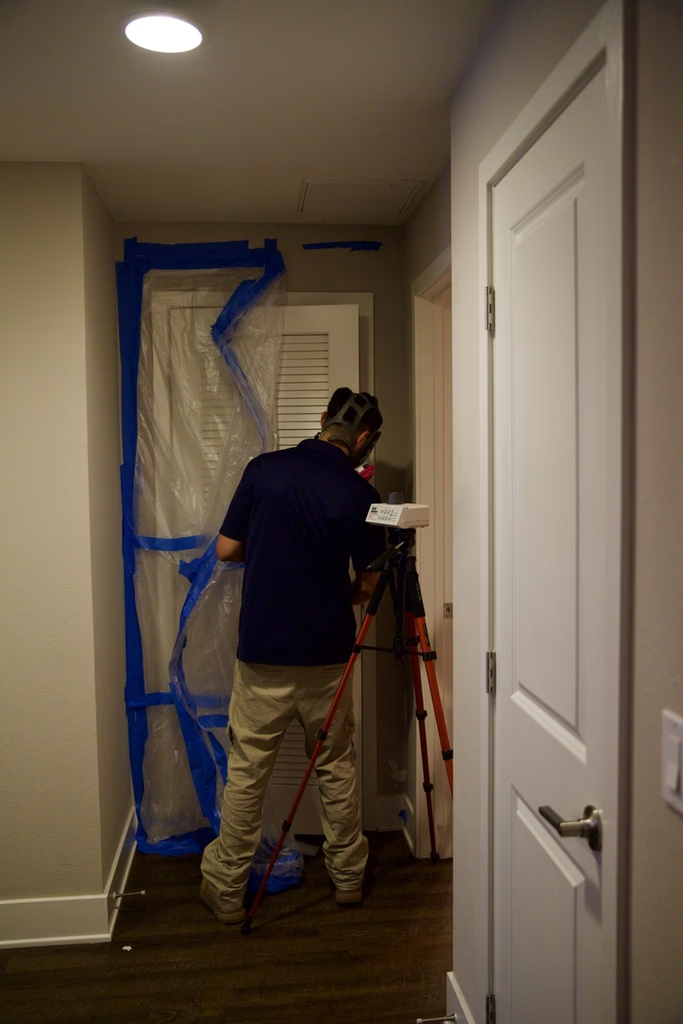
Collects airborne mold spores to assess air quality and detect hidden contamination.
our services
Mold Testing
State-certified testing that spots hidden mold—so you can act early, stay safe, and avoid costly repairs.
About
Why Mold Testing Matters
Mold isn't always visible. It hides in air vents, under floors, and inside walls. The only way to know what you're breathing—or what's spreading—is through lab-grade testing.
- —Identify mold species and spore levels
- —Detect hidden growth in "clean" areas
- —Assess the health risk to occupants
- —Decide on the right next steps
Methodology
How our mold testing works
The three sampling methods we use, chosen for what your property is showing
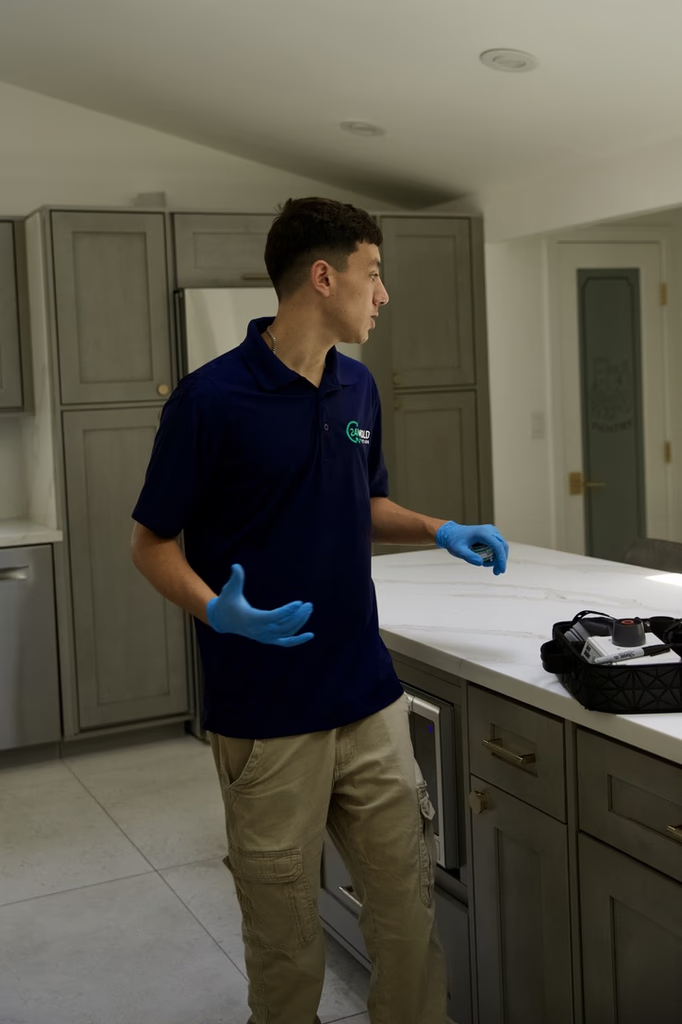
Sterile swabs and clear adhesive tape collect mold from visible spots on dry surfaces, giving the lab a clean sample for species identification. Suitable for walls, ceilings, baseboards, and furniture where the residue is what you're checking.
For damp or recently water-damaged areas, the sampling approach changes. Wet sampling captures live, actively growing colonies that dry methods underrepresent, which matters under flooring, behind tile, and around recent leaks.
A calibrated pump pulls a controlled volume of air through a spore trap cassette, capturing viable and non-viable spores from the breathing zone. The lab counts species and compares concentrations to outdoor levels, telling you whether your indoor air is healthy.
Checklist
Is Testing Right for You?
Mold testing is ideal if:
- —You suspect mold but can't see it
- —You've had water damage
- —Residents or tenants are reporting health symptoms
- —You're buying, selling, or managing a property
- —You need peace of mind after remediation
Still unsure? Let's talk. We'll help you decide which method suits your case best.
Testing Overview
Our Testing Methods
Techniques we use to collect accurate mold samples from air and surfaces.
Lifts mold samples from surfaces using clear adhesive—quick and non-destructive.
Gathers samples from damp or textured areas to identify active mold growth.
Mold inspection Toluca Lake FAQ
Call For An InspectionSame-day and next-day appointments are usually available across our Toluca Lake service area, with 24/7 emergency response for active leaks, recent water damage, or urgent real estate timelines. Standard scheduling runs 1 to 3 business days depending on availability.
Our certified mold inspectors assess bathrooms, kitchens, laundry rooms, basements, attics, crawl spaces, HVAC components, and any area showing signs of past or current water issues. Thermal imaging and moisture meters identify hidden moisture behind walls and under floors.
Major renovations often connect newer materials and systems to older portions of a structure. If plumbing, waterproofing, ventilation, or drainage upgrades are incomplete or inconsistent, moisture can accumulate behind newly finished surfaces where problems remain hidden until mold growth becomes significant.
Pricing varies based on the size of the property, the scope of testing required, and whether any lab work is included. Most residential mold inspections in Toluca Lake fall within the standard industry range of $300 to $600, with a clear quote provided before any work begins.
Air sampling, swab testing, tape lift testing, wall cavity sampling, and HVAC mold testing. The inspector recommends the right method on-site based on what's found. Samples go to a state-certified lab, with results typically back in 24 to 72 hours.
Mold needs water to grow, so finding the moisture source is what prevents the same problem from coming back after any cleanup. Moisture detection during the inspection identifies plumbing leaks, roof leaks, condensation issues, and humidity buildup that's feeding any growth.
Yes. Post-remediation verification confirms the remediation contractor's work succeeded and the space is safe to reoccupy. Because we don't perform remediation ourselves, the verification stays independent of the remediation contractor's interests, which is what insurers and tenants look for.
No. 24H Mold Inspection of Toluca Lake inspects and tests only, and never performs remediation or removal. The separation matters more than usual with this housing stock. Homes here are typically pre-1940 lath-and-plaster on raised foundations, sitting over a shallow water table, and carrying three or four rounds of remodeling on top of the original structure. Plaster does not stain and telegraph a leak the way drywall does, so the visible spot is rarely the boundary of the wet area, and a company that bills by the square foot of removal is also the company drawing that boundary. What we deliver is the diagnosis: what is growing, which moisture source feeds it, how far it extends behind the finish, and lab confirmation of the samples. You take that to two or three remediation contractors and get comparable bids on a defined scope instead of three different guesses about how much wall has to come out. When the work is finished, we can return for independent verification.
The whole neighborhood and the pockets that share its name. That means Toluca Estates, the Riverside Drive corridor, Toluca Lake Village, the Moorpark Street blocks, the Cahuenga Boulevard corridor, and the lake itself, plus West Toluca Lake, Toluca Woods, and Toluca Terrace, which carry Toluca addresses but sit outside the lake blocks proper. We also handle Studio City from this team, since the housing and the moisture patterns run continuously across that line. Several neighbors have their own 24H Mold Inspection page written around their own building stock: if your property is in Burbank, North Hollywood, Valley Village, Valley Glen, Sherman Oaks, or Glendale, start on that city's page instead. Scheduling here is usually same day or next day, and we take emergency calls around the clock, which is what an escrow closing Friday or a supply line that let go overnight actually requires. If your address sits on a boundary, call the number on this page and we will route it to the right team.
No, and the difference is worth understanding before you spend on either. A general home inspection is a broad condition survey covering roof, electrical, plumbing, and appliances, and most contracts exclude mold outright; its moisture coverage stops at what is visible from accessible areas. In this neighborhood that leaves the most important spaces out. The crawl spaces under pre-1940 raised foundations here are shallow, often under eighteen inches, and an inspector is not obligated to enter one that tight, which is exactly where a high water table does its damage. Layered remodels hide the rest behind finishes that photograph beautifully. A mold inspection is narrow and instrument-driven instead: moisture meters, thermal imaging, sub-area and attic entry, and lab-analyzed samples where the walkthrough justifies them. Most buyers here order both. The efficient sequence is the home inspection first, then a mold inspection inside the contingency window aimed at whatever it flagged, whether that is a sub-area the inspector could not reach, an odor, or a repair someone made without a permit.
It is the defining condition of the neighborhood. The lake is spring-fed, not filled from a pipe, and the surrounding blocks sit on the river's old floodplain, so groundwater here runs shallower than on most of the valley floor. After the March 1938 flood, the Army Corps lined the river channel in concrete, which moves storm flow out quickly but does nothing to lower the water table in the alluvium these houses are founded on. The practical consequences show up in three places: crawl spaces that stay damp through a dry summer because the soil beneath them never dries, subterranean rooms and garages cut in during later remodels that now sit in seasonally saturated ground, and pool and spa equipment vaults that hold water long after the rain stops. If your property is within a few blocks of the water or has any below-grade space, the sub-area and the below-grade walls are where an inspection here should start, not the bathroom ceiling.
Detection is the part that matters when nothing is visible, which is the usual situation here. It starts with the water history: what leaked, when, what was repaired, and which permits exist for the work. Then moisture meters along the base of walls and around every plumbing wall, thermal imaging to find the temperature signature of wet material behind a finish, and physical entry into the crawl space and attic. Sampling comes last and only where the walkthrough justifies it, including wall cavity sampling that reaches inside an assembly without opening it up. The local complication is that Toluca Lake and Toluca Terrace homes are mostly plaster over wood lath, sometimes with drywall added over the top during a remodel. That sandwich holds moisture without staining and reads differently on a meter than plain drywall does. Ask whoever inspects your property whether they meter through plaster and lath and what they do when the reading is ambiguous, because that answer separates a real assessment from a walkthrough.
It depends on which side of the line you are on, and the line runs through the neighborhood. Homes marketed as Toluca Lake carry 91602 on the Los Angeles side and 91505 on the Burbank side, with Clybourn Avenue forming much of the boundary, so two houses on the same block can answer to different building departments. That changes real things. Permits, inspections, and records requests for past work go to different agencies, so a leak traced to an unpermitted addition is researched in a different office depending on your address. Los Angeles rent stabilization covers pre-1978 multifamily on the city side and does not apply across the line, which matters when a tenant reports moisture in a duplex. Our inspection and report are the same either way, because testing is not licensed by either city. Before you call, check which city your parcel is in, since that determines where the permit history that explains your moisture problem is actually filed.
Yes, and the two share a border and a building stock, which is why one team covers both. The flat blocks north of Ventura Boulevard were subdivided in the same 1920s to 1940s period as the streets around the lake and carry the same raised foundations, plaster interiors, and mature irrigated landscaping pressed against original stucco. Where Studio City diverges is the south side: the streets climbing toward Mulholland put post-war houses on cut-and-fill pads and caissons, and hillside moisture arrives laterally through fill and behind retaining walls rather than up through a crawl space. Those two profiles need different inspections, and knowing which one you have before the appointment saves time. There is no separate 24H Mold Inspection page for Studio City, so this is the right team for a Studio City address, with the same same-day scheduling and around-the-clock emergency response. Tell us whether your property is on the flats or the hillside when you call and we will scope it accordingly.
The assessment is the on-site evaluation — the visual inspection, the moisture mapping with thermal imaging and meters, and the diagnosis of what is actually driving the growth. Testing is the laboratory component within it: air samples collected on spore traps, or surface samples taken by swab, tape lift, or bulk, analyzed by an accredited independent laboratory for species identification and spore counts. The assessment produces the answer; the testing confirms and quantifies it. Not every property here needs both. Where growth is visible and the source is obvious, sampling frequently adds cost without changing the next step. Where there is odor or symptoms with nothing visible, or where an insurer, a buyer, or an association needs documentation that will hold up, lab results are what make the findings defensible. Toluca Lake's heavily remodelled housing tends to fall into that second category more often than most neighbourhoods, because when finishes are newer than the structure behind them there is usually nothing visible to point at even when a problem is well established.
Start by discarding the assumption that some agency has already vetted them. California's Toxic Mold Protection Act of 2001 directed the state to establish permissible exposure limits for indoor mold; those limits were never set, and no state body issues or revokes a mold inspector credential. The confusion is worse than usual for Toluca Lake addresses, because properties here fall under either the City of Los Angeles or the City of Burbank depending on the block, and owners often assume whichever city they are in must license this work. Neither does. What is actually verifiable: recognized third-party industry certification, current liability insurance, samples analyzed by an accredited independent laboratory rather than read on site, a company that does not also sell remediation, and a written report with photographs, readings, and marked sample locations. That last item matters commercially here — production and post-production tenants frequently need documentation an insurer or a studio facilities group will accept, and a verbal finding will not survive that review.
Yes — the retail and professional buildings along the Riverside Drive corridor and through Toluca Lake Village, offices, condominium associations, and the production, post-production, and support facilities that fill much of the commercial stock between here and Burbank. Those last properties bring an inspection profile you do not see in an ordinary office. Sound stages, edit bays, and equipment rooms run continuous heavy cooling loads, which means large condensate volumes and long duct runs, and the interior build-outs are frequently non-standard assemblies added inside an older shell — soundproofing, isolated wall constructions, and rooms without normal ventilation paths. Moisture that gets into one of those assemblies has very little opportunity to dry and almost no way to become visible. Add low-slope roof drainage above ceiling systems and the result is damage that develops well out of sight. Reports are written to be relied on by an owner, a tenant, a manager, or an insurer.
Hand every contractor the same report and ask them to bid the scope it documents, so the quotes differ on price and method rather than on how much mold each company says it sees. Confirm a current CSLB license, required for any job over five hundred dollars in combined labor and materials, plus workers compensation and liability coverage. Then ask one question that matters a great deal on this particular housing stock: how the contractor handles discovering an assembly that is not what the plans or the finishes suggested. Toluca Lake homes commonly carry several generations of renovation, so opening a wall can reveal an older exterior surface buried inside the building, framing from two different eras meeting mid-cavity, or plumbing rerouted in a way nobody documented. A contractor who handles that with a written change to the scope is fine; one who treats it as a reason to expand the job on the spot is not. And confirm the moisture source repair is in the scope.
The report documents what was found and where, the photographs and instrument readings supporting it, the moisture source behind the growth, and any laboratory results with sample locations marked. That combination is what makes it useful to somebody other than you. Adjusters want the moisture source and a dated record of the condition, because policies distinguish sharply between a sudden failure and long-term seepage and that distinction generally decides coverage. Remediation contractors want a defined scope so their bids are comparable. Buyers, sellers, and agents want findings from a party with no stake in the transaction. One local note worth knowing: properties with a Toluca Lake address sit in either the City of Los Angeles or the City of Burbank depending on the block, so if the work will need permits, the report should go to the jurisdiction that actually covers your parcel. Lab results typically return within twenty-four to seventy-two hours.
It is the independent check performed after the cleanup and before containment comes down and finishes go back on: confirmation that the affected material was actually removed, meter verification that framing and substrate dried to a normal moisture content, and clearance air sampling compared against an outdoor control taken the same day. It should come from someone other than the remediation company — a contractor verifying their own work is grading their own exam. In Toluca Lake the argument for it is strongest on exactly the properties where it is most often skipped: high-end homes where the finish work following remediation is expensive and highly visible. Closing up a wall that had not fully dried is a costly mistake here in a way it is not in a simpler house, because correcting it later means taking apart custom millwork, stone, or plaster to reach the framing. Verification before the finishes go back is the cheapest insurance available at that stage.
Contact
Book your Toluca Lake mold inspection today
Tell us what's going on and we'll respond the same day
Location
24H Mold Inspection of Toluca Lake
Phone
(818) 855-7064Hours
- MondayOpen 24 hours
- TuesdayOpen 24 hours
- WednesdayOpen 24 hours
- ThursdayOpen 24 hours
- Friday6 AM – 6 PM
- SaturdayClosed
- SundayOpen 24 hours
Service area neighborhoods
- Toluca Estates
- Riverside Drive corridor
- Toluca Lake Village
- Moorpark Street area
- Bob Hope Drive vicinity
- Cahuenga Boulevard corridor
- Studio City border area
- Burbank adjacent area