
24H Mold Inspection
Tarzana24/7 EMERGENCY(818) 854-7723
HomeOur ServicesLeak & Moisture Detection
our services

Leak & Moisture Detection

Hidden moisture is the root cause of most mold problems. We locate it precisely—without tearing into walls—so you can fix the source, not just the symptoms.

About

Why Moisture Detection Comes First

Mold needs moisture to grow, and moisture hides. We use non-destructive instruments to map water through walls, floors, and ceilings—and thermal cameras to see temperature anomalies that indicate active leaks or condensation—giving you a precise location before any repair work begins.

Moisture detection helps you:

  • —Pinpoint the exact source of a leak before demolition
  • —Map moisture spread behind walls and under flooring
  • —Identify condensation-prone areas before mold appears
  • —Confirm repairs were effective after water damage is addressed
Why Moisture Detection Comes First

Methodology

How We Detect Moisture

Non-destructive tools that locate water without cutting into your property.
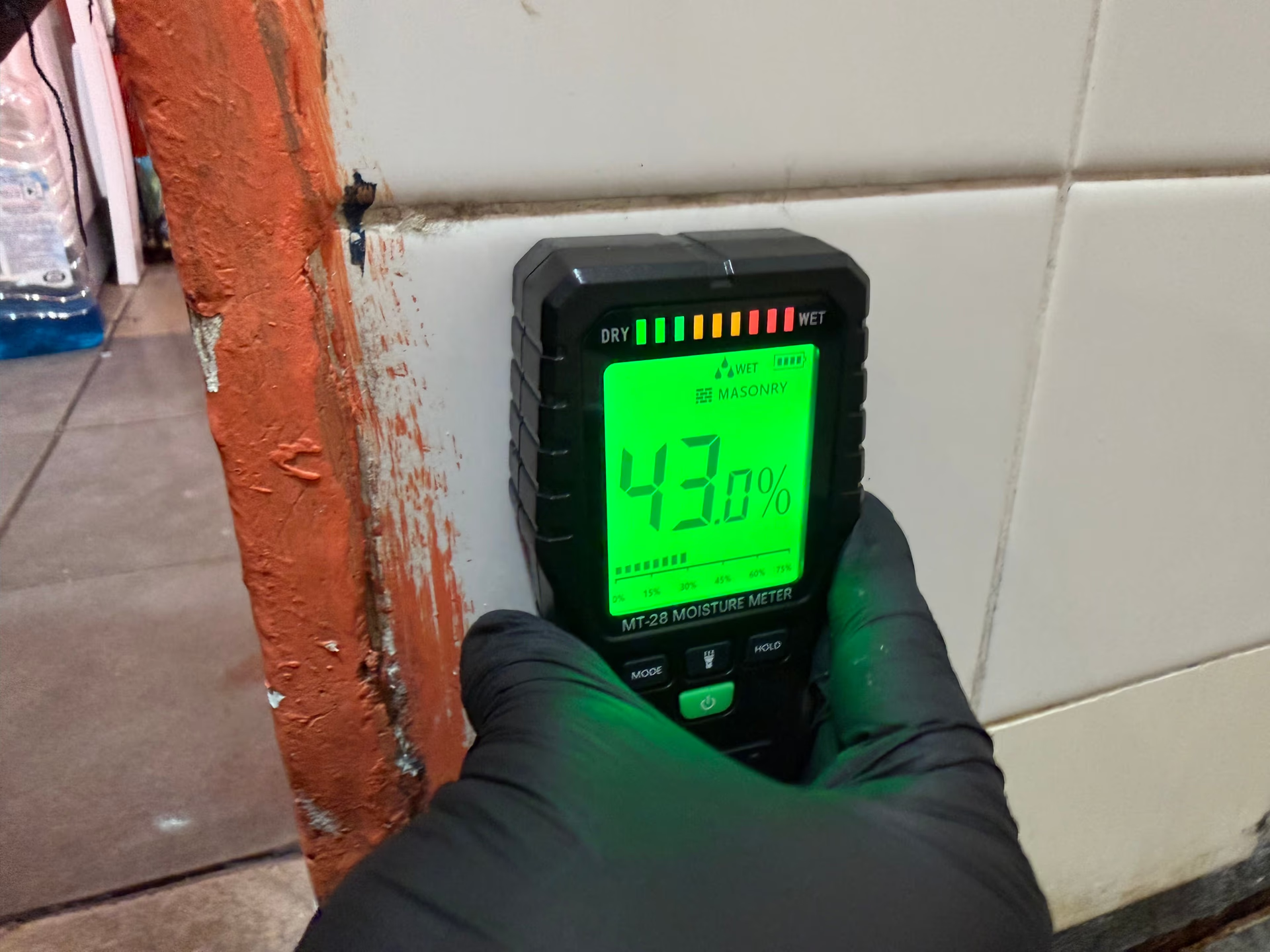
We measure the moisture content of walls, floors, and ceilings using both pin-based and non-invasive pinless meters—mapping the full extent of saturation without surface damage.

Best for:

— Drywall, wood framing, and subfloor assessment
— Mapping moisture spread after a water event
— Establishing baseline readings for monitoring

Our thermal cameras detect temperature differentials across surfaces. Water-loaded materials hold heat differently than dry materials, making leaks and saturated zones visible behind finished walls.

Best for:

— Finding active leaks behind drywall without cutting
— Locating plumbing or roof leaks not yet surface-visible
— Identifying condensation zones that feed mold

Every finding is documented with photos, moisture readings, and thermal images. You receive a clear report so contractors, insurers, or property managers can act immediately.

Report includes:

— Moisture readings mapped by room and surface
— Thermal images with annotated anomaly locations
— Probable source identification and next steps

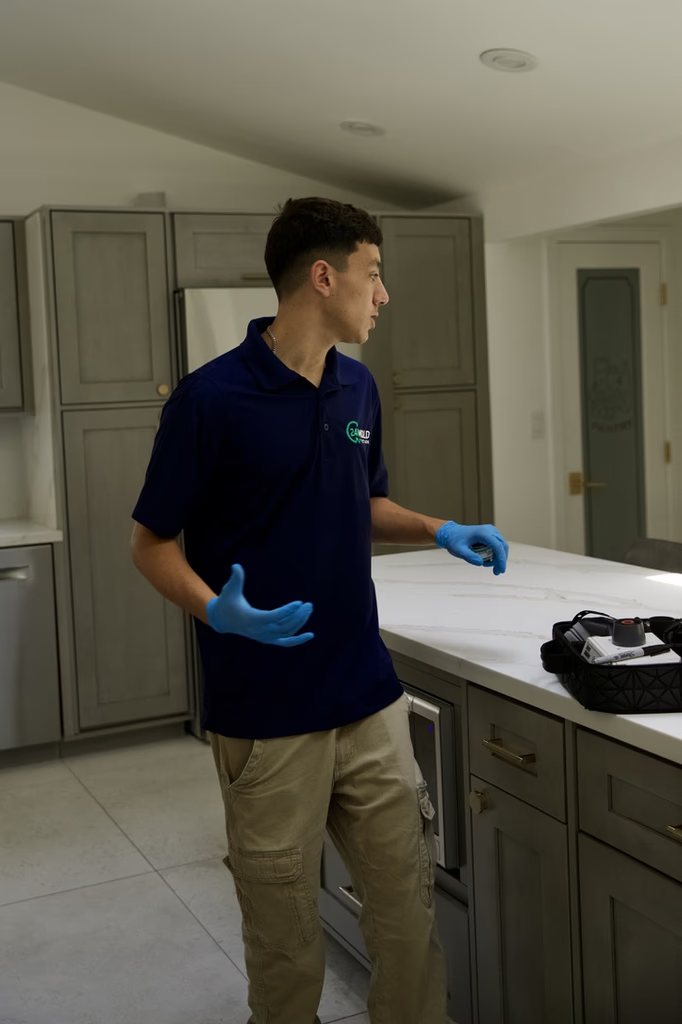
Mold inspector at work

Checklist

When Do You Need Moisture Detection?

Moisture detection is the right first step if:

  • —You smell mold or dampness but can't find the source
  • —You've had a plumbing leak, roof leak, or flood
  • —You're buying a property and want to verify no hidden moisture
  • —You had water damage and want to confirm the area is fully dry
  • —Recurring mold keeps coming back after surface cleaning

Moisture detection is often the fastest and most cost-effective way to scope a mold problem before committing to testing or remediation.

Detection Services

Our Detection Methods

Two complementary tools that together give a complete picture of moisture conditions in any building.

1Thermal Imaging

Infrared cameras reveal temperature anomalies that indicate hidden leaks, condensation zones, and moisture paths behind finished surfaces.

2Moisture Detection

Pin and pinless meters precisely measure moisture content in walls, floors, and ceilings—mapping the full extent of saturation without destructive investigation.

Mold inspection Tarzana FAQ

Call For An Inspection
Hillside homes depend on retaining walls, weep holes, and subdrains that are now 40 to 60 years old. When they fail, runoff concentrates at downhill foundations. Past earthquakes have also cracked foundations and retaining walls across the nearby foothills. An inspection focuses on the downhill walls, below-grade rooms, and drainage.
These homes are 60 to 70 years old. Galvanized supply lines leak at fittings inside walls, slab joints admit ground moisture, and HVAC condensate drains fail. Cracks from past earthquakes can add foundation and chimney pathways that have been admitting water for decades.
It is a consistent finding in older commercial buildings and converted home-offices. Parapet and mortar failures let water in, and converted residences carry commercial humidity loads, especially in medical and dental offices, that their original ventilation was never sized for.
Course irrigation keeps soil damp against adjacent foundations year-round. An inspection records moisture at slab edges and crawl-space vents, and checks drainage and grade rather than only the interior.
Yes. For hillside homes, retaining-wall drainage and earthquake-related foundation conditions matter most. For valley-floor homes, plumbing, HVAC, and slab moisture do. Independent documentation before closing protects you from inheriting a long-running problem.
Our Tarzana team covers the whole community, including Tarzana Hills, South Tarzana, the Ventura Boulevard corridor, El Caballero, Braemar, and the Mulholland area, with same-day and next-day appointments and 24/7 emergency response. Winnetka has its own 24H Mold Inspection page. If you are not sure which page fits your address, call the number on this page and we will point you to the right team.
The inspection is the diagnosis: moisture mapped, source identified, samples analyzed by a state-certified lab, and a written scope delivered. A separate contractor does any cleanup, because we perform inspection and testing only.

Contact

Book your Tarzana mold inspection today

Tell us what's going on and we'll respond the same day

Location

24H Mold Inspection of Tarzana

Address

18627 Ventura Blvd suite 200, Tarzana, CA 91356

Hours

  • MondayOpen 24 hours
  • TuesdayOpen 24 hours
  • WednesdayOpen 24 hours
  • ThursdayOpen 24 hours
  • Friday6 AM – 6 PM
  • SaturdayClosed
  • SundayOpen 24 hours

Service area neighborhoods

  • Tarzana Hills
  • South Tarzana
  • Melvin Avenue area
  • Ventura Boulevard corridor
  • El Caballero district
  • Braemar area
  • Mulholland vicinity
  • Reseda border area
Call For Service(818) 854-7723