24H Mold Inspection
Santa Clarita24/7 EMERGENCY(661) 666-5322
HomeOur ServicesMold TestingTape Testing
Mold Testing

Tape Testing

Surface samples collected quickly and without any damage, when growth is visible but needs lab confirmation.

Overview

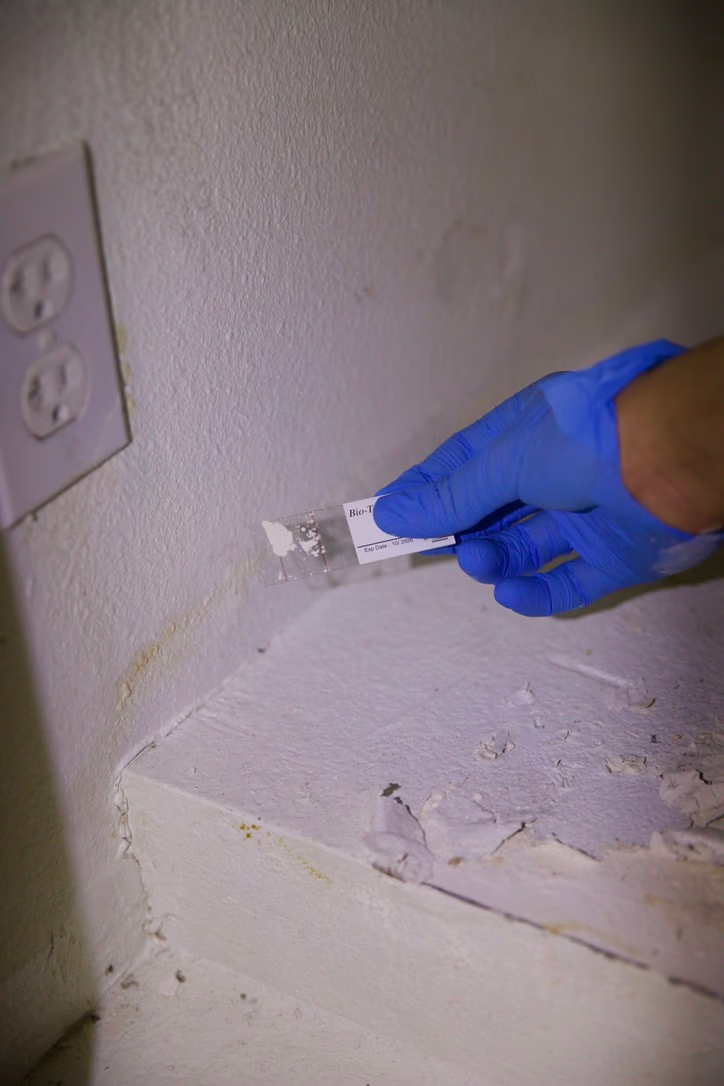
Why mold tape testing matters

Not every dark patch is mold. Tape testing is a fast, reliable method for confirming whether visible buildup is fungal and identifying the species behind it, before assumptions drive an expensive cleanup.

Mold tape testing detects:

  • Mold on walls, ceilings, and furniture surfaces
  • Visible buildup on smooth or dusty areas
  • Species identification on painted and finished walls
  • Early growth caught before it has time to spread
Why mold tape testing matters
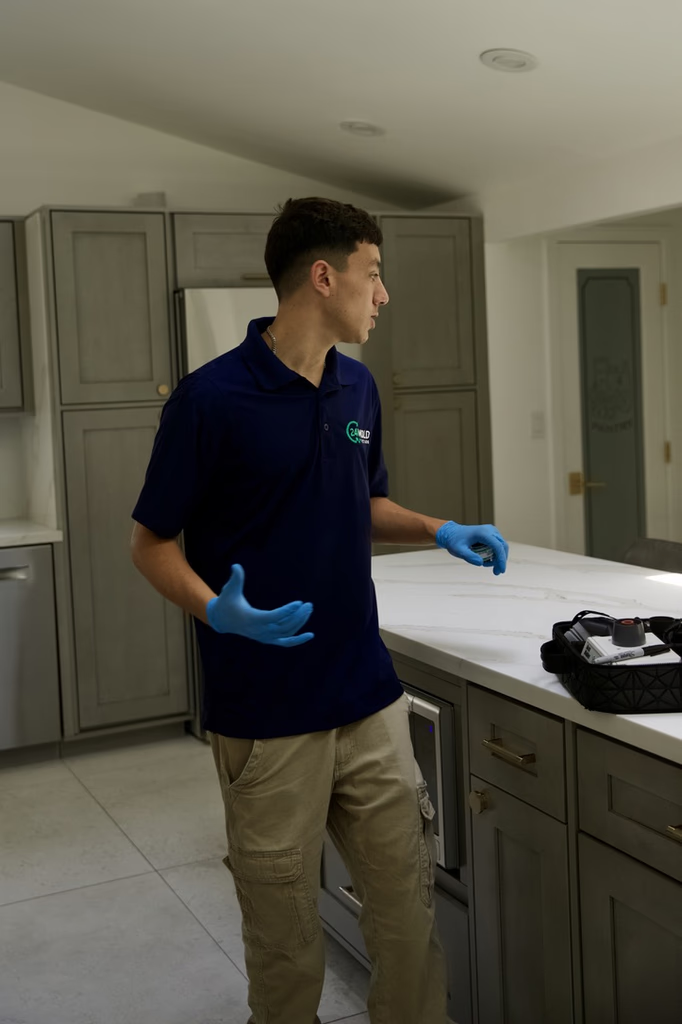
Mold inspector at work

Benefits

What you get from tape testing

A fast, non-destructive way to confirm what you're looking at

  • Quick: Sample collection takes seconds per spot.
  • Accurate: Lab-verified species ID on every sample.
  • Non-destructive: No cutting, no scraping, surfaces stay intact.
  • Targeted: Suited to isolated spots and surface discoloration.

About

How mold tape testing works

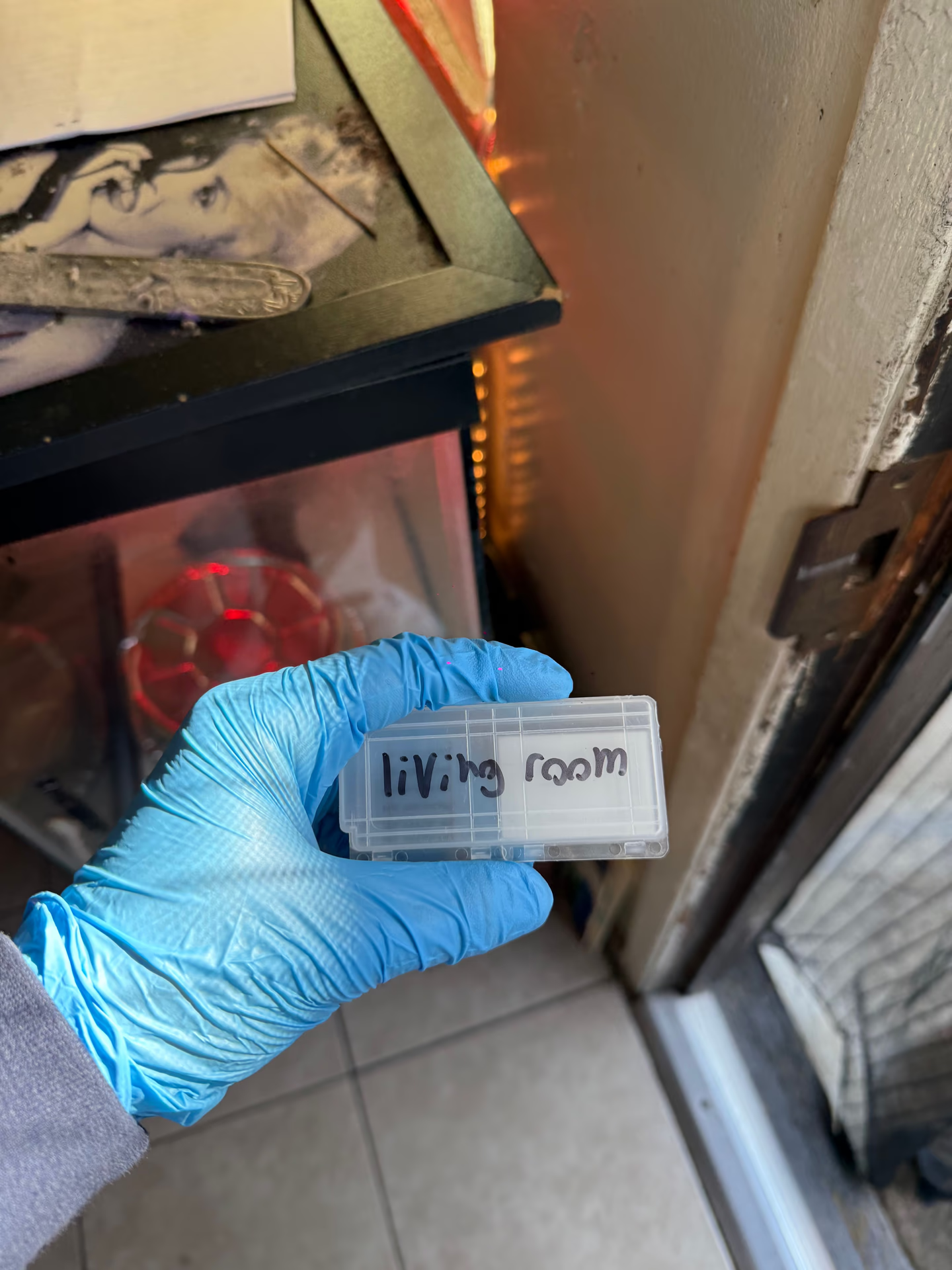
Our certified mold inspectors press a clear adhesive slide against the suspect area to capture a thin layer of surface material. The slide is sealed and sent to a state-certified lab for mold species identification.

Our process includes:

  • Surface sampling with sterile adhesive slides
  • Lab analysis for species type and contamination level
  • Lab-verified results with spore counts where relevant
  • A mold inspection report with clear next steps
How mold tape testing works

Mold inspection Santa Clarita FAQ

Call For An Inspection
Age isn't really what drives it — two to four decades is exactly when builder-grade waterproofing, window flashing, and HVAC equipment reach the end of their service life. Three patterns account for most of what we document in Valencia. First, the paseo and greenbelt landscaping that defines these neighborhoods puts HOA-controlled irrigation against slab edges and stucco year-round; where the weep screed sits too close to raised grade or a planter, the base of the wall never fully dries. Second, air handlers in these tracts are usually in the attic, so a plugged condensate line or a rusted-through pan drains into the ceiling below with nothing visible until the drywall stains. Third, tight, well-insulated envelopes hold shower and cooking humidity far longer than older construction does. In the Bridgeport tracts fronting the lake and its channels, add elevated ground moisture along the waterfront lots to all of that.
The grading. Stevenson Ranch was cut into terraces in the foothills west of the I-5, so most homes sit on a pad with a slope or retaining wall close behind them, and water on these lots arrives sideways rather than through the roof. We start with the uphill-facing walls and any space set partly into the grade — bonus rooms, tandem garages, media rooms, under-stair storage. The clay here swells when wet and shrinks when dry, and that seasonal movement opens hairline cracks in slabs, stucco, and hardscape that carry storm water behind finishes. Slope subdrains behind retaining walls silt up gradually, and nobody notices until a wall still reads wet a week after rain. Thermal imaging and moisture meters map how far the wet area actually extends, which is almost always further than the visible stain suggests. The same approach applies in Westridge and the newer Valencia hillside tracts across the freeway.
Newhall is the oldest part of the valley, with housing that predates the rest of Santa Clarita by decades: pre-war and early post-war cottages and bungalows, many on raised wood foundations with vented crawl spaces instead of the slabs standard in Valencia and Saugus. That changes where the visit is spent. The crawl space comes first — vapor barriers never installed or torn open, foundation vents blocked by decades of added landscaping and hardscape, and subfloor framing that stays damp through a wet winter. Original galvanized supply lines and cast-iron drains in these homes fail slowly, and a pinhole behind lath and plaster can wet framing for months before anything shows on a wall. Downtown Newhall's older Main Street commercial buildings carry the same plumbing age plus flat roofs. Where a house has been remodeled in layers, we also check where old and new assemblies meet, because those junctions leak more than either side does.
Start by keeping the two jobs separate. We inspect and test only, so what you receive is a defined scope — where growth is, how far it extends, what the lab identified, and which moisture source is feeding it — that you can hand to three remediation companies so they bid identical work instead of each writing their own findings. Ask anyone you call whether they will repair the water source or only remove material. In Santa Clarita's tract housing the source is usually one identifiable failure: an attic condensate line, a slow supply leak, stucco intrusion at a window after a wet winter. Cleanup that skips the repair only resets the clock. Ask for containment and negative air pressure on anything beyond a small area, confirm license classification and insurance, and get the job written as a scope rather than a lump sum. When they finish, have clearance testing done by someone who had no part in the removal.
Because most of what we find here in summer has nothing to do with weather. Valley temperatures run past 100 degrees for stretches of July through September, air conditioning runs nearly continuously, and that produces water inside the house: condensate at the coil, drain lines clogging with biofilm, rusted pans, and cold supply ducts sweating where insulation has slipped in a superheated attic. In tract homes with attic air handlers, that water lands on the ceiling below and can wet framing and insulation for weeks before a stain appears. Irrigation is the other summer source — sprinklers running daily against stucco, planters raised above the weep screed, and slope watering that keeps soil saturated against a foundation. Both deliver moisture at a slow, steady rate, which favors mold growth more than a single dramatic leak does. A musty smell when the AC starts, a ceiling stain that grows slowly, or one room that never cools right are worth having checked.
Yes, and it is usually the water rather than the fire. Firefighting operations put an enormous volume of water onto and around structures, and roof, attic, and wall cavities soaked during a defense stand often dry unevenly, if they dry at all. The larger issue in the canyons east of the 14 comes the following winter. The Sand Fire in 2016 and the Tick Fire in 2019 burned slopes directly above Canyon Country, Sand Canyon, and Mint Canyon, and burned ground sheds rain instead of absorbing it, so the first significant storms after a fire send water and mud into garages, crawl spaces, and the bottom course of walls at properties that had never taken water in decades. That intrusion typically gets treated as a mud cleanup while the material behind the drywall stays wet. If your property took water in either situation, moisture readings and thermal imaging show whether the structure actually dried, and produce a dated written record for a claim.
Yes. Any tenant can commission an independent inspection of the unit they occupy, and it comes up regularly in the apartment stock across Valencia, Canyon Country, and along the Soledad Canyon Road corridor, where units turn over quickly and a leak reported at the end of one tenancy is frequently painted over before the next one starts. California treats visible dampness and mold growth as a substandard condition affecting habitability, so what carries weight in a dispute is documentation that predates the argument — photographs, instrument readings, sample locations, and lab results in writing, not a maintenance ticket. In multi-unit buildings the source often isn't in your unit at all: a shared wall carrying a neighbor's supply leak, a stacked plumbing chase, or a second-floor water heater above your ceiling. An inspection identifies which. Because we never perform removal, the report has no stake in how large the cleanup turns out to be, which is precisely what makes it useful to a landlord, mediator, or court.

Contact

Book your Santa Clarita mold inspection today

Tell us what's going on and we'll respond the same day

Location

24H Mold Inspection of Santa Clarita

Service area neighborhoods

  • Valencia
  • Saugus
  • Newhall
  • Canyon Country
  • Stevenson Ranch
  • Castaic (adjacent)
  • Agua Dulce (adjacent)
  • Acton (adjacent)
Call For Service(661) 666-5322