1
Mold inspection
- Moisture detection
- Infrared technology
- Certified mold inspectors
- No conflict of interest

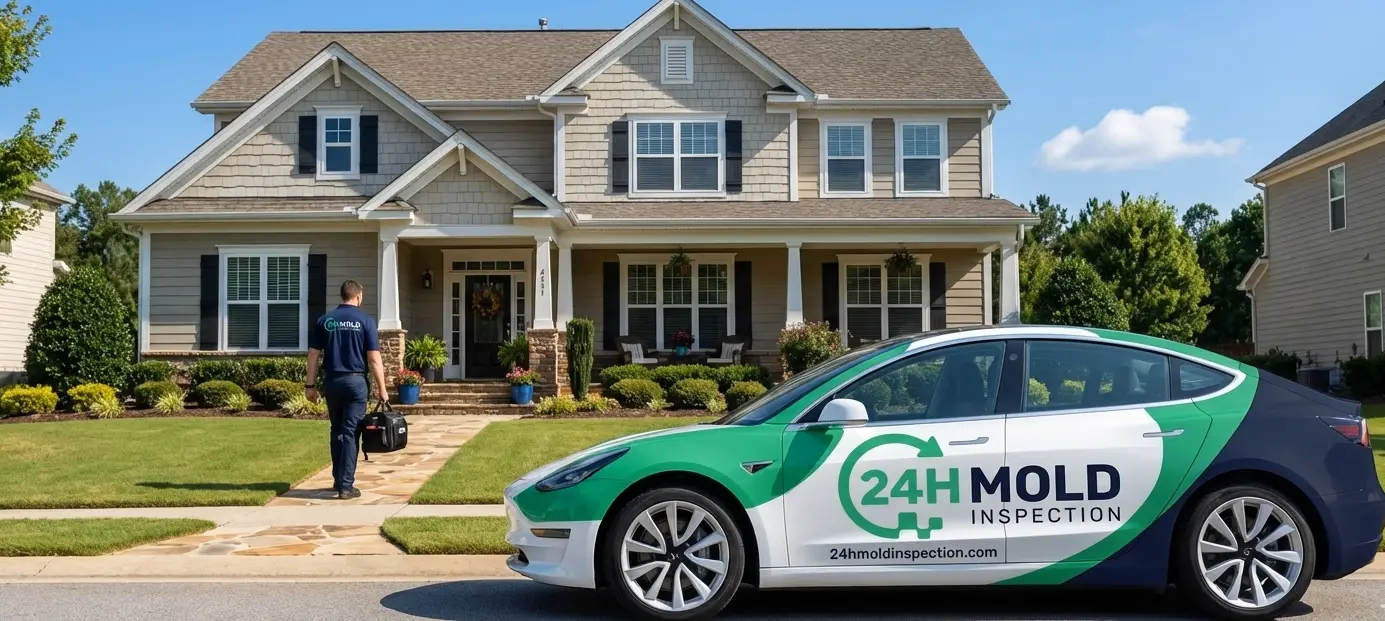
Certified mold inspection and testing in Santa Clarita. Same-day appointments, lab-verified reports, and no financial stake in any remediation work that follows.
(661) 666-5322What We Do
Air and surface samples analyzed in a state-certified lab. You receive mold species ID, spore count data, and lab-verified documentation that holds up with insurers, attorneys, or counsel.
About
At 24H Mold Inspection of Santa Clarita, we know no two buildings respond to moisture the same way.
Santa Clarita sits in a semi-arid inland valley north of Los Angeles where the mold risk profile is shaped more by specific event-driven moisture than by chronic ambient humidity — rainy season intrusion, HVAC condensation in homes that run cooling heavily during summer, and the occasional flash flooding that affects properties near the Santa Clara River and its tributaries. The city's housing stock is predominantly post-1980s suburban development — Valencia, Saugus, and Newhall neighborhoods were built in successive waves of master-planned expansion — and builder-grade stucco, aging HVAC systems, and original waterproofing in the older sections of these developments are the primary sources of moisture management failures. The Northridge earthquake's proximity in 1994 also left a legacy of stucco micro-cracking in the region's older homes that continues to create water intrusion pathways during wet winters.
Santa Clarita is predominantly single-family suburban residential built in master-planned communities from the 1980s through the 2000s, with tract homes in Valencia and Saugus representing the largest share of the housing inventory. These homes share a consistent risk profile: aging stucco exteriors, original HVAC systems approaching the end of their design life, and builder-grade waterproofing that has been under the stress of Southern California's thermal cycling for 20 to 40 years.
Services
Mold inspection, mold testing, and environmental risk assessments for Santa Clarita properties. Available 24/7, with no remediation work to bias the findings.

Why Us
24H Mold Inspection of Santa Clarita combines local field experience with state-certified methods and lab analysis. Reports get back to you quickly and clearly, with no upsell tacked on to the findings.
We don't stop at surface-level findings. Active leaks, health symptoms, post-remediation work, and pre-purchase due diligence each call for a different inspection approach. Our certified mold inspectors guide you through the specific situation rather than running a generic checklist.
Strengths
We check every box, then go further. Book your inspection today
Licensed inspectors with proven field experience in Santa Clarita.
FLIR thermal cameras, calibrated moisture meters, and lab-verified sampling.
Straightforward updates and honest reporting throughout the process.
5.0 stars from 108+ Santa Clarita homeowners and businesses.
Testimonials
Thousands of Santa Clarita property owners have come to us for reliable, detailed mold assessments
Shalev was very good due to on time appearance, courtesy manner and ready to explain all the questionnaires. And furthermore he has given me many information on the mold issue and inspection process. I am recurring customer due to his service.
Sangkyu (Joseph) L.
5 Step Process
Choose a date and time that fits your schedule.
Flexible scheduling means same-day and next-day appointments are usually available, with 24/7 emergency response when the situation needs it.
Our certified mold inspectors assess every mold-prone area.
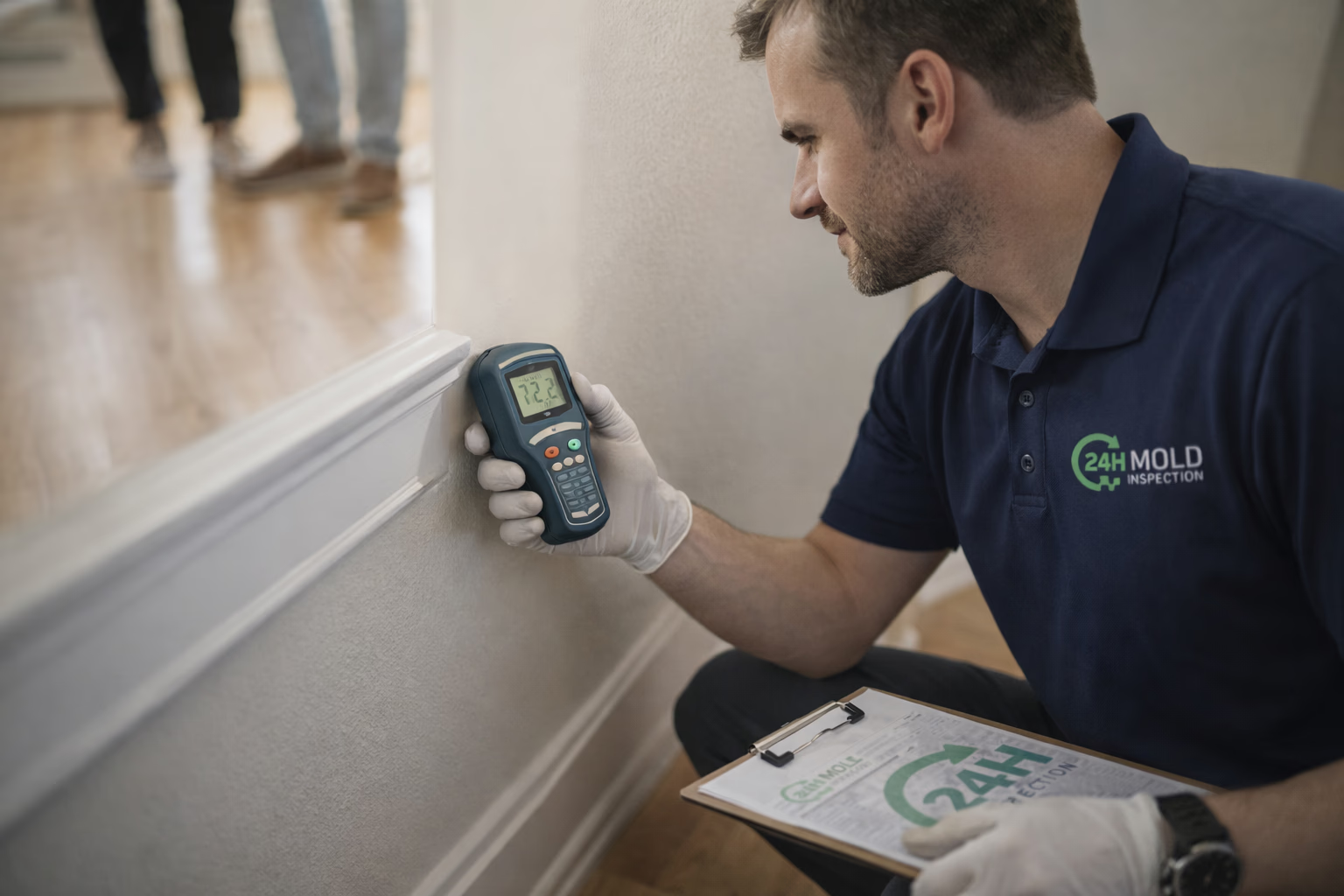
We walk the property identifying visible mold and moisture issues, using thermal imaging and moisture meters to catch what's hidden behind walls and under flooring.
Air and surface samples collected for lab analysis.
Our certified mold inspectors collect targeted samples from key areas to find mold spores both visible and hidden, with sample sites documented on a property map.
Lab testing returns precise results.
Samples go to a state-certified lab for detailed analysis identifying mold species and contamination levels, typically returned within 24 to 72 hours.
Insights and clear next steps from our experts.
You receive a written report with lab results, inspector findings, and specific recommended action steps to resolve any mold issues safely.
Who We Serve
24H Mold Inspection of Santa Clarita brings clear answers to HOAs, hotels, commercial buildings, and homes through certified mold inspection and testing services.
Valencia was built out in waves by Newhall Land from the late 1960s through the 2000s, and each wave carries its own moisture signature. The paseo and greenbelt system means HOA irrigation runs against slab edges and stucco year-round, keeping the bottom foot of exterior wall damp in tracts where the original weep screed sits too close to raised grade. In Bridgeport, homes fronting the man-made lake and its channels add elevated ground moisture and waterfront decking to that profile. Across the newer Westridge and Tesoro tracts, tight building envelopes and hard-working air conditioning move the problem indoors — attic-mounted air handlers, condensate pans and drain lines, and ducts sweating through a 100-degree July.
Saugus grew up the canyons — Bouquet, Plum, and Copper Hill — on cut-and-fill pads terraced into hillsides, and the seam between the cut and fill sides of a pad is where trouble concentrates. Uphill-facing walls and any room set partly below grade take water moving laterally through fill soil for days after a wet week, and the subdrains behind retaining walls silt up quietly over twenty years with nobody the wiser. Lower lots near Bouquet Canyon Creek and the wash also see seasonal groundwater. Most of the housing here is 1980s and 1990s tract stucco, now deep enough into thermal cycling that original window flashings and sealant joints are the common entry point.
Newhall is the original town in the Santa Clarita Valley and its buildings predate everything around them: pre-war and early post-war cottages and bungalows on raised wood foundations with vented crawl spaces, rather than the slabs standard in Valencia and Saugus. Those crawl spaces are the recurring find — vapor barriers never installed or long torn, foundation vents buried behind decades of added landscaping and hardscape, and subfloor framing that stays damp all winter. Original galvanized supply lines and cast-iron drains fail slowly behind lath and plaster. Along Main Street, the older commercial row carries the same plumbing age with flat roofs added on top, and the low ground near Newhall Creek compounds both.
East of the 14, Canyon Country runs up Sierra Highway and the Soledad, Mint, and Sand canyons, on alluvial canyon floors that move runoff fast. The Sand Fire in 2016 and the Tick Fire in 2019 burned slopes directly above these neighborhoods, and burned ground sheds rain instead of absorbing it — the first heavy storms after a fire push water and mud into garages, crawl spaces, and the lower course of walls at properties that had never taken water before. The area also holds the valley's most varied housing: 1960s and 1970s ranch tracts, horse properties on septic, and older manufactured homes where subfloor moisture and rot at the skirting line are routine findings.
Stevenson Ranch and the Westridge tracts across the freeway were graded onto terraces cut into the foothills during the 1990s and 2000s, which put a lot of three-story houses on narrow pads with a retaining wall or slope close behind them. Water here arrives sideways rather than through the roof. The clay in this ground swells wet and shrinks dry, and that seasonal movement cracks slabs, stucco, and hardscape into hairline paths that carry storm water behind finished surfaces. Rooms built partly into the slope — bonus rooms, tandem garages, under-stair storage — are where it shows. A quarter century on, original waterproofing and slope subdrains are at the end of their service life.
Google Search
Add 24H Mold Inspection as a preferred source so our pages are easier to spot in your Google results.
Contact
Tell us what's going on and we'll respond the same day
Location
24H Mold Inspection of Santa Clarita
Phone
(661) 666-5322Hours
Service area neighborhoods
Newsletter
Monthly notes from our inspectors on prevention and air quality.