1
Mold inspection
- Moisture detection
- Infrared technology
- Certified mold inspectors
- No conflict of interest

Certified mold inspection and testing in San Bernardino. Same-day appointments, lab-verified reports, and no financial stake in any remediation work that follows.
(909) 751-0026What We Do
Air and surface samples analyzed in a state-certified lab. You receive mold species ID, spore count data, and lab-verified documentation that holds up with insurers, attorneys, or counsel.
About
At 24H Mold Inspection of San Bernardino, we know no two buildings respond to moisture the same way.
San Bernardino sits at the base of the San Bernardino Mountains where the Inland Empire's desert-adjacent climate meets the moisture that descends from the mountain watersheds during wet seasons, creating a mold environment that is more complex than the region's dry reputation suggests. The river channel crosses the valley floor south of downtown, and properties in the lower-elevation neighborhoods near the river and its tributaries face groundwater and flood-influence moisture conditions that are atypical for Southern California's inland areas. The city's housing stock includes a high proportion of older mid-century homes and lower-income residential properties where deferred maintenance on roofing, plumbing, and drainage systems has allowed moisture pathways to develop over many years.
San Bernardino's housing stock is primarily mid-century and post-war single-family homes, a significant share of which are rental properties where maintenance has been inconsistent over successive ownership periods. The city also contains a substantial multi-family and commercial inventory, and the combination of aging building systems, deferred maintenance, and the moisture stress of the mountain-adjacent climate creates elevated mold risk across a broad range of property types throughout the area.
Services
Mold inspection, mold testing, and environmental risk assessments for San Bernardino properties. Available 24/7, with no remediation work to bias the findings.

Why Us
24H Mold Inspection of San Bernardino combines local field experience with state-certified methods and lab analysis. Reports get back to you quickly and clearly, with no upsell tacked on to the findings.
We don't stop at surface-level findings. Active leaks, health symptoms, post-remediation work, and pre-purchase due diligence each call for a different inspection approach. Our certified mold inspectors guide you through the specific situation rather than running a generic checklist.
Strengths
We check every box, then go further. Book your inspection today
Licensed inspectors with proven field experience in San Bernardino.
FLIR thermal cameras, calibrated moisture meters, and lab-verified sampling.
Straightforward updates and honest reporting throughout the process.
5.0 stars from 149+ San Bernardino homeowners and businesses.
Testimonials
Thousands of San Bernardino property owners have come to us for reliable, detailed mold assessments
Eliya, the mold inspector, came by today and tested my whole house. He really knew what he was doing and took the time to explain everything in a way that made sense. He answered all my questions and made the whole process super easy and comfortable. Definitely appreciate his help!
Kanin A.
5 Step Process
Choose a date and time that fits your schedule.
Flexible scheduling means same-day and next-day appointments are usually available, with 24/7 emergency response when the situation needs it.
Our certified mold inspectors assess every mold-prone area.
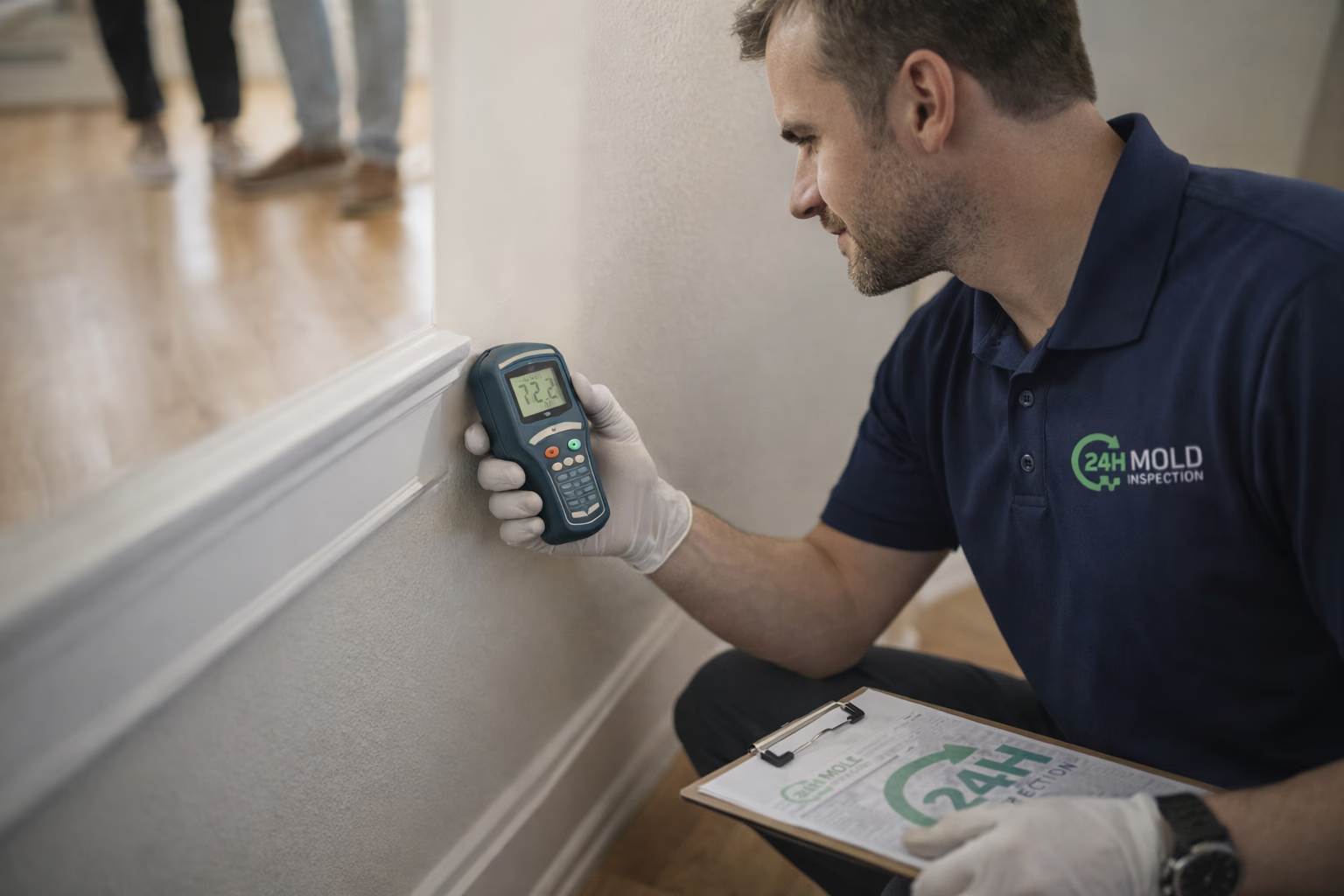
We walk the property identifying visible mold and moisture issues, using thermal imaging and moisture meters to catch what's hidden behind walls and under flooring.
Air and surface samples collected for lab analysis.
Our certified mold inspectors collect targeted samples from key areas to find mold spores both visible and hidden, with sample sites documented on a property map.
Lab testing returns precise results.
Samples go to a state-certified lab for detailed analysis identifying mold species and contamination levels, typically returned within 24 to 72 hours.
Insights and clear next steps from our experts.
You receive a written report with lab results, inspector findings, and specific recommended action steps to resolve any mold issues safely.
Who We Serve
24H Mold Inspection of San Bernardino brings clear answers to HOAs, hotels, commercial buildings, and homes through certified mold inspection and testing services.
San Bernardino grew as a railroad town, and its Santa Fe Depot, opened on July 15, 1918, was the largest train station west of the Mississippi when it was built. Route 66 ran through the city, and Richard and Maurice McDonald started their restaurant here in 1940. Downtown's older commercial blocks are masonry buildings with flat roofs behind parapets, many vacant or converted over the years, alongside early-twentieth-century homes on the surrounding streets. Clogged roof drains, failing parapet flashing, aging supply plumbing, and buildings left empty long enough for small leaks to become large ones are the recurring risks here.
Much of downtown and the valley floor sits over the Bunker Hill groundwater basin — formerly swampy land with a documented history of artesian springs and flowing wells, where the water table can sit unusually close to the surface. In wet years that shallow groundwater presses up into slabs, crawl spaces, and older foundations, so moisture here often rises from below rather than entering from a leak overhead. Slabs poured in the postwar decades rarely included a vapor barrier, and the signs are damp carpet pad, lifting floor tile, and white mineral deposits along the slab edge with no plumbing failure anywhere in sight.
The Westside, the North End, and the central tracts are dominated by 1950s and 1960s single-story stucco homes on slabs, many of them rentals through several changes of ownership with maintenance that varied along the way. The recurring moisture sources are aging galvanized or copper supply lines leaking inside walls or under the slab, cast-iron drains cracking beneath bathrooms, original ductwork sweating in hot attics, roofs re-covered over older layers, and evaporative coolers leaking at their roof curbs. Garage conversions on unsealed slabs and unpermitted additions hide further moisture paths behind fresh paint.
The northern neighborhoods — Arrowhead, Del Rosa, and Verdemont — climb the alluvial fans toward the mountains beneath the Arrowhead landmark, along the base where the San Andreas Fault runs. In October 2003 the Old Fire burned the slopes above and destroyed hundreds of homes along the city's northern edge, and on Christmas Day an intense storm set off debris flows across the burn areas that killed 16 people near San Bernardino. Burned slopes shed water and sediment far faster for years afterward, pushing runoff against uphill walls, garage slabs, and retaining walls, while earthquakes open cracks that let it in.
North and west of the core, semi-rural Muscoy and Arrowhead Farms sit on large lots with a mix of older traditional houses and manufactured homes, many on septic systems, with horse property, outbuildings, and long unpaved driveways. Manufactured homes carry plumbing inside an underbelly wrap that hides leaks against the floor decking, and skirting traps humid air beneath the floor. Older traditional houses here often have additions built in stages and roofs patched over time. Wind out of the passes lifts roofing and drives dust into vents and cooler housings, and runoff across open land collects against foundations after storms.
Google Search
Add 24H Mold Inspection as a preferred source so our pages are easier to spot in your Google results.
Contact
Tell us what's going on and we'll respond the same day
Location
24H Mold Inspection of San Bernardino
Phone
(909) 751-0026Hours
Service area neighborhoods
Newsletter
Monthly notes from our inspectors on prevention and air quality.