1
Mold inspection
- Moisture detection
- Infrared technology
- Certified mold inspectors
- No conflict of interest

Certified mold inspection and testing in Orange County. Same-day appointments, lab-verified reports, and no financial stake in any remediation work that follows.
(888) 818-0311What We Do
Air and surface samples analyzed in a state-certified lab. You receive mold species ID, spore count data, and lab-verified documentation that holds up with insurers, attorneys, or counsel.
About
At 24H Mold Inspection of Orange County, we know no two buildings respond to moisture the same way.
Orange County's coastal communities face persistent marine layer humidity that keeps mold pressure elevated in beachside and near-coastal properties throughout the year, while the inland communities deal with a drier climate that shifts mold risk primarily to HVAC condensation and rainy season intrusion events. The county's housing stock is heavily weighted toward post-1970s construction — tract homes, planned community developments, and condominium complexes — where builder-grade stucco, original HVAC systems, and aging HOA-managed infrastructure are the primary sources of moisture management failures. Seasonal offshore winds add an additional stress factor, driving debris into rooflines and accelerating wear on exterior cladding that creates pathways for rainy season water intrusion.
Orange County's residential stock is dominated by post-1970s single-family tract homes, townhome communities, and condominium complexes in master-planned developments, with coastal communities adding a significant share of older beach cottages and mid-century homes. HOA-managed common areas and shared roofing and drainage systems in townhome and condo communities create inter-unit moisture migration risks that affect individual owners without any failure originating within their own unit.
Services
Mold inspection, mold testing, and environmental risk assessments for Orange County properties. Available 24/7, with no remediation work to bias the findings.

Why Us
24H Mold Inspection of Orange County combines local field experience with state-certified methods and lab analysis. Reports get back to you quickly and clearly, with no upsell tacked on to the findings.
We don't stop at surface-level findings. Active leaks, health symptoms, post-remediation work, and pre-purchase due diligence each call for a different inspection approach. Our certified mold inspectors guide you through the specific situation rather than running a generic checklist.
Strengths
We check every box, then go further. Book your inspection today
Licensed inspectors with proven field experience in Orange County.
FLIR thermal cameras, calibrated moisture meters, and lab-verified sampling.
Straightforward updates and honest reporting throughout the process.
4.9 stars from 347+ Orange County homeowners and businesses.
Testimonials
Thousands of Orange County property owners have come to us for reliable, detailed mold assessments
Michael was prompt, courteous, efficient and knowledgeable. I asked a number of challenging questions to confirm the best approach to our situation, and Michael answered every question with confidence and clarity. Most importantly, he made me feel like he genuinely cared about doing what was in the best interest of our family. He assured us that he and his team leader would remain available to assist with any questions or issues we might have as we take next steps to mitigation processes. I would recommend 24H mold for your mold inspection requirements.
Bruce C.
5 Step Process
Choose a date and time that fits your schedule.
Flexible scheduling means same-day and next-day appointments are usually available, with 24/7 emergency response when the situation needs it.
Our certified mold inspectors assess every mold-prone area.
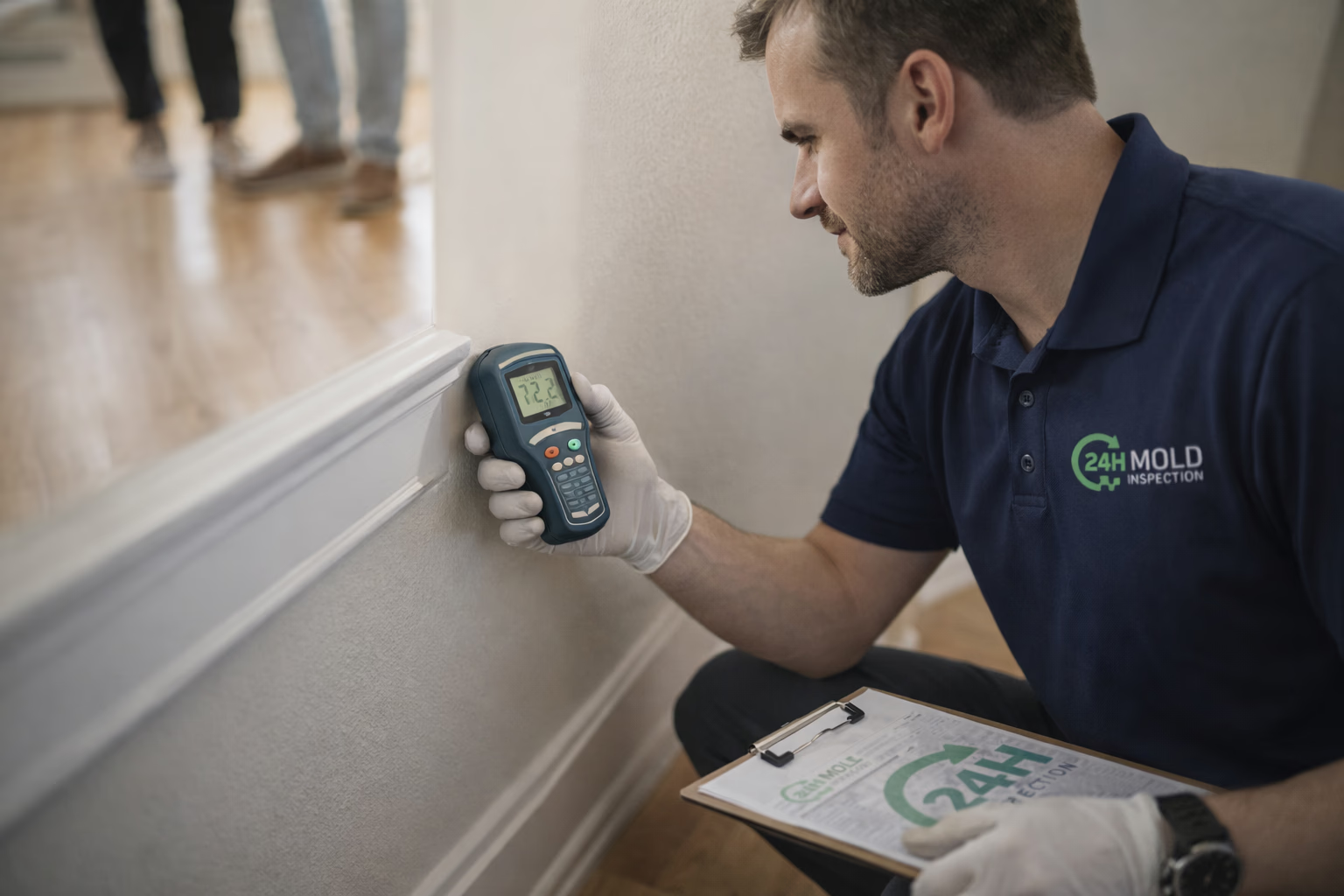
We walk the property identifying visible mold and moisture issues, using thermal imaging and moisture meters to catch what's hidden behind walls and under flooring.
Air and surface samples collected for lab analysis.
Our certified mold inspectors collect targeted samples from key areas to find mold spores both visible and hidden, with sample sites documented on a property map.
Lab testing returns precise results.
Samples go to a state-certified lab for detailed analysis identifying mold species and contamination levels, typically returned within 24 to 72 hours.
Insights and clear next steps from our experts.
You receive a written report with lab results, inspector findings, and specific recommended action steps to resolve any mold issues safely.
Who We Serve
24H Mold Inspection of Orange County brings clear answers to HOAs, hotels, commercial buildings, and homes through certified mold inspection and testing services.
Beyond marine-layer humidity, much of the coast sits barely above sea level — roughly three-quarters of Huntington Beach lies at or below 25 feet, with high-water-table pockets classified as wetlands. Harbor and near-coast homes in Huntington Harbour, Sunset Beach, and the Newport peninsula take on moisture from below and during king tides and flooding along the river channel, not just from the air.
Old Towne Orange, Santa Ana's Floral Park, and Fullerton's heritage streets hold some of the county's oldest homes — Victorians, Craftsman bungalows, and Spanish Revivals built largely between the 1880s and 1940. Original raised-foundation crawl spaces, aging supply plumbing, and decades-old plaster make hidden, slow-developing moisture the norm rather than the exception.
Silverado, Modjeska, and Trabuco canyons sit against the Santa Ana Mountains and Cleveland National Forest, where oak canopy and steep, shaded slopes keep humidity high and ground moisture lingering. Rural homes here often run on septic systems and sit in creek drainages with a real flash-flood history, so foundations, crawl spaces, and lower levels stay damp long after storms pass.
South County's master-planned communities — Irvine, Mission Viejo, Aliso Viejo, Rancho Santa Margarita, Ladera Ranch — are largely post-1970s, slab-built, and tightly sealed, so everyday humidity from cooking, showers, and irrigation gets trapped rather than vented. In their condo and townhome tracts, shared roofing and drainage also let moisture migrate between units, so a problem can originate in a neighbor's structure entirely.
The postwar tracts filling Anaheim, Garden Grove, Westminster, and Fountain Valley were built mostly in the 1950s and 60s on slab-on-grade foundations, often before modern moisture barriers were standard. Aging galvanized plumbing, original ductwork, and single-pane windows are the usual entry points, with rainy-season stucco intrusion and HVAC condensation doing most of the damage.