24H Mold Inspection
Ontario24/7 EMERGENCY(909) 914-4552
HomeOur ServicesMold TestingSwab Testing
Mold Testing

Swab Testing

Mold swab testing handles the textured, damp, and irregular surfaces where mold often grows without any visible sign.

Overview

Why mold swab testing matters

Mold grows in damp areas without always showing on the surface. Swab testing detects microbial growth on materials that are soft, porous, or moisture-prone, and is the right approach after water damage or in spaces that resist visual inspection.

Mold swab testing detects:

  • —Hidden mold on porous or textured materials
  • —Growth in damp spots like under sinks or around HVAC
  • —Contamination on organic materials including wood and fabric
  • —Mold that visual inspection alone tends to miss
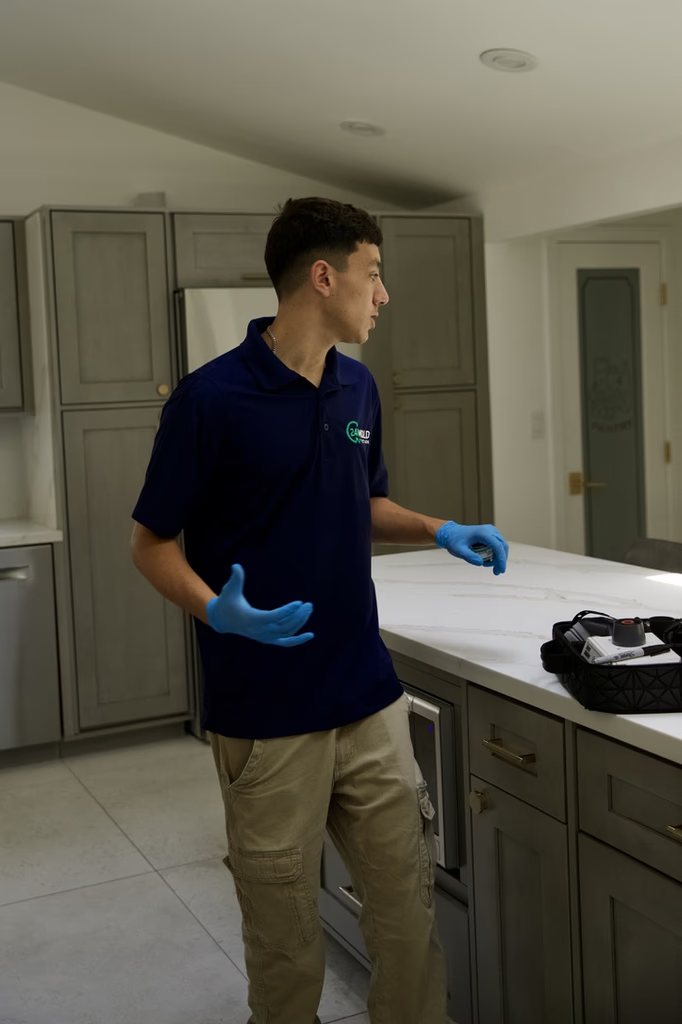
Why mold swab testing matters
Mold inspector at work

Benefits

What you get from swab testing

A flexible method for hard-to-sample surfaces

  • —Moisture-ready: Designed for damp and water-damaged materials.
  • —Flexible: Handles uneven, porous, and irregular surfaces.
  • —Confirmatory: Validates mold presence in hidden or subtle areas.
  • —Lab-backed: Lab-verified results with species identification.

About

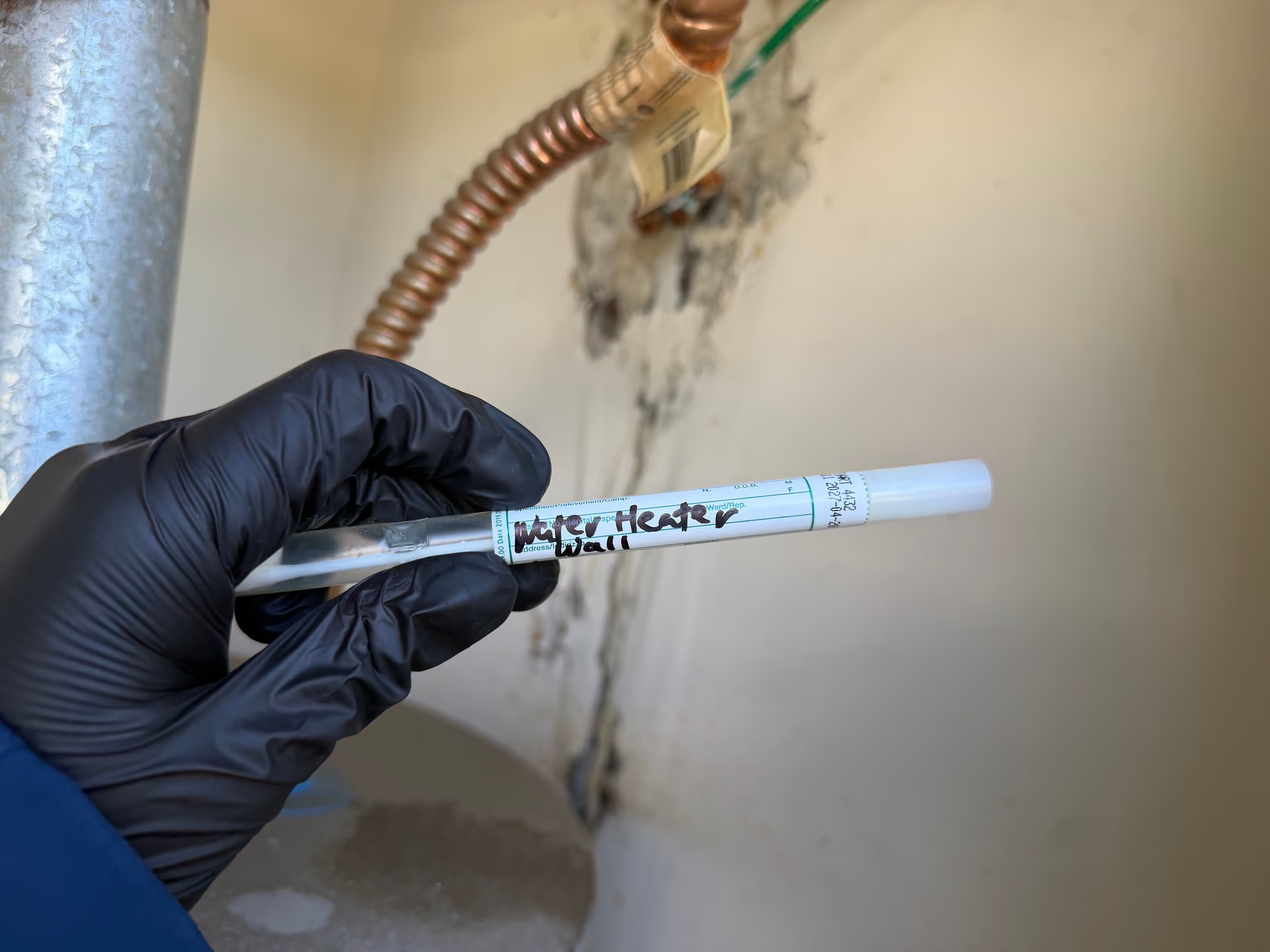
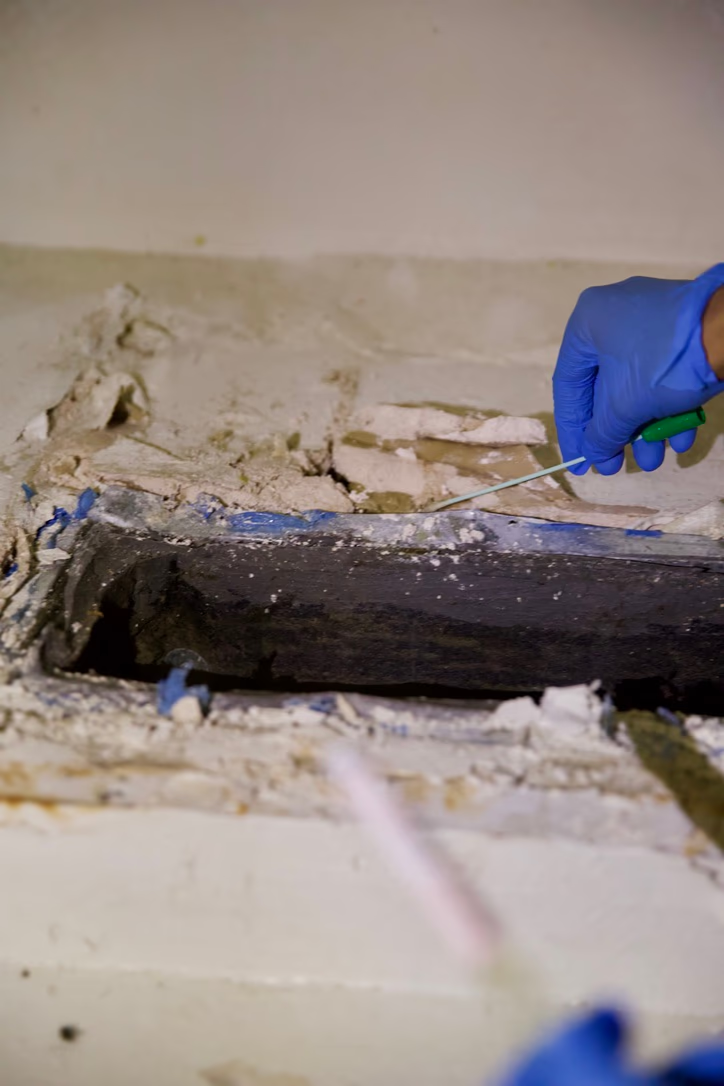
How mold swab testing works

Our certified mold inspectors gently rub a sterile swab across the suspect area to collect a sample, then seal it and send it to a state-certified lab for mold species identification and contamination level.

Our process includes:

  • —Sterile collection from textured surfaces and porous materials
  • —Coverage of damp surfaces and hard-to-reach spots
  • —Lab work returning spore counts and lab-verified results
  • —A mold inspection report with clear next steps
How mold swab testing works

Mold inspection Ontario FAQ

Call For An Inspection
Spore detection is the air-sampling part of a mold inspection. A measured volume of indoor air is drawn through a spore trap in each area of concern, a matching outdoor sample is collected on the same visit, and an accredited lab counts and identifies what was captured. The outdoor sample matters in Ontario because the Inland Empire's wind events, open lots, construction across Ontario Ranch, and dust from the logistics corridors around the airport all push outdoor particle and spore levels up and down from one day to the next. An indoor count only means something next to that baseline. Spore detection is the right test when someone in the household has symptoms, when there is a musty smell with nothing visible, or after water damage to see whether growth has reached the air. Paired with a moisture survey, it tells you not just that there is a problem but where it is.
Often they do. George Chaffey bought 6,218 acres with water rights in August 1881, and when the Ontario colony lands went on sale in November 1882 the centerpiece was Euclid Avenue — 200 feet wide, with twin driveways separated by a parkway planted with pepper trees. The older homes along and near it include some of the city's earliest houses, many on raised wood foundations with crawl spaces and many enlarged or remodeled several times. Their moisture risks sit in specific places: crawl space soil that stays damp after rain, original galvanized plumbing and cast-iron drains past their service life, roof additions tied into older roofs, and the roots of mature street and yard trees reaching sewer laterals while their litter clogs gutters and valleys. An inspection here goes under the house and into the junctions between original construction and later additions, rather than stopping at the slab-and-attic routine of a newer tract.
They can, even when they are only a few years old. Ontario Ranch grew out of the dairy land of the old agricultural preserve, annexed by the city in 1999 and planned as a master-planned community of tens of thousands of homes, and much of it has been built since the 2010s. New construction brings its own moisture risks. Tight building envelopes and energy-efficient windows hold shower and cooking moisture indoors when ventilation is undersized or bathroom fans go unused. Ducts in hot attics sweat through long Inland Empire summers. Framing and concrete closed in before they fully dried can release moisture for the first year or two. Irrigated yards and drainage that slopes toward slab edges keep the perimeter damp, and in attached product a leak in one unit reaches the next. If your home is still within its builder warranty period, a documented moisture inspection gives you specific findings to submit before the warranty expires.
Indirectly, yes — Ontario has a long history with damaging wind. In December 1953 a severe windstorm brought down so many of Euclid Avenue's mature pepper trees that in 1954 students from the city's nine public elementary schools planted replacements, and strong offshore wind events still sweep the valley each fall and winter. Those gusts crack and lift concrete roof tiles, tear ridge caps and flashing, and pack dust and debris into gutters and roof valleys. Nothing leaks on a dry, windy day. The damage appears with the first heavy rain, when water gets beneath displaced tiles and through exposed underlayment into the attic, soaks the insulation, and runs along rafters before staining a ceiling well away from the damaged spot. Because a tile roof can look intact from the ground, many homeowners only notice months later. After a major wind event, a roof check before the rainy season is the first step, and an attic moisture inspection if a stain appears later.
Much of central Ontario was built out in the postwar decades as single-story stucco homes on concrete slabs, and those houses are now 60 to 70 years old. The recurring moisture sources are consistent: copper or galvanized supply lines leaking inside walls or under the slab, cast-iron drain lines cracking beneath bathrooms and kitchens, roofs re-covered over older layers, roof-mounted evaporative coolers leaking at their curbs or run during humid weather, and bathroom fans that were never installed or that vent into the attic. Garage conversions built directly on unsealed slabs are common on these lots too. The first signs are usually subtle — a musty closet, a baseboard swelling, a warm spot on the floor from a hot-water slab leak, or staining around the ceiling register beneath an old cooler. A moisture survey of the plumbing walls, the slab perimeter, the attic, and the cooler opening covers the places these houses usually fail.
If the home inspection noted staining, a musty smell, or signs of past leaks, yes — that note is a referral to a specialist. A general inspection is a visual survey of the whole property; a mold inspection measures moisture inside walls, under flooring, and in the attic or crawl space with thermal imaging and moisture meters, and sends air or surface samples to an accredited lab. In Ontario the gap matters in a few predictable places: slab leaks in postwar homes that run for months beneath carpet or tile, crawl spaces under older houses near Euclid Avenue, attics beneath wind-damaged tile roofs, and attached units in newer communities where moisture can come from a neighbor's side of a shared wall. Many newer homes also belong to an HOA, so knowing whether the source sits in a common element affects who pays. Book the mold inspection inside your contingency window so the findings can still shape the deal.
Document the condition independently first. A written third-party report with lab-verified findings gives owners, tenants, and property managers the same set of facts. Ontario's rentals range from postwar houses with converted garages to apartment complexes along Mountain Avenue, Holt Boulevard, and the newer communities in the south, and disputes usually come down to whether the mold is a building defect or a household habit. A third-party report answers that with moisture readings, photographs, lab results, and an identified source — a slab leak, a plumbing failure inside the wall, a cooler leak, a missing exhaust fan. Because we don't do remediation, the report has no incentive to inflate the problem. Attach it to a written repair request so the landlord or property manager has the documented findings in front of them.

Contact

Book your Ontario mold inspection today

Tell us what's going on and we'll respond the same day

Location

24H Mold Inspection of Ontario

Address

4295 E Jurupa St #103A, Ontario, CA 91761

Hours

  • MondayOpen 24 hours
  • TuesdayOpen 24 hours
  • WednesdayOpen 24 hours
  • ThursdayOpen 24 hours
  • Friday6 AM – 6 PM
  • SaturdayClosed
  • SundayOpen 24 hours

Service area neighborhoods

  • Ontario Ranch
  • Creekside
  • Archibald Ranch
  • Downtown Ontario
  • Euclid Avenue corridor
  • New Model Colony
  • Park Place
  • Ontario Airport area
Call For Service(909) 914-4552