24H Mold Inspection
Los Angeles24/7 EMERGENCY(213) 832-8233
HomeOur ServicesMold TestingSwab Testing
Mold Testing

Swab Testing

Mold swab testing handles the textured, damp, and irregular surfaces where mold often grows without any visible sign.

Overview

Why mold swab testing matters

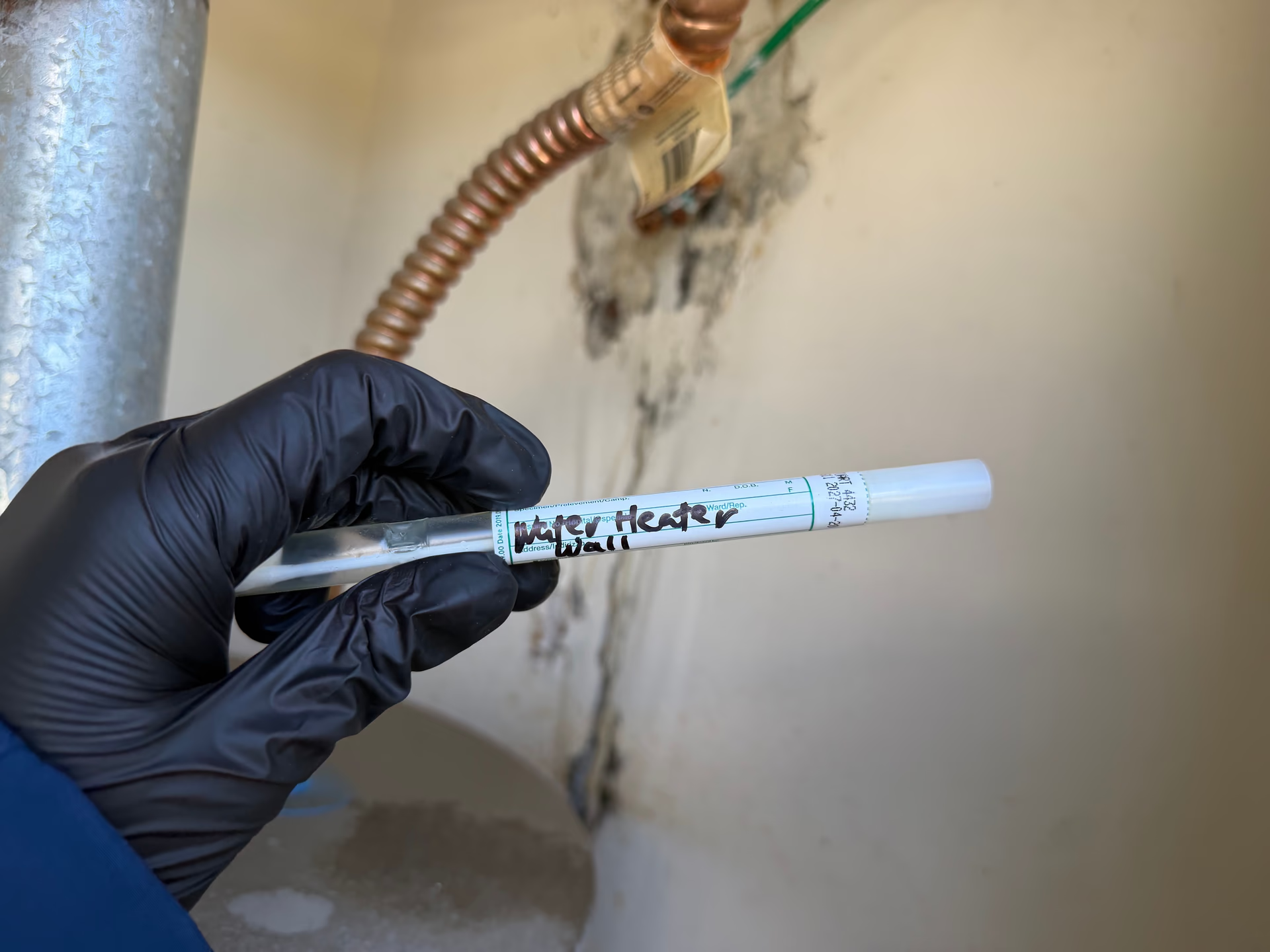
Mold grows in damp areas without always showing on the surface. Swab testing detects microbial growth on materials that are soft, porous, or moisture-prone, and is the right approach after water damage or in spaces that resist visual inspection.

Mold swab testing detects:

  • —Hidden mold on porous or textured materials
  • —Growth in damp spots like under sinks or around HVAC
  • —Contamination on organic materials including wood and fabric
  • —Mold that visual inspection alone tends to miss
Why mold swab testing matters
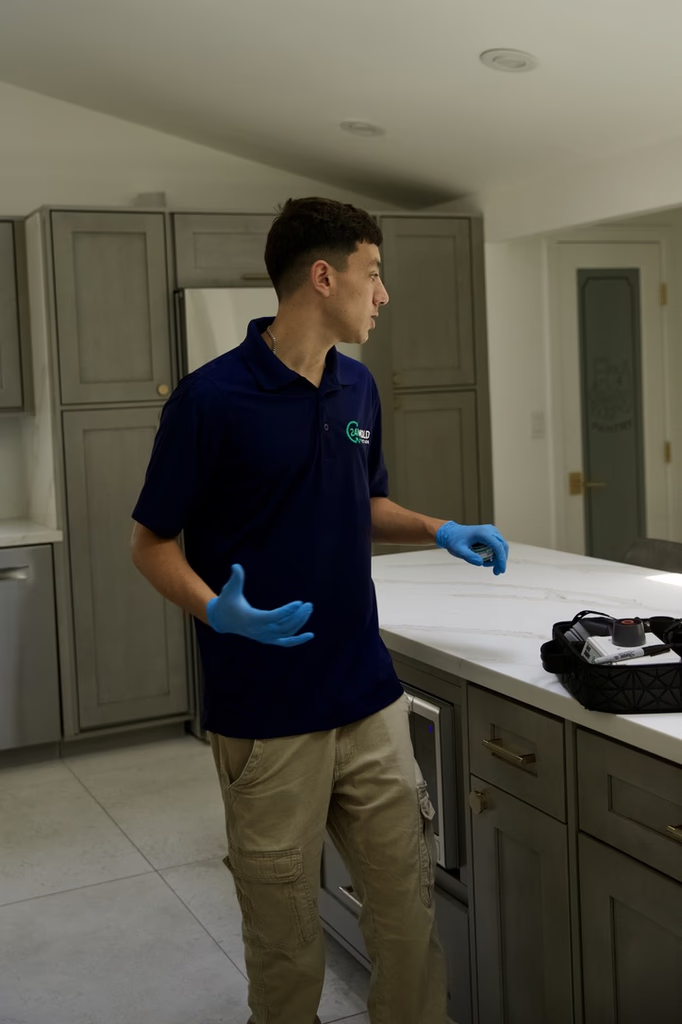
Mold inspector at work

Benefits

What you get from swab testing

A flexible method for hard-to-sample surfaces

  • —Moisture-ready: Designed for damp and water-damaged materials.
  • —Flexible: Handles uneven, porous, and irregular surfaces.
  • —Confirmatory: Validates mold presence in hidden or subtle areas.
  • —Lab-backed: Lab-verified results with species identification.

About

How mold swab testing works

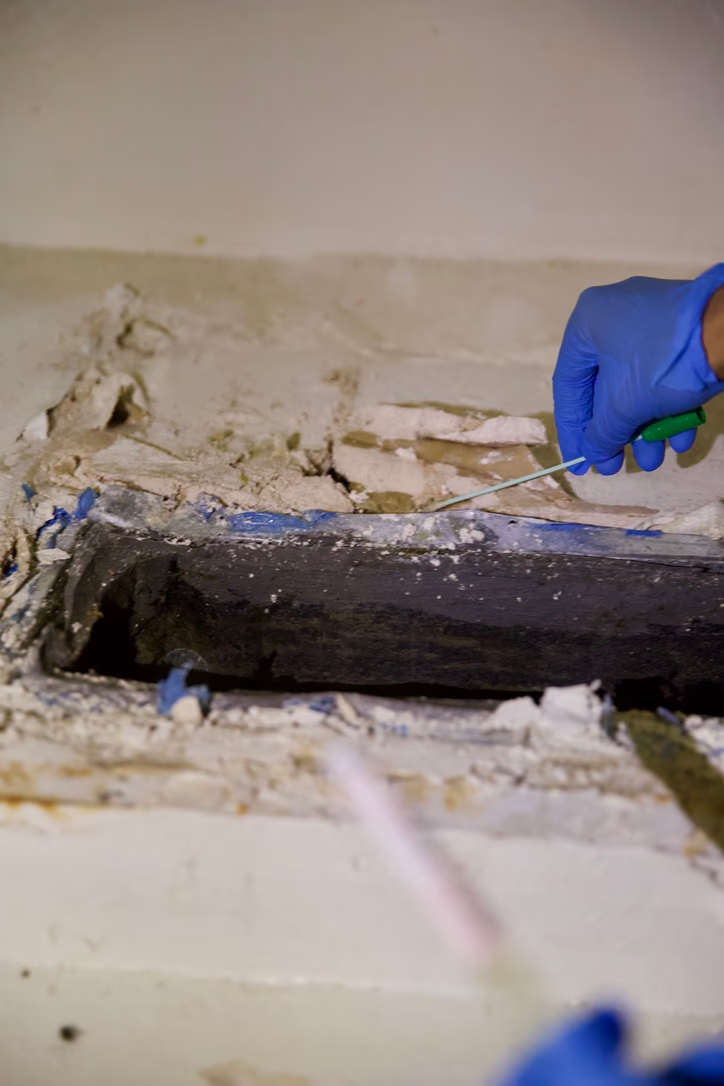
Our certified mold inspectors gently rub a sterile swab across the suspect area to collect a sample, then seal it and send it to a state-certified lab for mold species identification and contamination level.

Our process includes:

  • —Sterile collection from textured surfaces and porous materials
  • —Coverage of damp surfaces and hard-to-reach spots
  • —Lab work returning spore counts and lab-verified results
  • —A mold inspection report with clear next steps
How mold swab testing works

Mold inspection Los Angeles FAQ

Call For An Inspection
Los Angeles has one of the largest concentrations of intact early 20th-century residential construction in the country, and the Highland Park, Eagle Rock, West Adams, and Silver Lake neighborhoods carry homes from the 1890s through the 1920s that have been occupied continuously since. Original galvanized and cast-iron plumbing in these properties develops slow behind-wall leaks at fittings invisible until the drywall shows damage. Foundation walls from this era were built without waterproofing membranes — ground moisture migrates through in wet seasons. Chimney and roofing details have been through four or five replacement cycles, with each repair creating new potential moisture entry points at transitions. The 1994 Northridge earthquake opened foundation cracks and chimney gaps throughout the region that have been admitting water in properties never fully assessed since.
In the older multifamily stock of Koreatown, Mid-Wilshire, and the Westlake district it's among the most consistent findings. In stacked apartment construction, a moisture source on one floor — a failed roof section, a plumbing stack leak, a window seal failure — travels through shared wall assemblies and appears in units below months after the source event. Koreatown's exceptional occupancy density keeps interior humidity elevated in buildings that were designed for significantly lower occupancy loads. California's Civil Code 1941 requires landlords to maintain rental properties free of conditions that materially affect health, and independent inspection documentation — from a company with no remediation work to sell — establishes the condition of a unit in a form that holds up in a dispute with the Los Angeles Housing Department.
The Arts District, the Broadway corridor, and the Spring Street financial district's converted lofts and mixed-use buildings carry moisture histories in their structures that standard residential inspection doesn't address. Former warehouse concrete floors have drainage channels, loading dock slabs, and below-grade mechanical spaces whose moisture history predates any residential occupancy. Brick and masonry construction from the 1910s and 1920s develops moisture through mortar joint degradation that has been occurring for over a century. The thermal mass of masonry construction means moisture absorbed during a wet winter releases slowly through spring and summer, maintaining elevated wall cavity humidity long after the rain has stopped.
Los Angeles' climate creates mold risk through a pattern different from wetter climates — not constant moisture but intense seasonal cycling. Winter atmospheric river events deliver large volumes of water in short periods to buildings that haven't been stressed by sustained rain in months. Exterior sealing that appeared adequate through the dry season fails under the pressure of a three-inch storm, and water enters wall assemblies through gaps that weren't apparent before. The long dry season between wet winters desiccates and cracks exterior stucco and caulking, and the first significant rain of the season exploits those cracks before they're apparent. In hillside neighborhoods like Silver Lake and Eagle Rock, slope drainage concentrates this runoff at foundation faces.
Pre-purchase inspection in Los Angeles is particularly valuable given the age range of the housing stock, the seismic history, and the renovation activity that has characterized the city's older neighborhoods over the past decade. Renovation disturbs dormant mold in walls and attic spaces that have accumulated moisture for decades, and properties recently renovated in Highland Park, Echo Park, and West Adams may have had mold disturbed without proper remediation protocol. The inspection covers thermal imaging for behind-wall moisture, crawl space or slab assessment, attic condition, and air or surface sampling. In Los Angeles' competitive real estate market, having independent moisture documentation before closing protects you from inheriting a long-running problem.
Our Los Angeles team covers the neighborhoods listed on this page — Silver Lake, Highland Park, Koreatown, West Adams, Echo Park, Mid-Wilshire, Downtown LA, and Eagle Rock — alongside many other Los Angeles neighborhoods with same-day and next-day appointments and 24/7 emergency response. Several neighboring cities and communities have their own dedicated 24H Mold Inspection pages with local teams: Beverly Hills, Sherman Oaks, Van Nuys, Torrance, and Long Beach each have separate coverage. If your property is in one of those cities, that page will have the most relevant local information.
No — inspection and testing only. We never perform mold removal or remediation. In Los Angeles' vast and varied housing stock — from 1890s West Adams Victorians to 1960s Koreatown apartment buildings to 2000s Downtown loft conversions — moisture sources and remediation scopes vary enormously, and a company with cleanup work to sell has a financial reason to find more than the instruments confirm. What you receive is the diagnosis: extent of growth, moisture source, lab-confirmed species, and a written scope you can use to get comparable bids from multiple contractors on the same defined terms.

Contact

Book your Los Angeles mold inspection today

Tell us what's going on and we'll respond the same day

Location

24H Mold Inspection of Los Angeles

Hours

  • MondayOpen 24 hours
  • TuesdayOpen 24 hours
  • WednesdayOpen 24 hours
  • ThursdayOpen 24 hours
  • Friday6 AM – 6 PM
  • SaturdayClosed
  • SundayOpen 24 hours

Service area neighborhoods

  • Silver Lake
  • Highland Park
  • Koreatown
  • West Adams
  • Echo Park
  • Mid-Wilshire
  • Downtown LA
  • Eagle Rock
Call For Service(213) 832-8233