1
Mold inspection
- Moisture detection
- Infrared technology
- Certified mold inspectors
- No conflict of interest

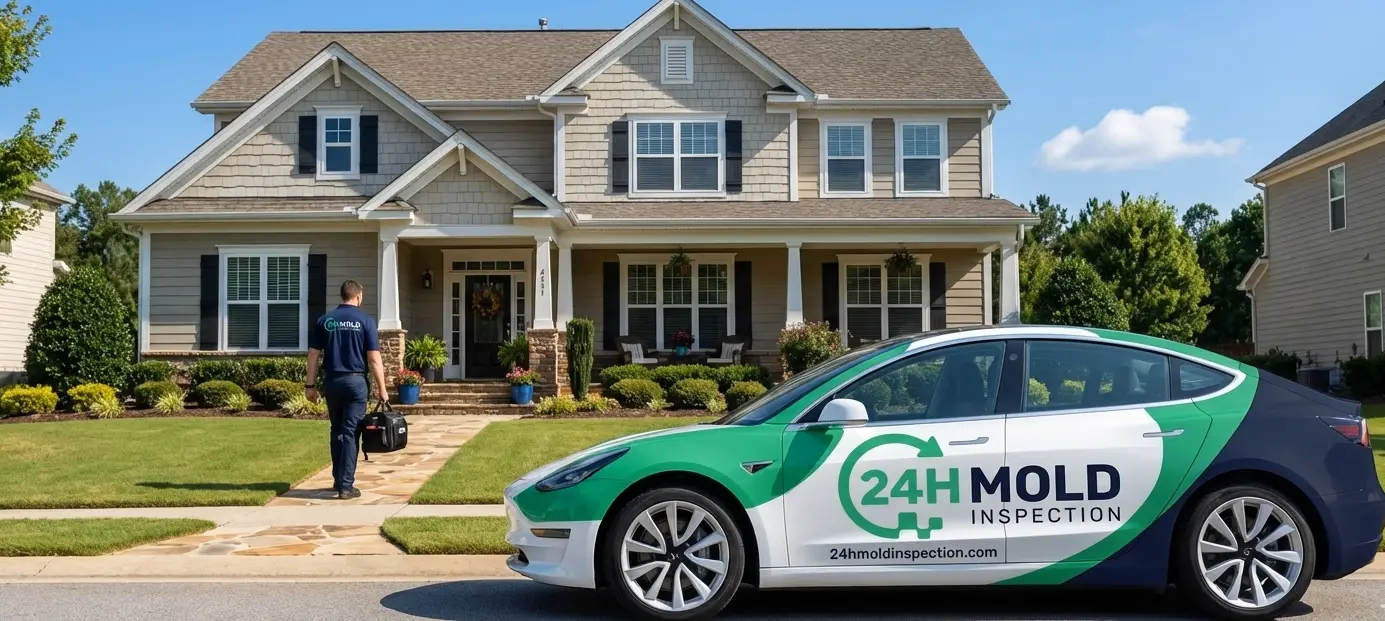
Certified mold inspection and testing in Los Angeles. Same-day appointments, lab-verified reports, and no financial stake in any remediation work that follows.
(213) 832-8233What We Do
Air and surface samples analyzed in a state-certified lab. You receive mold species ID, spore count data, and lab-verified documentation that holds up with insurers, attorneys, or counsel.
About
At 24H Mold Inspection of Los Angeles, we know no two buildings respond to moisture the same way.
Los Angeles presents a deceptively complex mold environment — the Mediterranean climate means dry summers mask the real risk, which arrives with the rainy season, marine layer humidity along the coast, and the wide variation in building conditions across one of the most architecturally diverse cities in the country. Coastal neighborhoods from Venice to Pacific Palisades deal with persistent marine moisture that drives mold in wall cavities and crawl spaces year-round, while inland areas like the Valley experience extreme heat-to-cool differentials that generate HVAC condensation issues in tightly sealed homes. The city's enormous range of building ages — from 1920s Craftsman bungalows in Highland Park to mid-century apartments in Koreatown to newer construction in the Palisades — means that no single mold risk profile applies across Los Angeles.
Los Angeles contains one of the most varied property mixes of any city in the country, spanning Craftsman bungalows, Spanish Revival stucco homes, mid-century apartments, post-war ranches, and modern high-rise condominiums. Stucco exterior cladding — dominant across the region — is particularly vulnerable to mold when surface cracks allow water intrusion during the rainy season, trapping moisture inside wall assemblies where it cannot dry in either direction.
Services
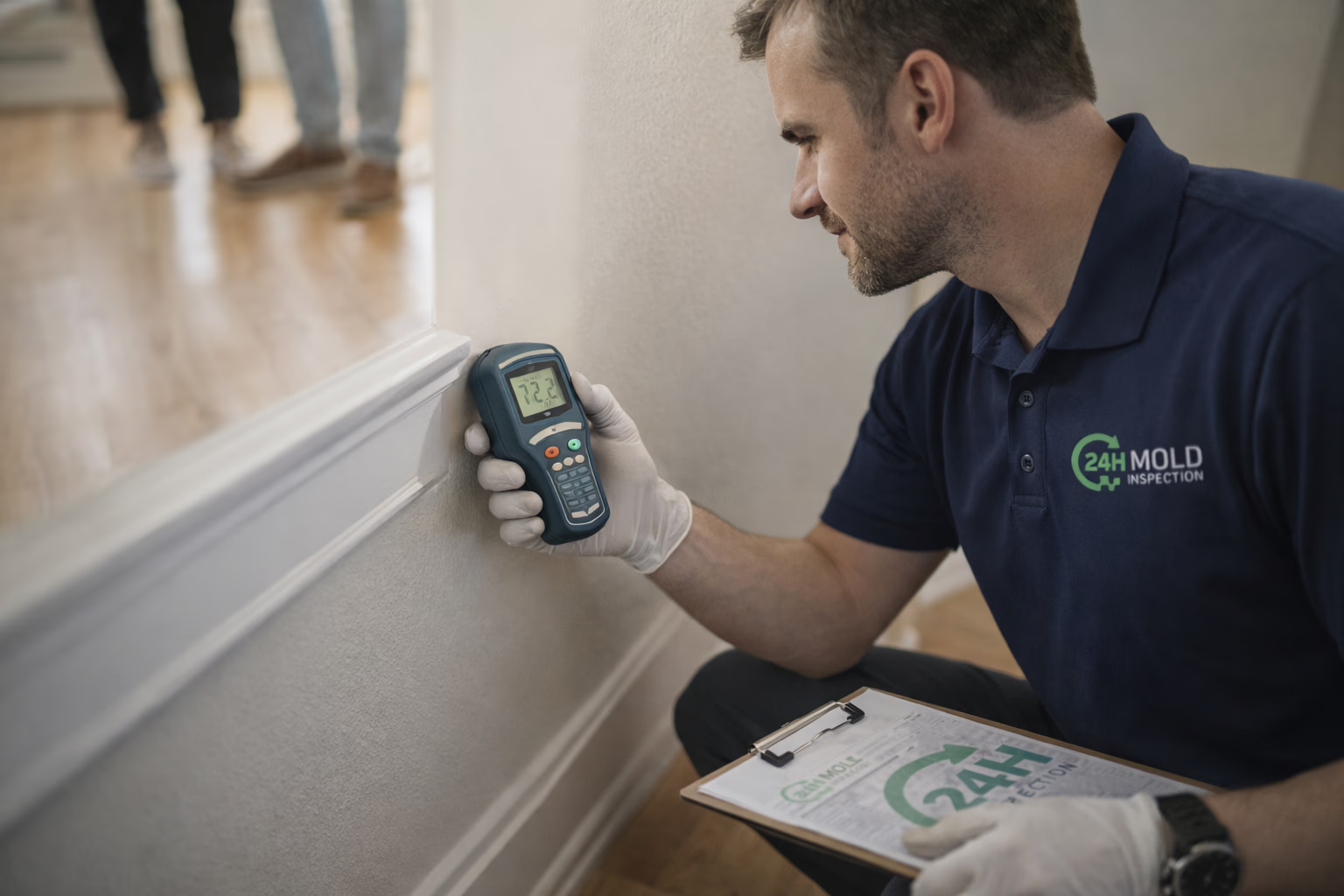
Mold inspection, mold testing, and environmental risk assessments for Los Angeles properties. Available 24/7, with no remediation work to bias the findings.
Why Us
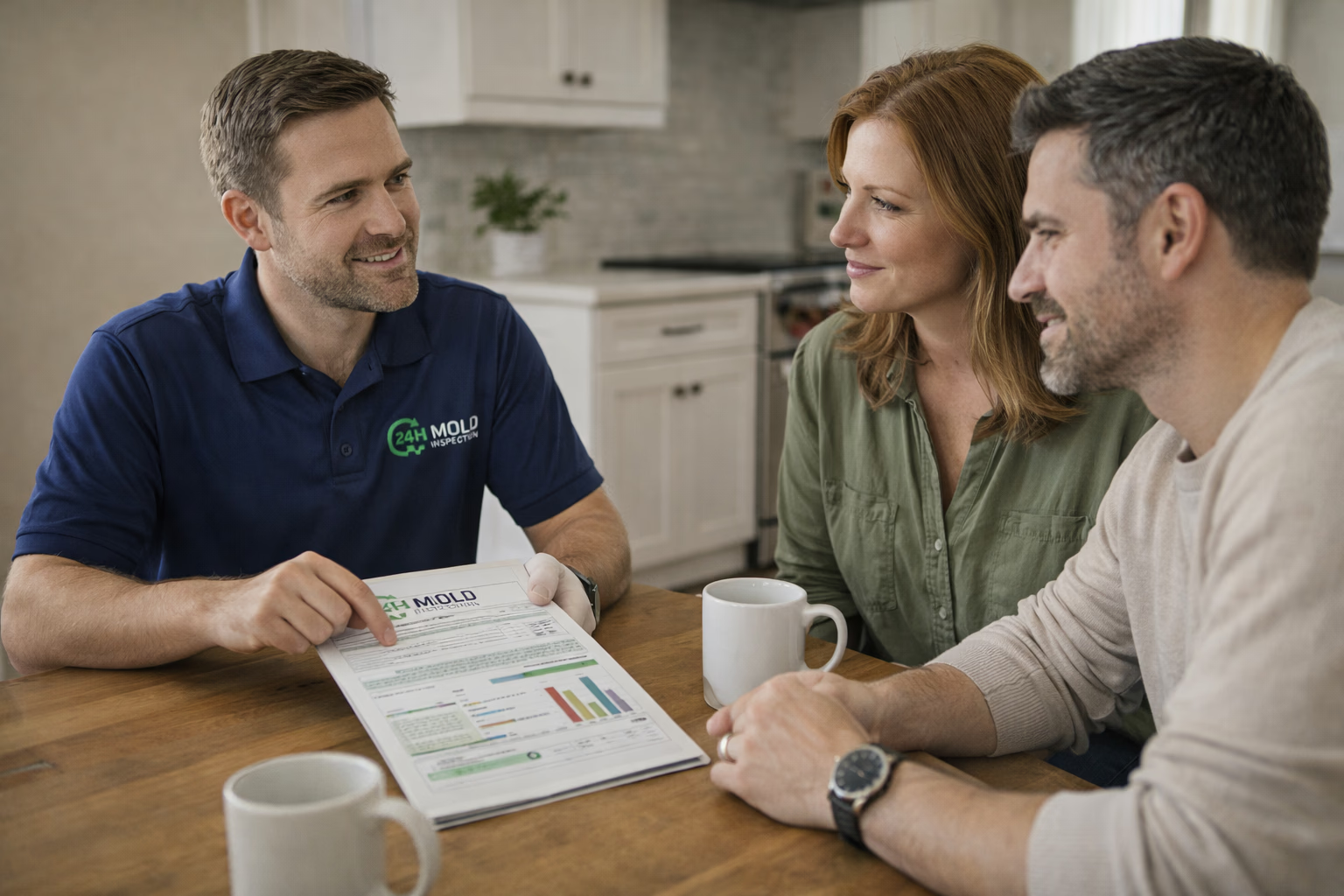
24H Mold Inspection of Los Angeles combines local field experience with state-certified methods and lab analysis. Reports get back to you quickly and clearly, with no upsell tacked on to the findings.
We don't stop at surface-level findings. Active leaks, health symptoms, post-remediation work, and pre-purchase due diligence each call for a different inspection approach. Our certified mold inspectors guide you through the specific situation rather than running a generic checklist.
Strengths
We check every box, then go further. Book your inspection today
Licensed inspectors with proven field experience in Los Angeles.
FLIR thermal cameras, calibrated moisture meters, and lab-verified sampling.
Straightforward updates and honest reporting throughout the process.
4.9 stars from 191+ Los Angeles homeowners and businesses.
Testimonials
Thousands of Los Angeles property owners have come to us for reliable, detailed mold assessments
Jonny was very great and very helpful from start to finish. He was extremely informative, professional, and clearly knew exactly what he was doing. He took the time to explain the entire mold inspection and testing process in a way that was easy to understand and made sure all of my questions were answered without rushing anything. Jonny was very thorough and detail-oriented, checking all the areas of concern and explaining what he was looking for and why. You can tell he has a lot of experience and genuinely cares about doing the job right. The equipment he used was professional, and he walked me through the results so I fully understood what was going on in my home. Overall, 24h Mold exceeded my expectations. The service was prompt, honest, and professional, and I felt confident and reassured after the inspection was completed. I would highly recommend 24h Mold to anyone needing mold inspection or testing—especially if you want someone knowledgeable, reliable, and easy to work with.
Nicole
5 Step Process
Choose a date and time that fits your schedule.
Flexible scheduling means same-day and next-day appointments are usually available, with 24/7 emergency response when the situation needs it.
Our certified mold inspectors assess every mold-prone area.
We walk the property identifying visible mold and moisture issues, using thermal imaging and moisture meters to catch what's hidden behind walls and under flooring.
Air and surface samples collected for lab analysis.
Our certified mold inspectors collect targeted samples from key areas to find mold spores both visible and hidden, with sample sites documented on a property map.
Lab testing returns precise results.
Samples go to a state-certified lab for detailed analysis identifying mold species and contamination levels, typically returned within 24 to 72 hours.
Insights and clear next steps from our experts.
You receive a written report with lab results, inspector findings, and specific recommended action steps to resolve any mold issues safely.
Who We Serve
24H Mold Inspection of Los Angeles brings clear answers to HOAs, hotels, commercial buildings, and homes through certified mold inspection and testing services.
Silver Lake and Echo Park occupy the hillsides above the reservoir that gave Silver Lake its name, with Victorian, Craftsman, and California Bungalow homes from the 1890s through the 1920s sitting on steep lots where drainage moves fast and foundation exposure to slope runoff is constant. The Silver Lake Reservoir was drained for seismic retrofitting in 2008 and refilled in 2015, and the soil saturation cycles around the reservoir's perimeter have affected the water table in the immediately adjacent blocks throughout that period. Echo Park's hillside lots collect runoff from the surrounding slopes, and the dense tree canopy in both neighborhoods keeps north-facing walls and roof surfaces shaded and damp well beyond any rain event.
Highland Park and Eagle Rock were established in the early 1900s along the Arroyo Seco corridor, and their housing stock includes some of Los Angeles' earliest residential construction — Colonial Revival, Craftsman, and Mission Revival homes built between 1895 and 1930. The 1938 Los Angeles flood drove the construction of the Arroyo Seco concrete channel, and properties in the lower blocks of both neighborhoods sit in the historical floodplain of the Arroyo. Highland Park's rapid gentrification has brought extensive renovation activity that often disturbs dormant mold in walls and attic spaces that have accumulated moisture for decades without intervention.
Koreatown and Mid-Wilshire contain some of Los Angeles' densest multifamily residential development — 1920s and 1930s courtyard apartments, 1950s and 1960s stucco walk-ups, and newer high-rise residential towers sitting in the same blocks. In stacked apartment construction, a moisture source on one floor travels through party walls and shows up in units below months after the source event. Koreatown's high occupancy density — among the highest in the city — keeps interior humidity elevated in buildings that were designed for significantly lower occupancy loads. The Mid-Wilshire corridor's 1920s and 1930s masonry commercial buildings along Wilshire Boulevard develop moisture through mortar joint degradation that affects the residential floors above.
West Adams is one of Los Angeles' oldest intact residential neighborhoods, with Victorian, Craftsman, and early Colonial Revival homes from the 1880s through the 1910s built for the city's first professional class before the Wilshire corridor drew development westward. Many of these properties have never had major system upgrades — original cast-iron plumbing, original foundation walls without waterproofing membranes, and chimney and roofing details from a construction era that didn't account for the moisture cycling these homes have experienced over 110 to 130 years of occupation. Leimert Park's 1920s and 1930s Spanish Colonial Revival homes share the aging-infrastructure moisture profile of their era.
Downtown Los Angeles contains the city's largest concentration of historic masonry commercial buildings — the Broadway Theater District's 1910s and 1920s ornate structures, the Spring Street financial corridor, the Arts District's former industrial warehouses — many of which have been converted to residential lofts and mixed-use occupancy in the past two decades. Converted buildings carry moisture histories in their concrete floors, brick walls, and below-grade loading areas that predate any residential occupancy. The Arts District's former industrial infrastructure — loading docks, freight elevators, warehouse-scale roof systems — creates moisture pathways that standard residential inspection doesn't address.
Google Search
Add 24H Mold Inspection as a preferred source so our pages are easier to spot in your Google results.
Contact
Tell us what's going on and we'll respond the same day
Location
24H Mold Inspection of Los Angeles
Phone
(213) 832-8233Hours
Service area neighborhoods
Newsletter
Monthly notes from our inspectors on prevention and air quality.