24H Mold Inspection
Lakewood24/7 EMERGENCY(562) 724-9177
HomeOur ServicesMold InspectionThermal Imaging
Mold Inspection

Thermal Imaging

Infrared cameras find hidden mold conditions and water damage before any surface stain shows up.

Overview

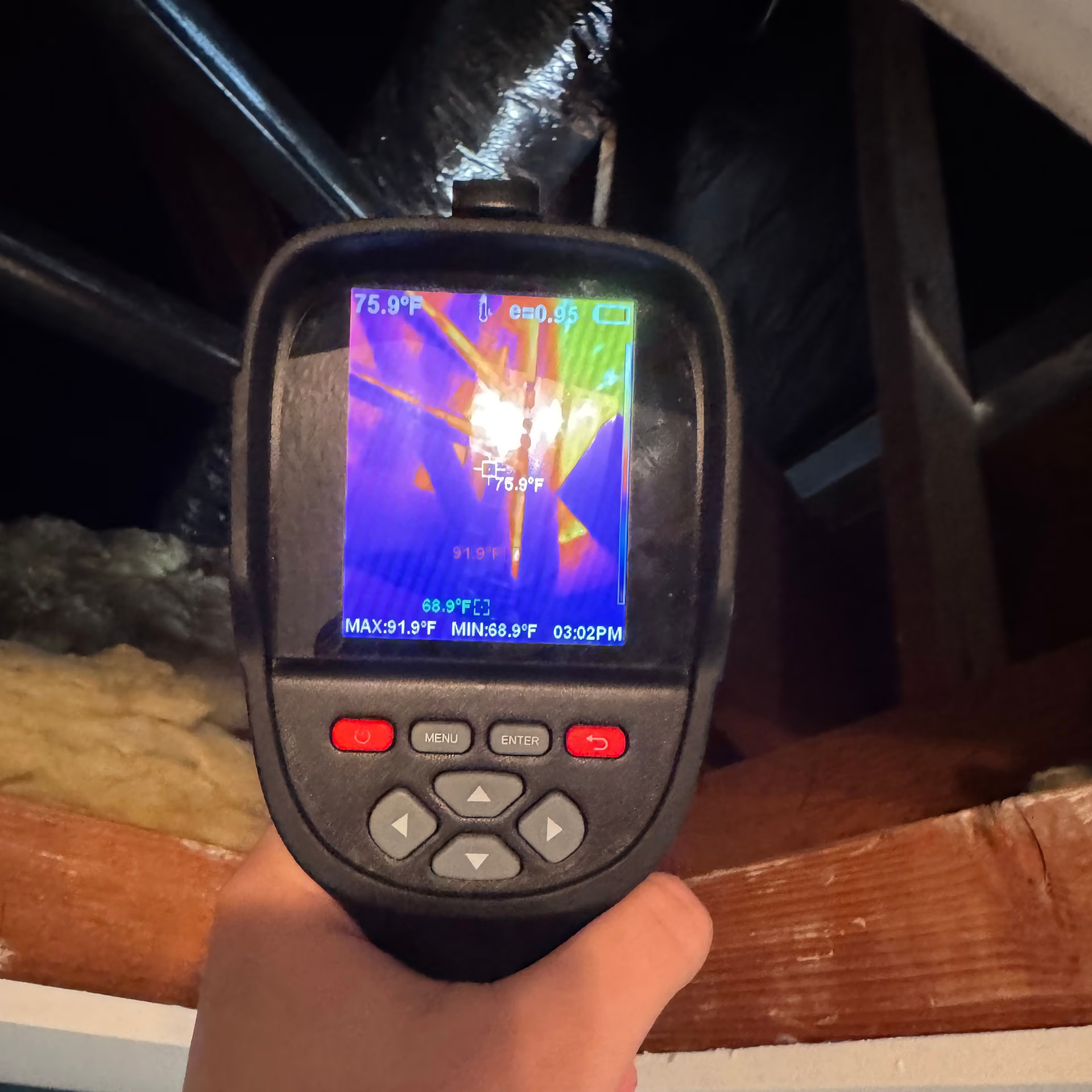
Why infrared thermal imaging finds mold others miss

Mold doesn't always announce itself. A small leak inside a wall, a stretch of failed insulation, or a cold-bridge condensation zone can build mold-friendly conditions for months before any stain reaches the surface. Thermal imaging reveals those conditions while they're still hidden, giving you a chance to address the moisture before mold has spread.

Thermal imaging detects:

  • —Hidden moisture inside walls, ceilings, and under floors
  • —Active leaks from plumbing, roofing, or HVAC components
  • —Insulation gaps and ventilation defects driving condensation
  • —Cold spots creating ideal future conditions for mold growth
Why infrared thermal imaging finds mold others miss
Mold inspector at work

Benefits

What you get from thermal imaging

Find hidden risks early without damaging the property

  • —Non-invasive: No drilling, no cutting, no surface damage.
  • —Early detection: Catches problems before damage becomes visible.
  • —Cost-effective: Targets repairs only where they're needed.
  • —Documented findings: Annotated thermal images included in the report.

About

How thermal imaging mold inspection works

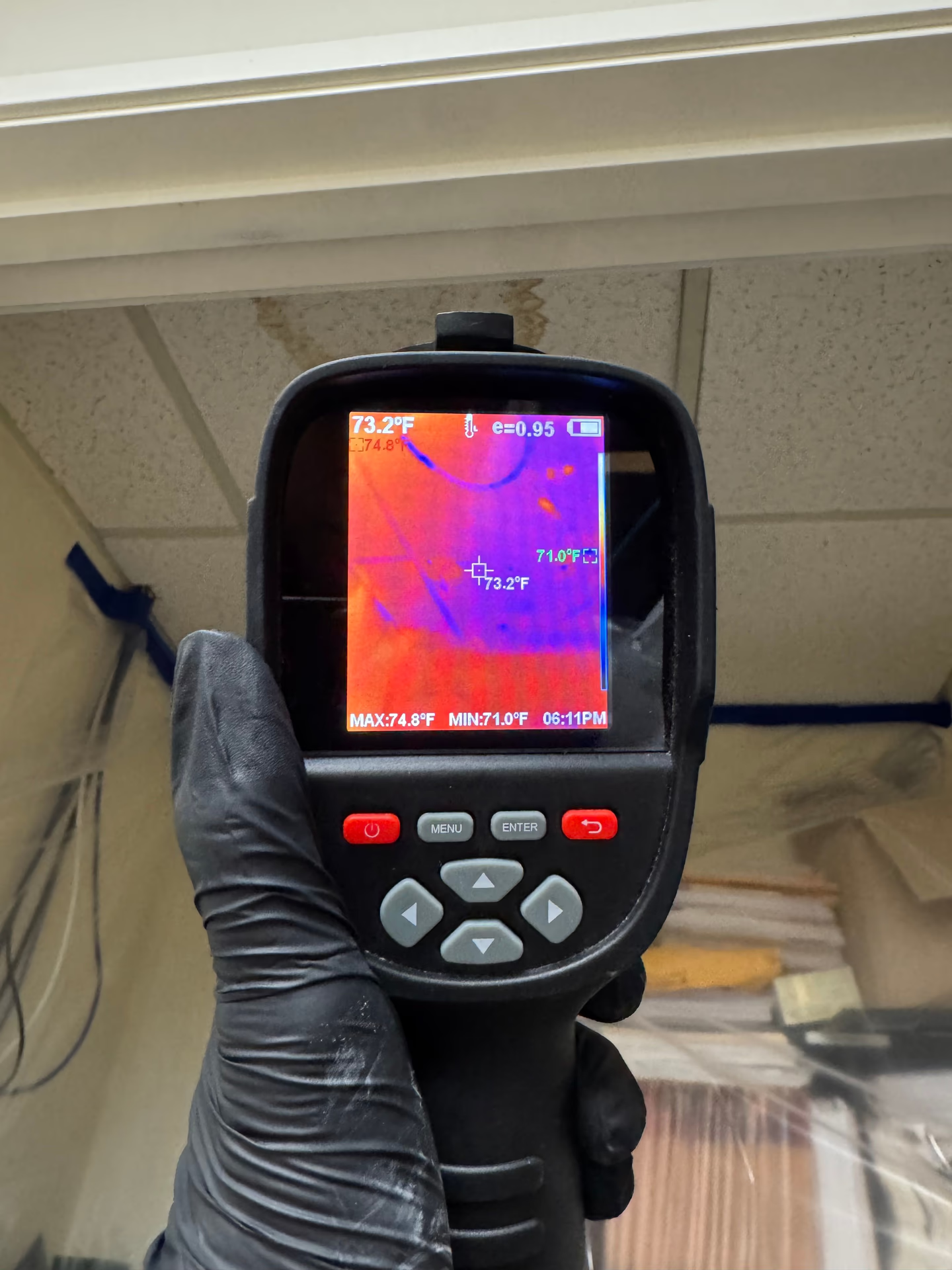
Our certified mold inspectors use FLIR cameras to read temperature differentials across surfaces. Cooler areas often signal water present in the material, even when no surface damage has appeared.

Our process includes:

  • —A complete thermal scan of key interior and exterior surfaces
  • —Identification of unusual cold or warm patterns in the readings
  • —Cross-checking thermal findings with calibrated moisture meters
  • —A mold inspection report including the annotated thermal images
How thermal imaging mold inspection works

Mold inspection Lakewood FAQ

Call For An Inspection
Lakewood's roughly 17,000 homes went up between 1950 and 1954 using a small set of floor plans, so they share the same slab design, plumbing layout, roof framing, and original systems. That means they age together. Original galvanized or early copper supply lines, slab expansion joints, attic bath-fan ducting, and original HVAC are all reaching end of life across the whole city at the same time. For an inspection, it helps: the likely failure points are predictable. It also means a home that looks fine may be sitting on the same aging plumbing as every house on its block. Thermal imaging and moisture meters find in-wall and under-slab moisture that a visual check misses.
Slab construction hides moisture problems. A slow supply-line leak under the slab or inside a wall can wick upward into drywall and framing with no visible sign at floor level, and Southern California's mild climate lets that moisture support growth year-round. Common sources in Lakewood are corroded original supply lines, bath fans that vent into the attic rather than outdoors, slab expansion joints that admit ground moisture, and original roofing details that have been patched or replaced several times. The inspection maps moisture across walls and slab edges and checks the attic for condensation staining.
Often it does. Many Lakewood homes were extended long after construction with converted garages and rear additions. Those spaces may lack a vapor barrier, may be tied into the original HVAC without enough return air, and may have no moisture control at the slab. They also add occupants to a house ventilated for fewer. We treat an addition as its own space, checking slab moisture, the wall cavity at the seam between old and new construction, and the roof tie-in.
It can. Lots in the lower blocks nearest the flood-control channel sit closer to the regional water table than the city's higher interior, which keeps ground moisture elevated against slab edges through the wet season. It does not mean every home nearby has a problem. It means an inspection should record moisture at slab edges and along exterior walls, not only inside the living space, and compare homes near the channel against drier parts of the city.
Yes. Because the housing stock is so uniform, the age-related risks are predictable, and an inspection tells you which of them have already started on this particular house. It covers thermal imaging for behind-wall moisture, slab readings at expansion joints, attic ventilation and condensation, and air or surface sampling where growth is suspected. For condos and townhomes it also documents whether a moisture condition comes from a shared building system, which affects who pays. Independent documentation before closing protects you from inheriting a slow problem.
Our Lakewood team covers the whole city, including Mayfair, the original Lakewood Park tracts, the Lakewood Center area, and the neighborhoods along the San Gabriel River, with same-day and next-day appointments and 24/7 emergency response. Long Beach has its own 24H Mold Inspection page with a local team. If your property is in Long Beach, start with that page.
Inspection and testing only. In a city of near-identical 1950s homes, a company that also sells cleanup has a financial reason to find more than the instruments confirm. What you receive is the diagnosis: the extent of growth, the moisture source, lab-confirmed species, and a written scope you can take to several contractors for comparable bids.

Contact

Book your Lakewood mold inspection today

Tell us what's going on and we'll respond the same day

Location

24H Mold Inspection of Lakewood

Address

3950 Paramount Blvd #115, Lakewood, CA 90712

Hours

  • MondayOpen 24 hours
  • TuesdayOpen 24 hours
  • WednesdayOpen 24 hours
  • ThursdayOpen 24 hours
  • Friday6 AM – 6 PM
  • SaturdayClosed
  • SundayOpen 24 hours

Service area neighborhoods

  • Lakewood Park
  • Mayfair
  • Lakewood Mutuals
  • Cherry Cove
  • Lakewood Village
  • Carson Park
  • Country Club Estates
  • Del Amo Boulevard corridor
Call For Service(562) 724-9177