1
Mold inspection
- Moisture detection
- Infrared technology
- Certified mold inspectors
- No conflict of interest

Certified mold inspection and testing in Lakewood. Same-day appointments, lab-verified reports, and no financial stake in any remediation work that follows.
(562) 724-9177What We Do
Air and surface samples analyzed in a state-certified lab. You receive mold species ID, spore count data, and lab-verified documentation that holds up with insurers, attorneys, or counsel.
About
At 24H Mold Inspection of Lakewood, we know no two buildings respond to moisture the same way.
Lakewood is one of Southern California’s most recognizable post-war suburban communities, with extensive residential neighborhoods developed during the housing boom of the 1950s and 1960s. Many homes share similar construction methods, floor plans, and slab foundation designs, creating recurring moisture patterns tied to aging plumbing, roof systems, and decades of remodeling activity. Mature landscaping and long-established irrigation systems also contribute to moisture conditions that can affect building performance over time.
Lakewood consists primarily of single-family homes, townhomes, apartments, and neighborhood commercial properties. Aging infrastructure, slab foundations, and irrigation-related moisture are common influences on building performance.
Services
Mold inspection, mold testing, and environmental risk assessments for Lakewood properties. Available 24/7, with no remediation work to bias the findings.

Why Us
24H Mold Inspection of Lakewood combines local field experience with state-certified methods and lab analysis. Reports get back to you quickly and clearly, with no upsell tacked on to the findings.
We don't stop at surface-level findings. Active leaks, health symptoms, post-remediation work, and pre-purchase due diligence each call for a different inspection approach. Our certified mold inspectors guide you through the specific situation rather than running a generic checklist.
Strengths
We check every box, then go further. Book your inspection today
Licensed inspectors with proven field experience in Lakewood.
FLIR thermal cameras, calibrated moisture meters, and lab-verified sampling.
Straightforward updates and honest reporting throughout the process.
5.0 stars from 6+ Lakewood homeowners and businesses.
5 Step Process
Choose a date and time that fits your schedule.
Flexible scheduling means same-day and next-day appointments are usually available, with 24/7 emergency response when the situation needs it.
Our certified mold inspectors assess every mold-prone area.
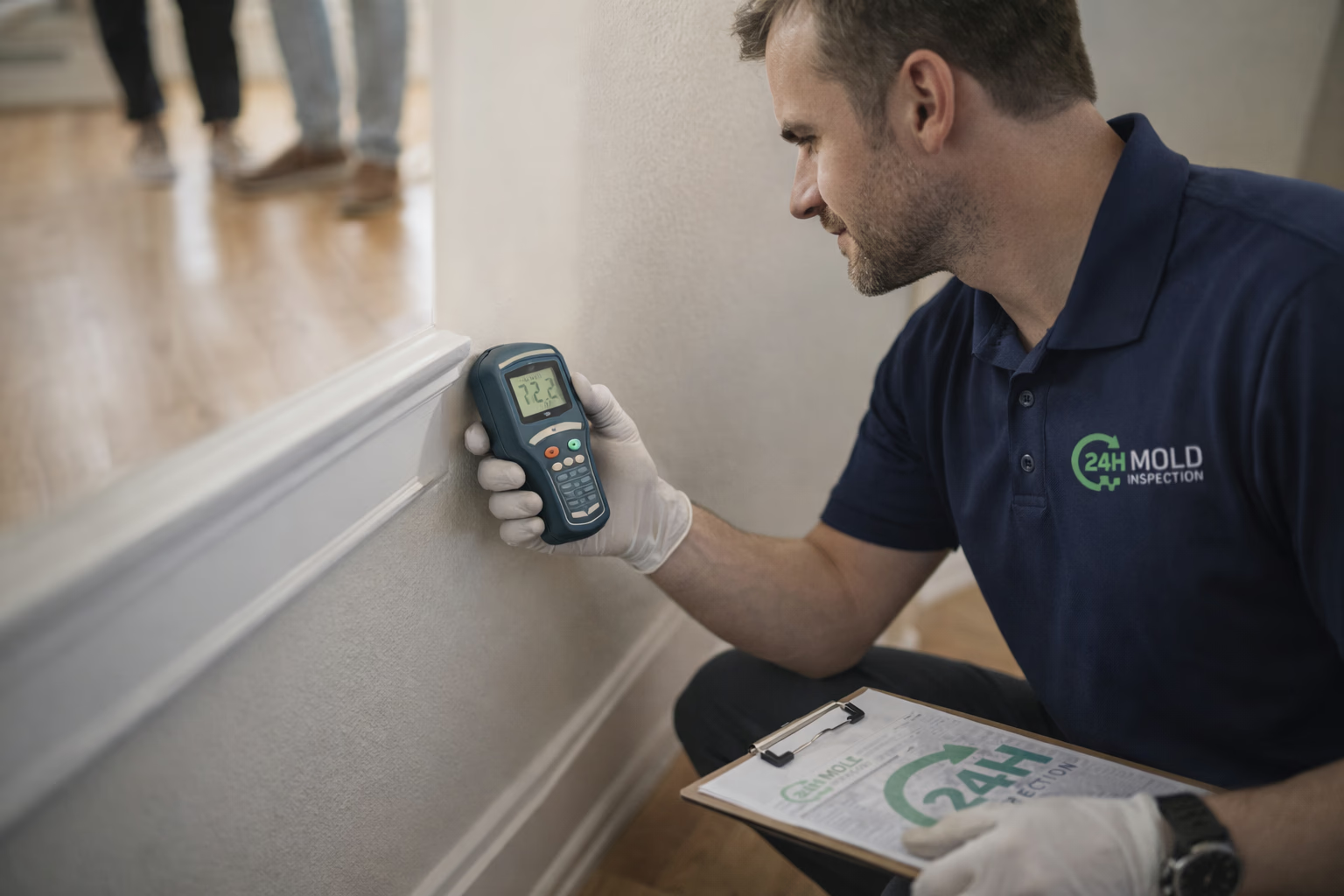
We walk the property identifying visible mold and moisture issues, using thermal imaging and moisture meters to catch what's hidden behind walls and under flooring.
Air and surface samples collected for lab analysis.
Our certified mold inspectors collect targeted samples from key areas to find mold spores both visible and hidden, with sample sites documented on a property map.
Lab testing returns precise results.
Samples go to a state-certified lab for detailed analysis identifying mold species and contamination levels, typically returned within 24 to 72 hours.
Insights and clear next steps from our experts.
You receive a written report with lab results, inspector findings, and specific recommended action steps to resolve any mold issues safely.
Who We Serve
24H Mold Inspection of Lakewood brings clear answers to HOAs, hotels, commercial buildings, and homes through certified mold inspection and testing services.
Lakewood was built between 1950 and 1954 as one of the first large-scale planned communities in the country, with roughly 17,000 homes put up in a matter of years on former farmland and open ground. The homes repeat a small set of floor plans, so the same details recur block after block: a similar slab and plumbing layout, similar roof framing, similar attic ventilation, and similar original systems. Most are now 70 to 75 years old. Original galvanized or early copper supply lines are at end of life, slab expansion joints have cycled through seven decades of temperature swings, and original bath fans often still exhaust into the attic.
Mayfair's residential streets share the postwar tract character that defines most of Lakewood, with modest single-story homes on small lots that have changed hands many times over seven decades. Because the lots are small and the houses sit close together, drainage from one property often affects its neighbor, and a failing downspout or poor grade next door can load moisture against your foundation. Many homes have been extended with converted garages and rear additions that were never part of the original ventilation design.
Lakewood Center opened in 1952 as one of the early large regional shopping centers, and the commercial corridors around it hold large-footprint retail, offices, and medical buildings from several eras. Flat or low-slope roofs with few drains, rooftop HVAC, and parapet details put water above suspended ceilings, where leaks can run for months before showing. Inspection here concentrates on roof drainage, condensate lines, mechanical rooms, and moisture above ceilings.
Lakewood's eastern side runs along the San Gabriel River flood-control channel, which was built out after the destructive floods of 1938. Lots in the lower blocks nearest the channel sit closer to the regional water table than the city's higher interior, so ground moisture against slab edges stays elevated through the wet season. In a tract where nearly every house has the same slab design, those lower blocks tend to show moisture earlier than the rest.
Alongside the original tracts, Lakewood has condominiums, townhome communities, and infill housing from the 1970s onward. Shared roofs, plumbing stacks, and exterior walls mean a failure in a common element can appear as mold inside a single unit. Fixed-schedule HOA irrigation keeps soil damp against foundations regardless of rainfall. Documenting whether a moisture source sits inside a unit or in a shared system usually decides who pays for the repair.