1
Mold inspection
- Moisture detection
- Infrared technology
- Certified mold inspectors
- No conflict of interest

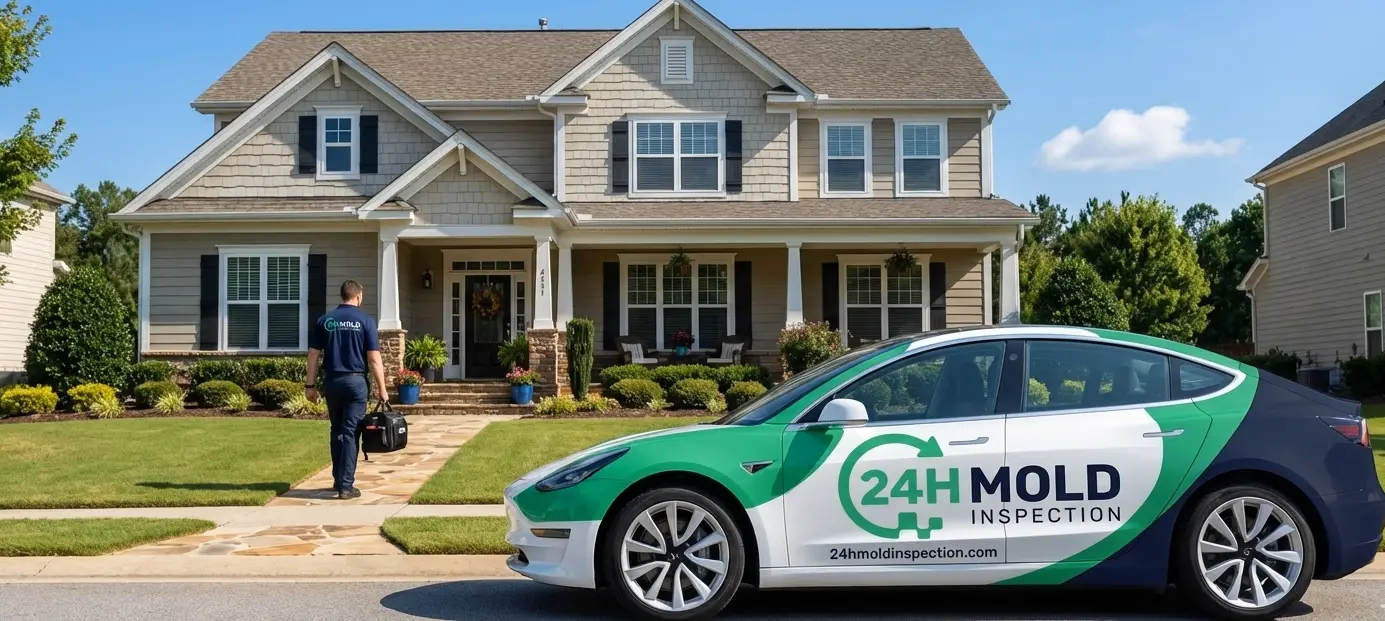
Certified mold inspection and testing in Lakeside. Same-day appointments, lab-verified reports, and no financial stake in any remediation work that follows.
(619) 752-6822What We Do
Air and surface samples analyzed in a state-certified lab. You receive mold species ID, spore count data, and lab-verified documentation that holds up with insurers, attorneys, or counsel.
About
At 24H Mold Inspection of Lakeside, we know no two buildings respond to moisture the same way.
Lakeside sits in eastern San Diego County where suburban development transitions into foothill terrain, open space, and rural residential communities. The area contains a diverse mix of family homes, equestrian properties, hillside residences, and larger-lot developments that create moisture conditions distinct from both coastal and urban neighborhoods. Seasonal storms can generate concentrated runoff through local valleys and drainage corridors, while many properties rely on extensive irrigation systems and landscaping that influence soil moisture levels year-round. Housing stock varies significantly in age, ranging from older homes with aging infrastructure to newer residential developments with modern building systems. As a result, mold concerns in Lakeside are often driven by drainage management, plumbing failures, irrigation issues, and hidden water intrusion rather than ambient humidity alone.
Lakeside contains suburban homes, ranch-style properties, equestrian estates, hillside residences, manufactured homes, and commercial buildings. Drainage conditions, irrigation infrastructure, and varied topography commonly influence moisture performance.
Services
Mold inspection, mold testing, and environmental risk assessments for Lakeside properties. Available 24/7, with no remediation work to bias the findings.

Why Us
24H Mold Inspection of Lakeside combines local field experience with state-certified methods and lab analysis. Reports get back to you quickly and clearly, with no upsell tacked on to the findings.
We don't stop at surface-level findings. Active leaks, health symptoms, post-remediation work, and pre-purchase due diligence each call for a different inspection approach. Our certified mold inspectors guide you through the specific situation rather than running a generic checklist.
Strengths
We check every box, then go further. Book your inspection today
Licensed inspectors with proven field experience in Lakeside.
FLIR thermal cameras, calibrated moisture meters, and lab-verified sampling.
Straightforward updates and honest reporting throughout the process.
Highly rated by Lakeside homeowners and businesses.
5 Step Process
Choose a date and time that fits your schedule.
Flexible scheduling means same-day and next-day appointments are usually available, with 24/7 emergency response when the situation needs it.
Our certified mold inspectors assess every mold-prone area.
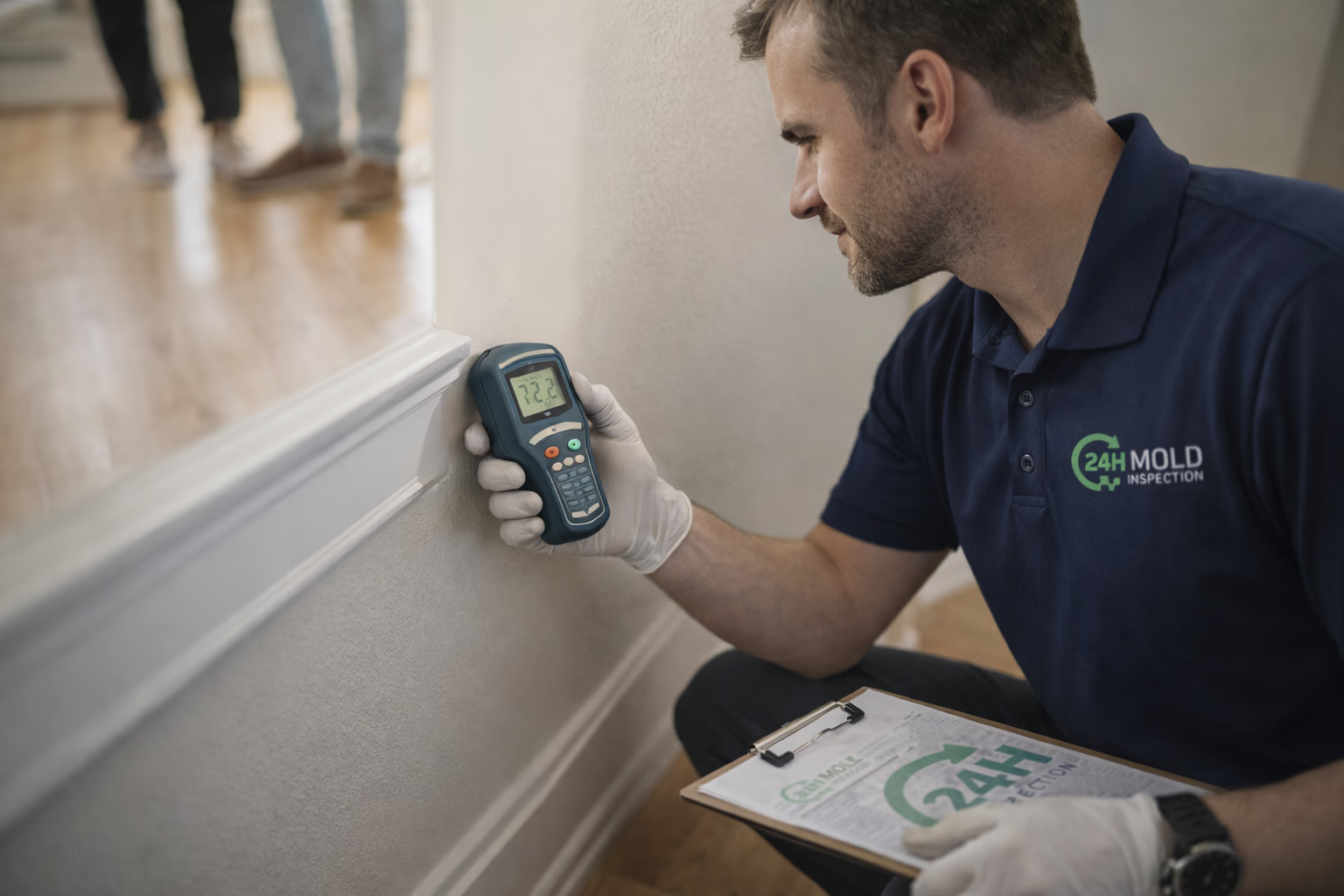
We walk the property identifying visible mold and moisture issues, using thermal imaging and moisture meters to catch what's hidden behind walls and under flooring.
Air and surface samples collected for lab analysis.
Our certified mold inspectors collect targeted samples from key areas to find mold spores both visible and hidden, with sample sites documented on a property map.
Lab testing returns precise results.
Samples go to a state-certified lab for detailed analysis identifying mold species and contamination levels, typically returned within 24 to 72 hours.
Insights and clear next steps from our experts.
You receive a written report with lab results, inspector findings, and specific recommended action steps to resolve any mold issues safely.
Who We Serve
24H Mold Inspection of Lakeside brings clear answers to HOAs, hotels, commercial buildings, and homes through certified mold inspection and testing services.
Winter Gardens is Lakeside's largest and most established residential neighborhood, developed primarily in the 1950s and 1960s on the valley floor along Winter Gardens Boulevard. This construction era is now 60 to 70 years old, and original systems are aging simultaneously — galvanized plumbing at end of life, slab-on-grade foundations developing moisture migration through San Diego County's thermal cycling, and HVAC systems developing condensate issues. Winter Gardens sits in the San Diego River floodplain, and the lower blocks near the river channel have experienced periodic flooding in wet winters. The 1993 and 2010 storms brought significant water into basements and below-grade spaces in this area that may have established dormant mold in properties never fully assessed since.
Eucalyptus Hills occupies the terrain rising above the valley floor, with custom and semi-custom homes on hillside lots that command views across the San Diego River Valley toward El Capitan Reservoir. Hillside construction here directs slope runoff and subsurface water toward downslope foundations, particularly after the atmospheric river events that have become more frequent in San Diego County winters. The eucalyptus trees that give the neighborhood its name keep surfaces shaded and damp well beyond any rain event, and the leaf debris they drop packs roof valleys and gutters until water backs up under the shingle course rather than running off cleanly. Custom homes on large hillside lots also have retaining walls and subdrains that are now 30 to 50 years old in many cases.
The neighborhoods closest to El Capitan Reservoir sit in the oak and chaparral terrain of the Cuyamaca foothills, where properties on canyon-adjacent lots deal with the moisture conditions specific to foothill San Diego County — post-storm slope runoff concentrating at canyon mouths, oak woodland canopy keeping north-facing surfaces perpetually shaded, and the significant temperature differential between warm afternoons and cool canyon nights driving condensation on surfaces inside wall assemblies. The 2003 Cedar Fire burned extensively through this area, and the fire-hardened soils in the burn scar continue to accelerate runoff volumes toward the valley below in wet winters.
Lakeside Farms and the Riverview Farms district represent the agricultural transition zone between Lakeside's residential neighborhoods and the open land of the San Diego River corridor. Properties here combine older agricultural structures — converted barns, outbuildings, storage buildings repurposed as living space — with newer residential construction on former farm parcels. Agricultural-to-residential conversions carry moisture histories in their structures that standard residential construction doesn't share: former barn floors, original irrigation infrastructure beneath residential foundations, and soil moisture conditions shaped by decades of agricultural water use rather than residential drainage design.
The Highway 67 corridor through Lakeside carries the community's older commercial development and the residential neighborhoods that grew alongside the highway as the primary route between El Cajon and Ramona. Properties along this corridor include some of Lakeside's oldest housing — 1940s and 1950s construction predating the suburban development wave of the 1960s — alongside commercial buildings that have been through multiple tenancy cycles. The highway corridor's topography sits at the base of the slopes rising toward Eucalyptus Hills, and properties on the east side of the highway collect drainage from those slopes.
Google Search
Add 24H Mold Inspection as a preferred source so our pages are easier to spot in your Google results.
Contact
Tell us what's going on and we'll respond the same day
Location
24H Mold Inspection of Lakeside
Phone
(619) 752-6822Hours
Service area neighborhoods
Newsletter
Monthly notes from our inspectors on prevention and air quality.