
Detect hidden moisture, leaks, and insulation issues without invasive methods.
our services
Mold Inspection
Advanced moisture detection and infrared technology—so you can act before it spreads.
About
Why Mold Inspection Matters
Mold often hides behind walls or under flooring. Our inspection process is designed to catch both the obvious and the invisible—before they become costly repairs or health concerns.
- —Detect visible mold
- —Locate the source of moisture that feeds it
- —Identify which areas need testing or remediation
- —Get peace of mind after leaks or before buying property
Methodology
How our mold inspectors inspect
We combine certified field experience with calibrated detection tools
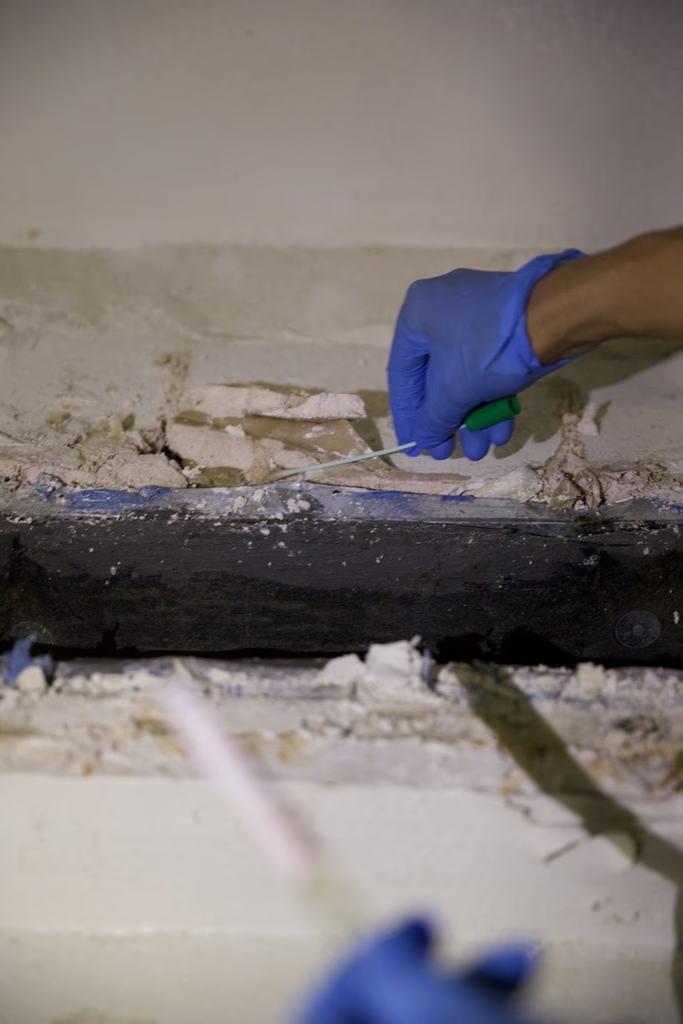
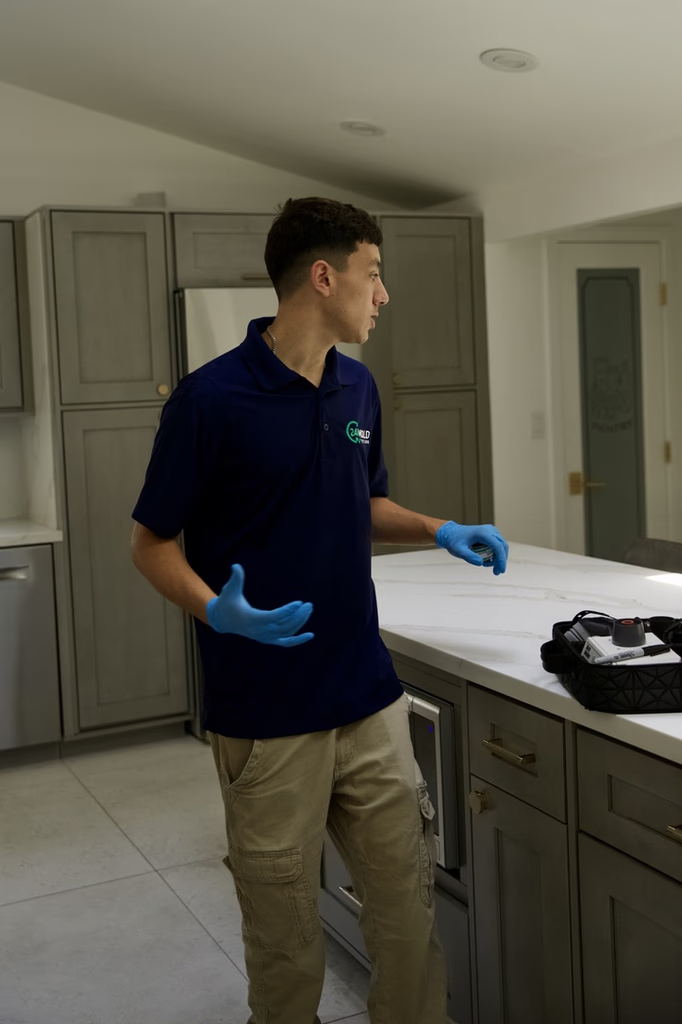
Every job starts with a structured walkthrough of high-risk areas: bathrooms, kitchens, attics, basements, crawl spaces, and around any plumbing, windows, or HVAC components. The inspector documents visible growth, stains, warping, and other physical signs as they go.
Mold doesn't grow without water, so finding the moisture is half the work. Pin and pinless moisture meters measure water content inside walls, ceilings, and flooring materials, locating active leaks and elevated humidity that the eye can't see.
FLIR thermal imaging cameras read temperature differentials behind surfaces, which is how we find wet areas inside walls without opening anything up. Cold spots flag moisture, condensation, and air leaks that often correlate with hidden mold growth.
Checklist
Is an Inspection Right for You?
Mold inspection is ideal if:
- —You've had recent leaks or water damage
- —You notice musty odors in certain rooms
- —You're buying, selling, or managing a property
- —You want to check for mold before testing or remediation
- —You just want peace of mind
Still unsure? Our team will help you decide if an inspection—or testing—is the right first step.
Inspection Overview
Our Inspection Methods
Understand the key methods we use to deliver a complete, thorough mold inspection.
Measure moisture levels inside surfaces to find leaks, trapped water, or early signs of mold risk.
Homes, condos, and rentals—moisture and mold assessment with clear reporting for occupants and transactions.
Offices, retail, hospitality, and industrial—inspections that respect operations and support facilities teams.
Mold inspection La Cañada Flintridge FAQ
Call For An InspectionSame-day and next-day appointments are usually available across our La Cañada Flintridge service area, with 24/7 emergency response for active leaks, recent water damage, or urgent real estate timelines. Standard scheduling runs 1 to 3 business days depending on availability.
Our certified mold inspectors assess bathrooms, kitchens, laundry rooms, basements, attics, crawl spaces, HVAC components, and any area showing signs of past or current water issues. Thermal imaging and moisture meters identify hidden moisture behind walls and under floors.
They can. Dense vegetation often increases shade and reduces airflow around structures, slowing the drying process after rainfall or irrigation. Tree roots may also influence drainage patterns, while heavy landscaping can trap moisture near foundations and exterior walls where hidden mold growth may eventually develop.
Pricing varies based on the size of the property, the scope of testing required, and whether any lab work is included. Most residential mold inspections in La Cañada Flintridge fall within the standard industry range of $300 to $600, with a clear quote provided before any work begins.
Air sampling, swab testing, tape lift testing, wall cavity sampling, and HVAC mold testing. The inspector recommends the right method on-site based on what's found. Samples go to a state-certified lab, with results typically back in 24 to 72 hours.
Mold needs water to grow, so finding the moisture source is what prevents the same problem from coming back after any cleanup. Moisture detection during the inspection identifies plumbing leaks, roof leaks, condensation issues, and humidity buildup that's feeding any growth.
Yes. Post-remediation verification confirms the remediation contractor's work succeeded and the space is safe to reoccupy. Because we don't perform remediation ourselves, the verification stays independent of the remediation contractor's interests, which is what insurers and tenants look for.
La Cañada Flintridge sits in a very high fire hazard zone at the San Gabriel mountain front, and the risk to homes doesn't end when a fire is out. In 2009 the Station Fire — the largest in Los Angeles County history at the time — burned the slopes directly above the city, and the following winter debris flows tore out of canyons like Mullally and Briar Wood and engulfed mountain-front homes. Burn scars lose the vegetation that holds soil in place, so heavy storms send mud, debris, and water toward foundations, into crawl spaces, and through lower levels — saturating framing and drywall and creating mold conditions. Homes along the mountain front, especially any that took on mud or water, are a priority for moisture and mold assessment after a wet winter.
Flintridge, developed in the 1920s by Senator Frank Flint, is known for its grand Mediterranean and Spanish Revival estates on the San Rafael Hills, many lining the deodar cedar streets of the Deodar district. These century-old luxury homes were built with original plumbing, roofing, and drainage designs, and decades of custom construction and remodeling tend to hide moisture problems well — a slow behind-wall leak or failing below-grade waterproofing can develop for years before any visible symptom appears. Their scale, multiple additions, and finished lower levels give moisture many places to accumulate unnoticed. An inspection of a historic Flintridge estate focuses on aging plumbing, roof-and-drainage details, and any below-grade or remodeled space.
Homes tucked into the deep, north-facing canyon bottoms around Descanso Gardens and into Chevy Chase Canyon sit under a dense canopy of California live oak where direct sun barely reaches. That heavy shade and cool, still air keep the ground, lower walls, and crawl spaces damp long after rain or irrigation — exactly the condition mold needs to establish. Limited airflow slows evaporation, so moisture that would dry quickly on an open lot lingers against foundations and exterior walls here. Canyon properties benefit from an inspection focused on the shaded, ground-contact areas: crawl spaces, lower walls, and north-facing rooms where drying is slowest.
Graded hillside tracts like Alta Cañada, Greenridge Estates, and the Country Club area are built on stepped and terraced foundations across large sloping lots, usually with pools, spas, and extensive irrigation. All that engineered water plus multi-level construction gives moisture many paths toward retaining walls, lower levels, and downslope foundations. Water moving downhill concentrates against uphill-facing and below-grade walls, and a small leak in a pool, spa line, or irrigation system can feed the soil around a foundation for a long time before it's noticed. Hillside estates benefit from an inspection focused on the downhill and below-grade walls, foundation and retaining-wall drainage, and lower-level living space.
If your home saw runoff or intrusion, yes. During winter storms, large volumes of water descend from the San Gabriel watershed and put heavy pressure on the community's drainage systems, and mountain-front and canyon properties can take on mud, debris, and water. Even without a dramatic event, wind-driven rain forces water through roof, window, and stucco gaps, and mold can begin growing within 24 to 48 hours of saturation. The damage is often hidden inside walls, under flooring, or in a crawl space rather than visible, so a home that looked fine after a storm can still be developing mold. A moisture assessment after a wet winter catches these problems early.
Yes — it's one of the most common patterns we find here. Many of La Cañada Flintridge's custom homes and older estates have crawl-space foundations and aging plumbing infrastructure, and both can conceal moisture problems for years before visible symptoms emerge. A slow supply-line or drain leak under the house, or ground moisture wicking up through an unsealed crawl space, feeds mold on the underside of the subfloor and framing where no one looks. Because the homes are large and often have finished lower levels over these spaces, the first sign is frequently an odor or a health symptom rather than a stain. A crawl-space and plumbing-focused assessment finds these hidden problems.
Given the city's mix of century-old estates, canyon-bottom homes, and graded hillside tracts, a pre-purchase inspection here is anything but routine. The priorities are the crawl space and any below-grade or lower level for seepage and past water staining, aging plumbing for slow behind-wall leaks, roof-and-drainage details on large custom rooflines, and the downhill and retaining-wall areas on sloping lots. For mountain-front properties it's worth confirming any history of debris-flow or storm intrusion, and for canyon homes the shaded ground-contact areas. Because these homes are heavily customized and often remodeled, older water damage may have been covered over rather than remediated. An independent inspection — with no stake in remediation — gives a clear moisture picture before closing.
Inspection and testing only — we do not perform removal or remediation, and the separation is the point. The company telling you how much mold you have should not be the company billing you to take it out. What you get is the diagnosis: how far the growth extends, the moisture source keeping it alive, lab confirmation of what is present, and a written report you can hand to several remediation contractors so they bid identical scope rather than their own estimates. That matters more than usual on this city's housing stock. Custom homes on large lots with stepped foundations, crawl spaces, and extensive irrigation give a walkthrough quote a great deal of room to assume the worst about what sits behind a wall or under a floor. A documented scope, with the moisture source identified, routinely turns an alarming verbal estimate into a defined and considerably smaller job.
The visit begins with history — the age of the house, what has been added or remodelled, recent storm or irrigation problems, and what you have noticed — then moves into a systematic survey: room by room visually, thermal imaging to locate the temperature differences that mark wet material behind finishes, and pin and pinless moisture meters to confirm it. On a La Cañada property the work outside the house matters as much as the work inside it. Stepped foundations on sloping lots, area and slope drains, downspout discharge, and irrigation against foundation walls are checked directly, because on this terrain the moisture source is frequently exterior and the interior finding is only the symptom. Crawl spaces get real attention, since heavily shaded lots with mature canopy dry slowly and a crawl space here can hold moisture for weeks after a storm. Expect three to four hours on a larger custom home.
There is no statewide license to look up. California's Toxic Mold Protection Act of 2001 directed the state to establish permissible exposure limits for indoor mold, those limits were never set, and no agency issues or revokes a mold inspector credential. Verify what can be verified: recognized third-party industry certification, current liability insurance, an accredited independent laboratory rather than on-site readings, a written report with photographs and marked sample locations, and a company that does not also perform remediation. Then add a check specific to this city. Because so many moisture problems here are drainage problems, the repair often involves a grading, drainage, or hillside contractor — so ask whether the inspector has any referral or financial relationship with the trade that would be doing that work. Independence from the remediation company is the usual concern; here it needs to extend to the drainage trade as well, particularly after a wet winter when unsolicited operators work the foothill neighbourhoods offering free inspections.
Yes — the retail and professional buildings along the Foothill Boulevard corridor, schools and institutional properties, clubhouses and community facilities, and the common areas managed by homeowner associations in the hillside tracts. Commercial inspection differs from residential in where the moisture hides rather than in method: low-slope roofs pond and leak above ceiling systems, packaged rooftop HVAC units generate condensation across long duct runs, and damage develops above occupied space or in mechanical areas that see attention only at service intervals. Association work in this city usually comes back to drainage. Slope drains, swales, retaining walls, and common-area grading carry substantial seasonal runoff off the San Gabriel front, and a blocked or undersized drain shows up as moisture inside the building downhill rather than at the drain itself. Because responsibility for those elements typically sits with the association and everything inboard of the unit with the owner, documenting the water's actual path is what decides who pays.
Hand every contractor the same report and ask them to bid the scope it documents, so quotes differ on price and method rather than on how much mold each company claims to find. Confirm a current CSLB license, required on any job over five hundred dollars in combined labor and materials, plus workers compensation and liability coverage. Then be specific about the moisture source repair, because in this city it is frequently not a plumbing job at all. Correcting slope drainage, clearing or resizing area drains, regrading a landscaped area that now falls toward the house, or repairing a retaining wall is what actually stops the recurrence, and none of it appears in a remediation bid written from a walkthrough. Ask whether the contractor will coordinate with a drainage or grading trade, or whether you need to arrange that separately. Removal without it will simply produce the same finding after the next wet winter.
It is the independent check performed after the cleanup and before containment comes down and finishes are restored: confirmation that the affected material was genuinely removed, meter verification that framing and substrate dried to a normal moisture content, and clearance air sampling compared against an outdoor control taken the same day. It should never be performed by the company that did the removal, for the same reason you would not ask a contractor to sign off on their own work. In La Cañada it earns its cost most clearly where the moisture source was exterior, which is most of the time. Where drainage, grading, or retaining wall work formed part of the repair, verification after the first significant rain is what tells you the fix actually held rather than merely looking finished in dry weather. On a large custom home it also confirms that a crawl space or a lower level dried fully, not just the room where the staining appeared.
Contact
Book your La Cañada Flintridge mold inspection today
Tell us what's going on and we'll respond the same day
Location
24H Mold Inspection of La Cañada Flintridge
Phone
(818) 856-4727Hours
- MondayOpen 24 hours
- TuesdayOpen 24 hours
- WednesdayOpen 24 hours
- ThursdayOpen 24 hours
- Friday6 AM – 6 PM
- SaturdayClosed
- SundayOpen 24 hours
Service area neighborhoods
- Flintridge
- La Cañada Country Club area
- Descanso Gardens vicinity
- Deodar district
- Alta Canyada
- Greenridge Estates
- Foothill Boulevard corridor
- Chevy Chase Canyon adjacent area