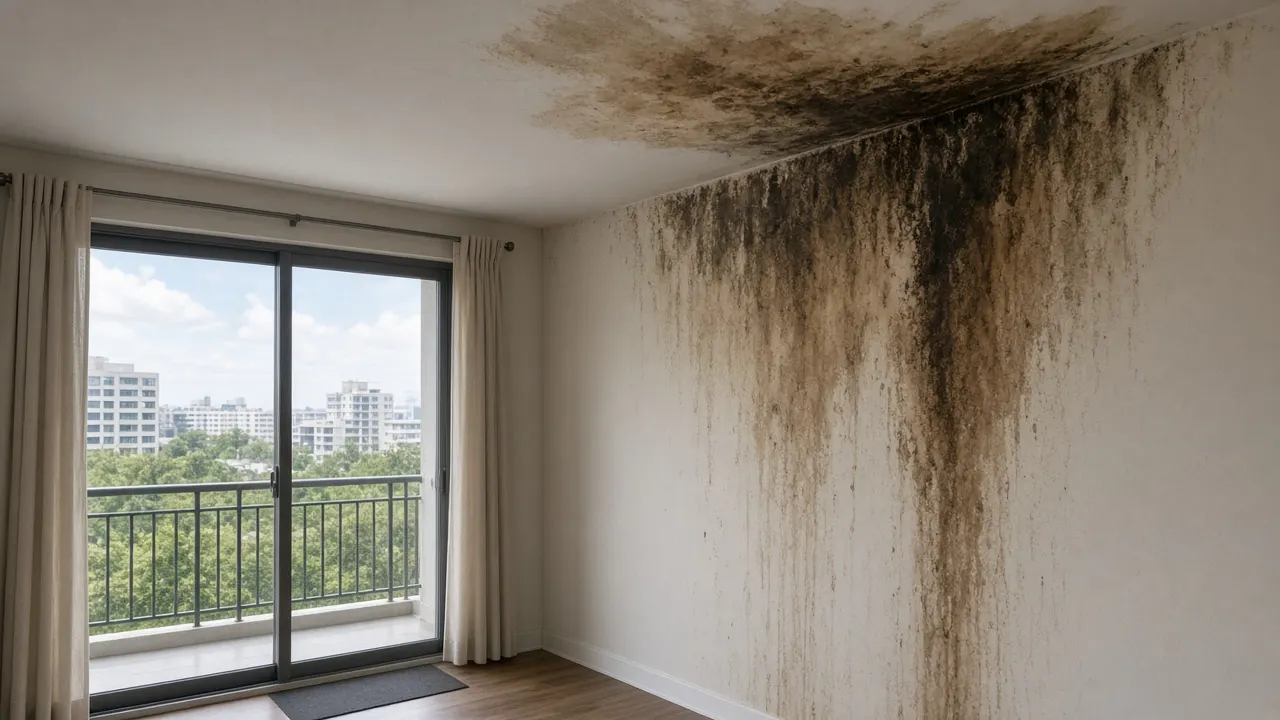
How Shared Construction Moves Moisture
In attached buildings such as condominiums, townhomes, and stacked flats, moisture does not stop at the unit boundary. A failed section of shared roofing can send water down a party wall into the unit below or beside it, sometimes months after the source event. A shared plumbing stack can develop a slow leak inside a wall cavity and wet framing that serves several units. A rooftop air-conditioning unit can overflow condensate into a ceiling space that serves more than one unit.
In each case, the mold appears inside one unit, but the moisture source is in a shared part of the building.
Who Maintains What Depends on Your Documents
Who maintains which parts of a building varies from one community to another and is set out in its governing documents. If you are unsure, read yours or ask your association or an attorney. What an inspection can do is answer the factual question that any such conversation starts from: where did the moisture come from?
Tracing the Moisture to Its Source
A contractor hired by either side has some interest in how a problem is described. An inspection from a company that performs no remediation has none, so the findings are easier for everyone involved to rely on.
The inspector uses thermal imaging and moisture meters to follow the moisture from the visible growth back toward its source, through the wall, through the ceiling, up to the roof, or into the plumbing chase. The result is a documented pathway showing whether the source is inside the unit or in a shared element.
Common Shared-System Sources
- Failed roofing over units. Water enters at a flashing, valley, or penetration in a shared roof and travels down into the units below.
- Shared plumbing stacks. A slow leak at a joint inside a shared wall wets framing that both adjacent units rely on.
- Rooftop air-conditioning condensate. An overflow runs into the ceiling space serving several units.
- Exterior waterproofing. Failed stucco, window flashing, or balcony waterproofing lets water into the wall behind a unit.
- Below-grade seepage. Water moving through a foundation or parking structure into ground-floor or below-grade units.
What Documentation Helps
A thermal scan showing moisture moving from a shared roof down a party wall, moisture meter readings that increase toward the shared wall, and laboratory results consistent with growth at the source together describe the pathway in factual terms. A written report with that evidence is useful in conversations with a board, a property manager, a contractor, or an insurer, because it describes what was found and where.
Confirming the Repair
After a repair or cleanup, an independent follow-up inspection can confirm that the source was addressed, the affected material was dealt with, and indoor spore counts are back within the normal range. Because it comes from a company that did none of the work, it is a straightforward confirmation for both the association and the unit owner. See post-remediation verification.
If you are a unit owner with mold that may have started in a shared system, or a board or manager who needs an independent record, schedule an inspection.