24H Mold Inspection
Escondido24/7 EMERGENCY(760) 546-6377
HomeOur ServicesEnvironmental Risk Assessment
our services

Environmental Risk Assessment

We identify hidden mold risks and verify that your space is safe to occupy.

About

Why Risk Assessment Matters

Even after cleanup or surface testing, questions often remain: Is it really gone? Are we safe to move forward? That's where an Environmental Risk Assessment comes in.

Ideal for:

  • —Post-remediation verification
  • —Pre-sale property inspections
  • —Property management compliance
  • —Sensitive environments (schools, offices, multi-unit housing)
Why Risk Assessment Matters

Methodology

Our Assessment Process

Step-by-step inspection to confirm your space is safe.

We inspect key areas across your property to identify visible signs of mold, moisture, or environmental risks that may have been missed in past inspections.

We use precision tools to measure moisture in building materials and collect air samples for lab analysis—capturing invisible spores that may linger in the environment.

Within 24–72 hours, you'll receive a certified report detailing our findings: mold species (if present), spore levels, moisture hotspots, and actionable next steps.

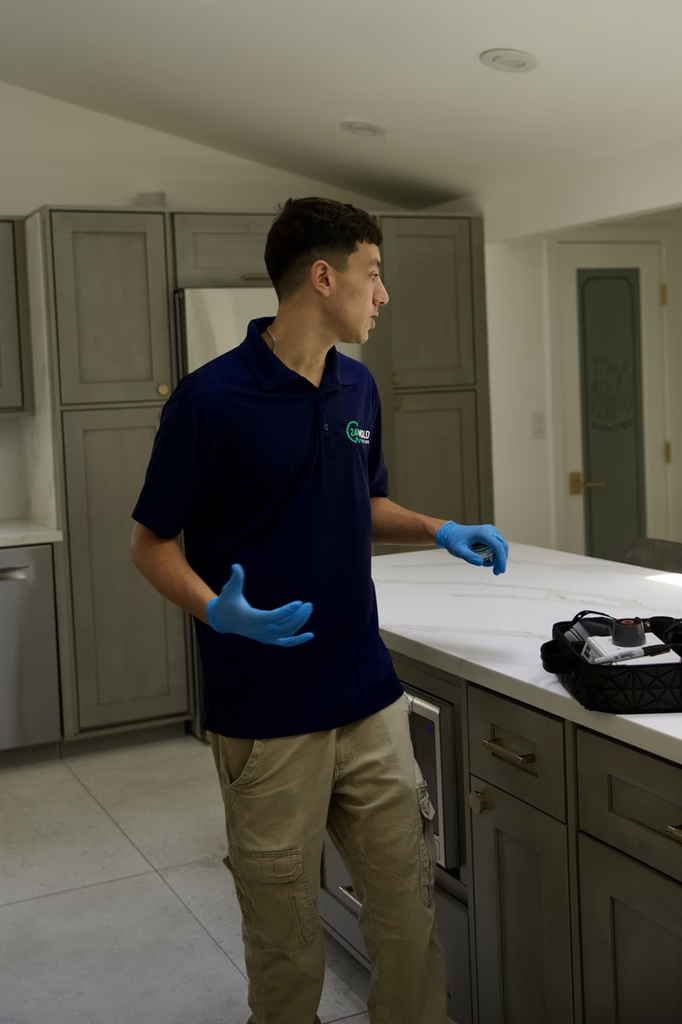
Mold inspector at work

Checklist

Is an Environmental Risk Assessment Right for You?

This service is ideal if:

  • —You've had recent remediation or water damage
  • —You're buying, selling, or managing a property
  • —You need proof your space is safe to occupy

Still unsure? Let's talk. We'll help you decide if an assessment is the right step for your property.

Overview

What You'll Get

Certified results, safety clarity, and clear next steps—delivered fast.

1

Comprehensive Risk Report

State-certified results that summarize mold levels, moisture issues, and remediation needs.

2

Occupancy Safety Verification

Peace of mind that your property is safe to inhabit—especially critical for buyers, renters, and businesses.

3

Actionable Recommendations

If risks are found, we provide clear guidance on next steps. If not, your report becomes a safety asset.

Mold inspection Escondido FAQ

Call For An Inspection
Usually, yes. The city created the Old Escondido Historic District in 1989 to protect the houses built by the town's early settlers, who arrived after the Escondido Land and Town Company bought the ranch lands in 1886 and the city incorporated on October 8, 1888. Many of these Victorians, Craftsman bungalows, and early revival homes stand on raised wood foundations over crawl spaces that were never fitted with vapor barriers, and over a century they have collected re-roofs, enclosed porches, and additions. Original or early-replacement galvanized plumbing and cast-iron drains are common. The moisture tends to sit where no one looks: on the subfloor beneath bathrooms and kitchens, in the crawl space after a wet winter, at old chimney and roof penetrations in the attic, and at the seams where additions meet the original house. Because historic-district repairs often have to preserve original materials, pinpointing the source before anything is removed protects both the house and the budget.
If the fire came close enough to put smoke into the house or water on it, it's worth considering. In October 2007 the Witch Creek Fire, driven by strong offshore winds, raced westward from east of Ramona to Escondido within about eight hours and destroyed dozens of homes in and around the city on its first day. A wildfire leaves three moisture-related problems behind. Firefighting water soaks roofs, attics, eaves, and walls, often in homes that look undamaged. Burned slopes above hillside neighborhoods shed water and sediment much faster in the next rainy season, pushing runoff against foundations. And ash and smoke residue drawn into attics and ducts can hold moisture and complicate later air testing. Homes on the north and east sides of the city, near Dixon Lake, Daley Ranch, and the eastern hills, are the most exposed. A moisture check of the attic, the uphill walls, and the HVAC before the first wet winter is a reasonable precaution.
They can be, particularly during intense winter storms. Escondido Creek runs 26 miles from its headwaters in Bear Valley above Lake Wohlford to San Elijo Lagoon at the coast, and for about seven miles through the city it is confined within concrete embankments. That channel carries a large watershed through the middle of town, including downtown, and the older apartments, homes, and commercial buildings on the low ground nearby sit where storm water collects fastest when streets and drains can't keep up. Water reaches the house at the slab edge, under garage and patio doors, and into crawl spaces, then wicks into the bottom of drywall and wood framing. Because the storms are short and the inland air dries quickly afterward, it is easy to assume everything dried. Wall bottoms, carpet pad, and crawl space soil don't. A moisture assessment within a few days of any storm that put water against or into the house catches the problem before mold has time to establish.
Yes — sewage is the most serious category of water damage, and it calls for documentation before and after cleanup. A sewage backup carries bacteria and organic material that feed mold growth faster than clean water does, and anything porous it touches — carpet, pad, drywall, baseboards, insulation — generally has to be removed, not dried. In Escondido the common causes are root intrusion into older clay or cast-iron sewer laterals, especially on lots with mature trees in Old Escondido and the older central neighborhoods, grease and debris blockages in aging lines, and storm surges overwhelming the system during heavy rain. After the cleanup contractor finishes, the risk is moisture left inside wall cavities and beneath flooring where the contaminated water wicked. An independent inspection maps where the water traveled, samples for growth, and, after remediation, verifies the area is clean and dry before walls and floors are closed — documentation your insurer will also want.
They can. Stucco and plaster are the dominant finishes across Escondido, from the older homes downtown to the hillside houses of the north and east sides, and a fresh coat or patch can cover a moisture problem rather than fix it. Cracks from settlement, from the expansive soils in parts of the valley, or from age let rain into the wall assembly; failed or missing flashing at windows and doors lets in more. Once water is behind the stucco, the building paper and sheathing can stay wet with no path to dry, while the hot inland summers bake the exterior so it looks fine. Patching or re-plastering over that wall seals the moisture in. Signs include staining at window corners, bubbling or crumbling near the base of a wall, and musty air in rooms on that side of the house. Thermal imaging and moisture readings from the interior, with probing at suspect spots, find it before anyone tears off the finish or re-coats over it.
They often do. Avocados became the leading local crop after growers such as Henry Avocado began planting in the area in 1925, and groves still operate in the East Valley. Many of the houses on that land are older ranch homes and farmhouses, some on raised foundations, many enlarged over the years, set on sloped lots surrounded by trees. The moisture sources are specific to that setting: grove irrigation and landscape watering keeping soil damp against the house, slopes directing runoff toward foundations, tree roots invading sewer and drain lines, leaf litter clogging gutters and roof valleys, and outbuildings or garages converted to living space on unsealed slabs. Shade from mature trees also keeps exterior walls and roofs from drying out after rain. An inspection on these properties covers the crawl space or slab perimeter on the uphill and irrigated sides, the attic beneath tree cover, and any converted space, rather than only the main living areas.
If the home inspection noted staining, a musty smell, or evidence of past leaks, yes; that note is a referral to a specialist. A general inspection is a visual survey of the whole property. A mold inspection measures moisture inside walls, floors, crawl spaces, and attics with thermal imaging and moisture meters, and sends air or surface samples to an accredited lab. In Escondido the gap shows most in a few places: the crawl spaces under the historic homes of Old Escondido, the uphill walls of hillside houses on the north and east sides, the slab edges of homes on the low ground near the creek channel, and stucco walls that have been patched or re-coated. Larger rural and grove properties add outbuildings and converted spaces a general inspection may only glance at. Book the mold inspection within your contingency period so the results can still shape the price, the repair requests, or your decision.

Contact

Book your Escondido mold inspection today

Tell us what's going on and we'll respond the same day

Location

24H Mold Inspection of Escondido

Hours

  • MondayOpen 24 hours
  • TuesdayOpen 24 hours
  • WednesdayOpen 24 hours
  • ThursdayOpen 24 hours
  • Friday6 AM – 6 PM
  • SaturdayClosed
  • SundayOpen 24 hours

Service area neighborhoods

  • Historic Downtown Escondido
  • Hidden Meadows
  • Felicita
  • East Grove
  • Old Escondido Historic District
  • Kit Carson area
  • South Escondido
  • Dixon Lake & Daley Ranch area
Call For Service(760) 546-6377