1
Mold inspection
- Moisture detection
- Infrared technology
- Certified mold inspectors
- No conflict of interest

Certified mold inspection and testing in Escondido. Same-day appointments, lab-verified reports, and no financial stake in any remediation work that follows.
(760) 546-6377What We Do
Air and surface samples analyzed in a state-certified lab. You receive mold species ID, spore count data, and lab-verified documentation that holds up with insurers, attorneys, or counsel.
About
At 24H Mold Inspection of Escondido, we know no two buildings respond to moisture the same way.
Escondido is one of San Diego County’s largest inland cities, stretching from established urban neighborhoods to rural and hillside communities surrounding the valley floor. The city experiences warmer inland temperatures than coastal communities, but its varied topography creates localized moisture conditions influenced by drainage patterns, irrigation systems, and seasonal rainfall. Housing ranges from historic homes and suburban developments to large estates and agricultural properties, resulting in a wide variety of moisture-related building concerns.
Escondido contains suburban homes, rural properties, hillside estates, apartment communities, agricultural properties, and commercial buildings. Topography, irrigation infrastructure, and mixed-age construction frequently affect moisture conditions.
Services
Mold inspection, mold testing, and environmental risk assessments for Escondido properties. Available 24/7, with no remediation work to bias the findings.

Why Us
24H Mold Inspection of Escondido combines local field experience with state-certified methods and lab analysis. Reports get back to you quickly and clearly, with no upsell tacked on to the findings.
We don't stop at surface-level findings. Active leaks, health symptoms, post-remediation work, and pre-purchase due diligence each call for a different inspection approach. Our certified mold inspectors guide you through the specific situation rather than running a generic checklist.
Strengths
We check every box, then go further. Book your inspection today
Licensed inspectors with proven field experience in Escondido.
FLIR thermal cameras, calibrated moisture meters, and lab-verified sampling.
Straightforward updates and honest reporting throughout the process.
Highly rated by Escondido homeowners and businesses.
5 Step Process
Choose a date and time that fits your schedule.
Flexible scheduling means same-day and next-day appointments are usually available, with 24/7 emergency response when the situation needs it.
Our certified mold inspectors assess every mold-prone area.
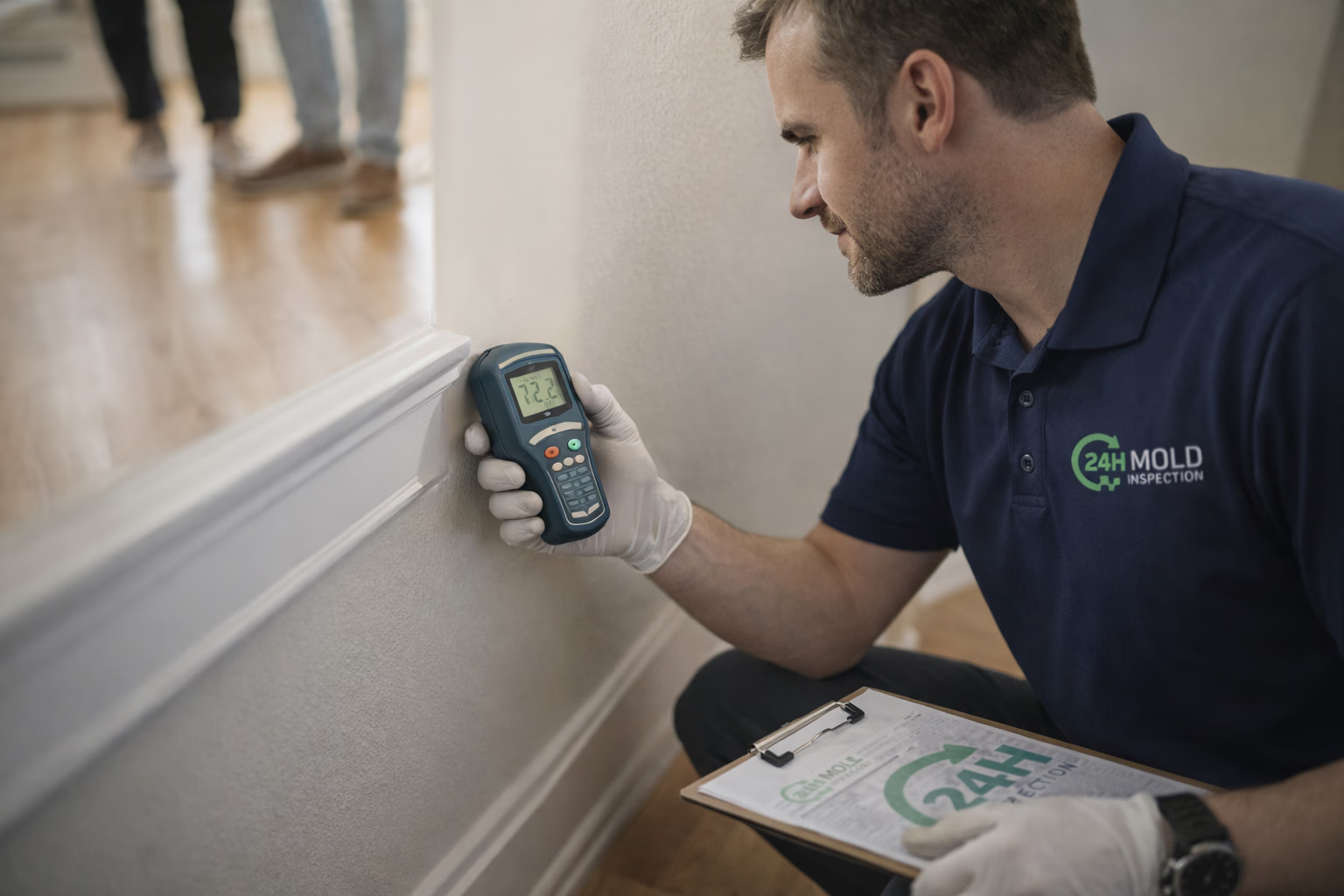
We walk the property identifying visible mold and moisture issues, using thermal imaging and moisture meters to catch what's hidden behind walls and under flooring.
Air and surface samples collected for lab analysis.
Our certified mold inspectors collect targeted samples from key areas to find mold spores both visible and hidden, with sample sites documented on a property map.
Lab testing returns precise results.
Samples go to a state-certified lab for detailed analysis identifying mold species and contamination levels, typically returned within 24 to 72 hours.
Insights and clear next steps from our experts.
You receive a written report with lab results, inspector findings, and specific recommended action steps to resolve any mold issues safely.
Who We Serve
24H Mold Inspection of Escondido brings clear answers to HOAs, hotels, commercial buildings, and homes through certified mold inspection and testing services.
Investors formed the Escondido Land and Town Company in 1886 to buy and subdivide the ranch lands, the city incorporated on October 8, 1888, and the well-off settlers who arrived in those first years built houses that still stand. The city created the Old Escondido Historic District in 1989 to protect them. These Victorians, Craftsman bungalows, and early revival homes mostly stand on raised wood foundations over crawl spaces without vapor barriers, with original or early-replacement galvanized plumbing and a century of re-roofs and additions. Damp crawl space soil, subfloor growth under bathrooms, and leaks where additions meet the original house define the risk here.
Downtown grew around Grand Avenue and the park that became the home of Grape Day, the September celebration former mayor Sig Steiner proposed after a report on the sweetness of local grapes; Grape Day Park, the city's oldest, has been the center of community events since the early 1930s. The blocks around it hold Escondido's oldest commercial buildings — masonry storefronts with flat roofs behind parapets, apartments and offices above shops — alongside older homes and apartment buildings. Clogged roof drains, failing parapet flashing, and aging supply plumbing are the recurring moisture sources, and in mixed-use buildings a leak upstairs becomes the shop's problem below.
Escondido Creek runs 26 miles from its headwaters in Bear Valley above Lake Wohlford to San Elijo Lagoon at the coast, and for about seven miles through the city it is confined within concrete embankments. That channel carries a large watershed straight through the middle of town, and the older apartments, homes, and commercial buildings on the low ground beside it are where storm water collects fastest when streets and drains fall behind. Water reaches these properties at the slab edge, under garage and patio doors, and into crawl spaces, then wicks into wall bottoms and framing that dry far more slowly than the warm inland air suggests.
Avocados became the area's largest local crop after growers such as Henry Avocado, founded here in 1925, began planting in the hills, and groves still operate across the East Valley. Many houses on that land are older ranch homes and farmhouses on sloped lots beneath mature trees, some on raised foundations and many enlarged over the decades. Grove and landscape irrigation keep soil damp against the house, slopes direct runoff toward foundations, roots invade sewer and drain lines, and leaf litter clogs gutters and valleys. Deep shade keeps roofs and exterior walls from drying after rain, and converted outbuildings on unsealed slabs add their own moisture.
The north and east edges of the city run up into open country: the present Wohlford Dam was completed in 1924 and holds back up to 7,100 acre-feet, and in 1996 the city voted to buy the 3,058-acre Daley Ranch as a permanent habitat preserve beside Dixon Lake. Homes along this edge sit on hillside lots facing open brush, and in October 2007 the Witch Creek Fire reached Escondido within about eight hours of starting east of Ramona. Hillside properties here take runoff against uphill walls and retaining walls, burned slopes above them shed water faster after a fire, and firefighting water can soak attics and walls in homes that look untouched.
Google Search
Add 24H Mold Inspection as a preferred source so our pages are easier to spot in your Google results.
Contact
Tell us what's going on and we'll respond the same day
Location
24H Mold Inspection of Escondido
Phone
(760) 546-6377Hours
Service area neighborhoods
Newsletter
Monthly notes from our inspectors on prevention and air quality.