1
Mold inspection
- Moisture detection
- Infrared technology
- Certified mold inspectors
- No conflict of interest

Certified mold inspection and testing in Compton. Same-day appointments, lab-verified reports, and no financial stake in any remediation work that follows.
(310) 731-0289What We Do
Air and surface samples analyzed in a state-certified lab. You receive mold species ID, spore count data, and lab-verified documentation that holds up with insurers, attorneys, or counsel.
About
At 24H Mold Inspection of Compton, we know no two buildings respond to moisture the same way.
Compton is a densely developed urban community in southern Los Angeles County with a substantial inventory of established residential neighborhoods, multifamily housing, industrial properties, and commercial corridors. Much of the city’s housing stock was built during the mid-twentieth century and has undergone decades of repairs, renovations, and infrastructure modifications. As a result, moisture issues are frequently linked to aging plumbing systems, roofing materials, slab foundations, and deferred maintenance rather than regional climate conditions. The city’s high-density development pattern can also allow moisture problems to spread between adjoining units or remain hidden within shared structural systems for extended periods before detection.
Compton contains single-family homes, multifamily housing, industrial facilities, commercial properties, mixed-use buildings, and established residential neighborhoods. Aging infrastructure, shared building systems, and long-term maintenance conditions frequently influence moisture performance.
Services
Mold inspection, mold testing, and environmental risk assessments for Compton properties. Available 24/7, with no remediation work to bias the findings.

Why Us
24H Mold Inspection of Compton combines local field experience with state-certified methods and lab analysis. Reports get back to you quickly and clearly, with no upsell tacked on to the findings.
We don't stop at surface-level findings. Active leaks, health symptoms, post-remediation work, and pre-purchase due diligence each call for a different inspection approach. Our certified mold inspectors guide you through the specific situation rather than running a generic checklist.
Strengths
We check every box, then go further. Book your inspection today
Licensed inspectors with proven field experience in Compton.
FLIR thermal cameras, calibrated moisture meters, and lab-verified sampling.
Straightforward updates and honest reporting throughout the process.
5.0 stars from 1+ Compton homeowners and businesses.
Testimonials
Thousands of Compton property owners have come to us for reliable, detailed mold assessments
Great experience! Very professional, thorough, and explained everything clearly. The inspection was quick and easy. Definitely recommend!
Yesica M.
5 Step Process
Choose a date and time that fits your schedule.
Flexible scheduling means same-day and next-day appointments are usually available, with 24/7 emergency response when the situation needs it.
Our certified mold inspectors assess every mold-prone area.
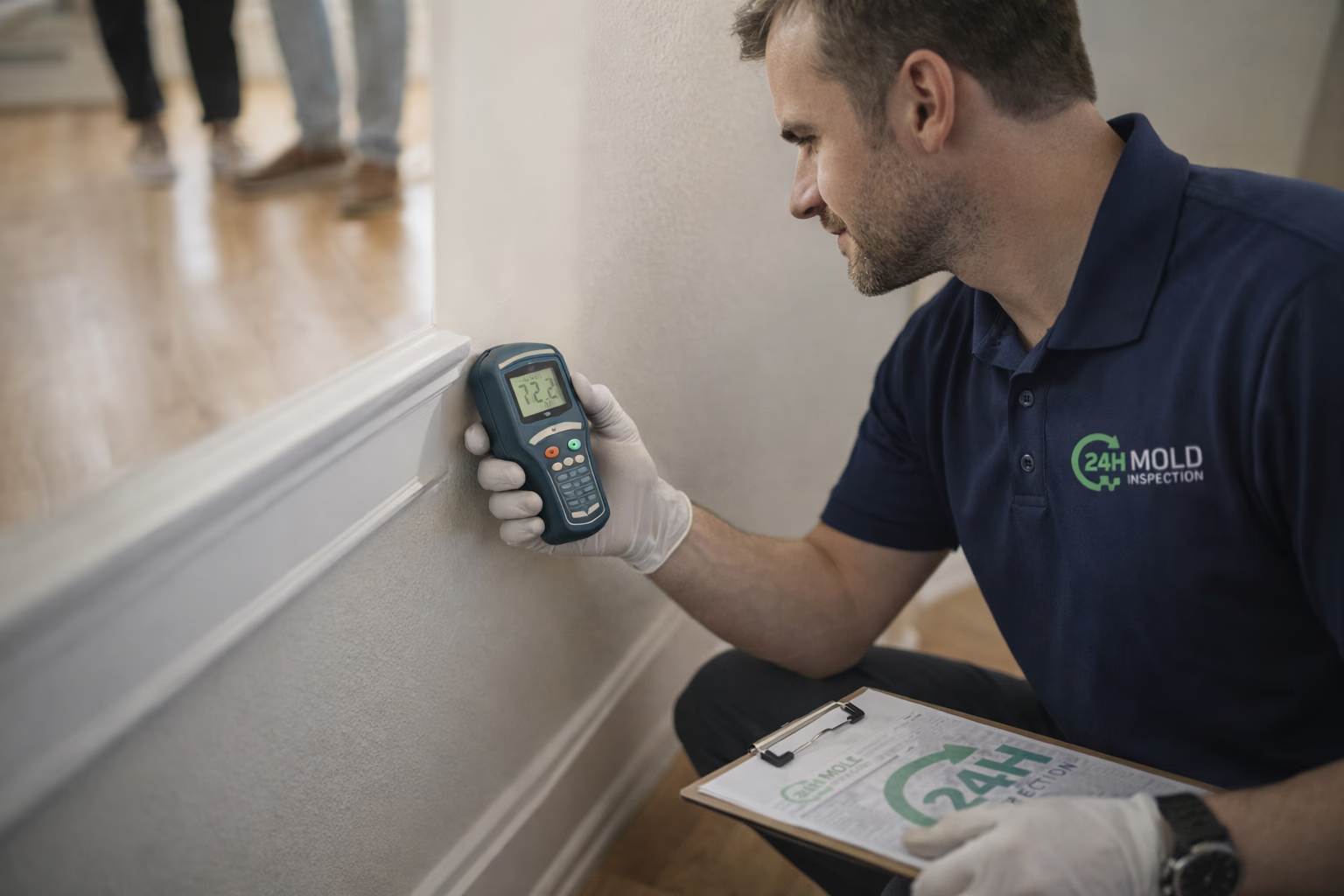
We walk the property identifying visible mold and moisture issues, using thermal imaging and moisture meters to catch what's hidden behind walls and under flooring.
Air and surface samples collected for lab analysis.
Our certified mold inspectors collect targeted samples from key areas to find mold spores both visible and hidden, with sample sites documented on a property map.
Lab testing returns precise results.
Samples go to a state-certified lab for detailed analysis identifying mold species and contamination levels, typically returned within 24 to 72 hours.
Insights and clear next steps from our experts.
You receive a written report with lab results, inspector findings, and specific recommended action steps to resolve any mold issues safely.
Who We Serve
24H Mold Inspection of Compton brings clear answers to HOAs, hotels, commercial buildings, and homes through certified mold inspection and testing services.
Compton is one of the older cities in Los Angeles County, incorporated in 1888, and its central residential blocks filled in with small stucco bungalows and ranch homes through the 1940s and 1950s. Many of these homes are now 70 to 80 years old. Original galvanized supply lines are at or past end of life, raised foundations over crawl spaces predate modern vapor barriers, and roofing has been replaced several times. Because the lots are small and the houses sit close together, a failing downspout or a grade that slopes toward the foundation next door can load moisture against your wall.
Compton sits on the flat Los Angeles basin floor and is crossed by flood-control channels, including the Dominguez Channel and Compton Creek, that carry storm runoff toward the coast. Concrete-lined channels like these were built to move water fast, but lots in the lower blocks nearest them sit closer to the regional water table than higher interior blocks. Ground moisture against slab edges and foundation walls stays elevated through the wet season, and crawl spaces in older raised-foundation homes hold that moisture longer than the rest of the house.
Much of Compton sits on clay-rich basin soil that swells when wet and shrinks as it dries. That movement cracks slab edges and opens expansion joints, and the same clay holds water against foundations long after a storm has passed. In a mild climate that rarely freezes, the moisture can support mold growth year-round, and a crack that admits water in winter can stay damp well into spring. Inspection here records moisture at slab edges, along exterior walls, and at any crawl-space vents, not only inside the living space.
A large share of Compton's housing is rental stock, including single-family homes, duplexes, fourplexes, and apartment buildings built mostly between the 1950s and the 1970s. Homes designed for one family are often occupied by more people, which raises indoor humidity beyond what original bath fans were sized to remove. Bath fans that vent into the attic, single-pane windows that condense in cool mornings, and deferred repairs between tenancies let moisture accumulate across occupancy cycles. In stacked construction, a leak on one floor surfaces in the unit below months later.
Compton's commercial corridors and industrial areas sit close to residential blocks in places, a pattern common across Southeast Los Angeles. Older commercial buildings tend to have flat roofs with limited drains, aging rooftop HVAC, and parapet details that leak at the edges, and water that gets in travels above suspended ceilings and stays hidden for months. Mold inspection addresses moisture and mold in the building itself. Soil and environmental conditions are outside its scope and belong to a licensed environmental consultant.