1
Mold inspection
- Moisture detection
- Infrared technology
- Certified mold inspectors
- No conflict of interest

Certified mold inspection and testing in Chino Hills. Same-day appointments, lab-verified reports, and no financial stake in any remediation work that follows.
(840) 282-7800What We Do
Air and surface samples analyzed in a state-certified lab. You receive mold species ID, spore count data, and lab-verified documentation that holds up with insurers, attorneys, or counsel.
About
At 24H Mold Inspection of Chino Hills, we know no two buildings respond to moisture the same way.
Chino Hills is distinguished by rolling terrain, master-planned neighborhoods, open-space preserves, and some of the most extensive hillside residential development in the Inland Empire. The city’s topography plays a major role in how moisture behaves around homes, particularly during seasonal storms when runoff moves through canyons, slopes, and engineered drainage systems. Much of the housing stock consists of homes built during rapid growth periods from the 1980s through the 2000s, creating neighborhoods where roofing systems, plumbing infrastructure, and HVAC equipment are aging at similar rates. Large residential properties, extensive landscaping, and hillside grading all contribute to moisture-management challenges that differ substantially from flatter Inland Empire communities. While ambient humidity remains relatively low, water intrusion, irrigation issues, drainage failures, and HVAC condensation are common drivers of mold growth throughout the city.
Chino Hills contains hillside homes, luxury residences, master-planned developments, townhomes, condominiums, and larger-lot suburban properties. Grading systems, retaining structures, and extensive landscaping frequently influence moisture conditions.
Services
Mold inspection, mold testing, and environmental risk assessments for Chino Hills properties. Available 24/7, with no remediation work to bias the findings.

Why Us
24H Mold Inspection of Chino Hills combines local field experience with state-certified methods and lab analysis. Reports get back to you quickly and clearly, with no upsell tacked on to the findings.
We don't stop at surface-level findings. Active leaks, health symptoms, post-remediation work, and pre-purchase due diligence each call for a different inspection approach. Our certified mold inspectors guide you through the specific situation rather than running a generic checklist.
Strengths
We check every box, then go further. Book your inspection today
Licensed inspectors with proven field experience in Chino Hills.
FLIR thermal cameras, calibrated moisture meters, and lab-verified sampling.
Straightforward updates and honest reporting throughout the process.
5.0 stars from 1+ Chino Hills homeowners and businesses.
Testimonials
Thousands of Chino Hills property owners have come to us for reliable, detailed mold assessments
Fast testing experience from Tim, with explanations
Richard H.
5 Step Process
Choose a date and time that fits your schedule.
Flexible scheduling means same-day and next-day appointments are usually available, with 24/7 emergency response when the situation needs it.
Our certified mold inspectors assess every mold-prone area.
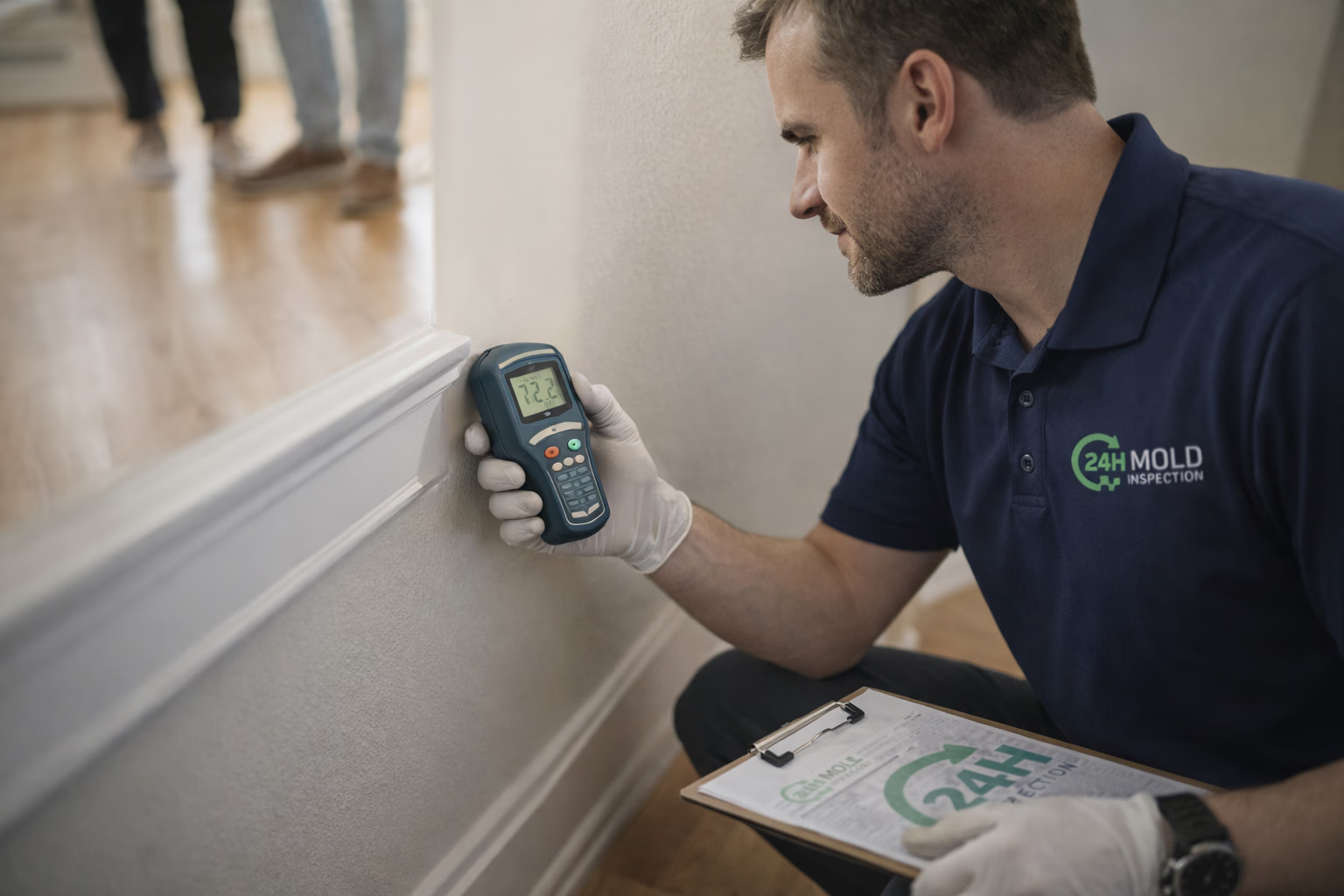
We walk the property identifying visible mold and moisture issues, using thermal imaging and moisture meters to catch what's hidden behind walls and under flooring.
Air and surface samples collected for lab analysis.
Our certified mold inspectors collect targeted samples from key areas to find mold spores both visible and hidden, with sample sites documented on a property map.
Lab testing returns precise results.
Samples go to a state-certified lab for detailed analysis identifying mold species and contamination levels, typically returned within 24 to 72 hours.
Insights and clear next steps from our experts.
You receive a written report with lab results, inspector findings, and specific recommended action steps to resolve any mold issues safely.
Who We Serve
24H Mold Inspection of Chino Hills brings clear answers to HOAs, hotels, commercial buildings, and homes through certified mold inspection and testing services.
Los Serranos began on April 25, 1925 as a country club resort on some 750 acres, with golf, stables, riding trails, a landing strip, and rental cottages, and its subdivision left narrow golf-course bungalows on lots averaging about 30 feet wide. It remained a separate community until the city incorporated on December 1, 1991. Many of these older homes stand on raised foundations, were enlarged in stages, and sit close to their neighbors with little airflow between them. Damp crawl space soil, original or patched plumbing, roof transitions on additions, and irrigation runoff from the course define the moisture risk here.
When the city's Specific Plan was approved in 1989 there were about 4,000 homes in Chino Hills; by incorporation two years later the population had reached 42,000, and neighborhoods such as Rolling Ridge, Pinehurst Hills, and Sycamore Heights filled in during that rush and the decade after. These stucco homes on graded pads, with concrete tile roofs and attic air handlers, are now 30 to 40 years old. Original water heaters and supply lines, clogged condensate lines, tile-roof underlayment wearing out beneath intact-looking tiles, and leaks crossing shared walls in townhome buildings are the recurring sources.
Carbon Canyon cuts through the hills along the city's southern side, and the homes along its winding road and side streets range from older canyon houses and cabins to custom homes on steep lots. These properties sit where water concentrates: slopes above send runoff down driveways and against uphill walls, creekside lots stay damp through the wet season, and dense oak and brush shade roofs and walls so they dry slowly after rain. Older homes here often have raised foundations, stepped additions, and drainage that was never engineered. Open hillsides around the canyon also carry wildfire risk, which leaves faster runoff and soaked attics behind.
Before the mid-1970s these rolling hills were cattle range, dairy, and equestrian land, and today much of the city's western and southern edge backs onto Chino Hills State Park and the open canyons beyond, including Tonner Canyon. Homes along that edge face open grassland and chaparral, which raises natural outdoor spore levels in the wet season and puts them at the wildland-urban interface during fire season. Graded pads, retaining walls, and terraced yards carry runoff from the open slopes above, and clogged V-ditches or terrace drains turn an ordinary storm into water at the slab edge of the uphill wall.
The newer neighborhoods, including the gated golf community of Vellano and the tracts of Fairfield Ranch, are larger homes on graded hillside pads built with tight envelopes, house wraps, and high-efficiency HVAC. On July 29, 2008 a magnitude 5.4 earthquake struck with its epicenter in Chino Hills itself, and ground movement on hillside lots can disturb drainage systems and open hairline cracks in stucco and slabs. The moisture risks here are newer-construction ones: interior humidity trapped when ventilation is undersized, condensation in attic ducts, and irrigation on terraced lots directing water toward slab edges and retaining walls.
Google Search
Add 24H Mold Inspection as a preferred source so our pages are easier to spot in your Google results.
Contact
Tell us what's going on and we'll respond the same day
Location
24H Mold Inspection of Chino Hills
Phone
(840) 282-7800Hours
Service area neighborhoods
Newsletter
Monthly notes from our inspectors on prevention and air quality.