24H Mold Inspection
Altadena24/7 EMERGENCY(626) 635-1776
HomeOur ServicesMold InspectionThermal Imaging
Mold Inspection

Thermal Imaging

Infrared cameras find hidden mold conditions and water damage before any surface stain shows up.

Overview

Why infrared thermal imaging finds mold others miss

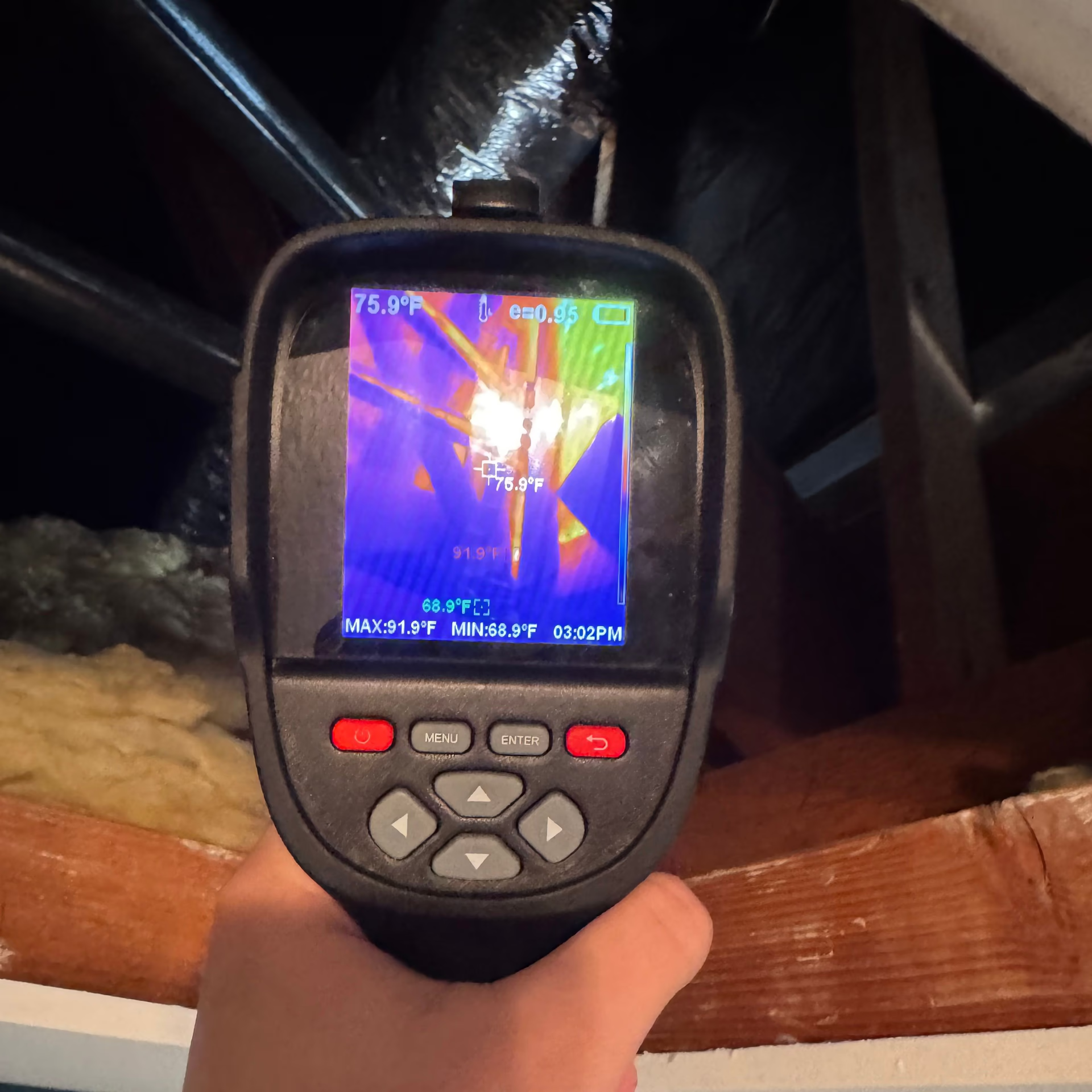
Mold doesn't always announce itself. A small leak inside a wall, a stretch of failed insulation, or a cold-bridge condensation zone can build mold-friendly conditions for months before any stain reaches the surface. Thermal imaging reveals those conditions while they're still hidden, giving you a chance to address the moisture before mold has spread.

Thermal imaging detects:

  • Hidden moisture inside walls, ceilings, and under floors
  • Active leaks from plumbing, roofing, or HVAC components
  • Insulation gaps and ventilation defects driving condensation
  • Cold spots creating ideal future conditions for mold growth
Why infrared thermal imaging finds mold others miss
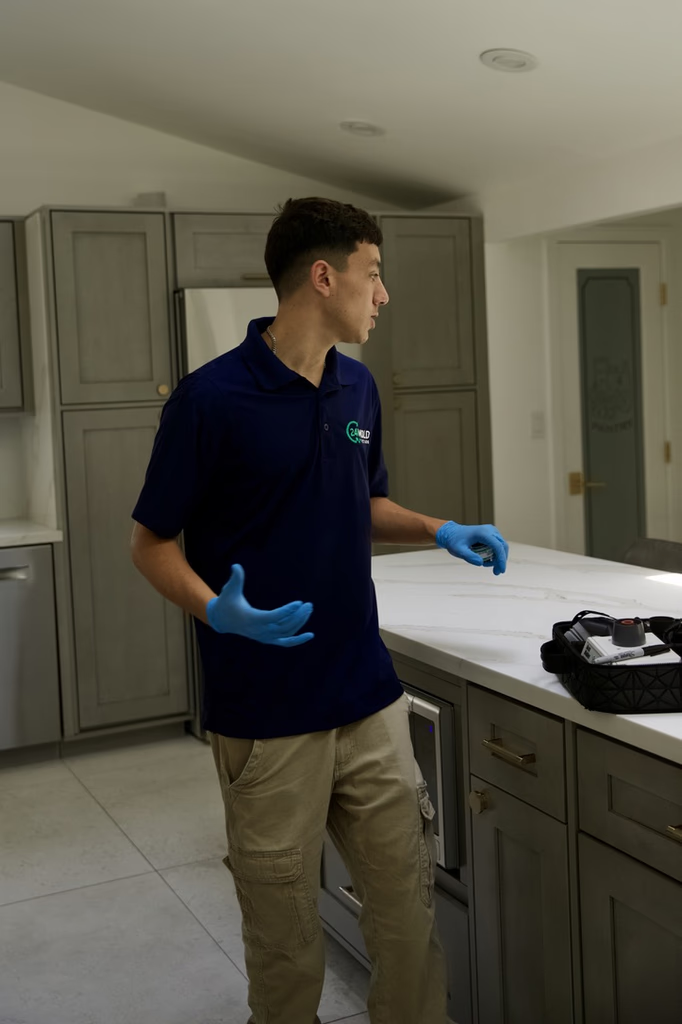
Mold inspector at work

Benefits

What you get from thermal imaging

Find hidden risks early without damaging the property

  • Non-invasive: No drilling, no cutting, no surface damage.
  • Early detection: Catches problems before damage becomes visible.
  • Cost-effective: Targets repairs only where they're needed.
  • Documented findings: Annotated thermal images included in the report.

About

How thermal imaging mold inspection works

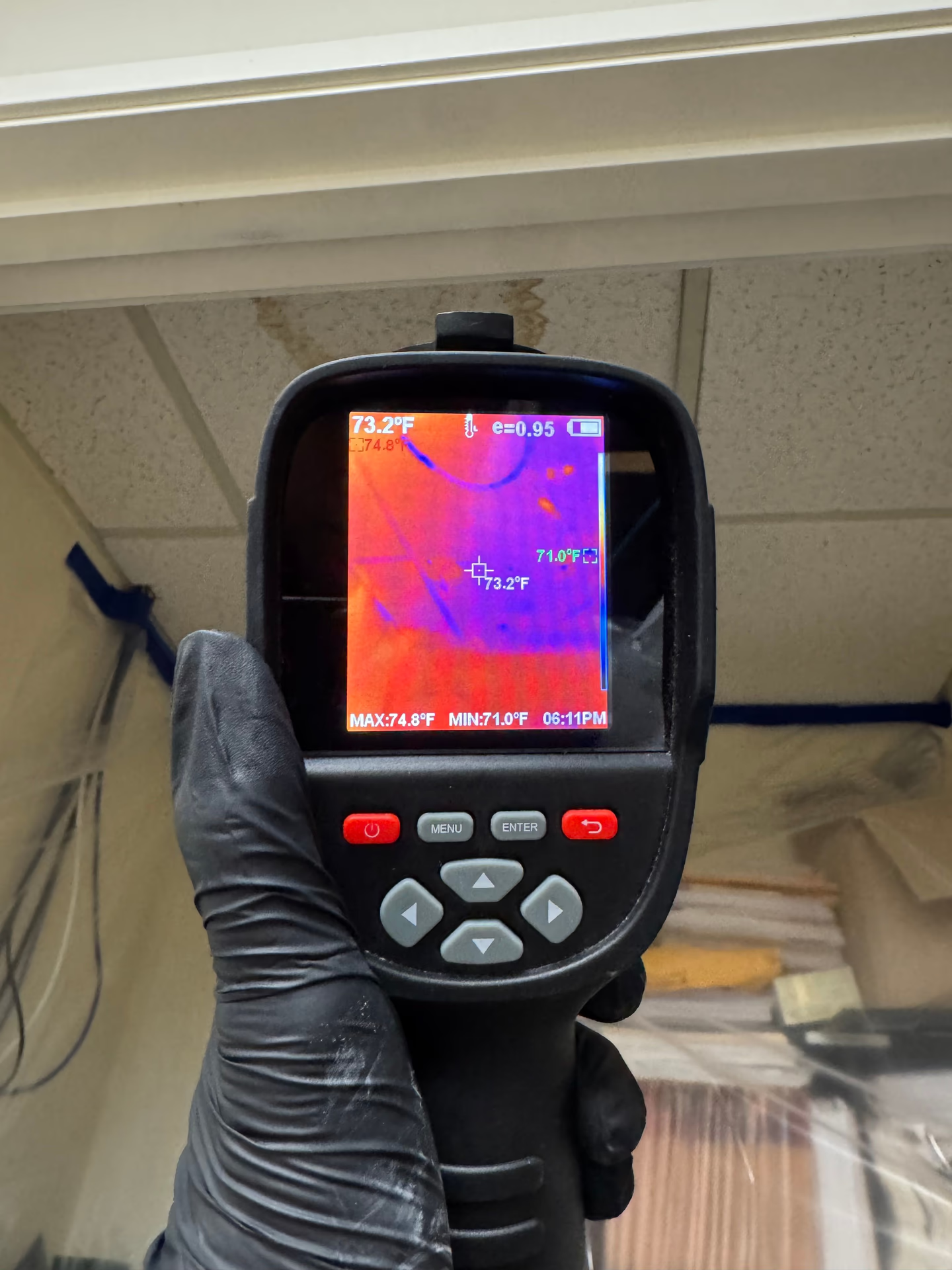
Our certified mold inspectors use FLIR cameras to read temperature differentials across surfaces. Cooler areas often signal water present in the material, even when no surface damage has appeared.

Our process includes:

  • A complete thermal scan of key interior and exterior surfaces
  • Identification of unusual cold or warm patterns in the readings
  • Cross-checking thermal findings with calibrated moisture meters
  • A mold inspection report including the annotated thermal images
How thermal imaging mold inspection works

Mold inspection Altadena FAQ

Call For An Inspection
No. 24H Mold Inspection of Altadena inspects and tests only, and we never perform remediation or removal. In this community that separation matters more than usual. Since January 2025 an unusual number of Altadena properties have moved through insurance scopes, contractor bids, and remediation work all at once, often with the same firm writing the scope and performing it. What we produce stands outside that: what is growing, which moisture source feeds it, how far it extends behind finished surfaces, and lab confirmation of the samples. On the older stock here — Craftsman and cottage housing on raised foundations with arroyo-stone stem walls, and hillside parcels whose subdrains nobody has opened in decades — the visible patch is rarely the extent of it, and the true scope depends entirely on how far the water traveled. A defined scope is what lets you collect comparable bids rather than a walkthrough guess, and it is what an adjuster can act on. When remediation is finished we return for independent verification, which carries weight precisely because we had no part in the work.
Altadena is unincorporated Los Angeles County rather than a city, so its edges follow county lines instead of a municipal limit — part of why searches here cross so easily into the city below. Inside Altadena we cover Loma Alta, Las Flores, the Christmas Tree Lane area, the Farnsworth Park area, the Meadows, El Prieto, Kinneloa Mesa, and the Chaney Trail corridor. Several neighbors have their own 24H Mold Inspection page written around that area's housing stock — Pasadena, La Cañada Flintridge, Glendale, Arcadia, Monrovia, Alhambra, Tujunga, Sunland, and La Crescenta-Montrose — so if your property sits in one of those, start there. Sierra Madre and the unincorporated pockets nearby have no page of their own and are dispatched from here. Because this is all one dispatch area, same-day appointments are realistic, and an active leak, a failed supply line, or water entering a property mid-storm is answered 24/7 — which matters in the first winters after a burn. If you are unsure which page covers your address, call the number on this page.
Detection is moisture work first and sampling last — and in Altadena there is a sorting step before either. Since January 2025 many properties here carry two problems that look alike from the doorway: combustion residue and ash driven into a building, and actual fungal growth fed by water. They call for different tests and different contractors, and nobody separates them reliably by eye or by smell. So the walk-through starts with history — what burned nearby, whether the structure stood open, what leaked, what was repaired — then an exterior pass for grade and for where slope water goes once it reaches the building. Inside, moisture meters read wall bases, window framing, and any wall sitting on stone or concrete at grade; thermal imaging marks wet material behind finishes; crawl spaces and attics get entered rather than glanced at from the hatch. Sampling follows only where the walk-through justifies it. A report naming the moisture source and its path is what a contractor can bid on — a spore count with no cause attached is not.
Because the fire was only the first event. The Eaton Fire began on the evening of January 7, 2025 and destroyed thousands of structures here, but a great many houses came through standing and damaged, and those are the ones carrying moisture histories. Water is the common thread. Structures took hose and hydrant water through windows, doors, and roof openings; supply and sprinkler lines failed in the heat and ran unattended; and buildings stood open to weather for weeks or months afterward behind broken glazing, missing roof sections, or plywood, through a winter that had rain in it. Water that entered a wall cavity in January and was never opened up does not evaporate on its own — it feeds growth quietly behind finishes that still look intact. Add ash and a duct system that pulled it through the house, and a building can be structurally sound and still not fit to occupy. Before you repaint anything, have the crawl space and the ducting opened and read.
A spore trap draws a measured volume of air across a sticky slide, and a lab counts and identifies what it caught, usually to genus — Aspergillus and Penicillium, Cladosporium, Stachybotrys, and so on. The number only means something against a reference, which is why every indoor sample is paired with an outdoor one taken at the same address on the same day. In Altadena that baseline needs care. A burn scar changes what is in the outdoor air: disturbed soil, ash, char particles, and heavy reconstruction traffic all load the outdoor sample, and demolition or grading on a nearby lot moves spores out of soil and debris that have nothing to do with your walls. A count read without that context can overstate or understate the problem in either direction. Sampling supports a moisture finding rather than replacing it. If a report hands you spore counts with no moisture source, no photographs, and no outdoor comparison from that day, a remediation contractor cannot scope work from it — ask for the missing half.
Yes, and the risk outlasts the fire by years. Vegetation on a burned slope no longer intercepts rain, and soil that has been through intense heat turns water-repellent, so a hillside that used to absorb a storm sheds it instead — along with the ash, soil, and rock sitting loose on the surface. The county's debris basins above Las Flores, Rubio, Eaton, and the other canyon mouths exist because the floods of the 1930s demonstrated exactly this, and they protect only to the extent they have been cleaned out since the last event. For a property, the practical consequence is water arriving at ground level with force and volume instead of soaking in: mud through low crawl space vents, saturated stem walls, water standing under a house for days, and yard grading quietly rearranged by the flow. Slopes recover across several rainy seasons, not one. After any storm that runs mud down your street, open the crawl space rather than assuming the yard absorbed it.
Twice, and neither time is at the end. The first is before anything closes up. Framing that has stood through a rainy season, lumber delivered and stacked outside, and a slab that has not finished releasing its moisture will all read wet, and insulation and drywall installed over any of that seal the water into an assembly where nothing can dry. A moisture meter across the framing and a relative humidity probe in the slab before insulation goes in is a half-day step that prevents a first-year callback. The second is on any part of an existing structure being kept — a foundation, a chimney, a partial wall, a garage that survived — because the salvaged piece carries whatever water history it already had into the new building. Since Altadena is unincorporated, the work runs through county permitting rather than a city, so your documentation needs to satisfy an adjuster and a county inspector both. Ask your contractor to schedule the pre-insulation check into the framing phase, not after drywall is ordered.

Contact

Book your Altadena mold inspection today

Tell us what's going on and we'll respond the same day

Location

24H Mold Inspection of Altadena

Service area neighborhoods

  • Loma Alta
  • Las Flores
  • Christmas Tree Lane area
  • Farnsworth Park area
  • Meadows
  • El Prieto
  • Kinneloa Mesa
  • Chaney Trail corridor
Call For Service(626) 635-1776