Why Fire Survivors Face Mold Risk
After a wildfire the focus is on fire damage. But properties that survive, or that sustain partial damage, can face mold through three mechanisms that have nothing to do with flames. Knowing them helps explain why a post-fire inspection can find moisture months after the fire seemed to be over.
Mechanism 1: Firefighting Water
Firefighting can put large volumes of water into and around structures. That water can soak roofing, wall assemblies, crawl spaces, and attics, then sit in enclosed spaces with no ventilation or drying.
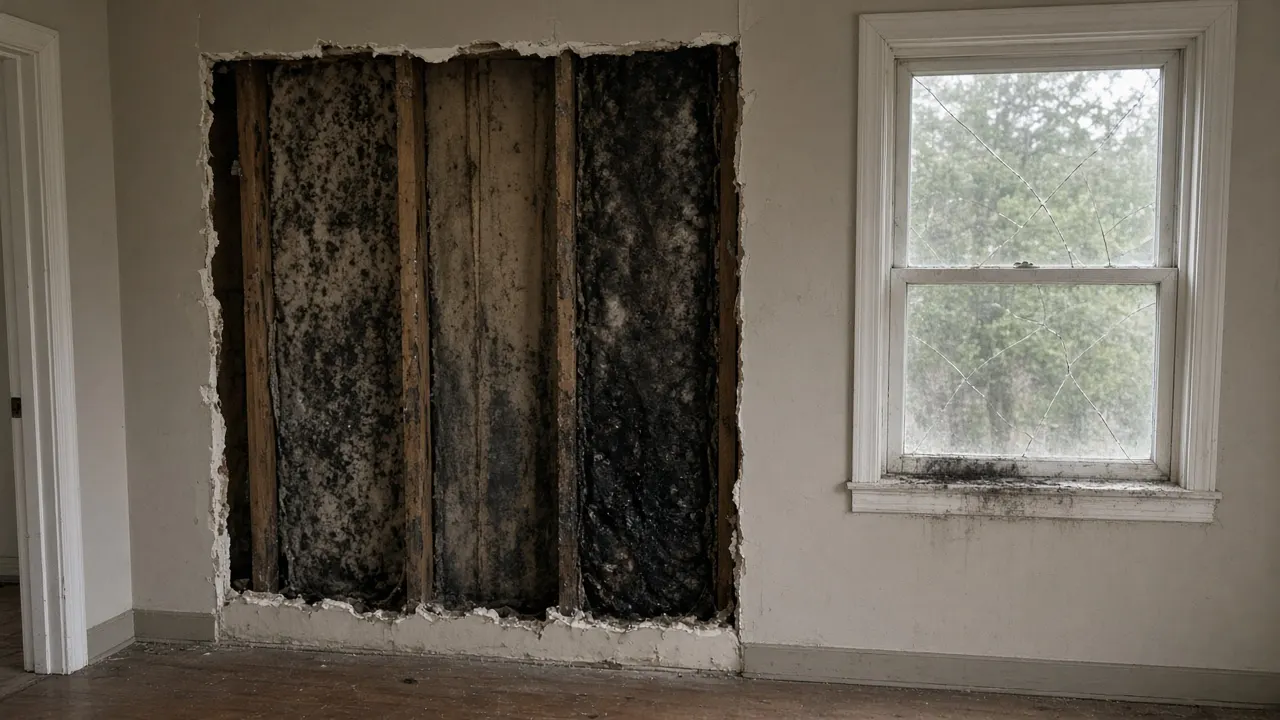
A building that was soaked and then left sealed up, with windows closed, the HVAC off, and no one home, can develop conditions that support mold inside walls within days. By the time someone returns, growth may be established behind surfaces that look normal. This is easy to miss because the visible story of the property is fire damage, not water damage. A thorough post-fire inspection includes moisture mapping of the framing and wall assemblies.
Mechanism 2: Damaged Building Envelopes
Fires can breach building envelopes even in structures that did not burn. Heat can crack stucco and break window glazing, embers can damage roofing and deck waterproofing, and debris can open gaps at roof penetrations and wall transitions.
These openings often remain through the rainy season that follows. Heavy rain can drive water through them into structures that have not been fully repaired, so a property that survived the fire but has unrepaired envelope damage can accumulate significant moisture over a wet season.
Mechanism 3: Burned Hillsides
This one can affect properties that had no direct contact with fire or firefighting water. When a wildfire burns a hillside, the soil can become less able to absorb rain. A large share of rainfall can run off as surface flow instead of soaking in, and runoff that would normally be absorbed over weeks can arrive at the bottom of the slope much faster.
Properties downslope can receive that runoff against their foundations, into crawl spaces, and against retaining walls in ways the pre-fire terrain never produced. Debris flows on burned California hillsides show the extreme end of this. The everyday version is quieter: foundation moisture that stays elevated in wet seasons while vegetation and soil recover.
Smoke Damage and Moisture Damage Are Different Problems
Smoke damage and moisture or mold damage are assessed differently, and they often exist in the same property. Smoke assessment typically focuses on soot, particulates, and odor, and is usually evaluated visually and by smell. Mold assessment relies on moisture mapping, sampling, and laboratory analysis.
Mold that started in a wall after firefighting water does not look like smoke damage, and it will not be found by a smoke assessment alone. A complete post-fire look at a surviving building includes both, as two separate services.
Insurance Documentation
Insurance policies treat fire, smoke, and water damage differently, and how a mold condition is described can affect how a claim is handled. Documentation that ties moisture to a specific event is useful. Check your policy, and talk to your insurer or a licensed professional about your own situation.
When to Schedule a Post-Fire Mold Inspection
- After reoccupying a structure that was exposed to firefighting water, even if no mold is visible
- Before closing walls or starting interior reconstruction on a fire-affected property
- Before the next wet season, for properties downslope from a burned area
- After heavy rain that sent runoff from a burned hillside toward the property
- When a musty odor appears that was not there before the fire
If your property survived a wildfire, or sits downslope from a burned area, and you have not had a moisture assessment, schedule an inspection. Documenting conditions before walls close up and reconstruction moves on is much easier than doing it afterward.