24H Mold Inspection
Tacoma24/7 EMERGENCY(253) 663-4890
HomeOur ServicesEnvironmental Risk Assessment
our services

Environmental Risk Assessment

We identify hidden mold risks and verify that your space is safe to occupy.

About

Why Risk Assessment Matters

Even after cleanup or surface testing, questions often remain: Is it really gone? Are we safe to move forward? That's where an Environmental Risk Assessment comes in.

Ideal for:

  • —Post-remediation verification
  • —Pre-sale property inspections
  • —Property management compliance
  • —Sensitive environments (schools, offices, multi-unit housing)
Why Risk Assessment Matters

Methodology

Our Assessment Process

Step-by-step inspection to confirm your space is safe.

We inspect key areas across your property to identify visible signs of mold, moisture, or environmental risks that may have been missed in past inspections.

We use precision tools to measure moisture in building materials and collect air samples for lab analysis—capturing invisible spores that may linger in the environment.

Within 24–72 hours, you'll receive a certified report detailing our findings: mold species (if present), spore levels, moisture hotspots, and actionable next steps.

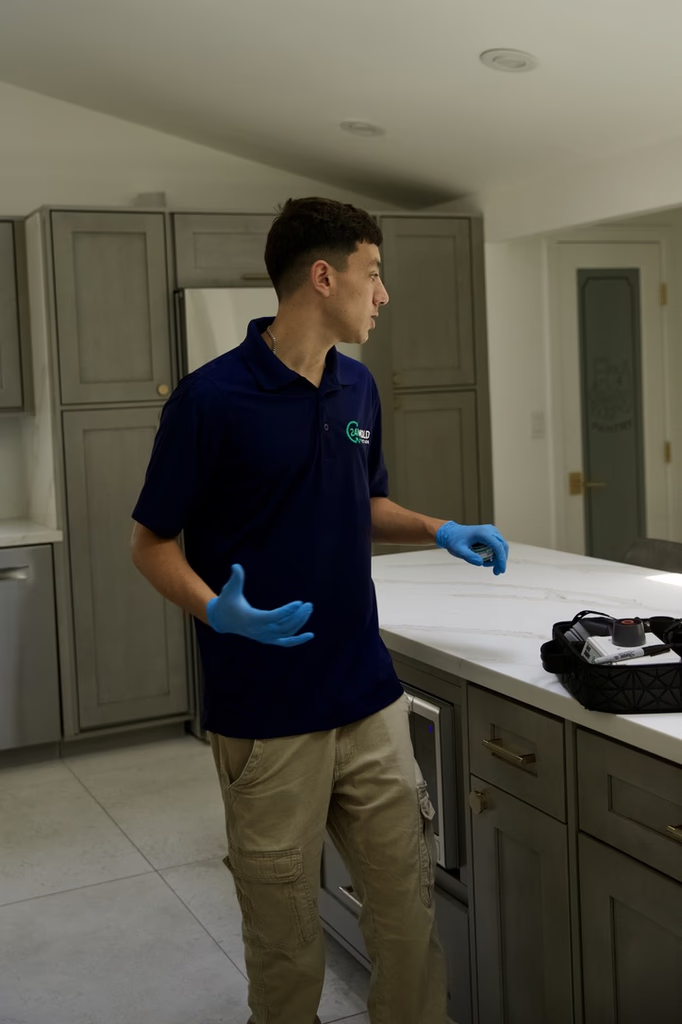
Mold inspector at work

Checklist

Is an Environmental Risk Assessment Right for You?

This service is ideal if:

  • —You've had recent remediation or water damage
  • —You're buying, selling, or managing a property
  • —You need proof your space is safe to occupy

Still unsure? Let's talk. We'll help you decide if an assessment is the right step for your property.

Overview

What You'll Get

Certified results, safety clarity, and clear next steps—delivered fast.

1

Comprehensive Risk Report

State-certified results that summarize mold levels, moisture issues, and remediation needs.
2

Occupancy Safety Verification

Peace of mind that your property is safe to inhabit—especially critical for buyers, renters, and businesses.

3

Actionable Recommendations

If risks are found, we provide clear guidance on next steps. If not, your report becomes a safety asset.

Mold inspection Tacoma FAQ

Call For An Inspection
Tacoma has one of the largest concentrations of intact Victorian and Craftsman housing in Washington State, and the Stadium District and North End in particular have homes that date to the city's 1880s and 1890s boom period. These properties carry the full range of aging-infrastructure moisture risks: original or early-replacement plumbing developing slow behind-wall leaks, crawl spaces that predate modern vapor barriers and have accumulated decades of ground moisture, and roofing and chimney details that have been through multiple replacement cycles — each one creating new potential entry points at transitions. The proximity to Puget Sound means these homes also face higher ambient humidity than inland properties in the region.
In properties near the port, the waterfront, and the industrial corridors along Pacific Avenue and the Puyallup River, the answer is yes in a specific way. Industrial land use history affects soil contamination and groundwater chemistry, but more directly relevant to mold inspection is that industrial-adjacent properties often have concrete slabs, loading areas, and converted warehouse spaces where moisture intrusion pathways behave differently from residential construction. Former industrial buildings converted to residential or commercial use carry moisture histories in their slabs and below-grade spaces that a standard home inspection wouldn't examine. We document the moisture condition and its source — the industrial history context is noted when it affects the inspection findings.
In Hilltop and South End rentals especially, it's one of the more consistent findings. High occupancy in homes designed for single-family use, bath fans that exhaust into attic space rather than outside, original single-pane windows that condense heavily in winter, and deferred maintenance on roofing and plumbing create conditions where moisture accumulates across tenancy cycles rather than being addressed between them. Washington State's Residential Landlord-Tenant Act requires landlords to maintain properties in a habitable condition, and visible mold affecting air quality meets the threshold for a habitability complaint. An independent inspection produces lab-verified documentation that holds up in a dispute regardless of whether the landlord or the tenant initiates it.
Thermal imaging identifies temperature differences in wall and ceiling surfaces that indicate moisture behind the finished material — wet insulation or framing holds temperature differently than dry material, and a thermal camera maps that difference across an entire surface in seconds. In Tacoma's older housing stock, where plumbing leaks and roof intrusion often show up in wall cavities rather than as visible stains, thermal imaging is the tool that finds the problem without demolition. The camera identifies where to direct moisture meter readings, which then confirm whether the temperature anomaly is actually wet material. In commercial properties near the waterfront — warehouses, mixed-use buildings, converted industrial spaces — thermal imaging is particularly useful for mapping large wall and ceiling areas where moisture pathways aren't obvious.
Yes, and the older the property, the more important it is. Tacoma's North End and Stadium District have homes from the 1880s through 1930s that have been through multiple ownership cycles, multiple roofing replacements, and in many cases multiple plumbing retrofits — each one creating opportunities for new moisture pathways and each one potentially concealing older damage. A pre-purchase inspection in these neighborhoods goes beyond a visual surface check: thermal imaging identifies moisture behind walls, crawl space assessment documents the subfloor condition, and air sampling establishes whether mold growth is active. In a market where North End and Stadium District properties move quickly and often receive multiple offers, having independent inspection results before closing protects you from inheriting a moisture problem that wasn't disclosed.
Our Tacoma team covers all Tacoma neighborhoods — North End, Stadium District, Hilltop, Proctor District, South End, and the waterfront corridor — plus the immediately adjacent communities of Ruston and Fircrest with same-day and next-day appointments. Several neighboring cities have their own dedicated 24H Mold Inspection pages with local teams: Seattle, Renton, and Everett each have separate coverage. If your property is in one of those cities, start with that page for the most relevant local information and local phone number.
Yes — office and retail buildings in the downtown core and along Pacific Avenue, industrial-to-residential conversions near the port, multifamily residential throughout the city, and waterfront commercial properties. Tacoma's commercial mold cases most often involve older masonry buildings where moisture migrates through brick and mortar into occupied spaces above, rooftop HVAC systems exposed to persistent rain, and below-grade mechanical and storage areas in buildings that sit close to the Puget Sound water table. Reports are written to be handed to a property manager, building engineer, or insurer with no remediation interest behind them.

Contact

Book your Tacoma mold inspection today

Tell us what's going on and we'll respond the same day

Location

24H Mold Inspection of Tacoma

Hours

  • MondayOpen 24 hours
  • TuesdayOpen 24 hours
  • WednesdayOpen 24 hours
  • ThursdayOpen 24 hours
  • Friday6 AM – 6 PM
  • SaturdayClosed
  • SundayOpen 24 hours

Service area neighborhoods

  • North End
  • Stadium District
  • Hilltop
  • South End
  • Proctor District
  • Lincoln District
  • Ruston (adjacent)
  • Fircrest (adjacent)
Call For Service(253) 663-4890