24H Mold Inspection
Everett24/7 EMERGENCY(425) 962-8305
HomeOur ServicesMold TestingAir Testing
Mold Testing

Air Testing

Mold air testing detects airborne spores and assesses indoor air quality, even in spaces where no visible contamination has shown up yet.

Overview

Why mold air testing matters

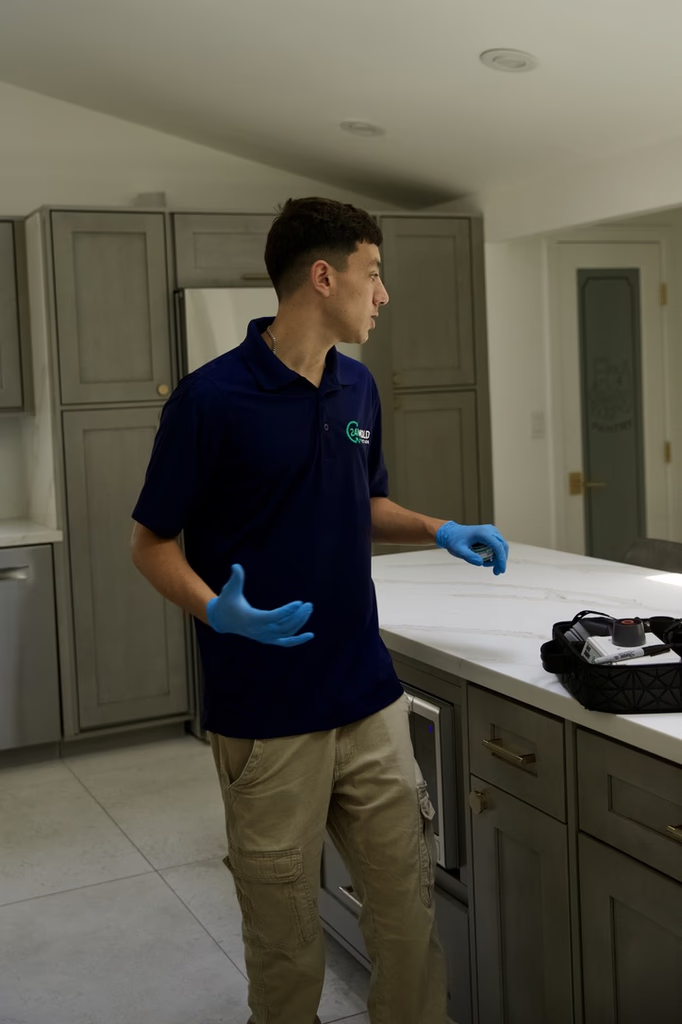
Most mold is invisible. Spores float undetected through ducts and doorways, spreading from room to room with the air itself. Air testing reveals the species and concentration of what's airborne, even when no visible growth is found on any surface.

Mold air testing detects:

  • —Invisible mold spores circulating through the air
  • —Differences in spore levels from one room to the next
  • —Contamination inside HVAC systems and hard-to-reach areas
  • —Early warning signs in rooms that appear unaffected
Why mold air testing matters
Mold inspector at work

Benefits

What you get from air testing

Understand the air quality and find what your eyes can't

  • —Non-invasive: No drilling, no surface damage, no demolition needed.
  • —Early detection: Catch contamination before it spreads or symptoms start.
  • —Data-driven: Measure and compare spore counts room by room with lab-verified results.
  • —Defensible documentation: State-certified lab results that hold up for insurance and real estate use.

About

How mold air testing works

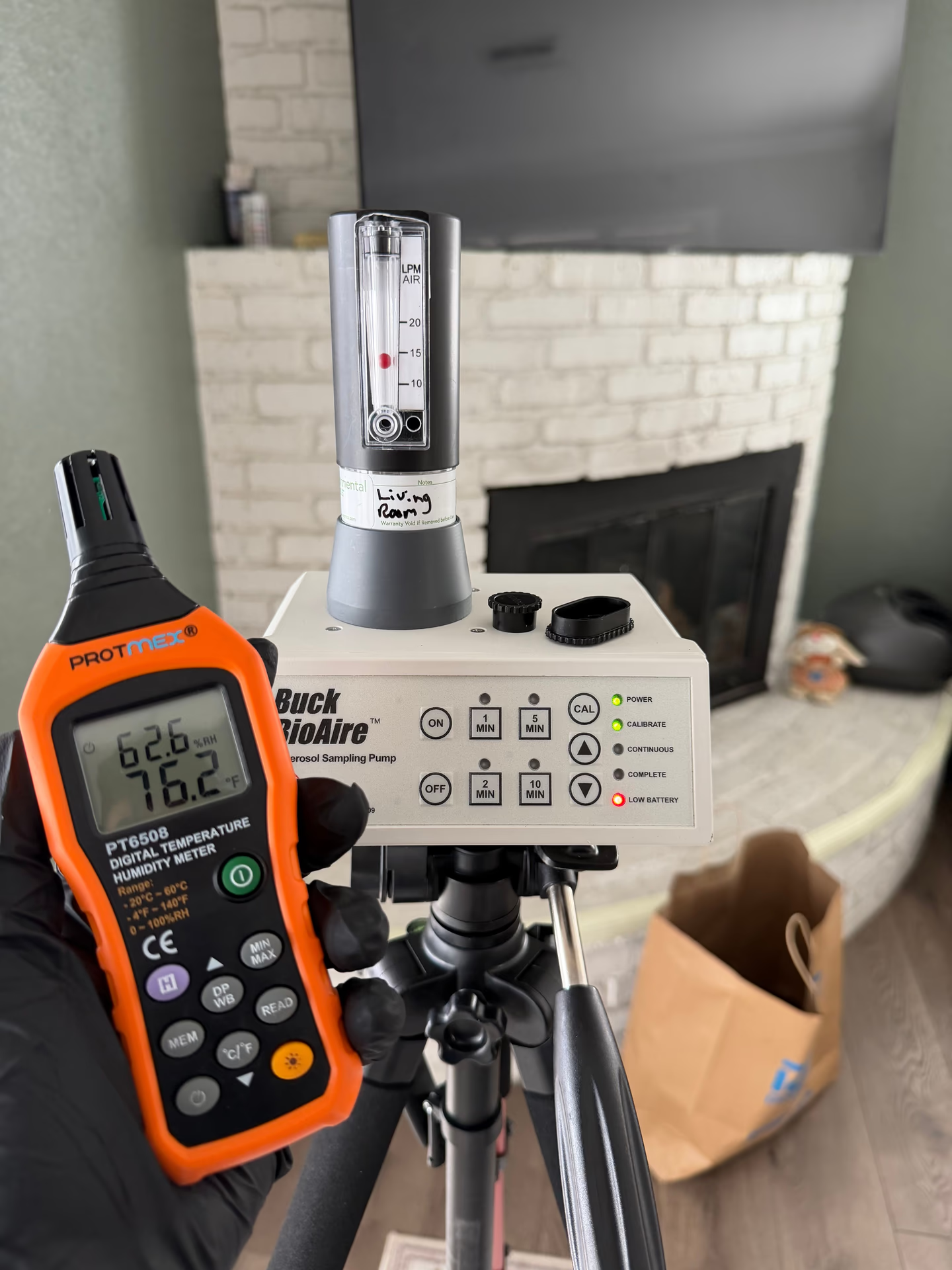
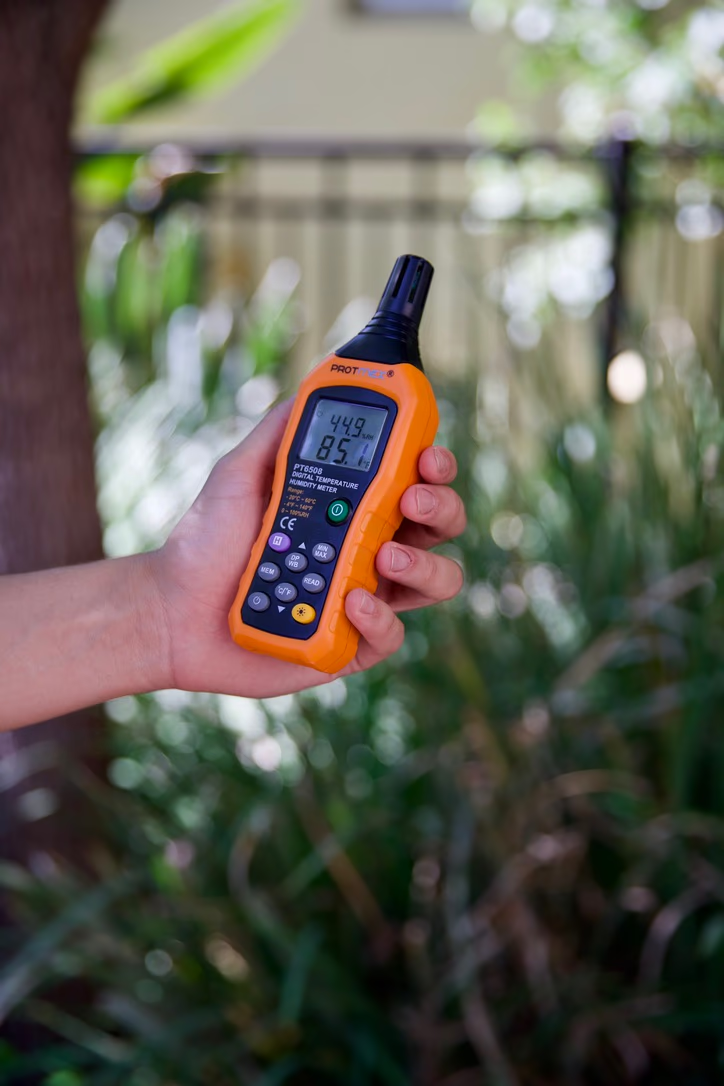
Our certified mold inspectors use calibrated sampling pumps to draw air through a spore trap cassette, capturing airborne mold spores. The lab identifies the mold species under a microscope, including any HVAC contamination if the system is implicated.

Our process includes:

  • —Targeted sampling in problem areas and comparison sampling outdoors
  • —Spore traps or impactor cassettes calibrated for accurate collection
  • —Lab-verified results identifying species and spore counts
  • —A written mold inspection report with the numbers and next steps
How mold air testing works

Mold inspection Everett FAQ

Call For An Inspection
Properties in the Bayside and waterfront neighborhoods sit within the moisture envelope of an active naval and industrial port — saltwater, marine humidity, and constant waterfront activity keep ambient conditions wetter than inland Everett neighborhoods year-round. The delta fill soil that most of these neighborhoods sit on has a shallow water table and retains moisture around foundations in ways that upland soil doesn't. Salt air degrades exterior sealing and caulking faster than in drier climates, opening window frames, stucco joints, and deck connections to water intrusion that accumulates inside wall assemblies over years of Pacific Northwest winters. Pre-purchase inspections in these neighborhoods should specifically assess the crawl space and any below-grade space given the soil conditions.
Crawl space mold is one of the most consistent findings in Everett's older housing stock, and the mechanism is straightforward: the Snohomish River delta soil has a shallow water table, the Pacific Northwest's 38-plus inches of annual rainfall keeps ground moisture elevated through the long wet season, and original vapor barriers in mid-century and older homes have deteriorated or were never installed to modern standards. Subfloor framing sitting in persistently humid conditions develops surface mold before any visible damage appears in the living space above. The crawl space inspection maps moisture readings across the framing and joists, checks vapor barrier coverage, and evaluates cross-ventilation — findings that define whether the condition is a maintenance issue or an active growth problem requiring remediation.
The Snohomish River has flooded Lowell and the low-lying neighborhoods near the delta multiple times through Everett's history, with notable events in the early 2000s when sustained winter runoff pushed river levels above flood stage for multiple consecutive days. Properties in Lowell's lower blocks and near the river corridor may carry accumulated moisture damage from flood events that predates the current owner — crawl space framing and subfloor material that absorbed water in a flood and was dried rather than replaced can harbor dormant mold that activates when humidity rises again in subsequent wet seasons. For any Lowell property or river-adjacent purchase, the crawl space and basement inspection should look specifically for evidence of past flood intrusion.
Yes — the 1960s through 1980s housing stock along the Mukilteo corridor south of Everett is a regular part of our Everett work. This construction era carries predictable aging-system risks: galvanized supply lines corroding from the inside, original HVAC systems developing condensate drain failures, first-generation asphalt roofing replaced once but with original flashing details that now leak at penetrations and valleys. When these systems begin failing in the same decade, the moisture accumulation accelerates and shows up in wall cavities and crawl spaces before it's visible at the surface. The inspection approach for this housing era focuses on the plumbing walls, the attic, and the crawl space rather than surface conditions.
Clearance testing — also called post-remediation verification — confirms that a remediation contractor's work succeeded: the affected material was removed or treated, the moisture source was controlled, and indoor spore counts are back within the range of the outdoor baseline. It's needed whenever a remediation was performed and the property owner, buyer, insurer, or tenant requires independent confirmation. Because 24H Mold Inspection of Everett never performs remediation, the clearance test is independent — we have no stake in the contractor's work passing. In Everett's rental market, clearance testing is increasingly requested by tenants and housing inspectors following landlord-initiated remediation of habitability complaints.
Our Everett team covers all Everett neighborhoods — Downtown, Bayside, Pinehurst, Silver Lake, the waterfront corridor, Lowell, and Cascade View — plus the Mukilteo corridor with same-day and next-day appointments and 24/7 emergency response. Several neighboring cities have their own dedicated 24H Mold Inspection pages with local teams: Seattle, Renton, Tacoma, and Bellevue each have separate coverage with their own local phone numbers. If your property is in one of those cities, that page will have the most relevant local information.
Yes — office and retail buildings in Downtown Everett, industrial-adjacent commercial properties near the port and Naval Station, multifamily residential throughout the city, and mixed-use buildings along the Colby Avenue corridor. Everett's commercial mold cases most often involve older masonry downtown buildings where moisture migrates through degraded mortar joints, flat-roof commercial buildings with standing water and drain failures, and ground-floor retail in mixed-use buildings where occupancy humidity rises into the residential floors above. Reports are written to be handed to a property manager, building engineer, or insurer.

Contact

Book your Everett mold inspection today

Tell us what's going on and we'll respond the same day

Location

24H Mold Inspection of Everett

Hours

  • MondayOpen 24 hours
  • TuesdayOpen 24 hours
  • WednesdayOpen 24 hours
  • ThursdayOpen 24 hours
  • Friday6 AM – 6 PM
  • SaturdayClosed
  • SundayOpen 24 hours

Service area neighborhoods

  • Downtown Everett
  • Bayside
  • Pinehurst
  • Silver Lake
  • Everett Waterfront
  • Cascade View
  • Lowell
  • Mukilteo (southern edge)
Call For Service(425) 962-8305