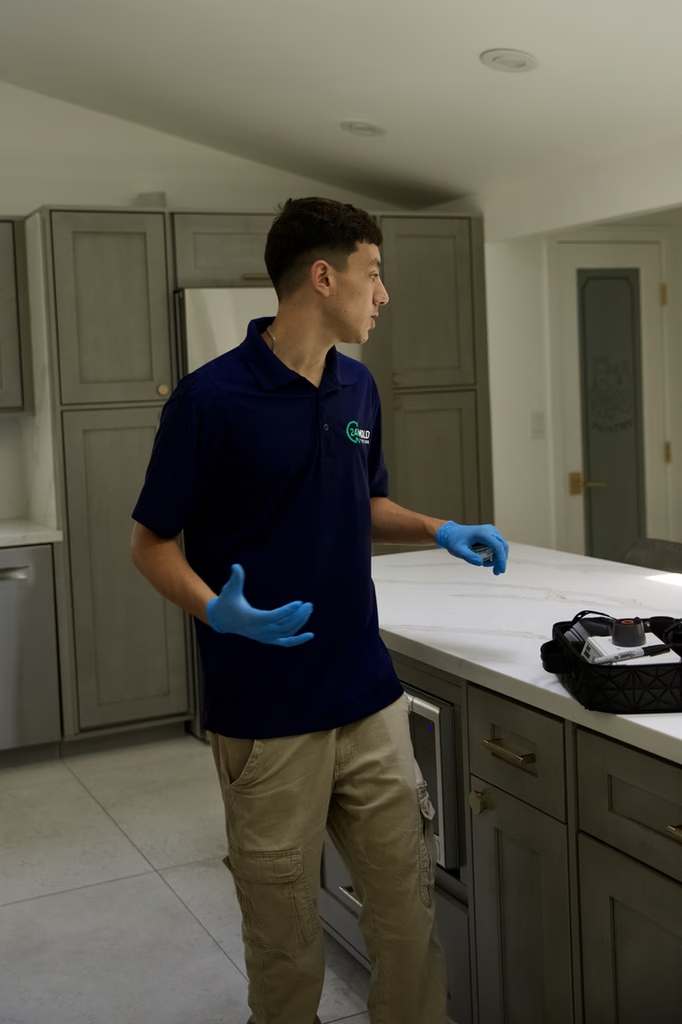
24H Mold Inspection
Collin County24/7 EMERGENCY(866) 643-0488
HomeOur ServicesMold TestingTape Testing
Mold Testing

Tape Testing

Surface samples collected quickly and without any damage, when growth is visible but needs lab confirmation.

Overview

Why mold tape testing matters

Not every dark patch is mold. Tape testing is a fast, reliable method for confirming whether visible buildup is fungal and identifying the species behind it, before assumptions drive an expensive cleanup.

Mold tape testing detects:

  • —Mold on walls, ceilings, and furniture surfaces
  • —Visible buildup on smooth or dusty areas
  • —Species identification on painted and finished walls
  • —Early growth caught before it has time to spread
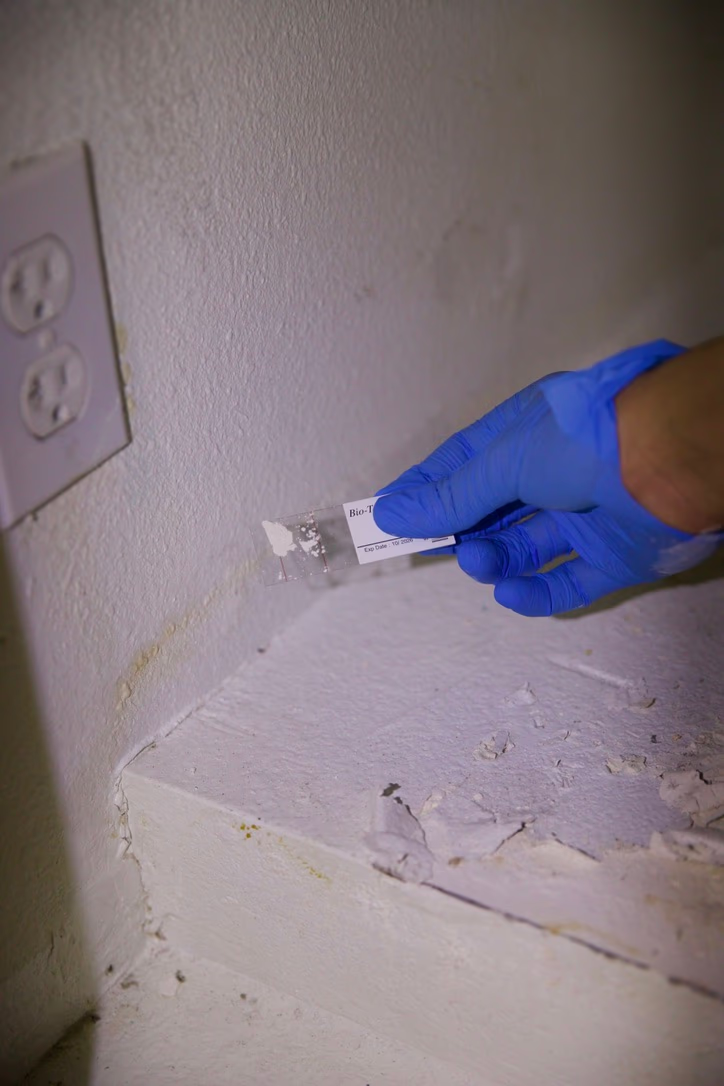
Why mold tape testing matters
Mold inspector at work

Benefits

What you get from tape testing

A fast, non-destructive way to confirm what you're looking at

  • —Quick: Sample collection takes seconds per spot.
  • —Accurate: Lab-verified species ID on every sample.
  • —Non-destructive: No cutting, no scraping, surfaces stay intact.
  • —Targeted: Suited to isolated spots and surface discoloration.

About

How mold tape testing works

Our certified mold inspectors press a clear adhesive slide against the suspect area to capture a thin layer of surface material. The slide is sealed and sent to a state-certified lab for mold species identification.

Our process includes:

  • —Surface sampling with sterile adhesive slides
  • —Lab analysis for species type and contamination level
  • —Lab-verified results with spore counts where relevant
  • —A mold inspection report with clear next steps
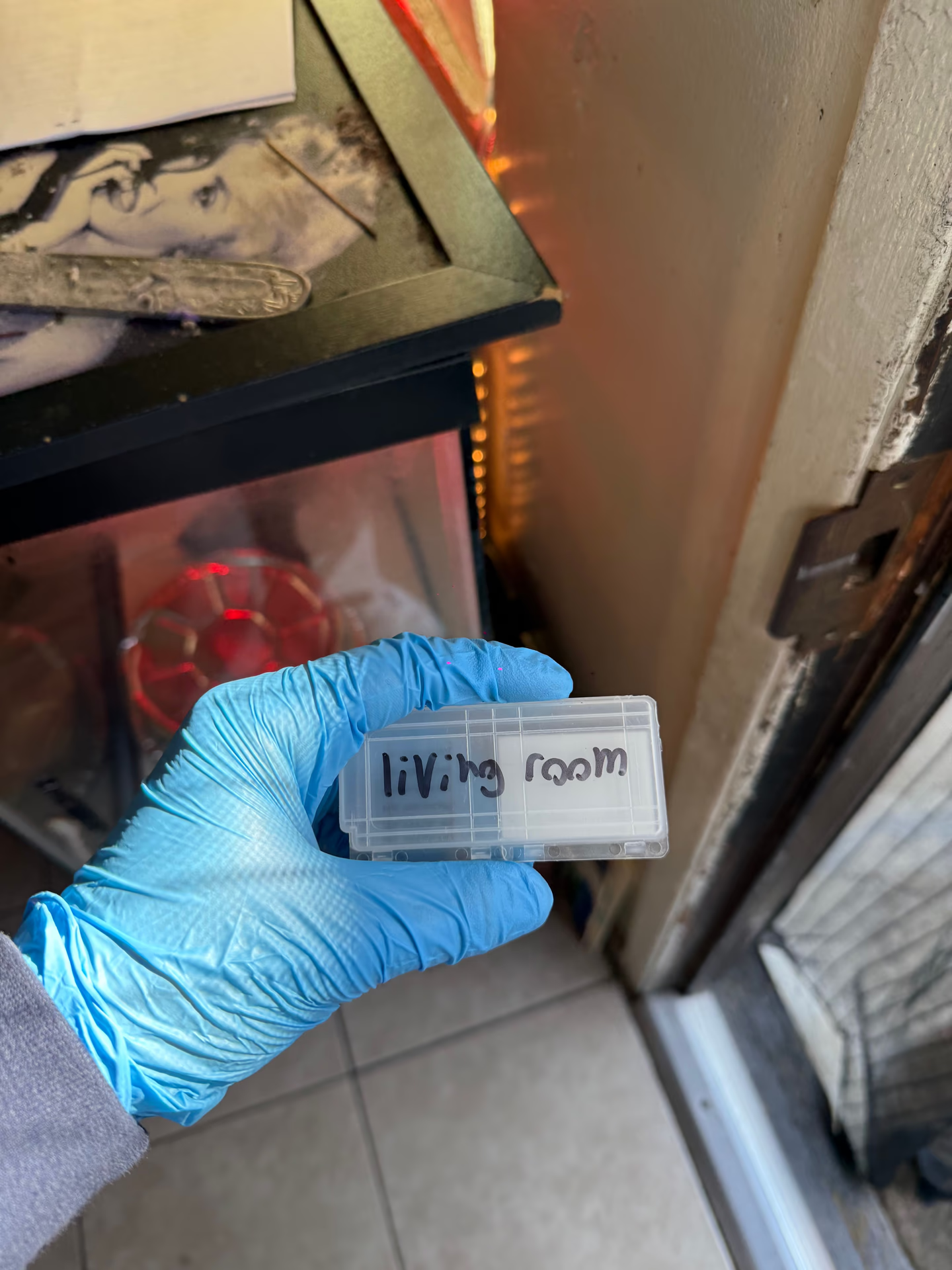
How mold tape testing works

Mold inspection Collin County FAQ

Call For An Inspection
Expansive clay swells when wet and shrinks in drought, which cracks slabs and stresses plumbing under the foundation. A slab leak can wick moisture into drywall and framing with no sign at floor level, and Texas heat lets mold establish quickly once material stays damp. An inspection looks for moisture at slab edges, plumbing walls, and cracks, and identifies whether the source is soil, plumbing, roofing, or the A/C system.
Yes. Summer A/C loads are heavy, and clogged condensate drains, overflowing drain pans, and sweating ducts can wet insulation, ceilings, and walls near attic air handlers. A musty smell when the system starts, stains on ceilings under the attic, or water near the air handler are common signs. An inspection checks the air handler, drain line, duct insulation, and surrounding ceilings.
If water got in, yes. Hail and wind-driven rain can damage roofing, flashing, and stucco, and water often reaches the attic or wall cavities before a stain shows. Mold can begin establishing within 24 to 48 hours of sustained dampness. A moisture assessment after a significant storm documents what is wet and whether it has dried.
Yes, through different mechanisms. Newer homes are built tight for energy efficiency, so indoor humidity builds up when ventilation underperforms. Builder-grade roofing, stucco, and window flashing can fail within the first decade, and settling can crack slabs and stress plumbing. Because the moisture often sits behind finished surfaces, it is found with meters and thermal imaging, not by looking.
Pier-and-beam homes over crawl spaces without vapor barriers let ground moisture into subfloor framing, and older plumbing, chimneys, and roofs have been repaired many times. Masonry storefronts and older commercial buildings move water through failing mortar into the spaces above. An inspection focuses on the crawl space, plumbing walls, attic, and roof-to-wall seams.
Yes. The inspection covers thermal imaging for behind-wall moisture, slab and crawl-space readings, attic and A/C condensate lines, roof and flashing condition, and sampling where growth is suspected. In a fast-moving market, independent documentation before closing protects you from inheriting a slow, hidden problem.
Our Collin County team covers Plano, McKinney, Frisco, Allen, Prosper, Wylie, Murphy, Celina, Anna, Melissa, Fairview, and Lucas, with same-day and next-day appointments and 24/7 emergency response. Neighboring counties each have their own 24H Mold Inspection page with a local team. If your property is outside Collin County, start with that page, or call the number on this page and we will point you to the right team.

Contact

Book your Collin County mold inspection today

Tell us what's going on and we'll respond the same day

Location

24H Mold Inspection of Collin County

Address

101 E Park Blvd Ste 600, Plano, TX 75074

Hours

  • MondayOpen 24 hours
  • TuesdayOpen 24 hours
  • WednesdayOpen 24 hours
  • ThursdayOpen 24 hours
  • Friday6 AM – 6 PM
  • SaturdayClosed
  • SundayOpen 24 hours

Service area neighborhoods

  • Plano
  • McKinney
  • Frisco
  • Allen
  • Prosper
  • Celina
  • Murphy
  • Wylie
Call For Service(866) 643-0488