24H Mold Inspection
West Hollywood24/7 EMERGENCY(310) 807-1797
HomeOur ServicesMold TestingAir Testing
Mold Testing

Air Testing

Mold air testing detects airborne spores and assesses indoor air quality, even in spaces where no visible contamination has shown up yet.

Overview

Why mold air testing matters

Most mold is invisible. Spores float undetected through ducts and doorways, spreading from room to room with the air itself. Air testing reveals the species and concentration of what's airborne, even when no visible growth is found on any surface.

Mold air testing detects:

  • Invisible mold spores circulating through the air
  • Differences in spore levels from one room to the next
  • Contamination inside HVAC systems and hard-to-reach areas
  • Early warning signs in rooms that appear unaffected
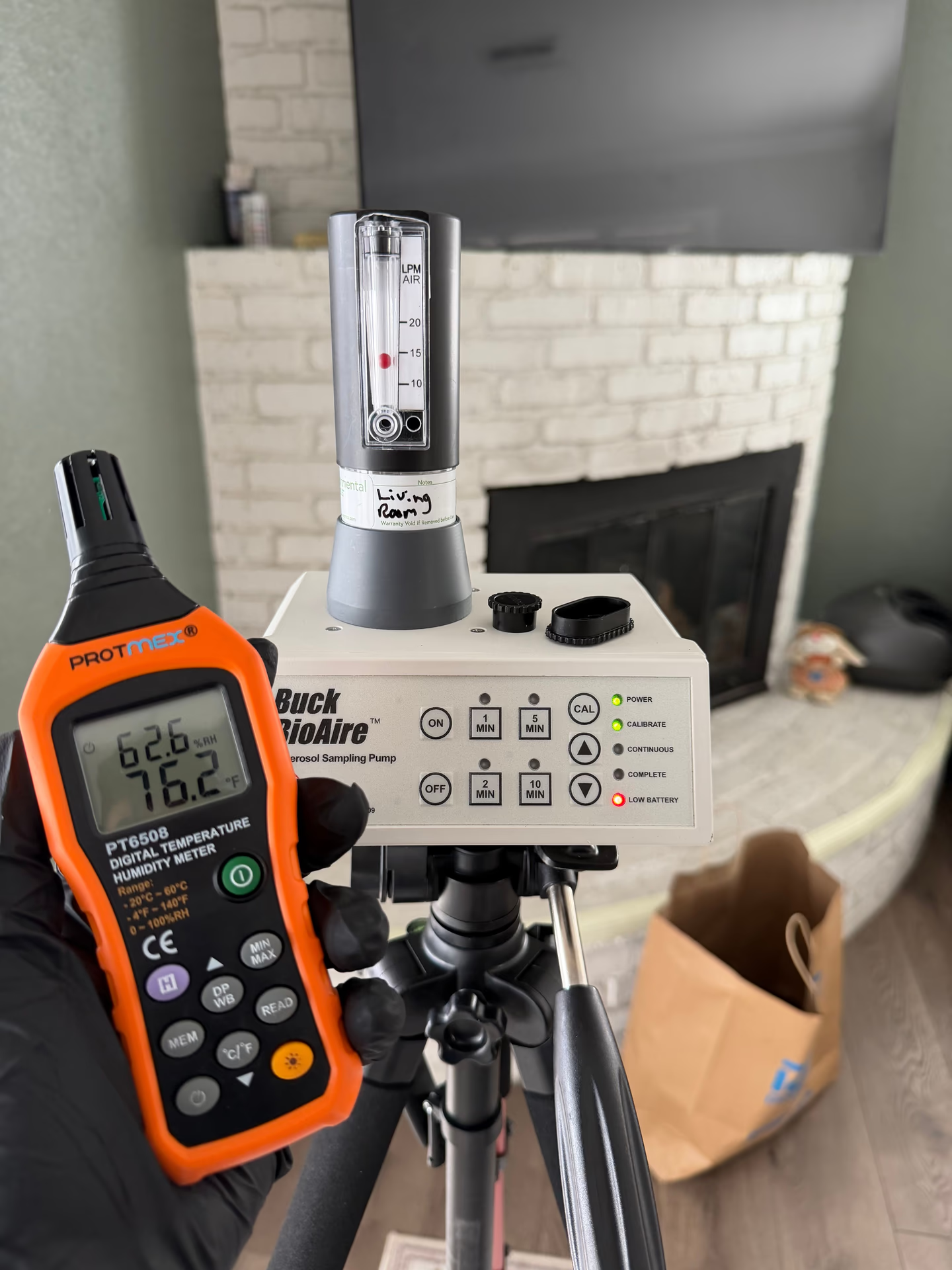
Why mold air testing matters
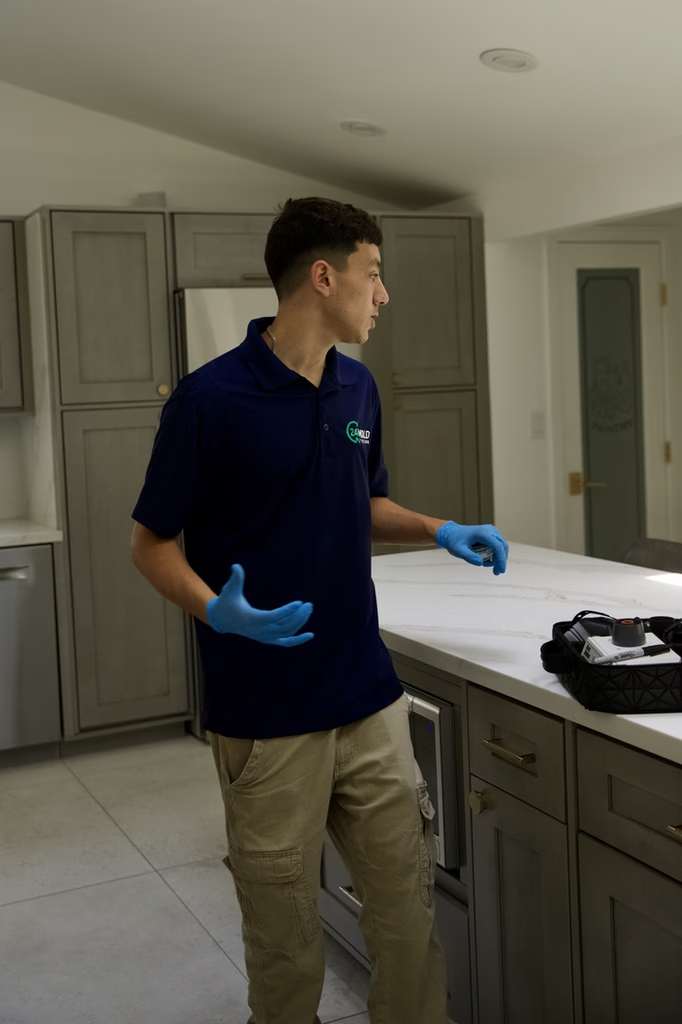
Mold inspector at work

Benefits

What you get from air testing

Understand the air quality and find what your eyes can't

  • Non-invasive: No drilling, no surface damage, no demolition needed.
  • Early detection: Catch contamination before it spreads or symptoms start.
  • Data-driven: Measure and compare spore counts room by room with lab-verified results.
  • Defensible documentation: State-certified lab results that hold up for insurance and real estate use.

About

How mold air testing works

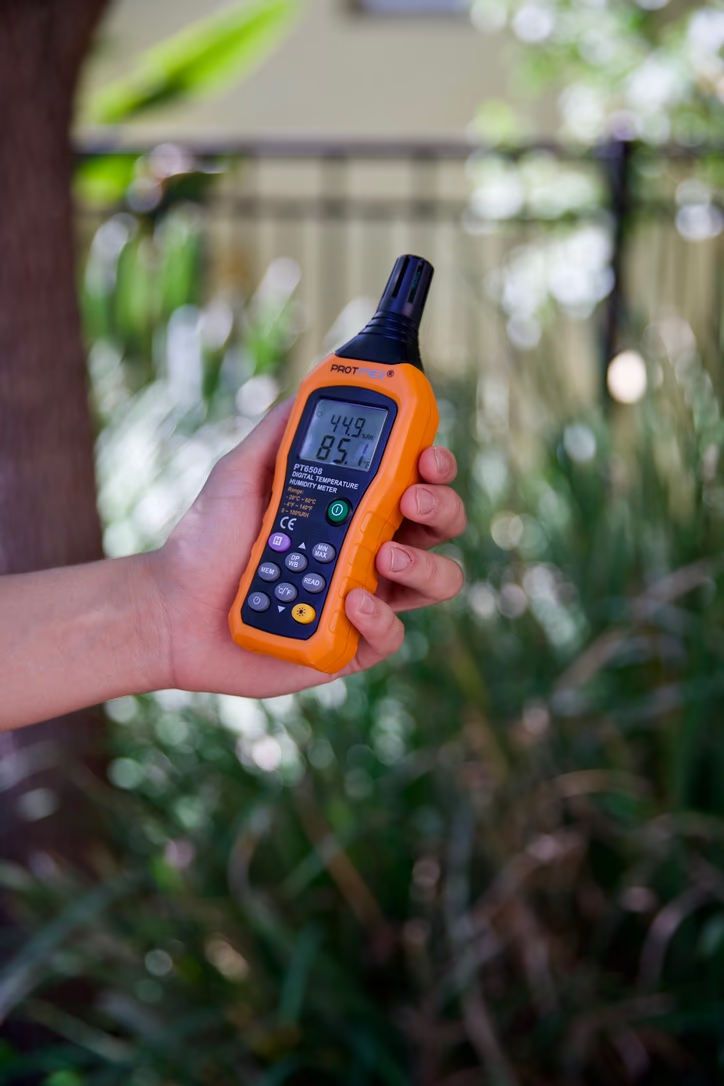
Our certified mold inspectors use calibrated sampling pumps to draw air through a spore trap cassette, capturing airborne mold spores. The lab identifies the mold species under a microscope, including any HVAC contamination if the system is implicated.

Our process includes:

  • Targeted sampling in problem areas and comparison sampling outdoors
  • Spore traps or impactor cassettes calibrated for accurate collection
  • Lab-verified results identifying species and spore counts
  • A written mold inspection report with the numbers and next steps
How mold air testing works

Mold inspection West Hollywood FAQ

Call For An Inspection
No. 24H Mold Inspection of West Hollywood inspects and tests only, and never performs remediation or removal. In a city where roughly three quarters of households rent and most of the housing predates 1979, that separation is not a philosophical point — it decides whether the report is usable. A mold finding in a rent-stabilized building at Kings Road or along Fountain is usually the center of a disagreement between a tenant, an owner, and an insurer, and a report from the company that also wants the demolition contract is the first thing the other side attacks. Our deliverable is the diagnosis: what is growing, which moisture source feeds it, how far it runs through the shared wall or ceiling assembly, and lab confirmation of what the samples contain. That becomes a defined scope that two or three remediation contractors can bid against, rather than an estimate written by the party being paid to find more. When the work is done, we can return for independent verification.
All of it, and the parts around it that people assume are part of it. Inside the city that means the Sunset Strip, the Santa Monica Boulevard corridor, West Hollywood West, the Norma Triangle, the Design District, the Kings Road blocks, and the Fountain Avenue corridor. Because the city is under two square miles and hemmed in by Los Angeles on three sides, we work continuously across those lines, including the Hollywood side of Fairfax and La Brea. Several neighbors have their own 24H Mold Inspection page written around their own building stock: for property in Los Angeles proper, Beverly Hills, Santa Monica, Sherman Oaks, or North Hollywood, start on that city's page instead. Scheduling here usually runs same day or next day, and we answer emergency calls around the clock, which is what a riser failure flooding three floors at two in the morning actually requires. If you are not sure which page covers your address, call the number here and we will route it.
No, and in this city the gap is mostly about boundaries rather than thoroughness. A general home inspection is a broad condition survey — roof, electrical, plumbing, appliances — and most contracts exclude mold outright. More to the point, most transactions here are condos, co-ops, and TIC shares in buildings from the 1920s through the 1970s, and that inspection stops at the unit boundary. The moisture that ruins a unit in this housing stock almost never originates inside it. It comes from a common riser in the wall, a roof or podium deck the association maintains, a planter box on the terrace above, or the bathroom of the neighbor upstairs. A mold inspection is instrument-driven and follows the water rather than the property line: moisture meters, thermal imaging, wall cavity sampling, and lab work where the walkthrough justifies it. Order both, and before the mold inspection, request the HOA's maintenance and leak history for the building, since that is where the pattern usually shows up first.
It changes several things, and the confusion is built into the mail. West Hollywood shares 90046 and 90048 with the City of Los Angeles, so an address a block either side of Fairfax or La Brea can carry a mailing city that does not match the jurisdiction, and plenty of people searching for mold inspection in Hollywood are standing in West Hollywood. The city incorporated on November 29, 1984, largely on the strength of a renter majority, and adopted its own rent stabilization ordinance immediately. That ordinance and the city's Rent Stabilization and Housing division are separate from the Los Angeles system, with different covered dates, different habitability procedures, and a different office holding the permit history for the addition that is now leaking. Our inspection and report are identical either way, since testing is not licensed by either city. Before you call, confirm which jurisdiction your parcel sits in, because that determines who enforces a habitability complaint and where the building records live.
You are not dependent on the landlord's opinion, and in this city the process is well established. West Hollywood runs its own rent stabilization and housing program, and habitability complaints here are handled locally rather than through the county, so documentation carries real weight. Start by putting the request in writing and keeping the copy. Then get an independent assessment. Because we do not perform remediation, our report is not an estimate for work we want to sell, which is exactly why it holds up when a landlord's contractor says the stain is old and dry. In the pre-1979 buildings that make up most of the housing here, the finding usually implicates a shared riser, a roof, or the unit above, meaning the repair belongs to the owner rather than the tenant. Schedule the inspection before any surface cleaning happens, because bleaching or painting the area destroys the evidence and makes both the lab result and the habitability claim considerably harder to establish.
Because most of the water in this housing type never touches the roof. In a 1920s to 1970s building, testing one unit answers one question, and the useful pattern only shows up when the sampling follows the assembly. That normally means air samples in the affected unit, the adjoining unit or the one directly above, and the common corridor or garage where a riser runs, plus wall cavity sampling to reach inside an assembly without opening it. The outdoor baseline is the part people get wrong here. In a dense, largely paved city of about two square miles, the outdoor control gets taken on a sidewalk between two buildings rather than in a yard, and heavy traffic along the boulevards changes what is in that air. A count is meaningless without the control taken beside it. When you receive results, look for the outdoor sample, the adjacent-space samples, and the moisture readings that explain them, not a single number from one room.
It is the defining pattern along Sunset, and it surprises owners who just replaced the roof. The Strip sits on the toe of the hills, so storm runoff from the slopes above crosses the properties laterally rather than falling on them. That water finds subterranean parking, elevator pits, and the below-grade walls of structures cut into the slope, arriving through cold joints and construction seams that were watertight when new and are not now. The second source is horizontal: pool decks, planted terraces, and podium slabs built over occupied rooms, where the waterproofing membrane is buried under pavers and soil and reaches the end of its service life invisibly. Hotel and restaurant use adds kitchens and laundry on top of that. For a property on this stretch, an inspection should start in the garage, the pit, and the slab underside beneath any deck, because that is where the evidence is.

Contact

Book your West Hollywood mold inspection today

Tell us what's going on and we'll respond the same day

Location

24H Mold Inspection of West Hollywood

Service area neighborhoods

  • Sunset Strip
  • Santa Monica Blvd corridor
  • West Hollywood West
  • Norma Triangle
  • Design District
  • Kings Road area
  • Fountain Avenue corridor
  • Hollywood Hills West (adjacent)
Call For Service(310) 807-1797