24H Mold Inspection
Thousand Oaks24/7 EMERGENCY(805) 905-4113
HomeOur ServicesMold InspectionThermal Imaging
Mold Inspection

Thermal Imaging

Infrared cameras find hidden mold conditions and water damage before any surface stain shows up.

Overview

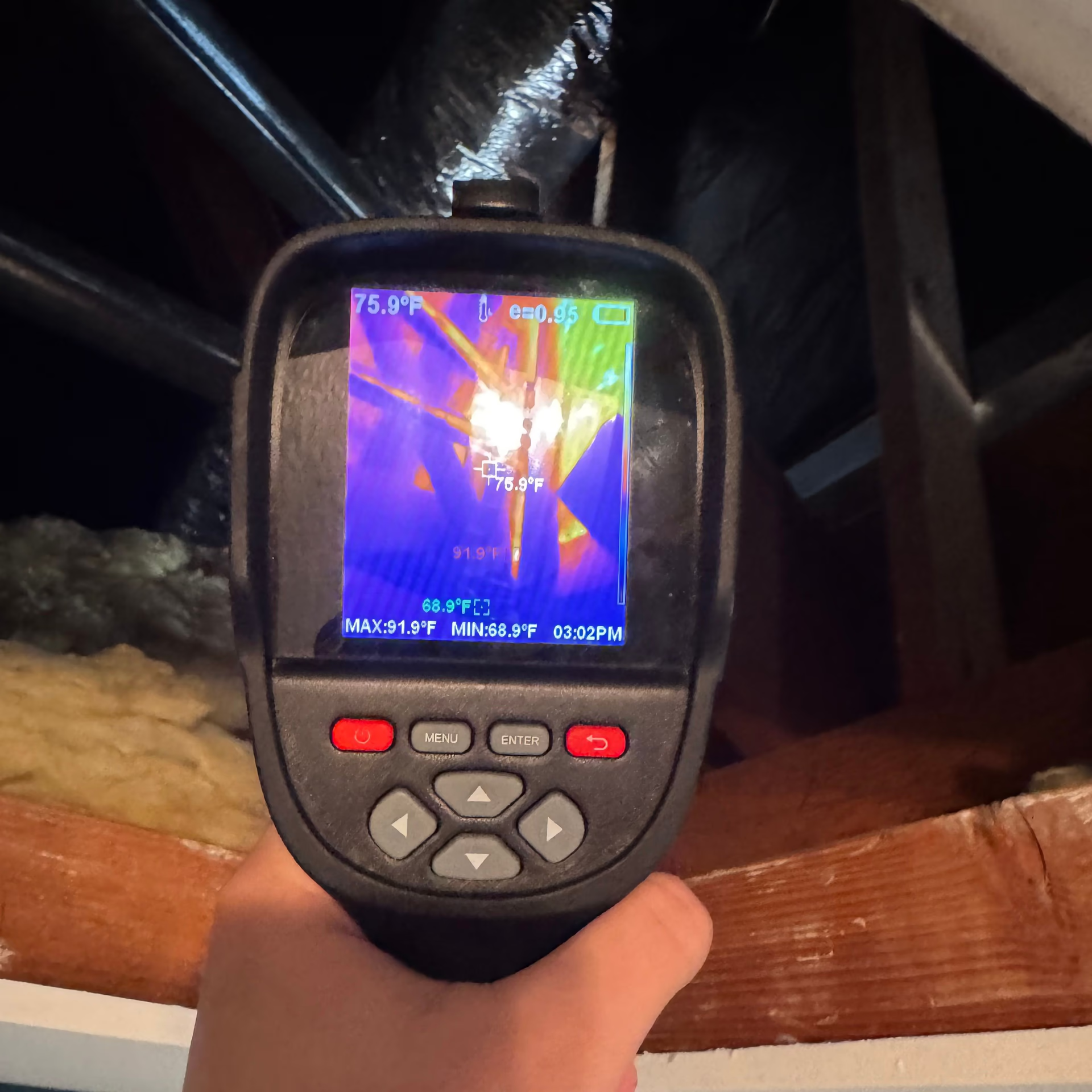
Why infrared thermal imaging finds mold others miss

Mold doesn't always announce itself. A small leak inside a wall, a stretch of failed insulation, or a cold-bridge condensation zone can build mold-friendly conditions for months before any stain reaches the surface. Thermal imaging reveals those conditions while they're still hidden, giving you a chance to address the moisture before mold has spread.

Thermal imaging detects:

  • —Hidden moisture inside walls, ceilings, and under floors
  • —Active leaks from plumbing, roofing, or HVAC components
  • —Insulation gaps and ventilation defects driving condensation
  • —Cold spots creating ideal future conditions for mold growth
Why infrared thermal imaging finds mold others miss
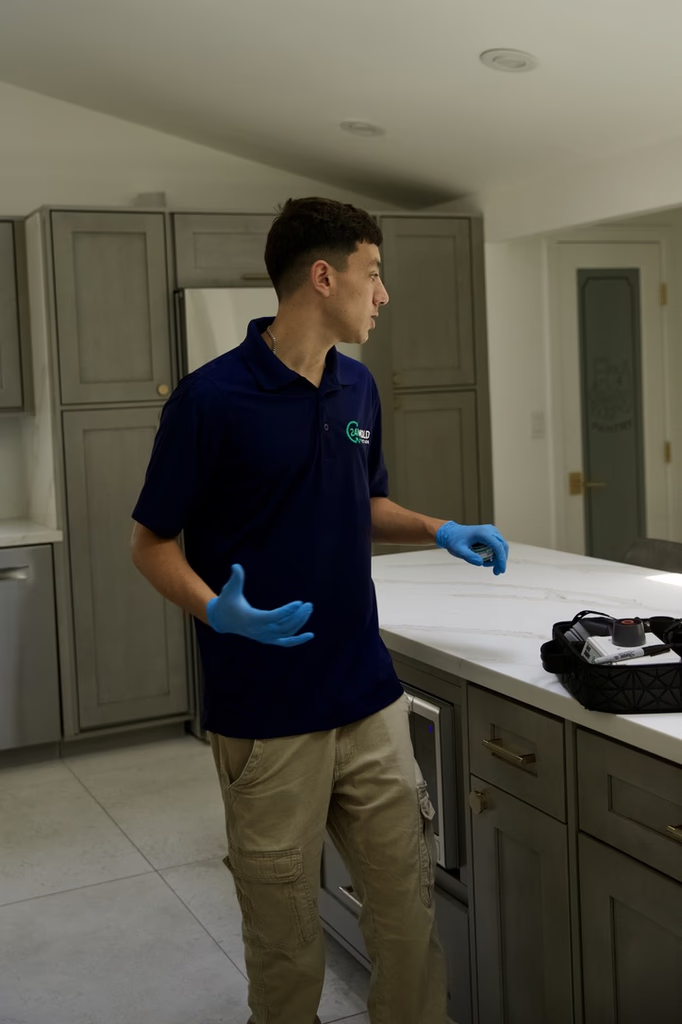
Mold inspector at work

Benefits

What you get from thermal imaging

Find hidden risks early without damaging the property

  • —Non-invasive: No drilling, no cutting, no surface damage.
  • —Early detection: Catches problems before damage becomes visible.
  • —Cost-effective: Targets repairs only where they're needed.
  • —Documented findings: Annotated thermal images included in the report.

About

How thermal imaging mold inspection works

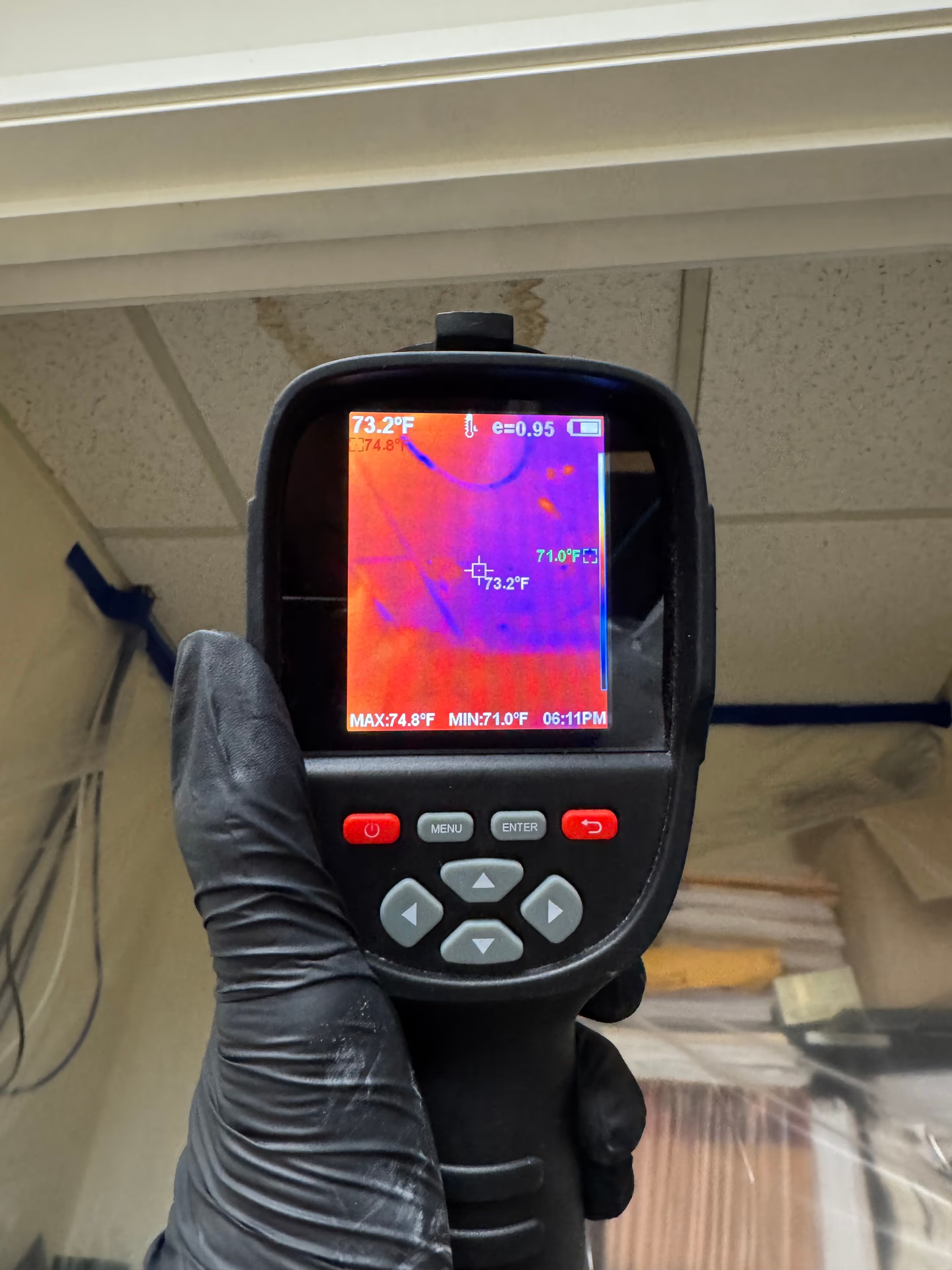
Our certified mold inspectors use FLIR cameras to read temperature differentials across surfaces. Cooler areas often signal water present in the material, even when no surface damage has appeared.

Our process includes:

  • —A complete thermal scan of key interior and exterior surfaces
  • —Identification of unusual cold or warm patterns in the readings
  • —Cross-checking thermal findings with calibrated moisture meters
  • —A mold inspection report including the annotated thermal images
How thermal imaging mold inspection works

Mold inspection Thousand Oaks FAQ

Call For An Inspection
The November 2018 Woolsey Fire burned approximately 97,000 acres through the Santa Monica Mountains and Conejo Valley, reaching the edges of Dos Vientos, Newbury Park, and Sunset Hills neighborhoods. Fire-hardened soils in burn areas shed rather than absorb rainfall, routing more post-storm runoff toward foundations and slopes than the pre-fire hydrology suggested — and this effect persists for years after a fire as vegetation recovers and soil structure normalizes. Properties on the downslope edges of neighborhoods adjacent to burn perimeters have experienced increased foundation and crawl space moisture in wet winters following the fire that wasn't present before. An inspection on these properties should assess slope drainage and foundation moisture in the context of the post-fire watershed conditions.
Lynn Ranch and Conejo Oaks equestrian properties bring barns, stables, tack rooms, and wash racks into the inspection — structures that combine constant water use, animal humidity, and often minimal ventilation. Mold takes hold in barn structures and adjacent living spaces in ways that a home inspection focused on the main structure wouldn't catch. Wash rack drainage, stable floor moisture, and the humidity that livestock generate inside enclosed spaces migrate toward adjacent living structures, particularly in older barn construction where vapor management wasn't part of the original design. For pre-purchase inspections on equestrian properties, outbuildings should be assessed separately from the main residence.
Newbury Park's 1970s and 1980s housing along the 101 corridor is now 40 to 50 years old, and original systems are failing in patterns. Original HVAC systems develop condensate drain failures that deposit moisture inside air handler cabinets and adjacent wall cavities. Galvanized and early-copper plumbing at end of life develops slow behind-wall leaks at fittings invisible until surface damage appears. Newbury Park's position at the mouth of the Conejo Grade means it receives more fog and marine layer influence than inland Thousand Oaks neighborhoods — ambient humidity is consistently higher here, which keeps the baseline moisture load on wall assemblies and crawl spaces elevated through the wet season.
Pre-purchase inspection in Thousand Oaks is worth doing across all neighborhoods and particularly for properties adjacent to the Woolsey Fire burn perimeter, equestrian properties with outbuildings, and the older Borchard Hills and Newbury Park housing stock where original systems are aging. The inspection covers thermal imaging for behind-wall moisture at plumbing and HVAC locations, crawl space or slab assessment, attic condition, and air or surface sampling where visible growth is present. In Thousand Oaks' active real estate market, where properties move quickly and buyers sometimes waive contingencies, having independent moisture documentation before closing protects you from inheriting a long-running problem.
Our Thousand Oaks team covers all of Thousand Oaks — Lang Ranch, Dos Vientos, Newbury Park, Lynn Ranch, Conejo Oaks, Wildwood, Sunset Hills, and Borchard Hills — with same-day and next-day appointments and 24/7 emergency response. Westlake Village has its own dedicated 24H Mold Inspection page with local coverage details — if your property is in Westlake Village, that page will have the most relevant local information. Camarillo also has its own page with its own local team.
Inspection and testing only — we never perform mold removal or remediation. In Thousand Oaks' range of construction eras and property types — from 1960s Borchard Hills ranches to newer Lang Ranch HOA communities to equestrian properties with outbuildings — moisture sources and remediation scopes vary significantly, and a company with cleanup work to sell has a financial reason to find more than the instruments confirm. What you receive is the diagnosis: extent of growth, moisture source, lab-confirmed species, and a written report you can use to get comparable bids from multiple remediation contractors.
Air quality testing draws a measured volume of air through a spore trap at each area of concern alongside an outdoor control sample taken at the same visit. The outdoor sample is particularly important in Thousand Oaks, where the Conejo Valley's Santa Ana wind cycles create large swings in ambient spore counts — the outdoor baseline on a dry offshore wind day differs substantially from the baseline during a marine layer morning, and the test interpretation needs to account for those conditions. Air testing is the right choice when someone has respiratory symptoms or a musty odor but there's nothing visible to sample, and for post-Woolsey-Fire properties where airborne spore counts may reflect disrupted soil rather than active indoor growth.

Contact

Book your Thousand Oaks mold inspection today

Tell us what's going on and we'll respond the same day

Location

24H Mold Inspection of Thousand Oaks

Hours

  • MondayOpen 24 hours
  • TuesdayOpen 24 hours
  • WednesdayOpen 24 hours
  • ThursdayOpen 24 hours
  • Friday6 AM – 6 PM
  • SaturdayClosed
  • SundayOpen 24 hours

Service area neighborhoods

  • Newbury Park
  • Lynn Ranch
  • Conejo Oaks
  • Sunset Hills
  • Lang Ranch
  • Dos Vientos
  • Wildwood
  • Borchard Hills
Call For Service(805) 905-4113