24H Mold Inspection
San Diego24/7 EMERGENCY(866) 699-8755
HomeOur ServicesEnvironmental Risk Assessment
our services

Environmental Risk Assessment

We identify hidden mold risks and verify that your space is safe to occupy.

About

Why Risk Assessment Matters

Even after cleanup or surface testing, questions often remain: Is it really gone? Are we safe to move forward? That's where an Environmental Risk Assessment comes in.

Ideal for:

  • Post-remediation verification
  • Pre-sale property inspections
  • Property management compliance
  • Sensitive environments (schools, offices, multi-unit housing)
Why Risk Assessment Matters

Methodology

Our Assessment Process

Step-by-step inspection to confirm your space is safe.

We inspect key areas across your property to identify visible signs of mold, moisture, or environmental risks that may have been missed in past inspections.

We use precision tools to measure moisture in building materials and collect air samples for lab analysis—capturing invisible spores that may linger in the environment.

Within 24–72 hours, you'll receive a certified report detailing our findings: mold species (if present), spore levels, moisture hotspots, and actionable next steps.

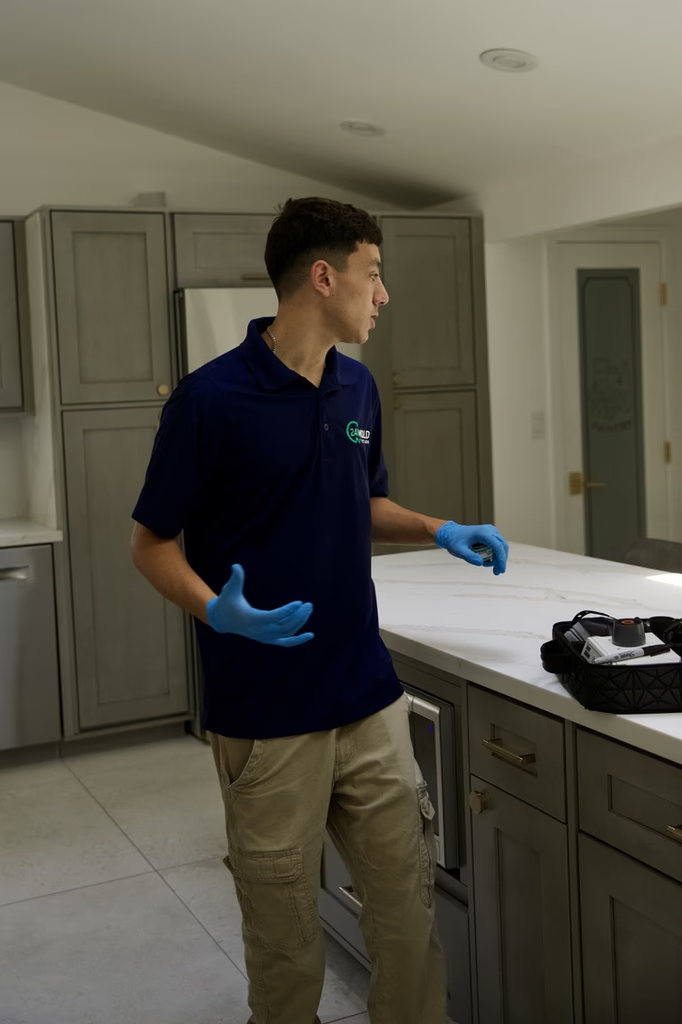
Mold inspector at work

Checklist

Is an Environmental Risk Assessment Right for You?

This service is ideal if:

  • You've had recent remediation or water damage
  • You're buying, selling, or managing a property
  • You need proof your space is safe to occupy

Still unsure? Let's talk. We'll help you decide if an assessment is the right step for your property.

Overview

What You'll Get

Certified results, safety clarity, and clear next steps—delivered fast.

1

Comprehensive Risk Report

State-certified results that summarize mold levels, moisture issues, and remediation needs.

2

Occupancy Safety Verification

Peace of mind that your property is safe to inhabit—especially critical for buyers, renters, and businesses.

3

Actionable Recommendations

If risks are found, we provide clear guidance on next steps. If not, your report becomes a safety asset.

Mold inspection San Diego FAQ

Call For An Inspection
On January 22, 2024, San Diego recorded roughly 2.7 inches of rain in a single day — a storm widely described as about a 1,000-year flood event — and more than 1,000 homes were damaged, with the worst flooding concentrated in Southcrest, Mountain View, Encanto, Mount Hope, Shelltown, and southeastern San Diego along the San Diego River corridor. Floodwater that entered homes soaked drywall, subfloors, framing, and insulation, and mold can begin growing within 24 to 48 hours of that kind of saturation. Many homes were dried and repaired quickly under insurance pressure, but incomplete drying leaves moisture inside wall cavities and under flooring that can surface as mold months later. If your property flooded in January 2024 and hasn't had an independent moisture assessment since, testing is worthwhile.
Many of San Diego's older central-neighborhood homes — Craftsman bungalows in North Park, Normal Heights, and Kensington, and cottages in the beach communities — sit on raised foundations over crawl spaces rather than concrete slabs. These shallow, low-clearance, poorly ventilated spaces trap the moisture that the coastal marine layer and damp soil push upward, and mold can grow on the underside of the subfloor and floor joists for years before a homeowner notices. Because crawl spaces are rarely entered, the growth is usually only found during an inspection or when musty odors and floor-level symptoms prompt a look. Any raised-foundation San Diego home that hasn't had its crawl space assessed is a good candidate for one.
Much of San Diego sits on clay-rich soil that expands when wet and contracts when dry, and that seasonal movement is enough to crack plaster and open gaps around windows, sill plates, and foundations over time — especially in homes built before 1949 that have been through decades of cycling. Those cracks and gaps become entry points for the marine-layer humidity and rain-driven moisture that then feed mold inside wall cavities and around the foundation. The soil movement itself doesn't create mold, but the openings it creates in the building envelope do, which is why older San Diego homes often develop moisture problems that trace back to foundation and framing gaps rather than a single obvious leak.
Homes in Ocean Beach, Pacific Beach, and the other coastal communities face the heaviest and most persistent marine-layer exposure, with morning humidity frequently sitting at or above 80% for much of the year. Combined with salt-laden coastal air that degrades exterior sealing and the older construction of many coastal cottages, this keeps exterior wall sheathing, attic spaces, and subfloor assemblies damp enough to support mold even without a specific leak. Rental and multi-unit beach properties add the risk of deferred maintenance and tenant-occupancy issues that let moisture problems go unreported. Coastal homes benefit from checks focused on the building envelope, attic ventilation, and any raised-foundation crawl space.
Spanish Revival and other stucco-clad homes are common across San Diego's older neighborhoods like Mission Hills, Kensington, and North Park. Stucco is durable, but when the underlying weather-resistant barrier fails, or when cracks open from soil movement, moisture can get trapped behind the stucco against the sheathing with no easy path to dry out — a condition that supports hidden mold inside the wall assembly. Older stucco homes also tend to have original windows and flashing details where water intrusion concentrates. Because the damage sits behind a hard cladding, it's typically found with moisture meters and thermal imaging rather than a visual check, which is where a certified inspection matters.
Yes. Properties in the San Diego River corridor and low-lying Mission Valley areas carry standing floodplain risk, which the January 2024 storm made clear when evacuation warnings were issued for Mission Valley, Southcrest, Mountain View, and other low-lying zones. Beyond outright flood events, proximity to the river maintains a higher groundwater and ambient-moisture load that keeps ground-floor and below-grade spaces damp. Homes in these areas — especially those that took on water in past events — should be treated as a priority for crawl space, subfloor, and ground-floor moisture assessment.
San Diego's tight escrow timelines put pressure on due diligence, but the older housing stock in the central and coastal neighborhoods rewards a careful look. The key areas are the crawl space under raised-foundation homes for subfloor and joist mold, the attic for marine-layer condensation and ventilation problems, stucco and wall cavities for moisture trapped behind cladding, and the window and foundation gaps opened by expansive-soil movement. In flood-affected communities it's also worth confirming whether the property took on water in January 2024 and how it was remediated. An independent inspection — with no financial stake in remediation — gives a clear moisture picture before closing, even within a short escrow window.

Contact

Book your San Diego mold inspection today

Tell us what's going on and we'll respond the same day

Location

24H Mold Inspection of San Diego

Service area neighborhoods

  • North Park
  • South Park
  • Ocean Beach
  • Pacific Beach
  • Mission Hills
  • Kensington
  • Normal Heights
  • City Heights
Call For Service(866) 699-8755