24H Mold Inspection
Rosemead24/7 EMERGENCY(626) 835-0070
HomeOur ServicesEnvironmental Risk Assessment
our services

Environmental Risk Assessment

We identify hidden mold risks and verify that your space is safe to occupy.

About

Why Risk Assessment Matters

Even after cleanup or surface testing, questions often remain: Is it really gone? Are we safe to move forward? That's where an Environmental Risk Assessment comes in.

Ideal for:

  • —Post-remediation verification
  • —Pre-sale property inspections
  • —Property management compliance
  • —Sensitive environments (schools, offices, multi-unit housing)
Why Risk Assessment Matters

Methodology

Our Assessment Process

Step-by-step inspection to confirm your space is safe.

We inspect key areas across your property to identify visible signs of mold, moisture, or environmental risks that may have been missed in past inspections.

We use precision tools to measure moisture in building materials and collect air samples for lab analysis—capturing invisible spores that may linger in the environment.

Within 24–72 hours, you'll receive a certified report detailing our findings: mold species (if present), spore levels, moisture hotspots, and actionable next steps.

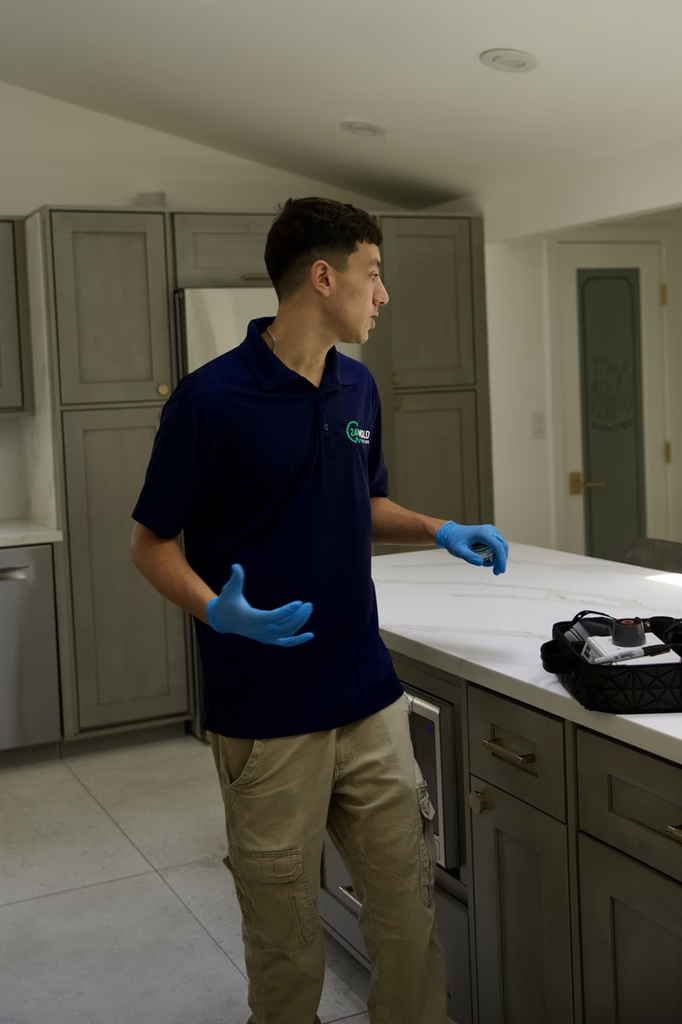
Mold inspector at work

Checklist

Is an Environmental Risk Assessment Right for You?

This service is ideal if:

  • —You've had recent remediation or water damage
  • —You're buying, selling, or managing a property
  • —You need proof your space is safe to occupy

Still unsure? Let's talk. We'll help you decide if an assessment is the right step for your property.

Overview

What You'll Get

Certified results, safety clarity, and clear next steps—delivered fast.

1

Comprehensive Risk Report

State-certified results that summarize mold levels, moisture issues, and remediation needs.

2

Occupancy Safety Verification

Peace of mind that your property is safe to inhabit—especially critical for buyers, renters, and businesses.

3

Actionable Recommendations

If risks are found, we provide clear guidance on next steps. If not, your report becomes a safety asset.

Mold inspection Rosemead FAQ

Call For An Inspection
Rosemead's postwar housing is now 65 to 80 years old, and original systems are failing together. Galvanized supply lines corrode from the inside and leak at fittings behind walls, slab expansion joints admit ground moisture, and bath fans often exhaust into the attic instead of outdoors. Because lots are small and houses sit close together, drainage from one property can load moisture against its neighbor. Thermal imaging and moisture meters find hidden moisture inside walls and under slabs that a visual check misses.
Clay soil swells when wet and shrinks as it dries, which cracks slab edges and opens expansion joints. The same clay holds water against foundations long after a storm, and since the area rarely freezes, that moisture can support mold year-round. A hairline crack that admits water in winter can keep a wall damp into spring. An inspection looks for moisture at cracks, slab edges, and exterior walls and identifies whether the source is soil moisture, plumbing, or the roof.
It can. Lots in the lower blocks nearest the basin and the flood-control channels sit closer to the regional water table, so ground moisture stays elevated against foundations through the wet season. That does not mean every nearby home has a problem. It means an inspection should record moisture at slab edges and in any crawl space, and compare those readings with drier parts of the property.
Dense multifamily and mixed-use buildings concentrate moisture in shared systems. Commercial kitchens, rooftop exhaust, and shared plumbing stacks create steady humidity and many potential leak points, and a leak on one floor travels through party walls into a lower unit months later. A building-level inspection that traces moisture to its source is more useful than a single-unit walkthrough, because the source is often outside the unit that shows the mold.
Yes, especially for homes from the 1940s through 1960s, converted garages and additions, and condos or townhomes with shared systems. The inspection covers thermal imaging for behind-wall moisture, slab readings at expansion joints, attic ventilation, and air or surface sampling where growth is suspected. For attached units it also documents whether a moisture condition comes from a shared building system, which affects who pays. Independent documentation before closing protects you from inheriting a slow problem.
Our Rosemead team covers the whole city, including the residential blocks, the Garvey Avenue corridor, and the areas near Whittier Narrows, and serves the wider San Gabriel Valley with same-day and next-day appointments and 24/7 emergency response. Pasadena has its own 24H Mold Inspection page with a local team. If your property is in Pasadena, start with that page. If you are not sure which page fits your address, call the number on this page and we will point you to the right team.
Inspection and testing only. In Rosemead's mix of postwar homes, multifamily buildings, and commercial properties, moisture sources and cleanup scopes vary widely, and a company with cleanup work to sell has a financial reason to find more than the instruments confirm. What you receive is the diagnosis: the extent of growth, the moisture source, lab-confirmed species, and a written scope you can take to several contractors for comparable bids.

Contact

Book your Rosemead mold inspection today

Tell us what's going on and we'll respond the same day

Location

24H Mold Inspection of Rosemead

Address

3927 Walnut Grove Ave #116, Rosemead, CA 91770

Hours

  • MondayOpen 24 hours
  • TuesdayOpen 24 hours
  • WednesdayOpen 24 hours
  • ThursdayOpen 24 hours
  • Friday6 AM – 6 PM
  • SaturdayClosed
  • SundayOpen 24 hours

Service area neighborhoods

  • Garvey Avenue corridor
  • Mission Drive district
  • Rosemead Boulevard area
  • North Rosemead
  • South Rosemead
  • Walnut Grove Avenue corridor
  • Valley Boulevard district
  • Klingerman Street area
Call For Service(626) 835-0070