24H Mold Inspection
Port Hueneme24/7 EMERGENCY(805) 940-0787
HomeOur ServicesMold InspectionThermal Imaging
Mold Inspection

Thermal Imaging

Infrared cameras find hidden mold conditions and water damage before any surface stain shows up.

Overview

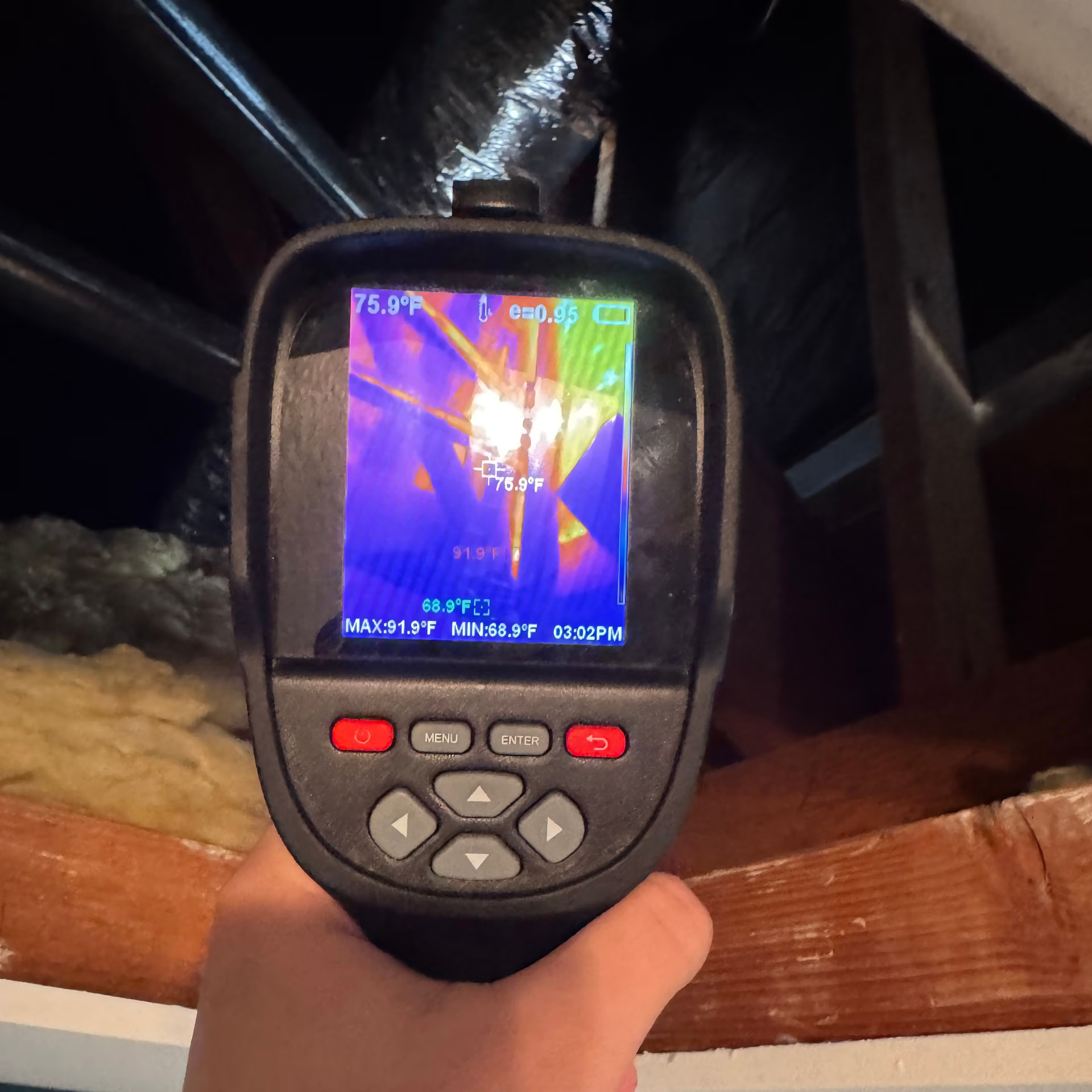
Why infrared thermal imaging finds mold others miss

Mold doesn't always announce itself. A small leak inside a wall, a stretch of failed insulation, or a cold-bridge condensation zone can build mold-friendly conditions for months before any stain reaches the surface. Thermal imaging reveals those conditions while they're still hidden, giving you a chance to address the moisture before mold has spread.

Thermal imaging detects:

  • —Hidden moisture inside walls, ceilings, and under floors
  • —Active leaks from plumbing, roofing, or HVAC components
  • —Insulation gaps and ventilation defects driving condensation
  • —Cold spots creating ideal future conditions for mold growth
Why infrared thermal imaging finds mold others miss
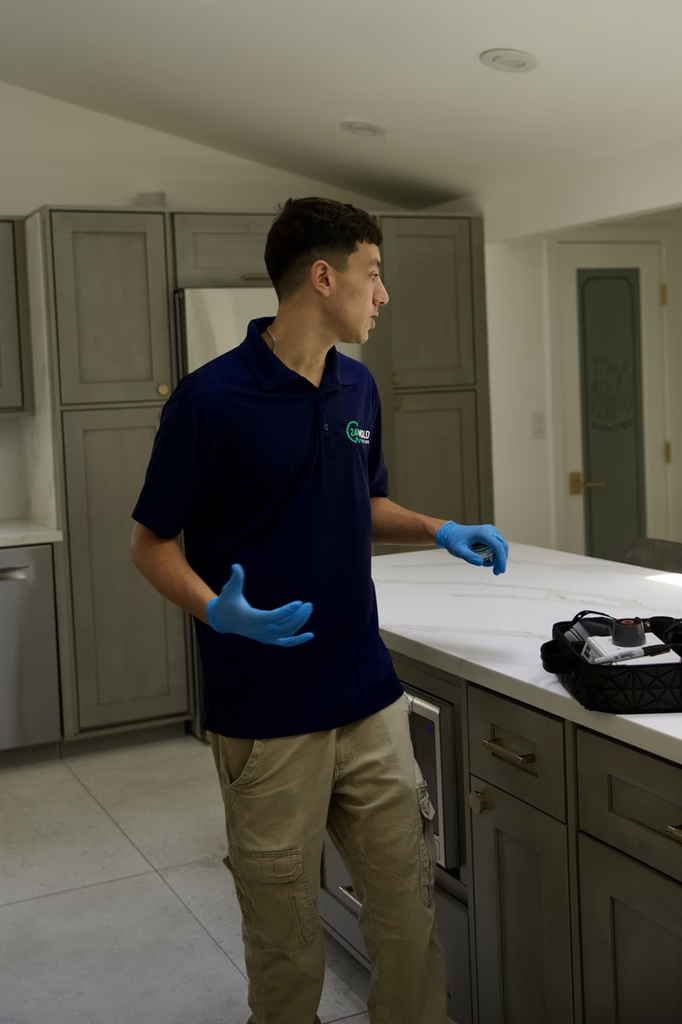
Mold inspector at work

Benefits

What you get from thermal imaging

Find hidden risks early without damaging the property

  • —Non-invasive: No drilling, no cutting, no surface damage.
  • —Early detection: Catches problems before damage becomes visible.
  • —Cost-effective: Targets repairs only where they're needed.
  • —Documented findings: Annotated thermal images included in the report.

About

How thermal imaging mold inspection works

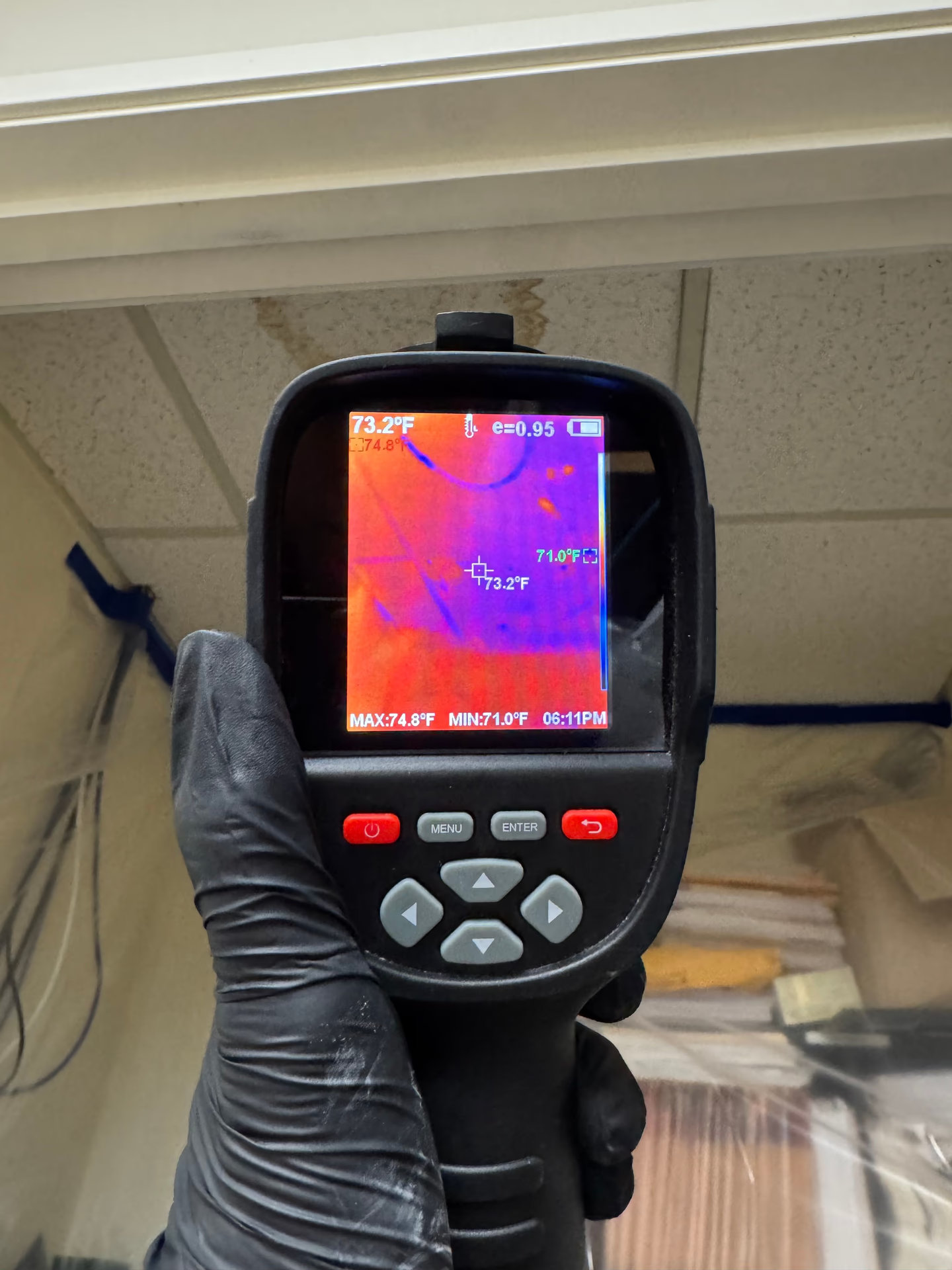
Our certified mold inspectors use FLIR cameras to read temperature differentials across surfaces. Cooler areas often signal water present in the material, even when no surface damage has appeared.

Our process includes:

  • —A complete thermal scan of key interior and exterior surfaces
  • —Identification of unusual cold or warm patterns in the readings
  • —Cross-checking thermal findings with calibrated moisture meters
  • —A mold inspection report including the annotated thermal images
How thermal imaging mold inspection works

Mold inspection Port Hueneme FAQ

Call For An Inspection
Port Hueneme is California's only deepwater port between Los Angeles and San Francisco, and its direct Pacific Ocean frontage makes it one of the most persistently humid communities on the entire Southern California coast. Nearly every property in the city is within a few blocks of direct ocean or harbor influence. Salt air degrades exterior sealing — window frames, stucco joints, deck connections — faster than in any inland community, creating ongoing moisture entry pathways that replenish with each Pacific weather system. The marine layer sits over the city through morning hours year-round, keeping ambient humidity elevated on building surfaces even during the dry season. The shallow water table across the Oxnard Plain adds ground moisture pressure on foundations that compounds the atmospheric coastal exposure.
In the military-adjacent rental stock it's among the most consistent findings, and the mechanism is specific to high-turnover occupancy in a coastal moisture environment. Military assignments typically run two to three years, and maintenance cycles tied to tenant turnover rather than continuous owner oversight mean moisture conditions that develop mid-assignment — a slow plumbing leak, a bath fan that exhausts into attic space, a window seal failure — accumulate for months before the unit turns over. High occupancy in homes designed for lower population density keeps interior humidity elevated, and the persistent coastal humidity Port Hueneme experiences means the baseline moisture load is already higher than inland rentals before any occupancy-related factor adds to it.
Hueneme Beach and Hollywood Beach border properties face the most concentrated moisture environment in the city — direct ocean frontage, wind-driven salt air on all elevations simultaneously, and the shallow water table of made coastal ground. Salt air degrades exterior sealing on all sides at the same time rather than primarily on the ocean-facing elevation, which means moisture entry points develop at window frames, stucco joints, deck connections, and roofing transitions on every face of the building. The marine layer that sits over the beachfront through morning hours keeps surfaces damp well beyond the nightly low tide, and properties built for seasonal beach use — as many of the older Hueneme Beach cottages were — have envelope details that were never designed for full-time heated occupancy in a salt air environment.
Port Hueneme sits on the Oxnard Plain, where the agricultural history of intensive strawberry and vegetable irrigation kept the regional water table elevated well above what inland communities experience. Combined with the city's direct coastal position, the water table here is among the shallowest in Ventura County for residential development. Properties on slab-on-grade foundations — which defines most of the city's postwar housing stock — sit with their slab edges in consistent contact with elevated ground moisture. The expansion joints and any cracks that have developed in these slabs over decades become pathways through which that ground moisture migrates into the slab and adjacent wall assemblies. An inspection on Port Hueneme properties should assess slab moisture with the Oxnard Plain water table context in mind rather than treating it as a standard Southern California slab condition.
Pre-purchase inspection in Port Hueneme is worth doing across all neighborhoods given the persistent coastal moisture environment. For beachfront and near-beach properties, the building envelope condition on all elevations and any below-grade space are the primary concerns. For naval base adjacent rentals, the occupancy history and whether deferred maintenance from previous assignments has been addressed matters specifically. For the older downtown and Bard Road corridor properties from the 1950s and 1960s, the slab moisture profile, aging plumbing condition, and attic ventilation are the focus. In Port Hueneme's active real estate market, independent moisture documentation before closing protects you from inheriting a coastal moisture problem that may have been developing across multiple occupancy cycles.
Our Port Hueneme team covers all of Port Hueneme — Hueneme Beach, Downtown, the naval base adjacent neighborhoods, Bubbling Springs, Surfside III, and the Channel Islands Harbor border — with same-day and next-day appointments and 24/7 emergency response. Oxnard has its own dedicated 24H Mold Inspection page with coverage for properties in Oxnard proper. If your property is in Oxnard, that page will have the most relevant local information.
Inspection and testing only — we never perform mold removal, remediation, or abatement. In Port Hueneme's coastal and military-adjacent properties, where moisture sources range from beachfront salt air envelope degradation to high-water-table slab moisture to aging rental stock with deferred maintenance, the remediation scope varies significantly by property type. A company with cleanup work to sell has a financial reason to find more than the instruments confirm. What you receive is the diagnosis: extent of growth, moisture source, lab-confirmed species, and a written scope you can use to get comparable bids from multiple contractors on the same defined terms.

Contact

Book your Port Hueneme mold inspection today

Tell us what's going on and we'll respond the same day

Location

24H Mold Inspection of Port Hueneme

Hours

  • MondayOpen 24 hours
  • TuesdayOpen 24 hours
  • WednesdayOpen 24 hours
  • ThursdayOpen 24 hours
  • Friday6 AM – 6 PM
  • SaturdayClosed
  • SundayOpen 24 hours

Service area neighborhoods

  • Hueneme Beach
  • Downtown Port Hueneme
  • Naval Base adjacent neighborhoods
  • Bubbling Springs area
  • Hollywood Beach border
  • Surfside III
  • Bard Road corridor
  • Channel Islands Harbor adjacent
Call For Service(805) 940-0787