1
Mold inspection
- Moisture detection
- Infrared technology
- Certified mold inspectors
- No conflict of interest

Certified mold inspection and testing in Palm Springs. Same-day appointments, lab-verified reports, and no financial stake in any remediation work that follows.
(760) 841-4488What We Do
Air and surface samples analyzed in a state-certified lab. You receive mold species ID, spore count data, and lab-verified documentation that holds up with insurers, attorneys, or counsel.
About
At 24H Mold Inspection of Palm Springs, we know no two buildings respond to moisture the same way.
Palm Springs and the broader Coachella Valley present a mold risk profile unlike any other market we serve — the desert climate means that ambient outdoor humidity is low for most of the year, which shifts mold risk almost entirely to interior moisture sources and the specific vulnerabilities of buildings that run air conditioning for eight or more months annually. The extreme temperature differential between scorching outdoor heat and aggressively cooled interiors drives significant condensation within HVAC systems, ductwork, and wall cavities near supply registers, and this is the dominant pathway for mold in Coachella Valley properties. Summer monsoon events deliver concentrated moisture in short, intense bursts that flat and low-slope rooflines common in desert architecture are poorly equipped to manage, creating acute intrusion events that can saturate ceiling and wall assemblies before the water has time to drain.
The Coachella Valley's housing stock is defined by mid-century modern homes — many of them architecturally significant — along with newer resort-style developments, gated communities, and a high concentration of seasonal vacation properties. Mid-century flat and butterfly rooflines that are iconic in Palm Springs are architecturally distinctive but functionally challenging from a water management standpoint, as flat roofing systems require more diligent maintenance to prevent ponding and intrusion during monsoon events.
Services
Mold inspection, mold testing, and environmental risk assessments for Palm Springs properties. Available 24/7, with no remediation work to bias the findings.

Why Us
24H Mold Inspection of Palm Springs combines local field experience with state-certified methods and lab analysis. Reports get back to you quickly and clearly, with no upsell tacked on to the findings.
We don't stop at surface-level findings. Active leaks, health symptoms, post-remediation work, and pre-purchase due diligence each call for a different inspection approach. Our certified mold inspectors guide you through the specific situation rather than running a generic checklist.
Strengths
We check every box, then go further. Book your inspection today
Licensed inspectors with proven field experience in Palm Springs.
FLIR thermal cameras, calibrated moisture meters, and lab-verified sampling.
Straightforward updates and honest reporting throughout the process.
5.0 stars from 194+ Palm Springs homeowners and businesses.
Testimonials
Thousands of Palm Springs property owners have come to us for reliable, detailed mold assessments
Leroy was very professional. He clearly explained the work that needed to be done, went over all of my options, and walked me through the thermal test readings. He also informed me of the safety hazards and the precautions I should take.
Jasmine W.
5 Step Process
Choose a date and time that fits your schedule.
Flexible scheduling means same-day and next-day appointments are usually available, with 24/7 emergency response when the situation needs it.
Our certified mold inspectors assess every mold-prone area.
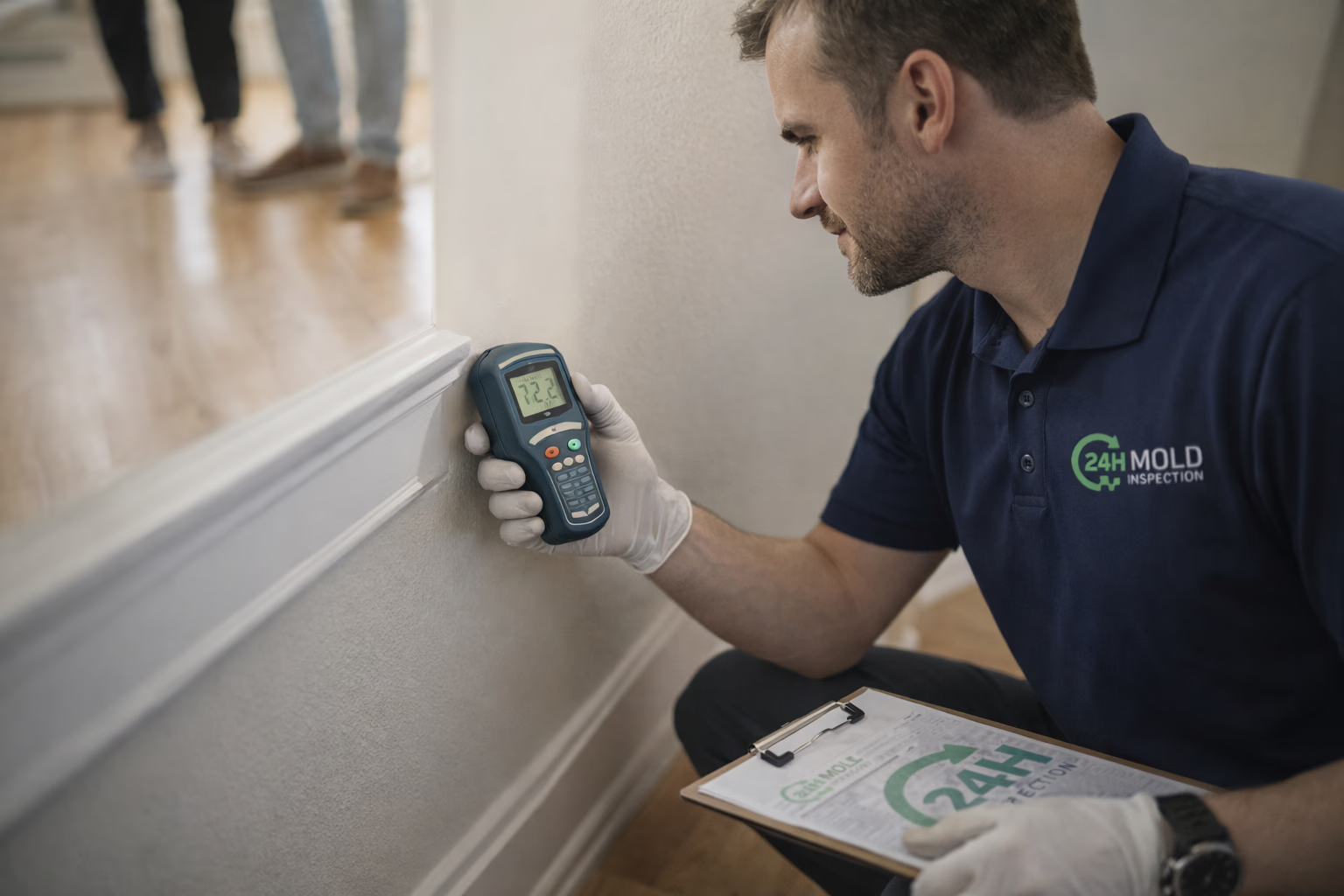
We walk the property identifying visible mold and moisture issues, using thermal imaging and moisture meters to catch what's hidden behind walls and under flooring.
Air and surface samples collected for lab analysis.
Our certified mold inspectors collect targeted samples from key areas to find mold spores both visible and hidden, with sample sites documented on a property map.
Lab testing returns precise results.
Samples go to a state-certified lab for detailed analysis identifying mold species and contamination levels, typically returned within 24 to 72 hours.
Insights and clear next steps from our experts.
You receive a written report with lab results, inspector findings, and specific recommended action steps to resolve any mold issues safely.
Who We Serve
24H Mold Inspection of Palm Springs brings clear answers to HOAs, hotels, commercial buildings, and homes through certified mold inspection and testing services.
A large share of Palm Springs homes are short-term vacation rentals or seasonal residences. They swing between sitting closed up and empty, often with the air conditioning set back, and being packed for a weekend, when showers, laundry, cooking, and pool-deck traffic add moisture all at once. A slow leak in a vacant house can run for weeks before anyone notices.
Palm Springs has an unusually high density of pools, spas, and misting systems, often close to the house. Splash-out, overspray, and constant irrigation keep soil and walls damp near foundations, and misting and landscape sprinklers can wet stucco and window seals in a climate where homes were not built to stay wet.
Much of central Palm Springs is mid-century modern housing from the 1950s and 1960s: flat or low-slope roofs, large glass walls, and slab-on-grade foundations. Flat roofs pond water during heavy storms, aging roofing and flashing let it in above ceilings, and single-pane glass condenses on cool desert mornings.
Neighborhoods tucked against the foothills deal with canyon runoff during heavy summer storms. Water coming off the slope concentrates against uphill walls and retaining walls, and drainage swales and weep holes that are rarely tested in a dry climate fail when the first big storm arrives.
Palm Springs has many condominium and townhome communities, including older resort-era developments. Shared roofs, plumbing stacks, and exterior walls let moisture move between units, and rooftop evaporative or air-conditioning equipment can leak condensate above ceilings. Documenting whether a moisture source sits inside a unit or in a shared system usually decides who pays.