24H Mold Inspection
Moorpark24/7 EMERGENCY(805) 834-9016
HomeOur ServicesMold InspectionThermal Imaging
Mold Inspection

Thermal Imaging

Infrared cameras find hidden mold conditions and water damage before any surface stain shows up.

Overview

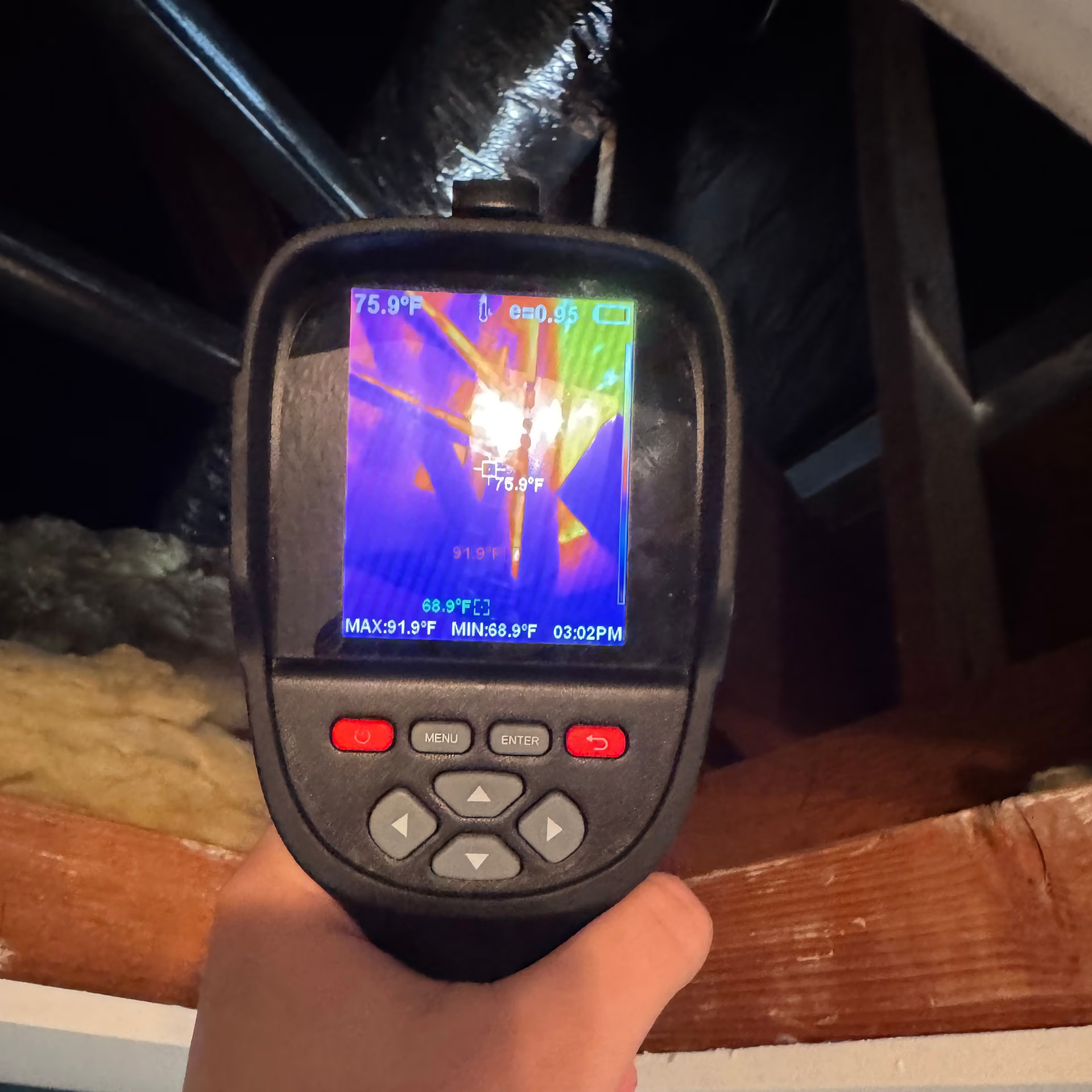
Why infrared thermal imaging finds mold others miss

Mold doesn't always announce itself. A small leak inside a wall, a stretch of failed insulation, or a cold-bridge condensation zone can build mold-friendly conditions for months before any stain reaches the surface. Thermal imaging reveals those conditions while they're still hidden, giving you a chance to address the moisture before mold has spread.

Thermal imaging detects:

  • —Hidden moisture inside walls, ceilings, and under floors
  • —Active leaks from plumbing, roofing, or HVAC components
  • —Insulation gaps and ventilation defects driving condensation
  • —Cold spots creating ideal future conditions for mold growth
Why infrared thermal imaging finds mold others miss
Mold inspector at work

Benefits

What you get from thermal imaging

Find hidden risks early without damaging the property

  • —Non-invasive: No drilling, no cutting, no surface damage.
  • —Early detection: Catches problems before damage becomes visible.
  • —Cost-effective: Targets repairs only where they're needed.
  • —Documented findings: Annotated thermal images included in the report.

About

How thermal imaging mold inspection works

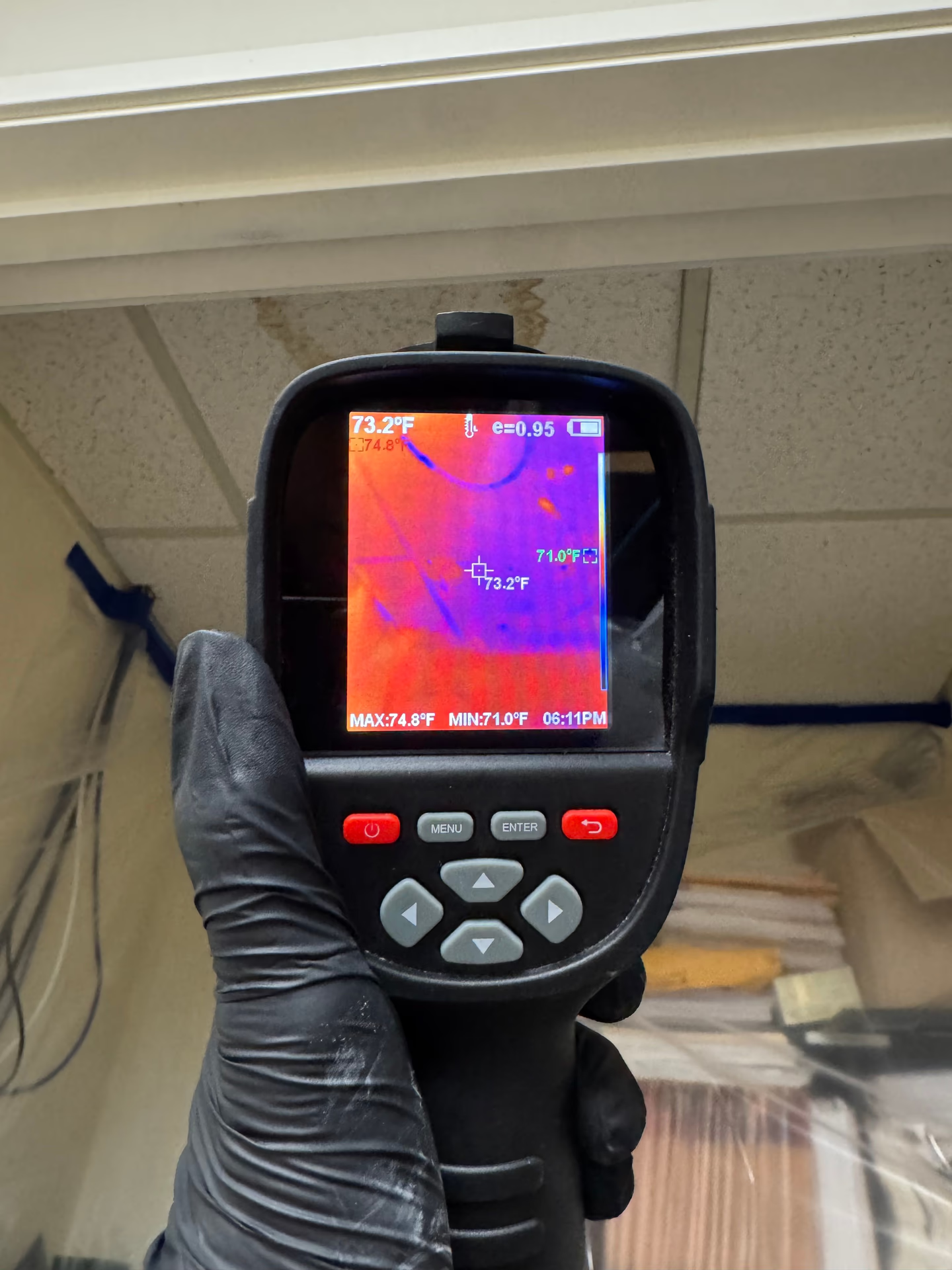
Our certified mold inspectors use FLIR cameras to read temperature differentials across surfaces. Cooler areas often signal water present in the material, even when no surface damage has appeared.

Our process includes:

  • —A complete thermal scan of key interior and exterior surfaces
  • —Identification of unusual cold or warm patterns in the readings
  • —Cross-checking thermal findings with calibrated moisture meters
  • —A mold inspection report including the annotated thermal images
How thermal imaging mold inspection works

Mold inspection Moorpark FAQ

Call For An Inspection
Equestrian properties in Moorpark bring barns, stables, tack rooms, and wash racks into the inspection — structures that combine constant water use, animal humidity, and minimal ventilation. Mold takes hold in these outbuildings and migrates toward adjacent living spaces in ways that a standard home inspection focused only on the main residence wouldn't catch. Wash rack drainage, stable floor moisture, and the humidity that livestock generate inside enclosed structures are the consistent sources. For pre-purchase inspections on equestrian properties, outbuildings should be assessed separately from the main residence and their findings reported distinctly rather than lumped into a single summary.
Grove irrigation in the Grimes Canyon and West Moorpark orchard areas keeps ground moisture elevated well beyond what Ventura County's dry inland climate suggests. Avocado, citrus, and lemon groves require consistent deep watering, and on canyon-cut hillside terrain that irrigation combines with natural slope drainage to keep the soil around foundations and retaining walls persistently damp. Properties adjacent to working groves or on former orchard land that has been subdivided carry elevated baseline ground moisture against their foundations year-round. An inspection on these properties focuses specifically on foundation drainage, below-grade spaces, and any crawl space where that ground moisture accumulates.
Newer construction is not immune — it's at risk from different mechanisms. Tight-envelope construction designed for energy efficiency traps interior humidity when ventilation systems underperform. A bath fan that terminates in attic space rather than outside, an HRV that isn't balanced, or an HVAC system with undersized return creates condensation inside wall assemblies in homes only 10 to 15 years old. In Moorpark's attached townhome and condo products in Highlands and Meridian Hills, HOA-managed roofing programs mean individual homeowners have limited visibility into when their section of shared roofing was last inspected. Shared walls and drainage systems also let moisture migrate between units when one property has a failure.
Campus Park, Peach Hill, and Buttercreek Estates' housing from the 1970s through 1990s is now 30 to 50 years old, and original building systems are showing first and second-generation failures simultaneously. Original HVAC systems develop condensate drain issues. First-generation roofing has been replaced once but the original flashing details at penetrations and valleys may not have been updated. Galvanized and early-copper plumbing at end of life develops slow behind-wall leaks at fittings invisible until drywall shows damage. The tracts that back onto Happy Camp Canyon open space carry additional slope drainage exposure — canyon-adjacent lots collect runoff from the open space above during the rainy season.
Pre-purchase inspection in Moorpark is worth doing across all property types given the range of moisture conditions in a single city — from orchard-adjacent ground moisture in the west to equestrian outbuilding conditions to tight-envelope newer gated communities. The inspection focus shifts by property type: for rural and equestrian properties, outbuildings and irrigation drainage are the priority; for 1970s-1990s tracts, plumbing condition, HVAC, and crawl space moisture are primary; for newer gated communities, roofing seams, ventilation performance, and shared building systems matter most. An independent inspection with no financial stake in remediation gives a clear moisture picture before closing.
Our Moorpark team covers all of Moorpark — Home Acres, the equestrian and orchard neighborhoods along Grimes Canyon, Campus Park, Peach Hill, Buttercreek Estates, and the newest gated communities — with same-day and next-day appointments and 24/7 emergency response. Several neighboring cities have their own dedicated 24H Mold Inspection pages: Thousand Oaks and Camarillo each have separate coverage with their own local teams. Oak Park is served from the Moorpark team. If your property is in Thousand Oaks or Camarillo, those pages will have the most relevant local information.
Inspection and testing only. In Moorpark's range of property types — from equestrian ranch properties with multiple outbuildings to newer gated HOA communities — moisture sources and remediation scopes vary significantly, and a company with cleanup work to sell has a financial reason to find more than the instruments confirm. What you receive is the diagnosis: extent of growth, moisture source, lab-confirmed species, and a written scope you can use to get comparable bids from multiple contractors on the same defined terms.

Contact

Book your Moorpark mold inspection today

Tell us what's going on and we'll respond the same day

Location

24H Mold Inspection of Moorpark

Hours

  • MondayOpen 24 hours
  • TuesdayOpen 24 hours
  • WednesdayOpen 24 hours
  • ThursdayOpen 24 hours
  • Friday6 AM – 6 PM
  • SaturdayClosed
  • SundayOpen 24 hours

Service area neighborhoods

  • Campus Park
  • Peach Hill
  • Serenata
  • Buttercreek Estates
  • Belmont
  • Home Acres
  • Moorpark Highlands
  • Meridian Hills
Call For Service(805) 834-9016