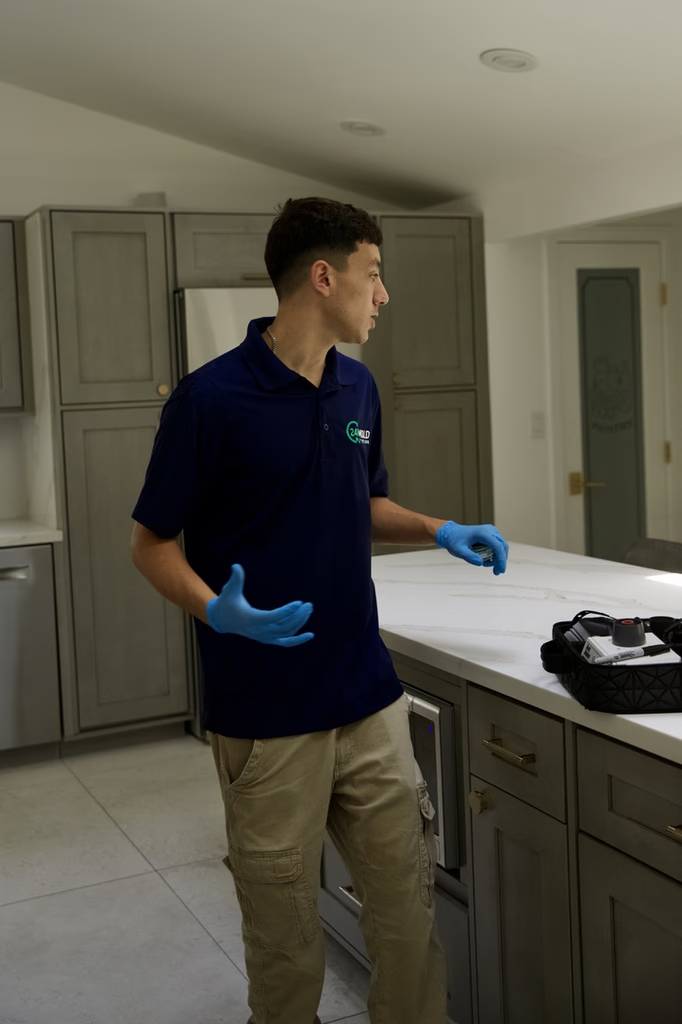
24H Mold Inspection
La Palma24/7 EMERGENCY(657) 999-6055
HomeOur ServicesMold TestingTape Testing
Mold Testing

Tape Testing

Surface samples collected quickly and without any damage, when growth is visible but needs lab confirmation.

Overview

Why mold tape testing matters

Not every dark patch is mold. Tape testing is a fast, reliable method for confirming whether visible buildup is fungal and identifying the species behind it, before assumptions drive an expensive cleanup.

Mold tape testing detects:

  • —Mold on walls, ceilings, and furniture surfaces
  • —Visible buildup on smooth or dusty areas
  • —Species identification on painted and finished walls
  • —Early growth caught before it has time to spread
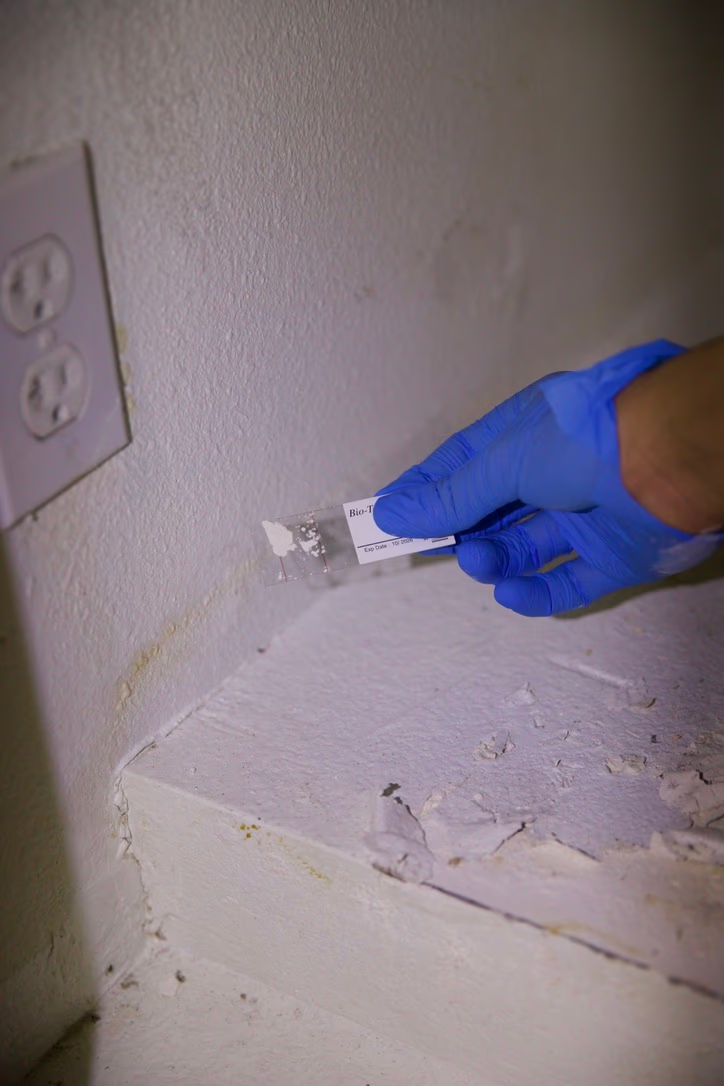
Why mold tape testing matters
Mold inspector at work

Benefits

What you get from tape testing

A fast, non-destructive way to confirm what you're looking at

  • —Quick: Sample collection takes seconds per spot.
  • —Accurate: Lab-verified species ID on every sample.
  • —Non-destructive: No cutting, no scraping, surfaces stay intact.
  • —Targeted: Suited to isolated spots and surface discoloration.

About

How mold tape testing works

Our certified mold inspectors press a clear adhesive slide against the suspect area to capture a thin layer of surface material. The slide is sealed and sent to a state-certified lab for mold species identification.

Our process includes:

  • —Surface sampling with sterile adhesive slides
  • —Lab analysis for species type and contamination level
  • —Lab-verified results with spore counts where relevant
  • —A mold inspection report with clear next steps
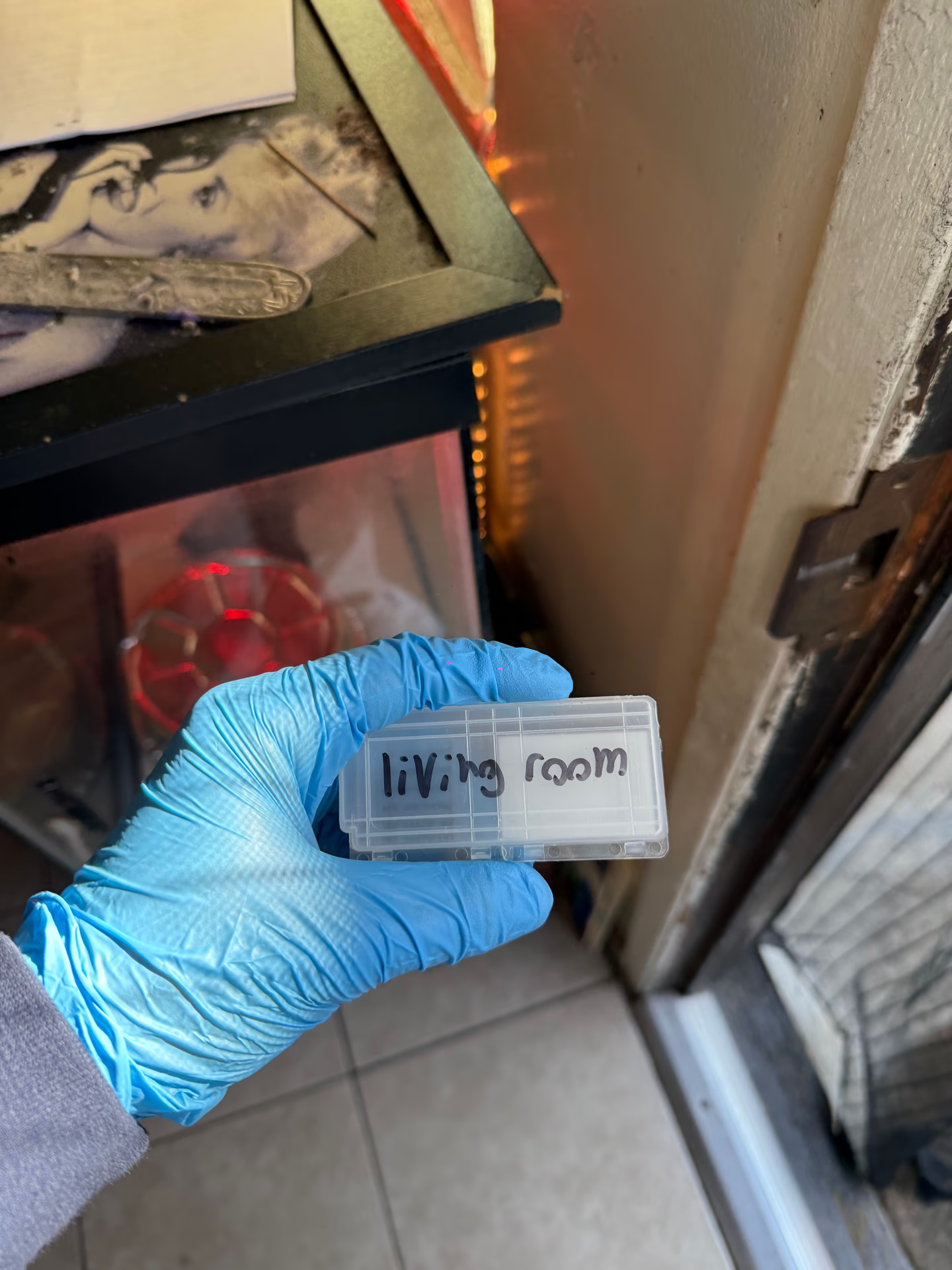
How mold tape testing works

Mold inspection La Palma FAQ

Call For An Inspection
Most of La Palma's housing was built in the same postwar window, so original systems are reaching end of life together. Galvanized and early copper supply lines corrode from the inside and leak at fittings behind walls, slab expansion joints admit ground moisture, and bath fans often still exhaust into the attic instead of outdoors. Because whole streets share the same plans, the same failure points recur block after block. Thermal imaging and moisture meters find hidden moisture inside walls and under slabs that a visual check misses.
Often, yes. Many postwar homes here were extended with converted garages and rear additions long after construction. Those spaces may lack a vapor barrier, may be tied into the original HVAC without enough return air, and may have no moisture control at the slab. They also add occupants to a house ventilated for fewer. We treat an addition as its own space, checking slab moisture, the wall cavity at the seam between old and new construction, and the roof tie-in.
It is one of the more consistent findings in attached housing, and the cause is usually a shared system rather than the individual unit. A failed section of shared roofing, a leaking plumbing stack inside a party wall, or a rooftop HVAC condensate overflow can put moisture into a neighboring unit months before anything is visible. Fixed-schedule HOA irrigation also keeps soil damp against foundations. An independent inspection traces the moisture to its source, which usually decides whether the association or the owner is responsible for the repair.
It can. On small lots with houses close together, drainage from one property often affects its neighbor. A downspout that discharges near a shared property line, or a grade that slopes toward a foundation, can load moisture against a wall that has no leak of its own. That is why an inspection records moisture at slab edges and along exterior walls, not only inside the living space, and identifies whether the source is plumbing, roofing, drainage, or ground moisture.
Yes, particularly for postwar slab homes, homes with converted garages or additions, and attached units with shared systems. The inspection covers thermal imaging for behind-wall moisture, slab readings at expansion joints, attic ventilation, and air or surface sampling where growth is suspected. For townhomes and condos it also documents whether a moisture condition comes from a shared building system, which affects who pays for repairs. Independent documentation before closing protects you from inheriting a slow, long-running problem.
Our La Palma team covers the whole city, including the Orangethorpe Avenue and Valley View Street corridors and the surrounding residential neighborhoods, with same-day and next-day appointments and 24/7 emergency response. Cerritos and Buena Park each have their own 24H Mold Inspection page with a local team. If your property is in either city, start with that page. If you are not sure which page fits your address, call the number on this page and we will point you to the right team.
The inspection is the diagnosis. We map moisture with thermal imaging and meters, identify the source, and send samples to an accredited lab, then deliver a written report with the extent of growth, the cause, and a defined scope. The cleanup is done by a separate remediation contractor, because we perform inspection and testing only. That separation matters in attached communities, where the party paying for the repair needs documentation with no financial interest in the size of the job. Once the work is done, we can return for independent post-remediation verification.

Contact

Book your La Palma mold inspection today

Tell us what's going on and we'll respond the same day

Location

24H Mold Inspection of La Palma

Hours

  • MondayOpen 24 hours
  • TuesdayOpen 24 hours
  • WednesdayOpen 24 hours
  • ThursdayOpen 24 hours
  • Friday6 AM – 6 PM
  • SaturdayClosed
  • SundayOpen 24 hours

Service area neighborhoods

  • Central La Palma
  • La Palma Center area
  • Orangethorpe Avenue corridor
  • Valley View Street corridor
  • Moody Street area
  • Walker Street area
  • La Palma Park vicinity
  • North La Palma
Call For Service(657) 999-6055