24H Mold Inspection
Inglewood24/7 EMERGENCY(310) 758-3808
HomeOur ServicesMold TestingAir Testing
Mold Testing

Air Testing

Mold air testing detects airborne spores and assesses indoor air quality, even in spaces where no visible contamination has shown up yet.

Overview

Why mold air testing matters

Most mold is invisible. Spores float undetected through ducts and doorways, spreading from room to room with the air itself. Air testing reveals the species and concentration of what's airborne, even when no visible growth is found on any surface.

Mold air testing detects:

  • Invisible mold spores circulating through the air
  • Differences in spore levels from one room to the next
  • Contamination inside HVAC systems and hard-to-reach areas
  • Early warning signs in rooms that appear unaffected
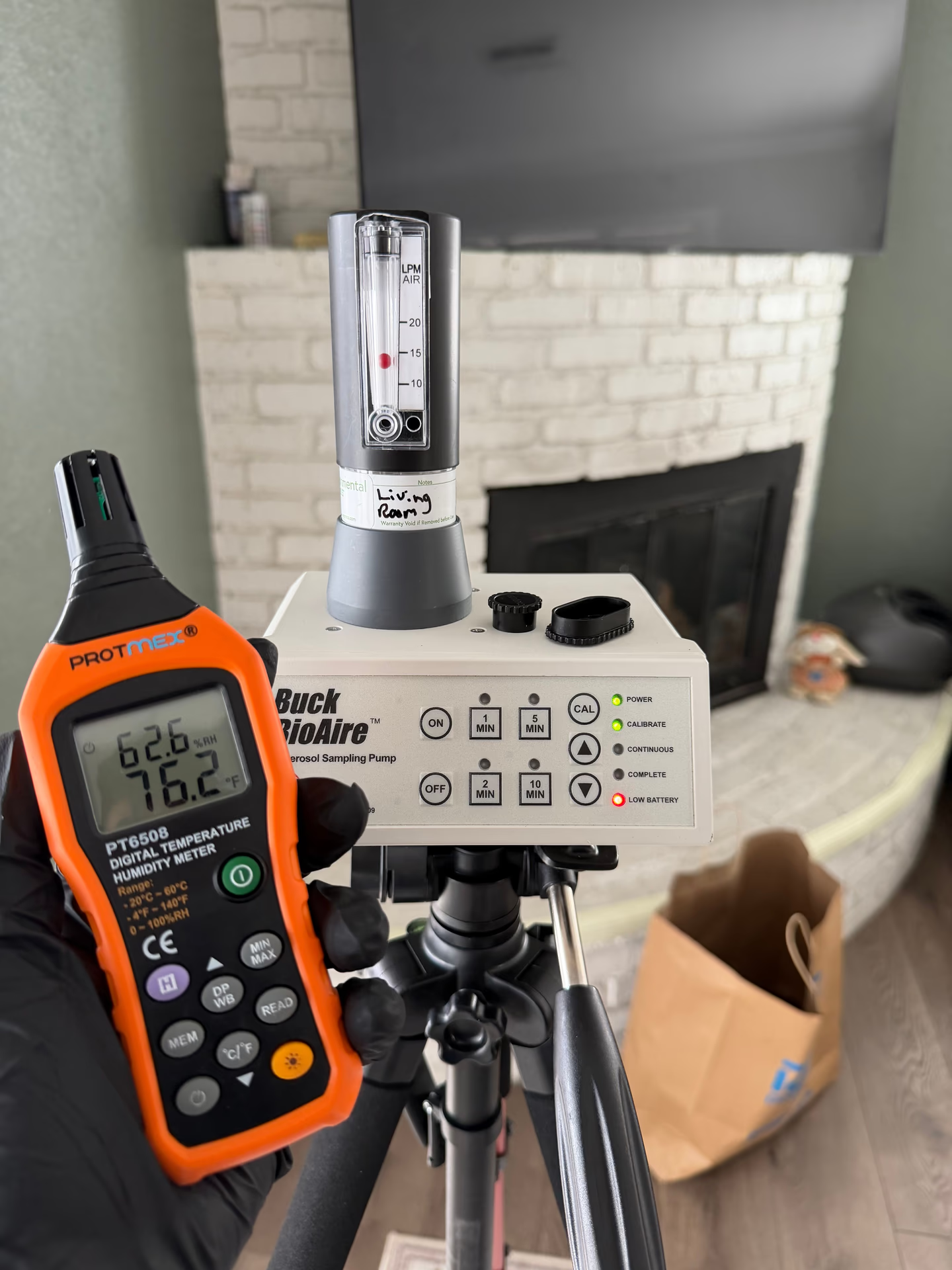
Why mold air testing matters
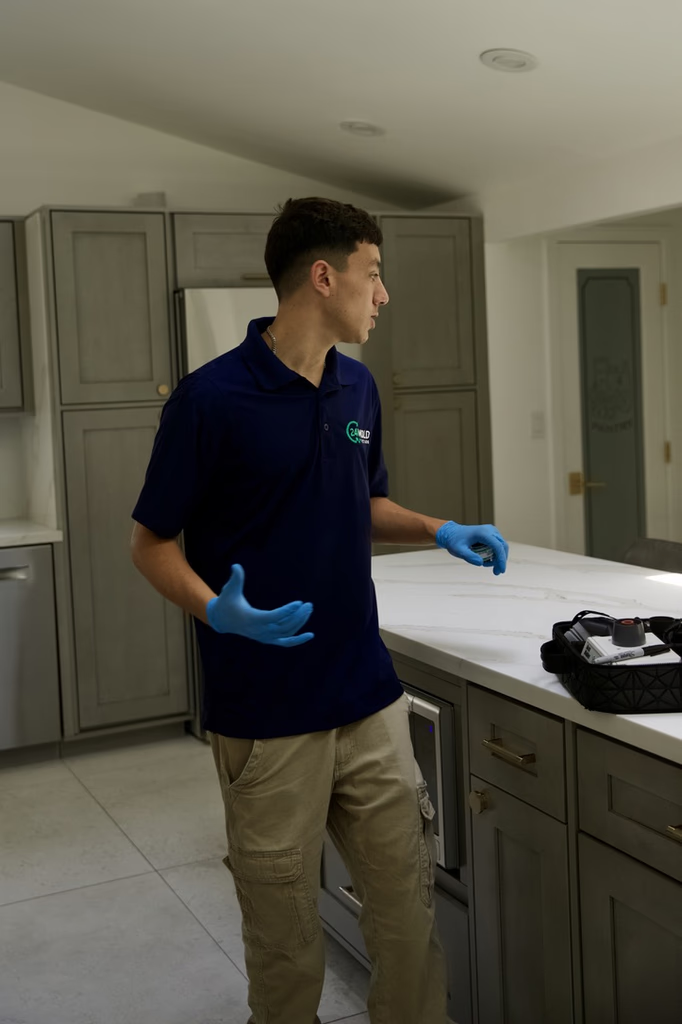
Mold inspector at work

Benefits

What you get from air testing

Understand the air quality and find what your eyes can't

  • Non-invasive: No drilling, no surface damage, no demolition needed.
  • Early detection: Catch contamination before it spreads or symptoms start.
  • Data-driven: Measure and compare spore counts room by room with lab-verified results.
  • Defensible documentation: State-certified lab results that hold up for insurance and real estate use.

About

How mold air testing works

Our certified mold inspectors use calibrated sampling pumps to draw air through a spore trap cassette, capturing airborne mold spores. The lab identifies the mold species under a microscope, including any HVAC contamination if the system is implicated.

Our process includes:

  • Targeted sampling in problem areas and comparison sampling outdoors
  • Spore traps or impactor cassettes calibrated for accurate collection
  • Lab-verified results identifying species and spore counts
  • A written mold inspection report with the numbers and next steps
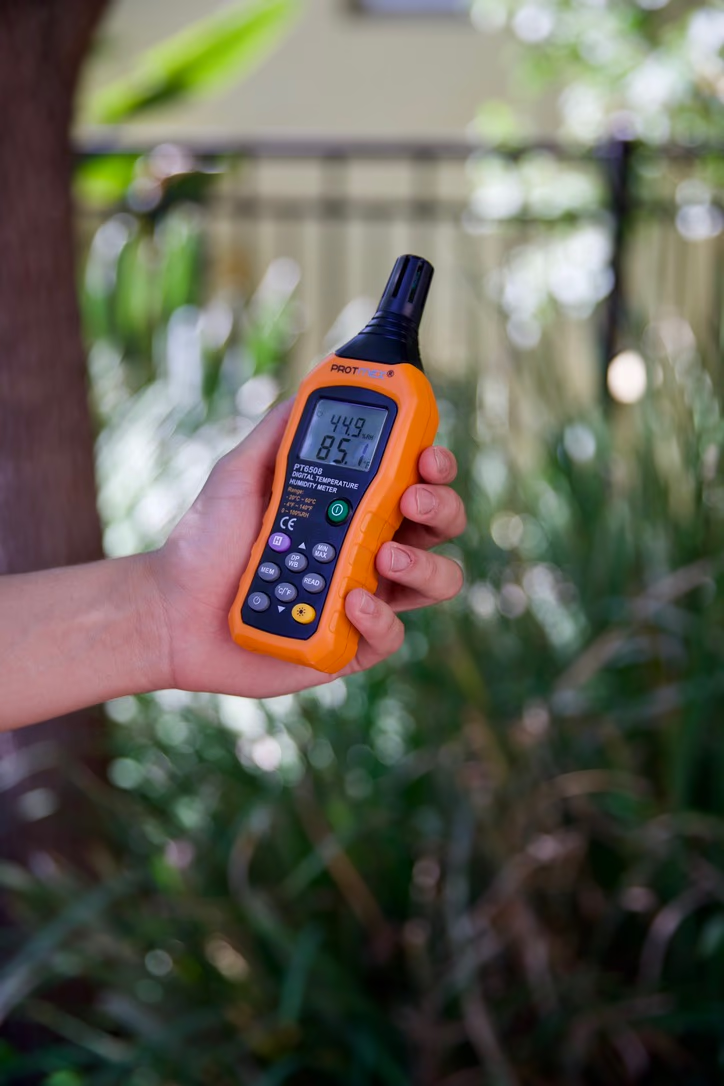
How mold air testing works

Mold inspection Inglewood FAQ

Call For An Inspection
No. 24H Mold Inspection of Inglewood inspects and tests only, and we never perform remediation or removal — that separation is deliberate. A large share of this city's housing is pre-war and post-war single-family stock on raised foundations, much of it now rental, and thousands of those homes went through airport-funded sound insulation: sealed dual-pane windows, added wall and attic insulation, and closed-up penetrations that eliminated the air exchange a leaky old house used to get for free. In a building sealed that tight, moisture that gets in has nowhere to go, and the visible patch is rarely the extent of it. A company that bills for the cleanup has a financial reason to keep finding more of it. What we produce is the diagnosis — what is growing, which moisture source feeds it, how far it runs behind finished surfaces, and lab confirmation of the samples. You take that report to remediation contractors and collect comparable bids on a defined scope instead of a walkthrough guess. When the work is done we return for independent verification, which carries weight with insurers and landlords precisely because we had no part in the removal.
Our coverage runs across Inglewood and the unincorporated pockets folded into it. Inside the city that means Fairview Heights, downtown Inglewood, Morningside Park, Century Heights, and Arbor Village, plus the adjacent communities we work as one area: Lennox, Ladera Heights, and Hyde Park. Lennox and Ladera Heights have no city hall of their own and no separate 24H page, so both are dispatched from here. Several neighbors do have their own 24H Mold Inspection page written around that area's housing stock — Los Angeles, Gardena, Torrance, Carson, Compton, Lynwood, South Gate, Manhattan Beach, and Redondo Beach — so if your property sits in one of those, start there. Because this is all one dispatch area, same-day appointments are realistic, and an active leak, a failed supply line, or standing water after a storm is answered 24/7. If you are not sure which page covers your address, call the number on this page — the ZIP boundaries here do not follow the city limits.
No, and the distinction is worth being blunt about: we are mold inspectors, not general home inspectors. A home inspection is a broad condition survey — roof, electrical, plumbing, appliances, structure — and most contracts exclude mold outright, so its mold coverage stops at whatever is visible in accessible areas. A mold inspection is narrow and instrument-driven: moisture meters at wall bases and slab edges, thermal imaging over suspect assemblies, crawl space and attic entry, and lab-analyzed samples when the walk-through justifies them. In Inglewood that gap runs wider than usual for one specific reason. Houses retrofitted under the airport sound insulation program are sealed far tighter than they were built to be, so interior humidity that once leaked away now condenses on the coldest surface in the room instead. None of that is visible in a condition survey. Most buyers here do both: a licensed home inspector for overall condition, then a mold inspection when that report notes staining, odor, prior water damage, or a crawl space nobody entered.
Because there is water under this city that has nothing to do with rainfall. The springs that named the old Rancho Aguaje de la Centinela still surface in Edward Vincent Jr. Park — free-flowing groundwater in the middle of a built-out city — and the creek that once carried them off was channelized long ago, which moved the surface water without lowering what sits beneath it. When SoFi Stadium was built on the old Hollywood Park site, the bowl had to be dug roughly a hundred feet into the ground to keep its roofline beneath the airport's flight-path height limits, an excavation running well below the surrounding grade. For houses, shallow groundwater shows up as crawl space humidity that never drops, white efflorescence blooming along the base of foundation walls, and slab edges that read wet on a meter in September. An intact vapor barrier and clear foundation vents matter more here than the rain gauge does. If your crawl space smells earthy in dry weather, that is the mechanism to check first.
Yes, Lennox is covered from here, and it has no 24H page of its own because it has no city of its own. It is an unincorporated island of Los Angeles County, roughly a square mile with its own ZIP, sitting directly below the airport's south runways. Two things make it distinct on an inspection. First, it is one of the most densely built square miles in the region — houses from the 1920s through the 1950s added onto repeatedly, split into units, and backfilled with rear structures, on lots whose drainage was never designed for that much roof and paving. Water leaves those lots slowly, and it leaves them against foundations. Second, jurisdiction: permits, code enforcement, and habitability complaints route to the county rather than to a city hall, so owners and tenants regularly lose weeks contacting the wrong agency. Get the moisture source documented independently before you file anything — a county inspector records a condition, not where the water came from or how far it has traveled.
Measurement settles it, not argument. Inglewood is majority-renter, and the city adopted its own rent stabilization and just-cause ordinance in 2019 as redevelopment around the stadium pushed rents upward, so habitability disputes here carry more weight than they used to and both sides have reason to want a defensible record. The claim that a tenant showers too long and the claim that a supply line is weeping inside the wall behind that shower produce the same stain, and nobody settles that by looking at it. What settles it is moisture readings at the wall base and behind the enclosure, thermal imaging across the plumbing wall, indoor humidity logged against outdoor conditions the same day, and lab-analyzed samples. It matters more in the sound-insulated houses, where sealed windows and added insulation mean ordinary household humidity genuinely can condense on a cold wall — so both explanations can be partly true, and only instruments separate them. Because we never perform the remediation, neither side can argue the findings were written to sell a cleanup.
Fresh finishes are the hard case, because everything that would normally show you where water has been is now behind new material. Inglewood has drawn heavy investor purchasing since the stadium and arena projects broke ground, and much of what trades here now has been through a fast cosmetic renovation: new flooring, new paint, recessed lighting, a re-tiled bathroom. The pre-war and post-war stock those flips start from carries raised foundations, seventy-year-old galvanized supply lines, and cast-iron drains at the end of their service life, and a cosmetic remodel rarely touches any of it. So the inspection goes where the finishes did not. The crawl space, for standing water, a torn or missing vapor barrier, and pipe repairs made without opening walls. The attic, for whether the bath and dryer vents actually terminate outside. Moisture readings at wall bases and around new tile. If the seller cannot produce permits for the plumbing or electrical work, treat that as your starting point for what else got skipped.

Contact

Book your Inglewood mold inspection today

Tell us what's going on and we'll respond the same day

Location

24H Mold Inspection of Inglewood

Service area neighborhoods

  • Morningside Park
  • Lennox
  • Hyde Park (adjacent)
  • Inglewood downtown
  • Century Heights
  • Arbor Village
  • Ladera Heights (adjacent)
  • Fairview Heights
Call For Service(310) 758-3808