24H Mold Inspection
Goleta24/7 EMERGENCY(820) 758-0011
HomeOur ServicesMold InspectionThermal Imaging
Mold Inspection

Thermal Imaging

Infrared cameras find hidden mold conditions and water damage before any surface stain shows up.

Overview

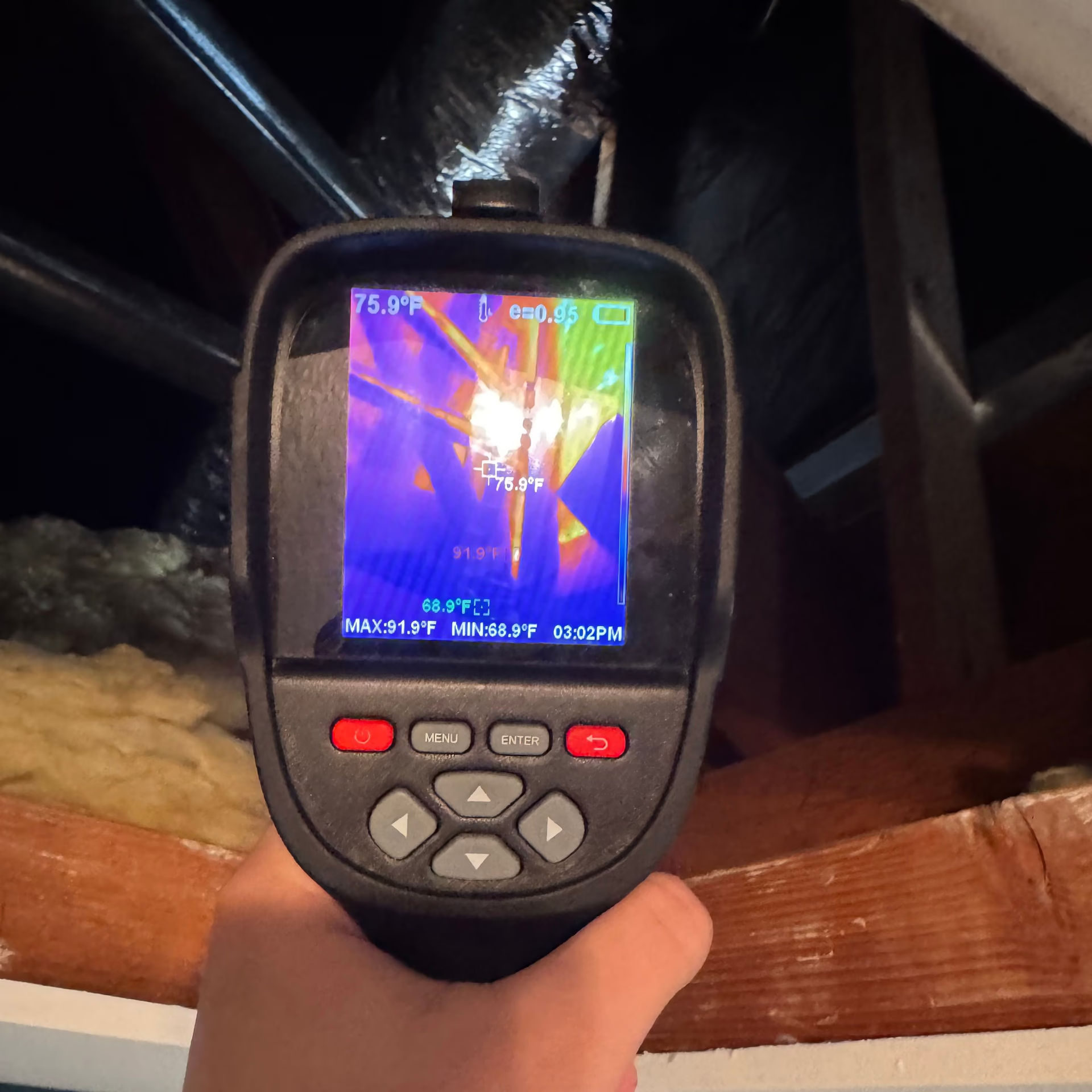
Why infrared thermal imaging finds mold others miss

Mold doesn't always announce itself. A small leak inside a wall, a stretch of failed insulation, or a cold-bridge condensation zone can build mold-friendly conditions for months before any stain reaches the surface. Thermal imaging reveals those conditions while they're still hidden, giving you a chance to address the moisture before mold has spread.

Thermal imaging detects:

  • Hidden moisture inside walls, ceilings, and under floors
  • Active leaks from plumbing, roofing, or HVAC components
  • Insulation gaps and ventilation defects driving condensation
  • Cold spots creating ideal future conditions for mold growth
Why infrared thermal imaging finds mold others miss
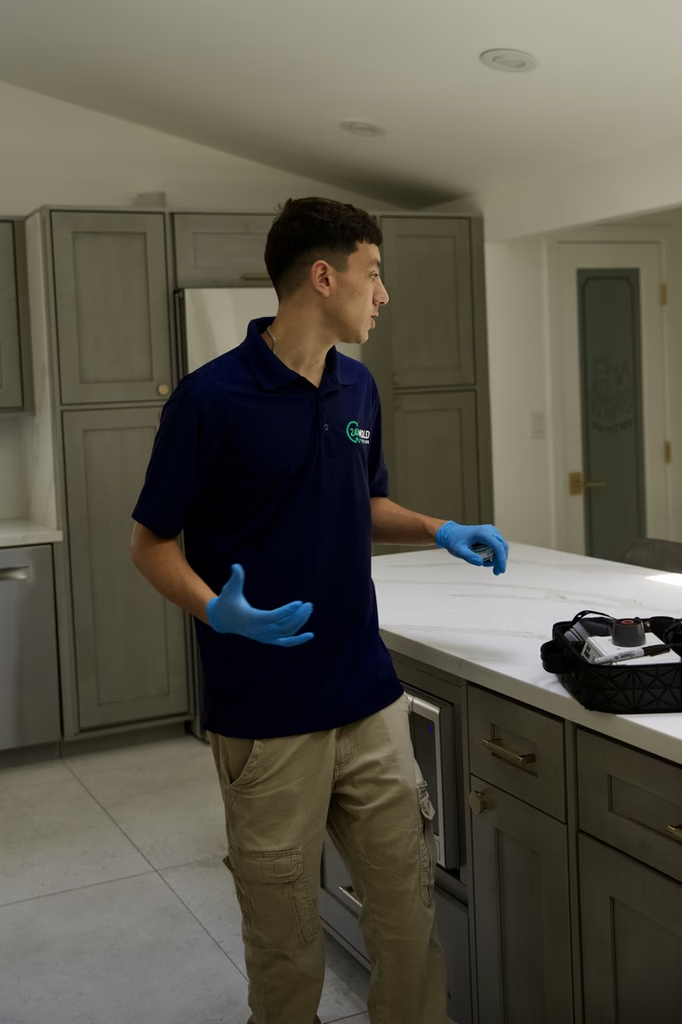
Mold inspector at work

Benefits

What you get from thermal imaging

Find hidden risks early without damaging the property

  • Non-invasive: No drilling, no cutting, no surface damage.
  • Early detection: Catches problems before damage becomes visible.
  • Cost-effective: Targets repairs only where they're needed.
  • Documented findings: Annotated thermal images included in the report.

About

How thermal imaging mold inspection works

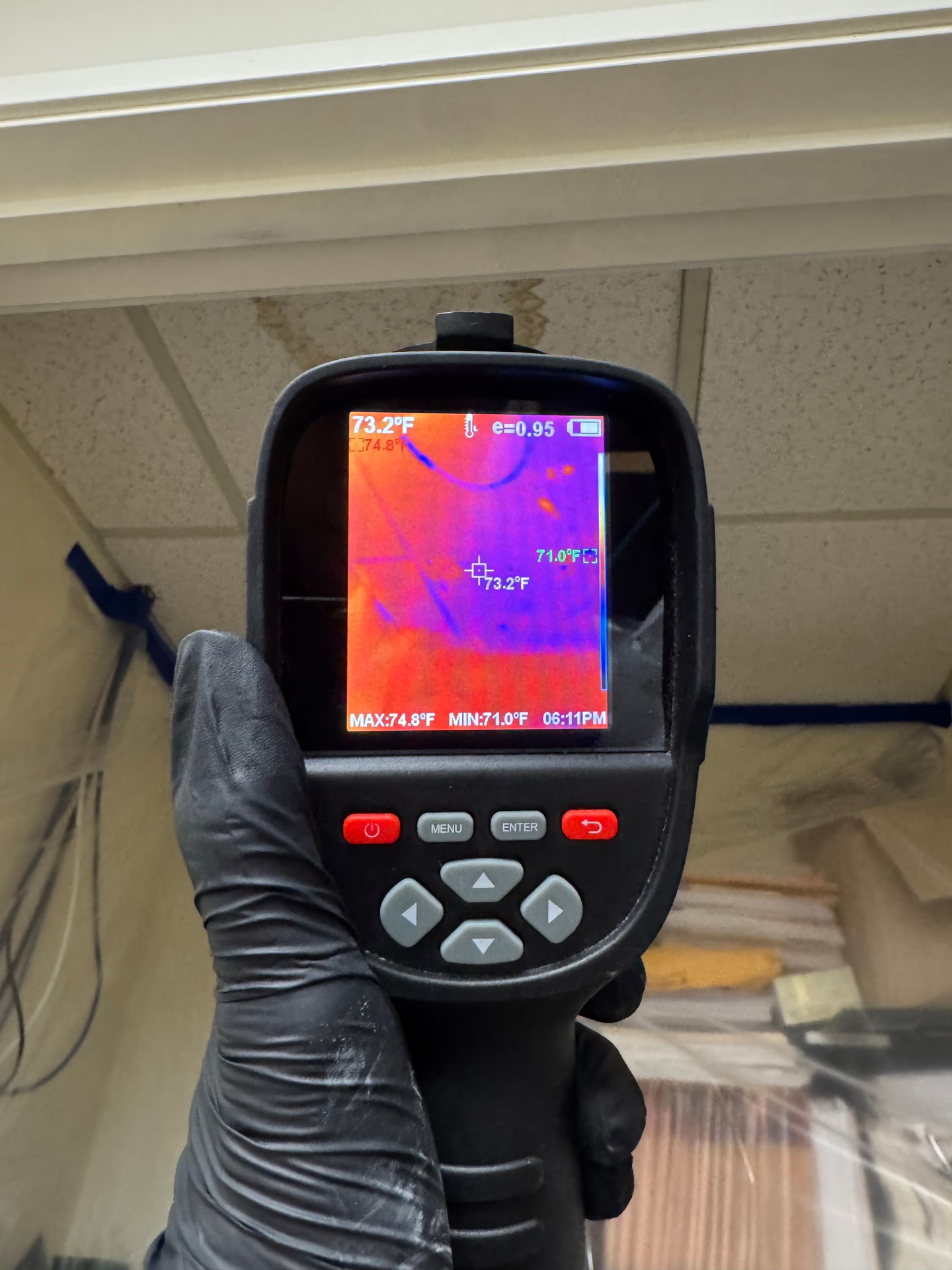
Our certified mold inspectors use FLIR cameras to read temperature differentials across surfaces. Cooler areas often signal water present in the material, even when no surface damage has appeared.

Our process includes:

  • A complete thermal scan of key interior and exterior surfaces
  • Identification of unusual cold or warm patterns in the readings
  • Cross-checking thermal findings with calibrated moisture meters
  • A mold inspection report including the annotated thermal images
How thermal imaging mold inspection works

Mold inspection Goleta FAQ

Call For An Inspection
No. 24H Mold Inspection of Goleta inspects, tests, and assesses; we do not perform removal, remediation, or repair work, and we take no referral fees from the contractors who do. That separation matters more than it sounds here. A large share of Goleta's housing is late-1990s slab-on-grade tract construction and 1920s-to-1940s raised-floor bungalows in Old Town, and those two assemblies fail in completely different ways — a slab-edge moisture problem and a wet crawl space require different containment, drying, and demolition scopes entirely. When the company writing the report is also bidding the removal, the affected area has a way of growing. Our report defines the moisture source, the actual affected square footage, and the containment the job requires, in writing, before any contractor prices it. Take that document to two or three licensed remediation contractors and have them bid the same defined scope. When they finish, we return for independent post-remediation verification, which is the sequence insurers and property managers expect.
We cover the full city and the unincorporated pockets around it: Old Town Goleta along Hollister, Ellwood and the mesa, Winchester Canyon, Storke Ranch, Lake Los Carneros and the Los Carneros corridor, the Fairview Gardens area, Rancho Embarcadero, and the university-adjacent blocks. Isla Vista is handled from this Goleta page — it is unincorporated county rather than part of the city, but it shares the 93117 ZIP code with much of Goleta, so a mailing address is a poor guide to which jurisdiction a property actually sits in. Permit history follows the same split: anything built before Goleta incorporated on February 1, 2002 was permitted by Santa Barbara County, and that is where those records still live. Neighboring cities have their own pages and their own coverage — 24H Mold Inspection of Santa Barbara, Carpinteria, Ventura, and Oxnard. Scheduling is typically same-day or next-day, with 24/7 response for active leaks and storm flooding.
Partly, and the boundary is worth stating precisely. We are not structural engineers and do not evaluate settlement, cracking, or load capacity; if an inspection turns up structural movement, we say so and you take it to a licensed engineer. What we do inspect is the foundation as a moisture system. Goleta splits cleanly between two types: raised post-and-pier floors with vented crawl spaces in Old Town and along the older Hollister corridor, and slab-on-grade in the 1950s and 1960s tracts and again in the 1990s ones. Each gets different instruments — pin and pinless moisture meters in subfloor framing, thermal imaging along slab edges, and relative humidity and dew point readings taken under the floor rather than in the living space. Crawl space venting is frequently the problem here rather than the fix: drawing 90-percent marine air across cool framing condenses water onto joists in July. If you are already ordering a structural or foundation report, book the moisture readings for the same visit so the engineer has both sets of data.
Very little in Goleta is built below grade; the water table is too high and the soils too wet. The equivalent space is the crawl space under a raised floor, and it behaves worse than a basement in one specific respect — a basement has a floor drain and a sump, while a vented crawl space has bare soil and no outlet at all. Water that gets under there leaves only by evaporating upward into the subfloor. Old Town carries the real flood exposure: San Jose Creek runs through it, storms have overtopped into those blocks repeatedly, and the county rebuilt the channel under the San Jose Creek Capacity Improvement and Fish Passage Project for exactly that reason. Atascadero Creek and the slough margins create the same condition further south. After any storm that puts water on your street, have the crawl space opened and metered within a few days — the soil surface looks dry long before the framing above it does.
Air sampling is comparative, not absolute. Every indoor sample is paired with an outdoor control taken at the same property on the same visit, and in Goleta that control does more work than it does inland. Marine layer mornings, eucalyptus and oak litter, and irrigated farmland along the Fairview and Hollister corridors keep outdoor Cladosporium and ascospore counts seasonally high, so a raw indoor spore number means very little on its own — a count that would look alarming in a desert city can be unremarkable against a Goleta outdoor baseline, and a modest count can still indicate an interior source when the outdoor number is low that day. Sundowner conditions coming off the Santa Ynez range can shift the air over a few afternoon hours, so sampling time and weather are logged with the results. When the lab report comes back, read the indoor and outdoor columns together; if a report shows no outdoor control, it cannot support a conclusion either way.
Spore counts are one component. The rest is humidity and moisture mapping room by room, HVAC and duct sampling, and — in this area specifically — settled particulate from wildfire smoke. The Holiday Fire burned through the Goleta foothills on July 6, 2018 and destroyed roughly twenty homes; the Thomas Fire had already pushed smoke down this stretch of coast for weeks in December 2017. Sundowner winds carry that material downslope into the city quickly, and it settles into attics, wall cavities, and duct runs where it stays for years. This matters because smoke residue and mold generate overlapping complaints — odor, irritation, a room that simply smells wrong — and treating the wrong one costs money and resolves nothing. Testing separates them. If your HVAC ran during either fire and nobody has opened the ducts since, ask for duct sampling alongside room air; in Goleta homes of that vintage, that is usually where the answer sits.
A tenant can commission an independent inspection of the unit they occupy. You do not need the owner's permission to have your own air tested, and many renters do it precisely because they want a document that was not written by their property manager. The housing around El Colegio Road and the Isla Vista blocks went up fast in the 1960s and early 1970s as UCSB grew — two- and three-story wood-frame apartments, low-slope roofs, units stacked on shared plumbing walls, and an occupancy pattern found almost nowhere else: nine-month leases that leave buildings sealed and empty through the summer, when marine humidity peaks and nobody is present to notice a weeping supply line. California Health and Safety Code section 17920.3 lists visible mold growth as a substandard housing condition, so a dated report with lab results carries real weight with an owner or a code enforcement officer. Schedule the inspection before you move out rather than after — once you surrender the unit, you lose access to the evidence.

Contact

Book your Goleta mold inspection today

Tell us what's going on and we'll respond the same day

Location

24H Mold Inspection of Goleta

Service area neighborhoods

  • Old Town Goleta
  • Ellwood
  • Winchester Canyon
  • Storke Ranch
  • Lake Los Carneros
  • Fairview Gardens area
  • University-adjacent neighborhoods
  • Rancho Embarcadero
Call For Service(820) 758-0011