24H Mold Inspection
Garden Grove24/7 EMERGENCY(657) 944-6711
HomeOur ServicesMold TestingAir Testing
Mold Testing

Air Testing

Mold air testing detects airborne spores and assesses indoor air quality, even in spaces where no visible contamination has shown up yet.

Overview

Why mold air testing matters

Most mold is invisible. Spores float undetected through ducts and doorways, spreading from room to room with the air itself. Air testing reveals the species and concentration of what's airborne, even when no visible growth is found on any surface.

Mold air testing detects:

  • —Invisible mold spores circulating through the air
  • —Differences in spore levels from one room to the next
  • —Contamination inside HVAC systems and hard-to-reach areas
  • —Early warning signs in rooms that appear unaffected
Why mold air testing matters
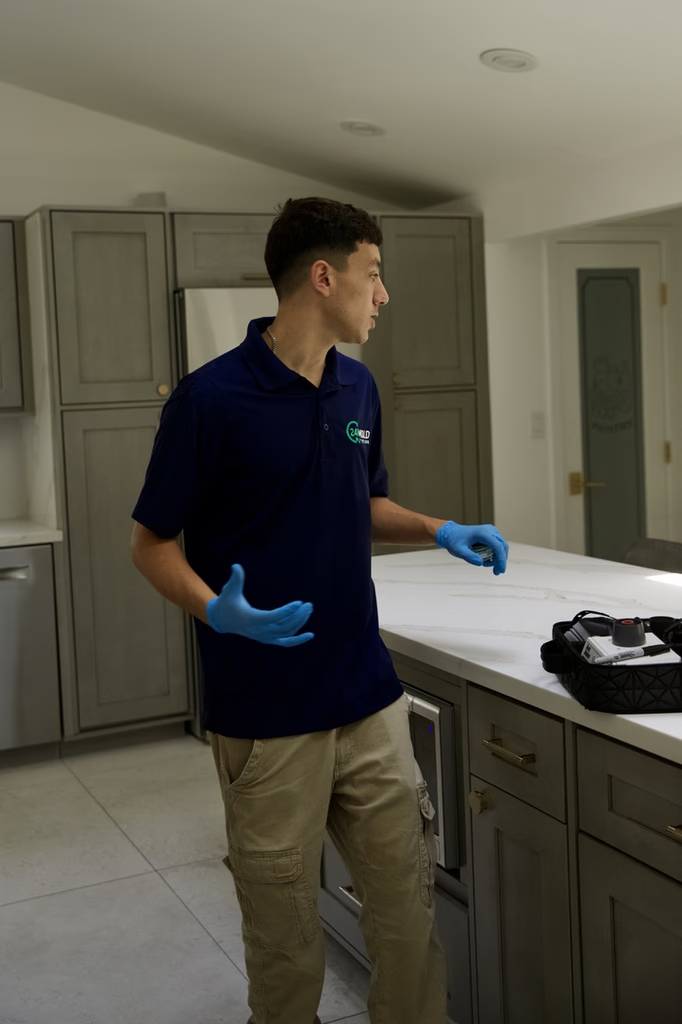
Mold inspector at work

Benefits

What you get from air testing

Understand the air quality and find what your eyes can't

  • —Non-invasive: No drilling, no surface damage, no demolition needed.
  • —Early detection: Catch contamination before it spreads or symptoms start.
  • —Data-driven: Measure and compare spore counts room by room with lab-verified results.
  • —Defensible documentation: State-certified lab results that hold up for insurance and real estate use.

About

How mold air testing works

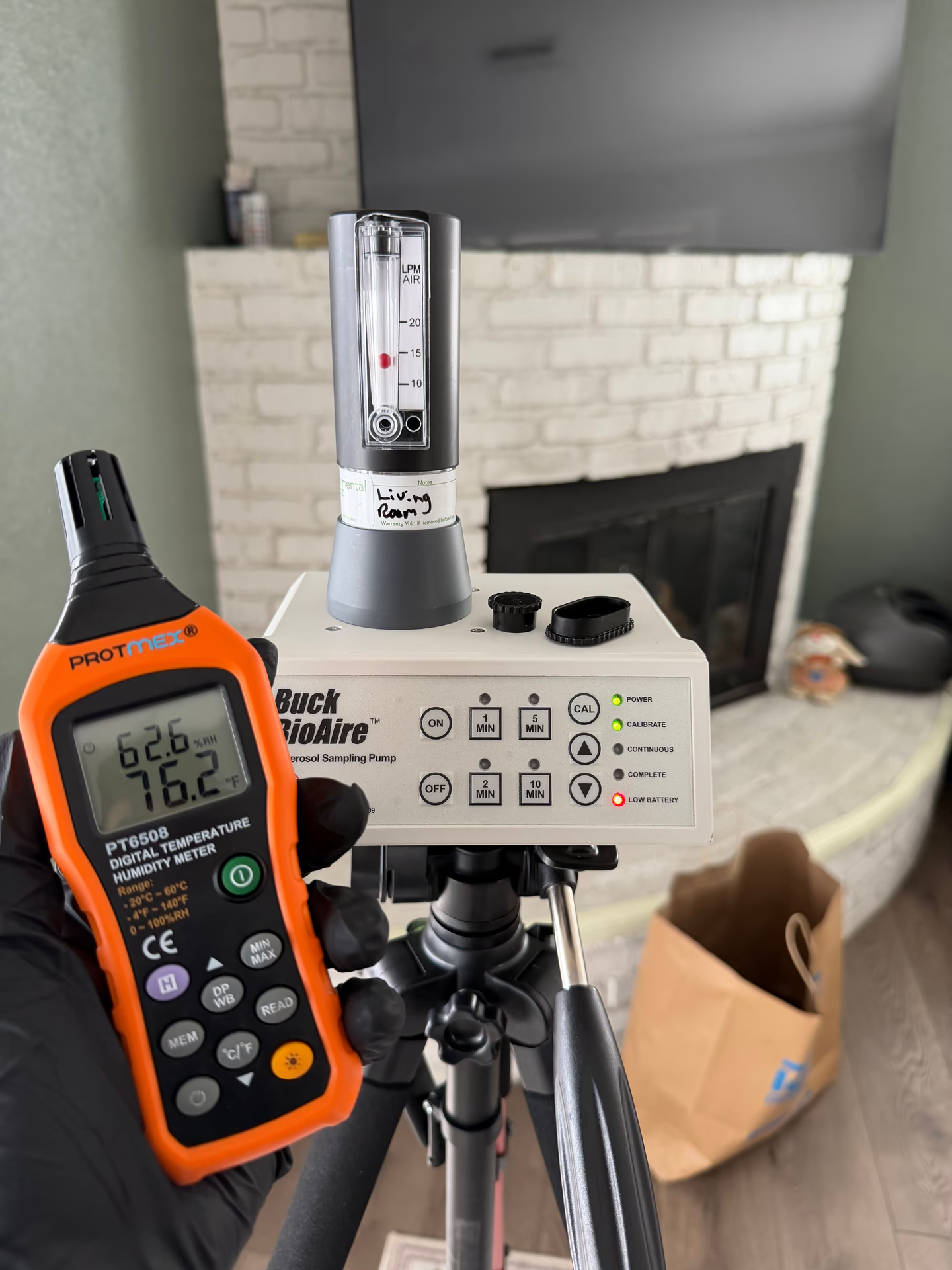
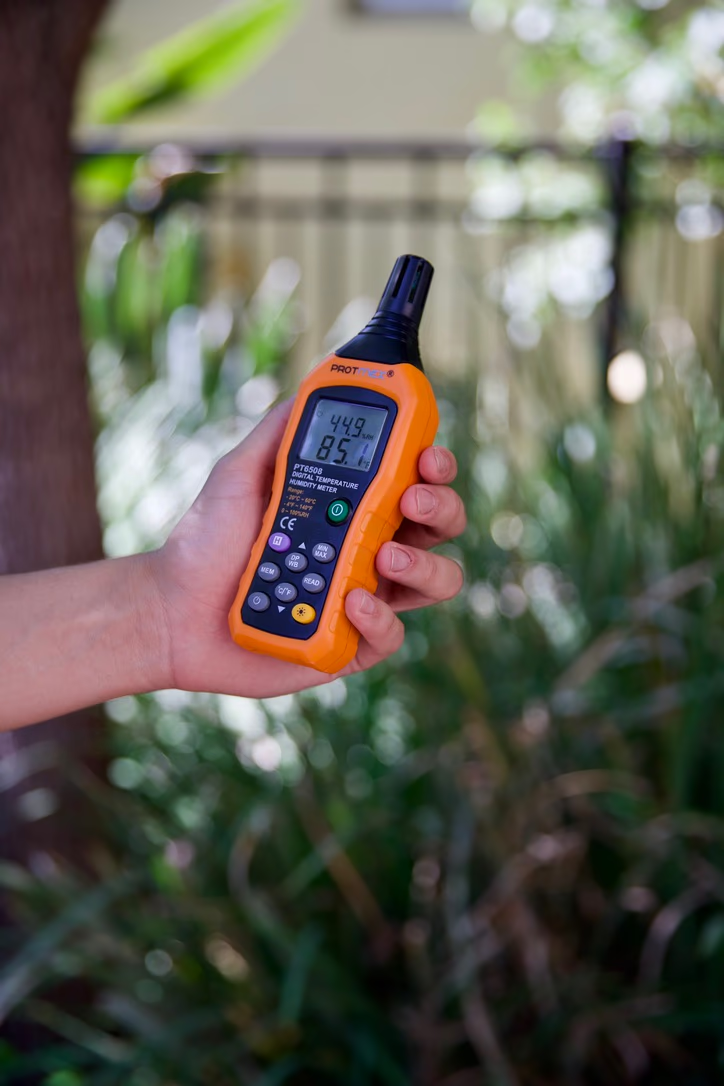
Our certified mold inspectors use calibrated sampling pumps to draw air through a spore trap cassette, capturing airborne mold spores. The lab identifies the mold species under a microscope, including any HVAC contamination if the system is implicated.

Our process includes:

  • —Targeted sampling in problem areas and comparison sampling outdoors
  • —Spore traps or impactor cassettes calibrated for accurate collection
  • —Lab-verified results identifying species and spore counts
  • —A written mold inspection report with the numbers and next steps
How mold air testing works

Mold inspection Garden Grove FAQ

Call For An Inspection
Dense multifamily and mixed-use buildings concentrate moisture in shared systems. Commercial kitchens at street level, rooftop exhaust, and shared plumbing stacks create steady humidity and many potential leak points, and in stacked construction a leak on one floor travels through party walls and appears in a lower unit months later. Higher occupancy also pushes indoor humidity past what older bath fans were designed to remove. A building-level inspection that traces moisture to its source is more useful than a single-unit walkthrough, because the source is often outside the unit that shows the mold.
They often are, and the risk is hidden by the slab. Original galvanized supply lines corrode from the inside and fail at fittings, and a leak under the slab or inside a wall can wick into drywall and framing with no visible sign at floor level. Orange County rarely freezes, so that moisture can support growth year-round. Bath fans that vent into the attic and converted garages with no dedicated ventilation add to the problem. Thermal imaging and moisture meters find in-wall and under-slab moisture that a visual check misses.
Often, yes. Many postwar Garden Grove homes were extended with converted garages and rear additions built long after the original house. Those spaces may lack vapor barriers, may be tied into the original HVAC without adequate return air, and may sit on slabs with no moisture control. They also add occupants to a house that was ventilated for fewer. An inspection should treat the addition as its own space, checking slab moisture, wall cavities at the old and new construction seam, and the roof tie-in.
Older commercial buildings along Chapman Avenue typically have flat or low-slope roofs with few drains, aging rooftop HVAC, and parapet and flashing details that leak at the edges. Water that gets in tends to travel above suspended ceilings and stay hidden for months. Large glass buildings add sealant failures and condensation at glazing. An inspection concentrates on roof drainage, condensate lines, mechanical rooms, and moisture above ceilings, and produces a report a property manager or insurer can use.
Yes, especially for 1950s and 1960s tract homes, converted garages and additions, and condos or townhomes with shared systems. The inspection covers thermal imaging for behind-wall moisture, slab readings at expansion joints, attic ventilation, and air or surface sampling where growth is suspected. For attached units it also documents whether any moisture condition originates in a shared building element, which affects who pays for repairs. Independent documentation before closing protects you from inheriting a slow, long-running problem.
Our Garden Grove team covers the whole city, from the Brookhurst and Garden Grove Boulevard corridors to the Chapman Avenue area, downtown, and the surrounding residential tracts, with same-day and next-day appointments and 24/7 emergency response. Stanton and Fountain Valley each have their own 24H Mold Inspection page with a local team. If your property is in either city, start with that page.
The inspection is the diagnosis. We map moisture with thermal imaging and meters, identify the source, and send samples to an accredited lab, then deliver a written report with the extent of growth, the cause, and a defined scope. The cleanup itself is done by a separate remediation contractor, because we perform inspection and testing only. That separation matters in Garden Grove's apartment buildings and HOA communities, where the source is often a shared system and the party paying for the repair needs documentation with no financial interest in the outcome. Once the work is done, we can return for independent post-remediation verification.

Contact

Book your Garden Grove mold inspection today

Tell us what's going on and we'll respond the same day

Location

24H Mold Inspection of Garden Grove

Address

12630 Brookhurst St # E, Garden Grove, CA 92840

Hours

  • MondayOpen 24 hours
  • TuesdayOpen 24 hours
  • WednesdayOpen 24 hours
  • ThursdayOpen 24 hours
  • Friday6 AM – 6 PM
  • SaturdayClosed
  • SundayOpen 24 hours

Service area neighborhoods

  • Historic Main Street
  • West Garden Grove
  • Little Saigon vicinity
  • Euclid corridor
  • Garden Park
  • Eastgate
  • Chapman Avenue district
  • Brookhurst area
Call For Service(657) 944-6711